
Bitcoin Crosses $80,000, Fueled by Institutional Inflows and 'Dollar Debasement' Trade
Bitcoin surged past $80,000 for the first time since May, driven by a massive short squeeze, $1.9 billion in ETF inflows, and a macroeconomic shift away from the US dollar.

Bitcoin reclaimed the $80,000 threshold on August 25, 2026, touching an intraday high of $81,237 and marking its first return to that level since mid-May. The surge caps a dramatic 38% recovery from late-June lows below $58,000, pushing the asset to a 28% gain for the month of August.
While the cryptocurrency remains below its all-time peak of over $126,000 reached in late 2025, the speed of the current rebound has fundamentally shifted market sentiment. The total market capitalization of Bitcoin has now swelled to $1.6 trillion, lifting the broader digital asset sector alongside it.[1][2][4][5]
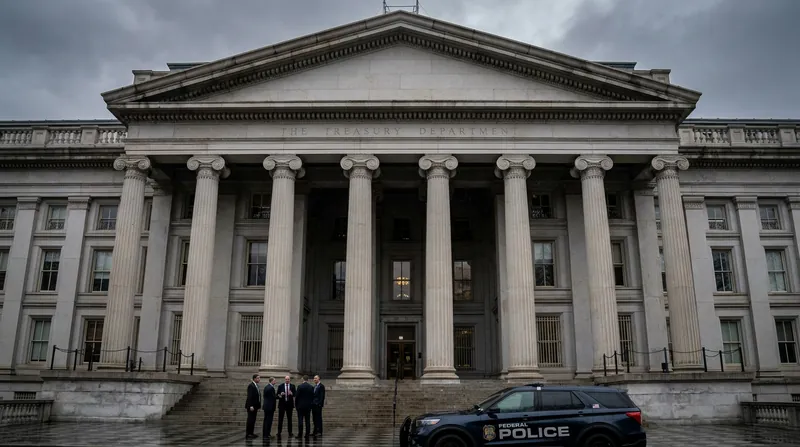
Unlike previous retail-driven manias, analysts attribute this breakout to a specific macroeconomic catalyst: the "dollar debasement" trade. The immediate trigger was an announcement by US Treasury Secretary Scott Bessent detailing plans to double the government's buybacks of long-dated bonds to at least $4 billion per operation. This intervention is designed to cap rising yields on the long end of the curve, effectively shifting pressure from the bond market to the currency market.[1][3][6]
By artificially suppressing long-term yields, the Treasury's policy makes the US dollar less attractive to yield-seeking investors, prompting a scramble into alternative stores of value. Gold simultaneously touched a three-month high, underscoring that Bitcoin's rally is part of a broader flight from fiat currency rather than an isolated crypto event. James Butterfill, head of research at CoinShares, noted that the cryptocurrency is responding to a rapidly changing narrative combining looser fiscal policy and renewed concerns over the sustainability of US government debt.[1][3][5]
Institutional capital has aggressively followed this macroeconomic signal. US-listed spot Bitcoin exchange-traded funds (ETFs) recorded roughly $1.9 billion in net inflows during the week ending August 21, marking the strongest weekly total in nearly ten months. The iShares Bitcoin ETF alone saw six consecutive days of positive inflows, indicating that traditional asset managers are actively building long-term strategic positions rather than executing short-term trades.[3][4][6]
Corporate treasuries are also participating in the accumulation phase. Strive, a Nasdaq-listed firm, executed its largest Bitcoin purchase in months by acquiring 1,110 BTC, signaling that corporate buyers remain undeterred by the rising price. This sustained spot demand has provided a structural foundation for the rally, absorbing the supply that had previously capped the market during the summer months.[4][6]
However, the sheer velocity of the move from $65,000 to over $80,000 was severely amplified by derivatives market mechanics, specifically a massive short squeeze. As the price began to climb on the back of the Treasury announcement, traders who had bet against the asset were forced to buy it back to cover their losses. Over the past week, roughly $4 billion in Bitcoin short positions were liquidated, including over $634 million in a single 24-hour window.[4][5][6]
This forced buying acted as rocket fuel, accelerating the price discovery process and pushing Bitcoin through key technical resistance levels with unusual speed. While the short squeeze provided the necessary momentum to clear the $80,000 psychological barrier, analysts warn that such leverage-driven spikes can leave the market vulnerable to sudden pullbacks once the forced buying is exhausted.[3][4][6]
Adding to the bullish momentum is a renewed sense of regulatory optimism in Washington. On August 20, President Donald Trump publicly urged Congress to pass the stalled CLARITY Act, a legislative framework designed to establish clear definitions for digital assets and determine which agencies have oversight jurisdiction. Since that endorsement, Bitcoin has risen 16%, reflecting the market's appetite for regulatory certainty.[1][5]
The upcoming September 15 procedural vote on the CLARITY Act has become a focal point for institutional investors. Prediction markets have recently adjusted the odds of the bill's passage from 10% to nearly 30%, injecting a layer of political tailwinds into the macroeconomic setup. Clearer rules of the road are widely viewed as the final hurdle required to unlock deeper pools of institutional capital that have thus far remained on the sidelines due to compliance concerns.[1][5]
Despite the confluence of positive indicators, significant uncertainties remain. The immediate test for the rally will be the upcoming release of the Federal Reserve's core Personal Consumption Expenditures (PCE) inflation data. A hotter-than-expected inflation print could force the central bank to maintain restrictive monetary conditions, potentially driving Treasury yields back up and strengthening the dollar.[3][4]
If financial conditions tighten unexpectedly, the same leverage that accelerated Bitcoin's ascent could quickly work in reverse. Options desks are currently betting heavily on a continued breakout, with millions of dollars flowing into call options targeting the $82,000 strike price by early September. This heavy concentration of bullish bets leaves the market exposed to a "bull trap" if momentum stalls and traders rush to unwind their positions simultaneously.[3][5][6]
Technical analysts are closely watching the $82,000 to $84,000 resistance zone. A sustained daily close above this region is required to confirm the breakout and invalidate the risk of a fakeout. If the price fails to hold the $80,000 line, the next major support zone sits between $76,000 and $78,000, where the market previously consolidated.[5][6]
For now, the broader cryptocurrency ecosystem is enjoying the halo effect of Bitcoin's resurgence. Ether, the second-largest digital asset, climbed over 30% for the week to reclaim $2,500, while alternative networks like Solana and XRP posted gains of 32% and 51%, respectively. This sector-wide participation suggests a genuine return of risk appetite rather than an isolated rotation into Bitcoin.[2]
Ultimately, Bitcoin's ability to maintain its newly reclaimed territory will depend on the persistence of the debasement narrative. As long as the US Treasury continues its bond interventions and institutional ETF inflows remain steady, the structural case for a continued advance remains intact. Investors are now watching to see if the asset can transition from a macro-driven recovery back into a phase of true price discovery.[1][3][4]
Key points
- Bitcoin crossed $80,000 for the first time since mid-May, capping a 38% recovery from late-June lows.
- The rally was triggered by the US Treasury's plan to double long-dated bond buybacks, reviving the 'dollar debasement' trade.
- US spot Bitcoin ETFs saw $1.9 billion in weekly net inflows, the strongest institutional demand in nearly ten months.
- A massive short squeeze accelerated the breakout, with over $4 billion in bearish positions liquidated in a week.
What we don’t know
- Whether the upcoming US PCE inflation data will disrupt the macroeconomic conditions supporting the rally.
- If the CLARITY Act will actually secure enough congressional votes to pass by September 15.
- Whether institutional ETF inflows can be sustained once the initial momentum of the breakout fades.
How we got here
May 2026
Bitcoin falls below the $80,000 threshold amid broader market cooling and ETF outflows.
Late June 2026
The cryptocurrency bottoms out near $58,000 following weeks of sustained selling pressure.
August 20, 2026
President Trump publicly calls on Congress to pass the CLARITY Act to regulate the crypto sector.
August 24, 2026
The US Treasury announces expanded buybacks of long-dated bonds, triggering a drop in the dollar.
August 25, 2026
Bitcoin surges past $80,000, hitting an intraday high of $81,237 amid a massive short squeeze.
- Macroeconomic Analysts
- Argue the rally is driven by Treasury interventions and fiat debasement fears rather than crypto fundamentals.
- Institutional Crypto Investors
- Emphasize structural adoption through ETF inflows and corporate treasury purchases.
- Technical & Risk Traders
- Focus on short squeezes, options leverage, and the risk of a bull trap if momentum stalls.
Perspectives this story doesn't cover
- Retail Cryptocurrency Traders
- Central Bank Policymakers
Sources
Source coverage
6 outlets
3 viewpoints surfaced






- [1]Euronext (Reuters)Macroeconomic Analysts
Bitcoin rises above $80,000 as soft dollar, debasement fears boost momentum
Read on Euronext (Reuters) → - [2]ForbesInstitutional Crypto Investors
Bitcoin Crosses $80,000 For The First Time Since May Amid Crypto Bounce Back
Read on Forbes → - [3]MorningstarMacroeconomic Analysts
Why Bitcoin Surged to USD 80,000, and What May Come Next
Read on Morningstar → - [4]The Economic TimesTechnical & Risk Traders
Bitcoin tops $80,000 for first time since May as soft dollar, debasement fears boost momentum
Read on The Economic Times → - [5]PrimeXBTTechnical & Risk Traders
Bitcoin Tops $81,000 as Dollar-Debasement Trade and Regulatory Optimism Fuel Rally
Read on PrimeXBT → - [6]WalletInvestorInstitutional Crypto Investors
Bitcoin Crosses $80,000 for the First Time Since May on ETF Inflows and Short Liquidations
Read on WalletInvestor →
More in Finance
See all →Market Mechanics
How Market Depth and Price-Time Priority Dictate the Execution Price of a Large Market Order
6 sources

Portfolio Theory
How the Efficient Frontier and the Capital Allocation Line Optimize Portfolio Risk and Return
4 sources

Risk-Free Rate
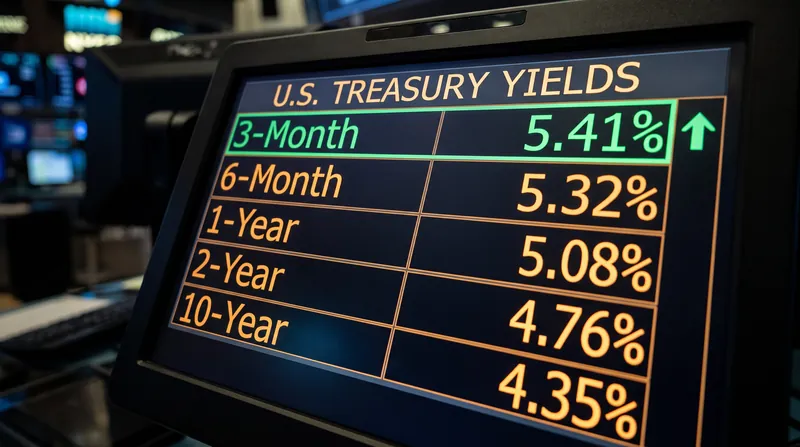
The Near-Zero Duration and Minimal Default Risk That Make the 3-Month Treasury Bill the Standard Risk-Free Rate Proxy
9 sources
Derivatives Pricing
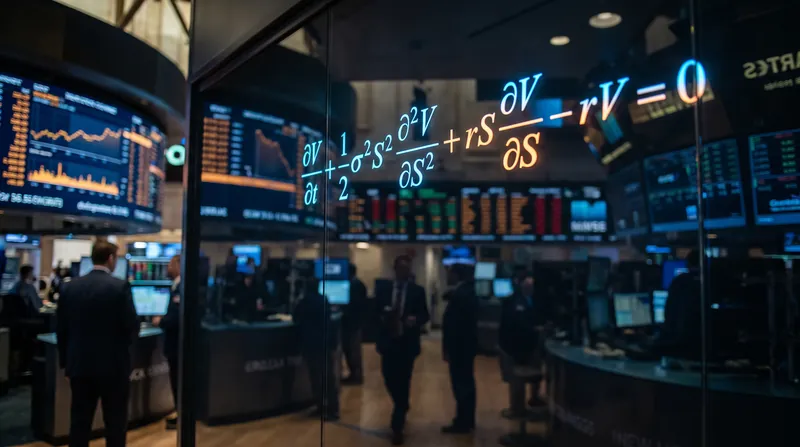
How Volatility, Time to Expiration, and the Risk-Free Rate Dictate the Theoretical Value of a European Option in the Black-Scholes Model
4 sources
Comments
Every angle. Every day.
Get Finance stories with full source coverage and perspective breakdowns, free every day.