
Analysis Reveals Justice Alito Gained Up to $2.9 Million From Oil and Gas Assets
A new review of federal financial disclosures shows Supreme Court Justice Samuel Alito has earned up to $2.9 million from fossil fuel interests since 2005. The findings are fueling calls for his recusal in an upcoming major climate liability case.
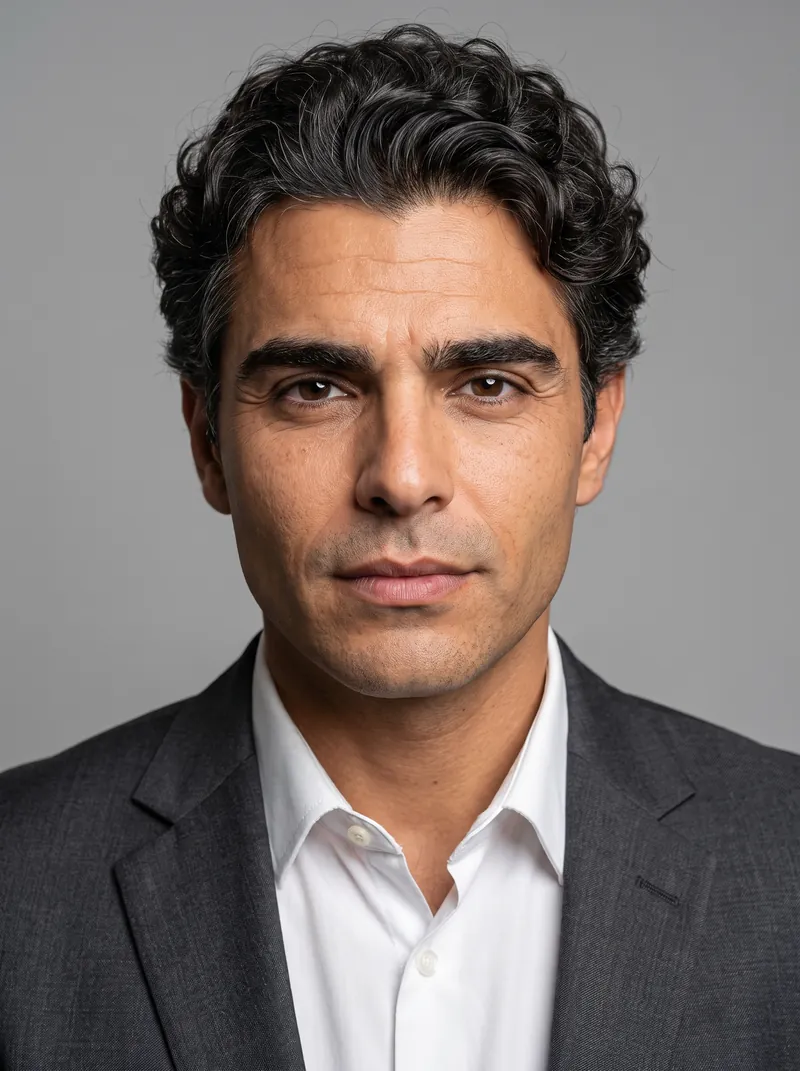
When the public pictures Supreme Court conflicts of interest, they often imagine a justice holding direct stock in a company actively arguing before the bench. The reality of modern judicial ethics is far more structural. A new financial analysis reveals that Justice Samuel Alito has gained up to $2.9 million from oil and gas assets since joining the Court in 2005—not necessarily from the specific plaintiffs currently on the docket, but from the broader fossil fuel ecosystem his rulings help regulate.[1][2]
The review, conducted by the judicial watchdog group Court Accountability, examined two decades of federal financial disclosures. Because justices report their assets in broad value ranges, the exact figure is difficult to pin down. However, the analysis concluded that even at the lowest baseline estimates, Alito has earned nearly $400,000 from fossil fuel interests during his tenure, with the upper bound reaching $2.9 million.[3]
The bulk of these financial gains stems from a single physical asset: a property in Grady County, Oklahoma. Alito's wife, Martha-Ann, holds a mineral interest in the land. In 2022, the family agreed to lease the plot to Citizen Energy, a private oil and gas extraction company, entitling the owners to a fraction of the profits from any extracted resources.[1][5]
The timing of the disclosure has amplified scrutiny, as the Supreme Court prepares to open its new term on October 5 with a highly consequential climate case. In Suncor Energy Inc. v. Board of County Commissioners of Boulder County, the justices will determine whether local and state governments can sue major fossil fuel producers for the climate-warming effects of their products.[1]
The oil companies, backed by the Trump administration, are asking the Court to rule that federal law preempts these subnational lawsuits, effectively shielding the industry from a wave of state-level climate litigation. A ruling in favor of the fossil fuel giants would protect the sector from billions of dollars in potential damages, preserving the profitability of the broader oil and gas market.[1][3]
Despite mounting pressure from environmental and good-government groups, Alito has refused to recuse himself from the upcoming case. A Supreme Court spokesperson previously stated that recusal is not required because Alito does not hold direct financial interests in Suncor or ExxonMobil, the specific companies named in the lawsuit. Under the Court's current ethics framework, conflicts of interest are generally defined by direct investments in the litigants themselves, rather than broader industry ties.[1][5]
Ethics advocates argue this narrow definition ignores the reality of modern financial entanglements. Lisa Graves, co-founder of Court Accountability, noted that a justice invested in the broader oil exploration industry inherently stands to benefit from legal outcomes that protect that industry's profitability. The analysis highlights how the financial success of the fossil fuel sector directly impacts the value of the Alitos' mineral leases and related energy holdings.[1][4]
The financial web surrounding the Oklahoma property has also drawn attention to Alito's past associations. In 2024, Citizen Energy—the company leasing the Alito land—was acquired for over $2 billion by Validus Energy. Validus is majority-owned by Elliott Investment Management, a hedge fund founded by Republican megadonor Paul Singer.[1][3]
Singer's fund currently holds more than 52 million shares of Suncor Energy, valued at over $2.3 billion, making him a major stakeholder in the company at the center of the October Supreme Court case. Singer previously made headlines when a ProPublica investigation revealed he had provided Alito with an undisclosed private jet ride for a luxury fishing trip to Alaska in 2008. Alito defended the trip at the time, asserting that ethics rules did not require its disclosure.[2][3]
The revelations arrive amid a broader crisis of confidence in the Supreme Court's ethical standards. Following a series of reporting on undisclosed gifts and luxury travel accepted by several justices, the Court adopted a voluntary code of conduct in 2023. However, the code lacks an enforcement mechanism, leaving individual justices to decide for themselves when their impartiality might reasonably be questioned.[4]
Dozens of government watchdog groups and environmental organizations have sent letters to the Senate Judiciary Committee, pushing for an investigation into Alito's recusal practices. They point to his inconsistent history—he recused himself from a related Chevron case earlier this year due to his stock in ConocoPhillips, yet remains seated for the Suncor dispute.[4]
As the October term approaches, the intersection of the Court's environmental docket and the justices' personal portfolios will remain under a microscope. For critics, the situation underscores a structural vulnerability in the American judicial system: the individuals tasked with deciding the limits of corporate liability are entirely self-policing when it comes to their own financial stakes in those industries.[2][5]
Viewpoints in depth
Judicial Watchdogs
Advocates argue that broad industry investments create inherent conflicts of interest that require recusal.
Groups like Court Accountability maintain that the Supreme Court's ethics rules are dangerously narrow. They argue that a justice who profits from oil and gas leases has a vested interest in the overall financial health of the fossil fuel sector. From this perspective, allowing a justice to rule on whether oil companies can be sued for climate damages—when that ruling could impact the profitability of their own energy assets—undermines public trust and violates the spirit of federal impartiality laws.
The Supreme Court's Ethics Framework
The Court maintains that recusals are only necessary when a justice holds a direct financial stake in the named parties.
Defenders of the current system point to the letter of the Supreme Court's ethics code, which focuses on direct financial conflicts. Because Justice Alito does not own shares in Suncor Energy or ExxonMobil, court spokespeople argue he has no direct financial interest in the outcome of the specific case before the bench. Under this framework, requiring justices to recuse themselves based on broad, industry-wide investments would be unworkable, potentially forcing recusals on any case that touches a sector where a justice holds mutual funds or property interests.
Environmental Litigants
Climate advocates view the Court's financial ties as a structural barrier to holding polluters accountable.
For environmental groups and local governments attempting to sue oil giants, the financial disclosures confirm their fears of an uneven playing field. They argue that the fossil fuel industry has spent decades insulating itself from liability, and that having a justice with millions in oil-derived wealth deciding their fate makes it nearly impossible to secure a fair hearing. These advocates are pushing for congressional intervention to enforce stricter, mandatory recusal standards for the nation's highest court.
Key points
- A financial analysis estimates Justice Samuel Alito has gained between $390,000 and $2.9 million from fossil fuel interests since 2005.
- The majority of the gains stem from an Oklahoma property where his wife holds a mineral interest leased to an energy company.
- Alito has refused to recuse himself from an upcoming Supreme Court case involving Suncor Energy and ExxonMobil.
- The Court's ethics rules do not require recusal because Alito does not hold direct stock in the specific companies named in the suit.
What we don’t know
- Whether the Senate Judiciary Committee will formally investigate Alito's recusal practices.
- How the Supreme Court will ultimately rule in Suncor Energy v. Boulder County.
- Whether the Court will adopt enforceable ethics rules in the future.
How we got here
2005
Samuel Alito is confirmed to the Supreme Court, reporting a net worth of roughly $2.1 million.
2008
Alito takes an undisclosed private jet trip to Alaska funded by billionaire Paul Singer.
2022
Alito's wife leases an Oklahoma property with mineral rights to Citizen Energy for oil and gas extraction.
2024
Validus Energy, majority-owned by Paul Singer's hedge fund, acquires Citizen Energy for over $2 billion.
August 2026
A financial analysis reveals Alito has gained up to $2.9 million from fossil fuel interests since joining the Court.
October 5, 2026
The Supreme Court is scheduled to hear arguments in Suncor Energy v. Boulder County.
- Judicial Watchdogs
- Advocates pushing for strict, mandatory recusal standards and congressional oversight of the Supreme Court.
- Court Institutionalists
- Those who defend the Court's current ethics framework, arguing that recusals should only apply to direct financial conflicts with named parties.
- Environmental Advocates
- Climate groups focused on ensuring fossil fuel companies face liability in state and local courts.
Perspectives this story doesn't cover
- The fossil fuel industry's legal defense teams
- Local governments suing for climate damages
Sources
Source coverage
5 outlets
3 viewpoints surfaced





- [1]The GuardianEnvironmental Advocates
Samuel Alito gained up to $2.9m from oil and gas assets since joining supreme court, analysis shows
Read on The Guardian → - [2]The New RepublicCourt Institutionalists
Supreme Court Justice Samuel Alito has reportedly gained as much as $2.9 million from his fossil fuel interests
Read on The New Republic → - [3]Mother JonesEnvironmental Advocates
Supreme Court justice Samuel Alito gained up to $2.9 million from his fossil fuel interests between 2005 and 2024
Read on Mother Jones → - [4]Balls and StrikesJudicial Watchdogs
Cases involving the oil and gas industry are great for Justice Samuel Alito
Read on Balls and Strikes → - [5]TruthoutJudicial Watchdogs
Alito's Assets in Fossil Fuels Have Grown by Up to $2.9 Million, Analysis Finds
Read on Truthout →
More in Law & Justice
See all →Regulatory Takings
The Three Factors That Determine a Regulatory Taking Under the Fifth Amendment's Penn Central Test
6 sources

Severability Doctrine
The Two Requirements That Determine If an Unconstitutional Statute Can Be Severed
6 sources
Redistricting Fight
Supreme Court Blocks Federal Order, Reinstating Missouri's 2022 Congressional Map
7 sources
Immigration Detention
Supreme Court Dismisses Major Immigration Detention Case Following State Pardon
4 sources
Comments
Every angle. Every day.
Get Law & Justice stories with full source coverage and perspective breakdowns, free every day.