
Alpine Skiing Injury Report: Cyprien Sarrazin and Alexander Steen Olsen Hit Major Milestones in Summer Rehab
French speed specialist Cyprien Sarrazin and Norwegian technical star Alexander Steen Olsen have successfully returned to on-snow training after season-ending injuries. Both athletes are targeting full comebacks for the 2026-27 World Cup season following extensive rehabilitation.
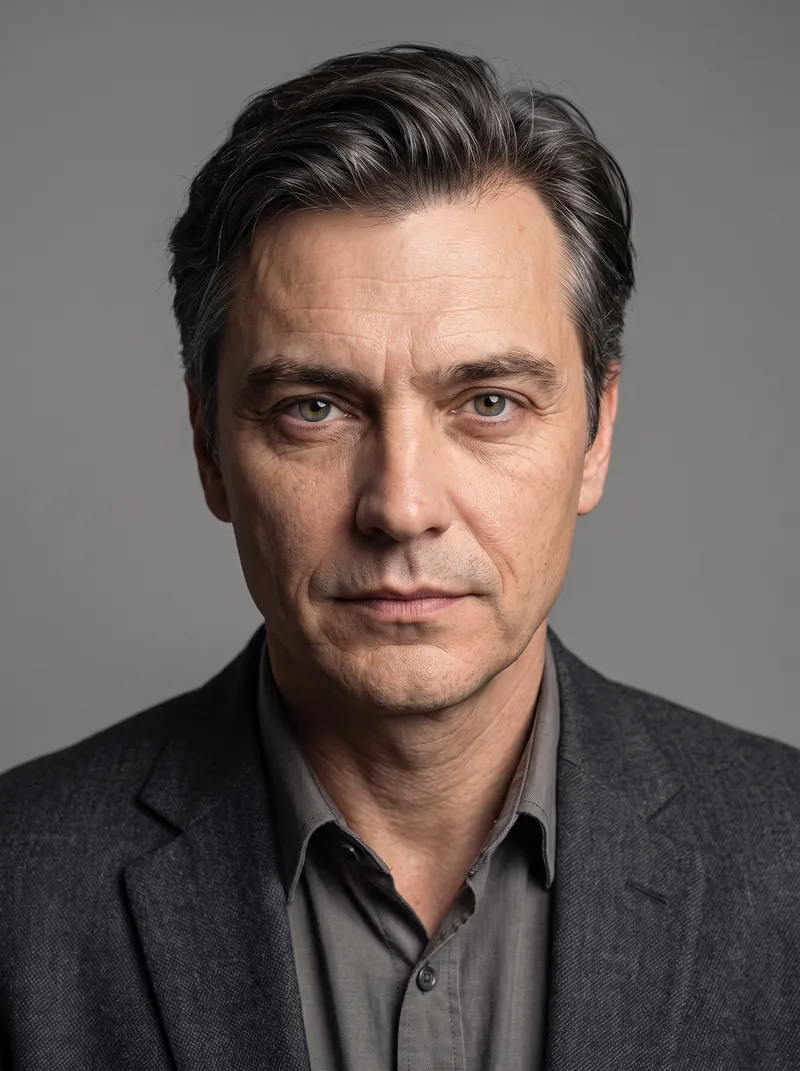
As the FIS Alpine World Cup circuit gears up for the 2026-27 season, the men's field is set to welcome back two of its brightest stars. French speed specialist Cyprien Sarrazin and Norwegian technical ace Alexander Steen Olsen have both reached major milestones in their respective rehabilitations, officially returning to structured on-snow training after devastating injuries derailed their careers.
The dual comebacks represent a massive injection of talent into the World Cup roster and provide a much-needed dose of optimism for fans who watched both athletes endure grueling medical setbacks over the past two years.[1][2]
For Sarrazin, the return to snow is nothing short of a medical miracle following a near-fatal head injury sixteen months ago that threatened not only his career but his life. For Steen Olsen, it marks the end of a frustrating, chronic battle with severe knee pain that ultimately cost him a highly anticipated appearance at the Milano-Cortina 2026 Winter Olympics. Both men are now utilizing the European summer glacier camps to rebuild their physical strength, technical timing, and mental confidence ahead of the late-October season opener in Sölden, Austria.[1][3]
Sarrazin's harrowing ordeal began in December 2024 on the fearsome Stelvio course in Bormio, Italy. During a routine downhill training run on a slope notorious for its unforgiving, hard-packed ice, the Frenchman lost control off a final jump.
He was catapulted into the air at an awkward angle, landing violently on his back and head before sliding unconscious into the safety netting. The incident immediately raised questions about course preparation and safety standards on the World Cup circuit, but the immediate concern was strictly for Sarrazin's survival as he was airlifted to a neurological intensive care unit.[4][5]
At the hospital, Sarrazin was diagnosed with a subdural hematoma—a severe condition characterized by bleeding near the brain—and underwent emergency surgery to relieve the mounting intracranial pressure. The devastating injury abruptly halted a breakout 2023-24 campaign in which the late-blooming speed specialist had secured four World Cup victories. That dominant stretch included a historic double win on the legendary Hahnenkamm downhill in Kitzbühel, Austria, establishing him as one of the few racers capable of challenging the sport's overall king, Marco Odermatt.[4][5]
The road back has been deliberately cautious and fraught with uncertainty. Sarrazin missed the remainder of the 2024-25 season and the entirety of the 2025-26 Olympic campaign to focus entirely on his neurological recovery. However, his physical progression accelerated remarkably through the spring of 2026. After initially clicking into skis for gentle free-skiing in late 2025 to test his balance, he recently progressed to running structured super-G gates in Val d'Isère, signaling a transition from medical recovery to active athletic preparation.[2]
"The sensations were good; nothing can compare to that," Sarrazin shared with his supporters on social media, acknowledging the profound emotional weight of his return to the mountains. He candidly noted that while he still has a long way to go to ski entirely without lingering knee pain from the secondary impacts of the Bormio crash, clearing the neurological hurdles and feeling the snow under his skis again represented a "more-than-positive first step."
His management team has indicated that while a return for the 2026-27 season is the target, his ultimate motivation is competing in the 2030 Winter Olympics on home snow in the French Alps.[2][5]
Meanwhile, over in the technical disciplines, Alexander Steen Olsen is writing his own compelling comeback story. The 24-year-old Norwegian entered the 2025-26 season as one of the world's top slalom and giant slalom prospects, boasting three career World Cup wins and a reputation for fearless, aggressive edge control. He was widely expected to be a centerpiece of Norway's medal hunt at the Milano-Cortina Games, carrying the torch for a national team undergoing a generational transition and looking to establish its next era of technical dominance.[3]
However, a persistent and agonizing case of jumper's knee—severe inflammation of the patellar tendon—derailed those ambitions before the Olympic season even began. The chronic pain forced Steen Olsen to abruptly withdraw from the season-opening giant slalom race in Sölden last October, a venue where he had previously tasted victory and hoped to defend his title.
Despite extensive off-season rehabilitation, specialized physical therapy, and careful load management, the tendon simply could not withstand the immense, repetitive forces required to carve through injected ice on the steepest pitches of the World Cup circuit.
In December 2025, Steen Olsen made the agonizing decision to undergo season-ending knee surgery, officially ruling him out of the Milano-Cortina 2026 Winter Olympics. "This was an extremely difficult decision, especially with the Olympics coming up," he admitted to Norwegian media at the time. Recognizing that pushing through the injury could cause irreversible joint damage, he opted for the surgical route, promising his fans and teammates that he would use the extended layoff to return stronger and more experienced than ever.[3]
That promise materialized this past May, as Steen Olsen officially rejoined the Norwegian Alpine team for his first on-snow sessions in six months. Free from the chronic, stabbing pain that had hindered his previous preparations, the young star is now focused on rebuilding his explosive power and trusting his surgically repaired knee. Coaches report that his fundamental technique remains as sharp as ever, and the primary objective of the summer camps is gradually increasing his tolerance for high-speed gate training.[1][3]
The successful return of both athletes fundamentally alters the competitive landscape for the upcoming winter. Prior to his crash, Sarrazin was widely considered the only downhill racer capable of consistently challenging Swiss powerhouse Marco Odermatt for the season-long speed globes. His fearless, attacking style on the circuit's most dangerous tracks provided a thrilling contrast to Odermatt's calculated technical precision, and his absence last season left a noticeable void in the men's speed events. A healthy Sarrazin instantly reintroduces a high-stakes rivalry at the top of the downhill standings.[1][2]
Steen Olsen's presence similarly bolsters a Norwegian technical squad that relies heavily on his aggressive, high-risk slalom style to secure podiums and push the pace against rival Austrian and Swiss teams. With the 2027 FIS Alpine World Ski Championships looming on the horizon in Crans-Montana, Switzerland, both men have ample time to regain their race rhythm, test their new equipment setups, and re-acclimate to the grueling travel schedule of the World Cup tour without the immediate, crushing pressure of an Olympic spotlight bearing down on their initial comeback races.[1][3]
Medical experts note that while returning to snow is a massive psychological victory, the transition back to the starting gate involves managing entirely different physical and mental loads. For Sarrazin, the focus remains on neurological safety and overcoming the inevitable mental hurdles of pushing past 80 miles per hour on the very slopes that nearly claimed his life. The trauma of a severe head injury often requires as much psychological rehabilitation as physical healing to restore a racer's edge.[2][4]
For Steen Olsen, the challenge is intensely mechanical: ensuring his surgically repaired patellar tendon can withstand the immense G-forces generated during tight giant slalom turns. Alpine skiing places extraordinary eccentric loads on the knees, requiring the quadriceps and tendons to absorb massive shocks while navigating uneven terrain. The Norwegian medical staff will be closely monitoring his joint response to back-to-back training days, utilizing advanced load-management protocols. The overarching goal is to avoid the inflammation cycles that derailed his previous season, strictly prioritizing his long-term joint health over immediate early-season results.[3]
Alpine skiing places extraordinary eccentric loads on the knees, requiring the quadriceps and tendons to absorb massive shocks while navigating uneven terrain.
Despite the formidable hurdles that still lie ahead, the summer training camps have provided a rare dose of unmitigated good news for the global alpine skiing community. As Sarrazin and Steen Olsen carve their way down European glaciers this August, their resilience serves as a powerful reminder of the grit required to survive at the pinnacle of winter sports. Their impending returns to the World Cup starting gates will undoubtedly be among the most highly anticipated storylines of the 2026-27 season.[1][2]
Key points
- Cyprien Sarrazin has returned to super-G training 16 months after a near-fatal head injury at Bormio.
- Alexander Steen Olsen is back on snow after undergoing season-ending knee surgery in December 2025.
- Both athletes are utilizing European summer glacier camps to prepare for the 2026-27 World Cup season.
- Their returns inject major talent back into the men's speed and technical disciplines ahead of the 2027 World Championships.
How we got here
Dec 2024
Cyprien Sarrazin suffers a severe head injury during downhill training at Bormio.
Oct 2025
Alexander Steen Olsen withdraws from the Sölden World Cup opener due to a persistent patellar tendon injury.
Dec 2025
Steen Olsen undergoes season-ending knee surgery; Sarrazin clicks into skis for the first time since his crash.
Apr 2026
Sarrazin progresses to structured super-G training in Val d'Isère.
May 2026
Steen Olsen officially returns to on-snow training with the Norwegian team.
Aug 2026
Both athletes continue intensive summer camps ahead of the 2026-27 World Cup season.
- French Skiing Federation & Fans
- Thrilled by Sarrazin's miraculous recovery and hopeful for his return to peak form.
- Norwegian Alpine Team
- Focused on Steen Olsen's long-term health and technical development after a heartbreaking Olympic absence.
- Neutral Analysts
- Viewing both returns as massive boosts to the competitive depth of the men's World Cup.
Perspectives this story doesn't cover
- Personal medical and physical therapy teams
- Rival competitors facing their return
Sources
Source coverage
5 outlets
3 viewpoints surfaced





- [1]Ski Racing MediaNeutral Analysts
Steen Olsen Returns to Snow, Sarrazin Back After Serious Head Injury
Read on Ski Racing Media → - [2]SnowBrainsFrench Skiing Federation & Fans
French Ski Racer Cyprien Sarrazin Returns to Race Training 16 Months After Near-Fatal Crash
Read on SnowBrains → - [3]Olympics.comNorwegian Alpine Team
Norwegian Alpine skiing star Alexander Steen Olsen out for the remainder of the season
Read on Olympics.com → - [4]The GuardianFrench Skiing Federation & Fans
Cyprien Sarrazin has surgery on head injury after crash on 2026 Olympic slope
Read on The Guardian → - [5]CBCFrench Skiing Federation & Fans
French skier Cyprien Sarrazin returns to the slopes after serious head injury
Read on CBC →
More in Sports
See all →Injury
Italian Speed Specialist Elena Curtoni Overcomes Summer Ankle Injury for Final World Cup Season
6 sources
Standings
FIS Alpine Skiing World Cup 2026-2027 Points Race Preview: Balanced Calendar Reshapes the Crystal Globe Battle
3 sources
Injury
Alpine Skiing Injury Report: Federica Brignone Returns to Snow as World Cup Veterans Target 2026-27 Comebacks
4 sources
Injury
Petra Vlhová Targets Full World Cup Return After Two-Year Injury Layoff
7 sources
Comments
Every angle. Every day.
Get Sports stories with full source coverage and perspective breakdowns, free every day.