
AI Boom Forces US Grid Overhaul as Data Centers Near 20% of National Power Use
Driven by the massive energy demands of artificial intelligence, U.S. data centers are projected to consume 20% of the nation's electricity by 2035, sparking a historic modernization of the electrical grid.

The scale of the AI boom is no longer just measured in trillions of parameters or billions of dollars—it is now measured in gigawatts. Across the United States, the physical footprint of artificial intelligence has become the primary catalyst for a historic modernization of the national electrical grid.[3]
According to a July 2026 forecast by BloombergNEF, data centers are on track to consume roughly 20% of all U.S. electricity by 2035. This represents a massive leap from the 5.9% share they hold today, translating to a projected 194 gigawatts of demand.[2]
The sheer velocity of this growth has caught many forecasters off guard. The 2035 demand projection is 83% higher than estimates issued just a year prior, driven by a massive pipeline of new AI facilities entering the development phase. Gartner estimates that global data center electricity consumption will grow 26% in 2026 alone, reaching 565 terawatt-hours.[2][4]
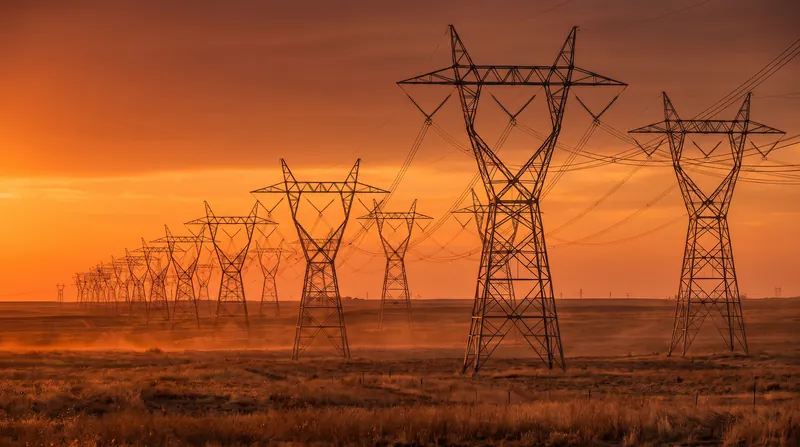
In response, the Department of Energy’s draft 2026 National Transmission Needs Study officially declared that the U.S. energy transmission system has entered a new planning era. Historically, grid upgrades were driven by reliability concerns and aging infrastructure; today, rapid load growth from AI campuses is the principal force behind new transmission investment.[3]
To understand this infrastructure pivot, it is necessary to examine the fundamental difference between traditional cloud computing and modern AI workloads. A standard enterprise data center typically draws between 5 and 20 megawatts of power, while early cloud hyperscale facilities peaked around 150 megawatts.[7]
Today, the calculus has changed entirely. A single large-scale AI training campus designed in 2026 demands between 500 megawatts and a full gigawatt of continuous power. To put that in perspective, a one-gigawatt facility requires the equivalent electrical capacity of a traditional nuclear reactor.[2][7]
Furthermore, the nature of the power draw has evolved. As AI transitions from the training phase to global deployment, the industry has shifted heavily toward inference—the continuous, 24/7 process of models answering queries, generating code, and processing data.[6]
Unlike training workloads, which can sometimes be scheduled during off-peak hours, inference requires firm, sustained power with ultra-low latency. This means modern AI facilities must maintain a constant, high-wattage draw, fundamentally altering how utilities must plan for baseload generation.[1][6]
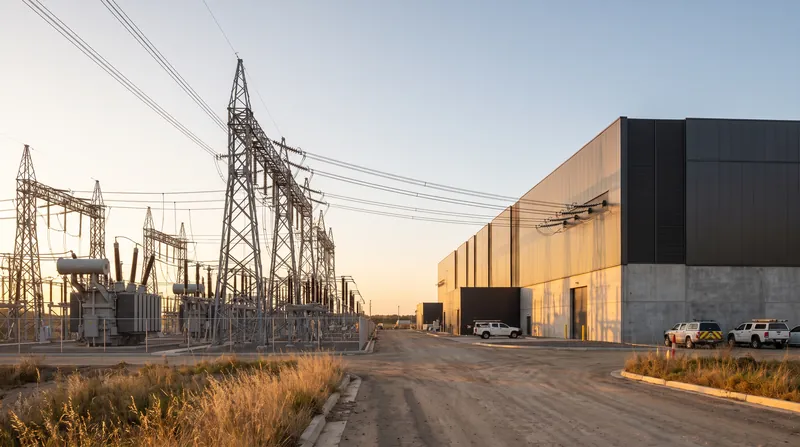
Faced with utility interconnection queues that can stretch for up to seven years, the technology sector is refusing to let grid bottlenecks throttle innovation. Instead, developers are actively funding and building their own parallel power infrastructure.[1][7]
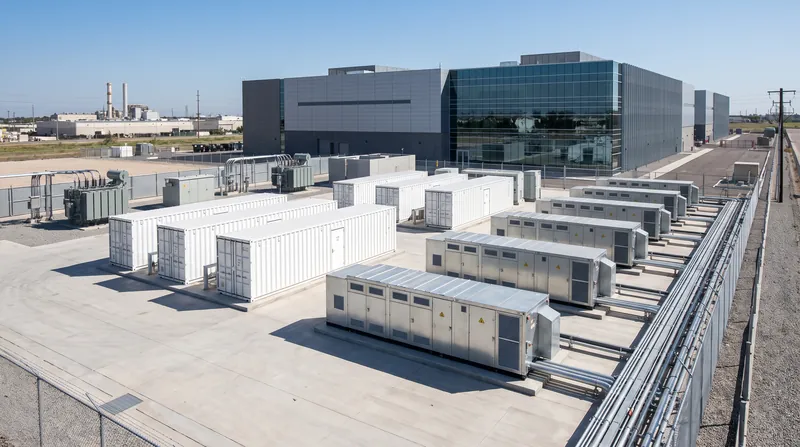
Bank of America analysts note that with data center demand expected to outpace planned utility capacity additions by more than 100 gigawatts through 2030, operators are increasingly pivoting to on-site generation. By pairing traditional grid connections with dedicated microgrids and massive battery storage systems, developers are ensuring reliability while shortening project timelines.[1]
This influx of private capital is also accelerating the commercialization of next-generation clean energy. Tech giants are signing landmark power purchase agreements to fund gigawatt-scale renewable projects, advanced geothermal plants, and small modular nuclear reactors (SMRs) to meet their zero-carbon commitments.[6]
Inside the data centers, a parallel engineering revolution is underway to maximize the efficiency of every watt consumed. Because AI-optimized server racks now demand anywhere from 30 to over 100 kilowatts each, traditional air cooling is no longer physically viable.[4]
Liquid cooling—where specialized fluids absorb heat directly from the processors—has become the new standard. This transition not only allows for denser compute clusters but dramatically improves the Power Usage Effectiveness (PUE) of new facilities, ensuring that less power is wasted on ambient cooling.[4]
The geographic concentration of this demand remains a challenge. In hubs like Northern Virginia, data centers already account for over a quarter of total electricity demand, prompting intense local debates over land use and utility rates.[5]
Yet, this localized strain is forcing a long-overdue national conversation about grid resilience. By acting as system-shaping infrastructure counterparties, AI developers are providing the guaranteed, long-term demand needed to underwrite massive grid upgrades.[3]
Ultimately, the AI power boom is not just a story of consumption; it is a story of industrial mobilization. By forcing utilities to rethink transmission planning and injecting billions into advanced energy technologies, the rise of artificial intelligence is inadvertently building a more robust, modern electrical grid for the 21st century.[1][3]
Key points
- U.S. data centers are projected to consume 20% of the nation's electricity by 2035, up from 5.9% today.
- A single modern AI training campus now requires up to one gigawatt of continuous power, equivalent to a nuclear reactor.
- The Department of Energy cites AI infrastructure as the new primary driver for U.S. electrical transmission planning.
- To bypass grid bottlenecks, tech companies are heavily investing in on-site generation, microgrids, and advanced clean energy.
What we don’t know
- How quickly next-generation clean energy sources, such as small modular reactors (SMRs), can be commercialized to meet this demand.
- Whether local municipalities will introduce new zoning laws or tariffs to cap data center expansion in highly concentrated regions.
- The exact degree to which future algorithmic efficiencies might reduce the power required for AI inference workloads.
How we got here
2010s
The hyperscale era focuses on efficiency, allowing cloud computing to grow massively without a proportional spike in energy demand.
2023
The generative AI boom begins, shifting industry focus to power-dense GPU clusters and sparking early warnings about grid capacity.
2025
Tech companies begin signing landmark gigawatt-scale power purchase agreements and investing directly in advanced clean energy to bypass grid bottlenecks.
July 2026
The Department of Energy declares that AI data centers have officially become the primary driver of new U.S. transmission grid planning.
2035 (Projected)
U.S. data centers are forecast to consume 20% of the nation's total electricity, reaching 194 gigawatts of demand.
- Grid Operators & Utilities
- Focuses on maintaining grid reliability, managing interconnection queues, and upgrading transmission infrastructure to handle unprecedented load growth.
- AI Infrastructure Developers
- Prioritizes scaling compute capacity quickly by bypassing grid bottlenecks through on-site generation, microgrids, and advanced liquid cooling.
- Energy & Sustainability Analysts
- Emphasizes the need to pair massive AI power demand with zero-carbon energy sources and tracks the geographic concentration of grid strain.
Perspectives this story doesn't cover
- Local residents in high-density data center hubs
- Legacy fossil fuel plant operators
Sources
Source coverage
7 outlets
3 viewpoints surfaced







- [1]Utility DiveGrid Operators & Utilities
AI data center growth could force US utilities to rethink generation plans, BofA says
Read on Utility Dive → - [2]Tom's HardwareEnergy & Sustainability Analysts
U.S. data centers are on track to consume about 20% of the nation's electricity by 2035
Read on Tom's Hardware → - [3]Data Center KnowledgeGrid Operators & Utilities
AI Becomes the Planning Driver for US Transmission Grid
Read on Data Center Knowledge → - [4]GartnerAI Infrastructure Developers
Gartner Says Data Center Electricity Consumption to Grow 26% in 2026
Read on Gartner → - [5]Our World in DataEnergy & Sustainability Analysts
Data centers consume around 1.5% of global electricity, but demand is very geographically concentrated
Read on Our World in Data → - [6]Brookings InstitutionEnergy & Sustainability Analysts
The AI energy challenge: How to power the next generation of data centers
Read on Brookings Institution → - [7]EGMAI Infrastructure Developers
A practical look at what the growth of AI infrastructure means for utilities, grid operators, and the investors who support them
Read on EGM →
More in Energy
See all →Grid Policy
States Mandate New High-Rate Customer Class for Data Centers to Shift Grid Upgrade Costs to Tech Industry
4 sources
Offshore Gas
Eni and BP Accelerate Timeline for 2 Tcf Denise West Gas Project in Egypt
4 sources

European Gas Supply
Equinor and Uniper Sign 15-Year Deal, Securing Long-Term Gas Supply for Germany
8 sources

Grid Infrastructure
Hyperscalers and Hospitals Bypass Utilities With Large-Scale Onsite Power to Secure 3-6 MW Systems
6 sources
Comments
Every angle. Every day.
Get Energy stories with full source coverage and perspective breakdowns, free every day.