
A New Playbook for Soccer's Most Feared Injury: How the BEAR Implant is Changing ACL Recovery
As soccer players face an epidemic of ACL tears, a newly FDA-approved technology called the BEAR Implant is allowing the body to heal its own ligaments without traditional grafts. The breakthrough offers faster recovery times and a reduced risk of long-term arthritis for athletes at all levels.

- Sports Medicine Innovators
- Argue that restorative technologies like the BEAR implant represent the future of orthopedics by preserving native anatomy and reducing long-term arthritis risk.
- Rehabilitating Athletes
- Emphasize that the hardest part of an ACL injury is the psychological hurdle of trusting the knee again, valuing any advancement that makes the joint feel more natural.
- Clinical Researchers
- Focus on the hard data of return-to-play metrics, noting that while surgery is effective, a significant percentage of players never reach their pre-injury form.
Perspectives this story doesn't cover
- Insurance Providers
- Traditional Orthopedic Surgeons
Key points
- Soccer players suffer nearly 150,000 ACL injuries annually in the United States alone.
- Traditional graft surgeries carry a 50% risk of post-traumatic osteoarthritis within 10 years.
- The FDA-approved BEAR Implant allows the body to heal its own torn ACL without requiring a graft.
- The restorative procedure preserves native tissue, potentially easing the psychological hurdle of returning to play.
- Only 60% of soccer players currently return to their pre-injury level of competition after traditional ACL reconstruction.
The explosive cutting, pivoting, and rapid deceleration that define soccer place an immense amount of stress on the knee. In the United States alone, those high-torque movements contribute to nearly 150,000 soccer-related anterior cruciate ligament (ACL) injuries every year. For decades, the diagnosis has meant the same grueling reality: a year on the sidelines, an invasive reconstruction surgery, and a massive mental and physical battle to return to the pitch.[1]
Traditionally, orthopedic surgeons have treated a torn ACL by removing the damaged ligament entirely and replacing it with a tendon graft, usually harvested from the patient's own patella or hamstring, or from a donor. While this method is highly effective at stabilizing the knee, it comes with significant long-term tradeoffs. Studies indicate that roughly half of all patients who undergo traditional ACL reconstruction show signs of post-traumatic osteoarthritis within a decade of their surgery.
But a newly FDA-approved technology is fundamentally changing the conversation around soccer's most feared injury. The BEAR (Bridge-Enhanced ACL Restoration) Implant is the first medical technology designed to help a torn ACL heal itself and restore the natural function of the knee. Rather than replacing the ligament with a graft, the implant acts as a biological sponge, bridging the gap between the torn ends of the ACL and creating an environment that supports the body's natural healing response.
For Marcelo Cunha, a soccer coach and recent BEAR Implant patient, the technology offered a lifeline back to the sport he loves. Cunha recently joined Dr. Scott Sigman, a leading orthopedic surgeon who has performed over 175 BEAR procedures, on a nationwide media tour to discuss his recovery. Because the procedure preserves the native tissue, patients like Cunha often experience a more natural-feeling knee and a smoother rehabilitation process compared to those who undergo traditional graft surgeries.
The long-term implications for athletes are profound. The BEAR Implant is currently the only sports medicine product to receive an FDA clinical claim related to a reduced risk of developing post-traumatic osteoarthritis. By allowing the body to heal its own ligament, the procedure mitigates the joint degeneration that so often plagues soccer players long after they hang up their boots.
The BEAR Implant is currently the only sports medicine product to receive an FDA clinical claim related to a reduced risk of developing post-traumatic osteoarthritis.
The physical healing, however, is only half the battle. Dr. Bonnie Gregory, an orthopedic sports medicine surgeon at UTHealth Houston and team physician for the Houston Dash, emphasizes that returning to the field requires a massive psychological rebuild. "Readiness to return to sport after any injury is a multifactorial decision," Gregory explains. Athletes must not only restore their strength and stability but also overcome the lingering fear of reinjury.[1]
That fear is a significant hurdle. A recent systematic review published by the National Institutes of Health analyzed data from over 7,400 soccer players who underwent traditional ACL reconstruction. While 83% of the players eventually returned to play—averaging a 9.1-month recovery timeline—only 60% managed to return to their pre-injury level of competition. Furthermore, the secondary ACL injury rate hovered at 15%, highlighting the immense physical toll the sport takes on reconstructed knees.[2]
For Division I soccer players like Ella Hwang, who spent a year sidelined after an ACL tear, the mental hurdles often eclipse the physical pain. Hwang noted that rebuilding confidence in the knee's ability to handle high-speed tackles and sudden changes of direction is the hardest part of the comeback. Sports medicine specialists increasingly rely on psychological readiness scales to ensure athletes trust their bodies before stepping back onto the pitch.[1]
The introduction of restorative technologies like the BEAR Implant aims to improve those odds. By preserving the knee's original anatomy and proprioception—the body's subconscious ability to sense movement and position—athletes may find it easier to trust their joints during the chaotic, split-second movements required in a soccer match.[3]
As the global soccer community continues to grapple with what many experts call an ACL epidemic, particularly among female athletes, the focus is shifting from simple repair to long-term joint preservation. While traditional reconstruction will remain a vital tool for many, the ability to biologically restore a torn ligament represents a massive leap forward, offering a new playbook for players fighting to keep their careers alive.[1][3]
How we got here
1980s-2010s
Traditional graft reconstruction becomes the gold standard for treating torn ACLs in athletes.
December 2020
The FDA grants De Novo approval for the BEAR Implant, marking the first major advancement in ACL surgery in decades.
January 2026
The NIH publishes a massive meta-analysis showing only 60% of soccer players return to their pre-injury levels after traditional ACL surgery.
July 2026
Orthopedic surgeons and patients launch a nationwide campaign to raise awareness of restorative ACL options as soccer's popularity surges.
Sources
Source coverage
3 outlets
3 viewpoints surfaced



- [1]UTHealth HoustonClinical Researchers
Soccer Injuries Explained: ACL Tears
Read on UTHealth Houston → - [2]National Institutes of HealthClinical Researchers
Return to play outcomes in soccer players after anterior cruciate ligament reconstruction: A systematic review and meta-analysis
Read on National Institutes of Health → - [3]Factlen Editorial TeamSports Medicine Innovators
Synthesis by Factlen editorial team
Read on Factlen Editorial Team →
Comments
More in Sports
See all →Tactical Evolution
The Tactical Schism: Quantifying the Trade-Offs Between Inverted and Overlapping Fullbacks
6 sources
Football Finance
How the Premier League's Broadcast Revenue Algorithm Distributes £2.8 Billion Annually
5 sources
Managerial Shift
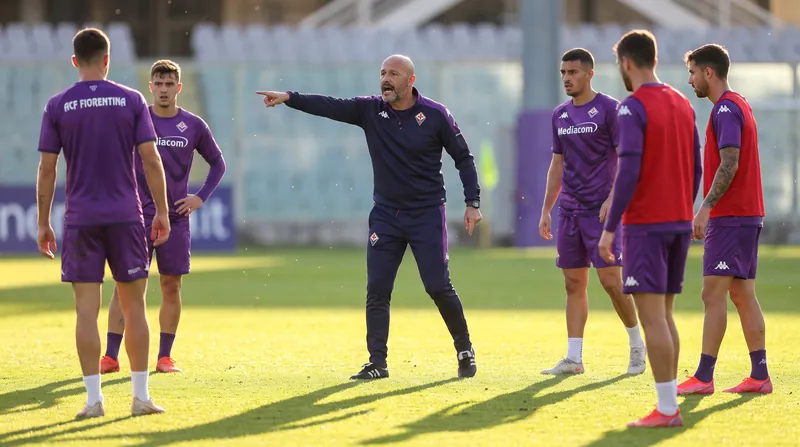
Fiorentina Re-Hire Paolo Vanoli as Head Coach After Sacking Fabio Grosso Three Matches Into Season
6 sources
Revenue Distribution
The €853 Million 'Value Pillar': How UEFA's New Champions League Revenue Engine Actually Works
7 sources
Every angle. Every day.
Get Sports stories with full source coverage and perspective breakdowns delivered to your inbox.