
Undefeated Japan Tops Men's VNL Standings After Five-Set Thriller Over USA
Japan's men's volleyball team maintained their perfect 2026 Volleyball Nations League record with a grueling 3-2 victory over the United States, showcasing their elite speed and defense.
By Meera Iyer

In the crucible of the CO'Met Arena in Orleans, France, the sport's ultimate clash of styles reached a boiling point on Saturday. The United States Men's National Team, boasting towering physicality and a punishing block, pushed the undefeated Japanese squad to the absolute brink in the 2026 Volleyball Nations League (VNL).
Yet, in a decisive fifth set defined by razor-thin margins, Japan's relentless floor defense and lightning-fast transition offense proved unbreakable. A final defensive stand secured a 15-13 tiebreak victory for Japan, capping a grueling 3-2 marathon that cemented their status as the tournament's team to beat.
The 18-25, 25-21, 20-25, 25-22, 15-13 triumph elevates Japan to a flawless 7-0 record in the preliminary phase of the premier annual international volleyball tournament. They stand alone at the summit of the VNL standings, having navigated a gauntlet of the world's elite programs without dropping a match. For the Americans, who fell to 5-2, the loss was a bitter but illuminating test of their depth and tactical adaptability against an opponent that simply refuses to let the ball hit the floor.
Saturday's showdown was a masterclass in contrasting volleyball philosophies. The United States leveraged its sheer size and power at the net, out-blocking Japan 9-4 and relying on heavy, high-velocity serves to disrupt the Asian side's passing rhythm. Japan, conversely, leaned into its signature identity: unparalleled agility, disciplined positioning, and an offensive system that prioritizes speed and angles over brute force.
The statistical breakdown of the match tells the story of a contest decided by discipline rather than dominance. While the United States held a slight edge in total kills (69 to 66), Japan's meticulous ball control ultimately tipped the scales. The Japanese squad committed just 25 unforced errors across five sets, compared to 29 for the Americans. In a fifth set where every side-out—the act of winning the point when the opponent serves—carried monumental weight, those four extra errors proved to be the difference between victory and defeat.
At the heart of Japan's undefeated run is a tactical evolution that is forcing traditional powerhouses to rethink their defensive schemes. Under the guidance of their coaching staff, Japan has perfected a system that neutralizes height disadvantages through relentless floor defense. By consistently digging hard-driven spikes and converting them into rapid counter-attacks, Japan exhausts opposing blockers who are forced to constantly jump and readjust to multiple offensive threats.
This system relies heavily on the seamless integration of back-row attacks, specifically the "pipe attack," where a hitter strikes from behind the three-meter line in the center of the court. Japan's captain Yuki Ishikawa and rising star Ran Takahashi have mastered this tempo, launching themselves from the backcourt with such speed that opposing middle blockers rarely have time to form a cohesive two-man wall.
Despite the loss, the United States found significant silver linings, most notably in the breakout performance of opposite hitter Jake Hanes. Tasked with carrying a massive offensive load, Hanes delivered a match-high 25 points, including 21 kills, two blocks, and two aces. His ability to hit over and through the Japanese block kept the Americans in control during the first and third sets, showcasing the depth of the U.S. roster as they build toward the VNL Finals and future global championships.[1]
U.S. head coach Karch Kiraly framed the grueling defeat as a necessary crucible for his squad. "It doesn't feel good to lose that, but it's so good to be in those kind of matches for this different group of U.S.A. men," Kiraly noted following the match. He emphasized that suffering through tight, high-pressure situations—particularly the four or five unconverted chances in the fifth set—provides invaluable experience that will ultimately sharpen the team's execution in elimination matches.
The American attack was far from one-dimensional, with veteran outside hitters TJ DeFalco and Matt Anderson each contributing 15 kills. Setter Micah Christenson, widely regarded as one of the premier playmakers in the sport, orchestrated a balanced offense that consistently found gaps in the Japanese defense during the early stages of the match. However, as the match wore on, Japan's defenders began reading Christenson's distribution patterns, perfectly positioning themselves to absorb the heavy American swings.
For Japan, the victory was a testament to their physical conditioning and mental resilience. The five-set thriller against the United States marked their third tiebreak match in their first seven VNL outings, coming just days after a similarly exhausting 3-2 survival against Iran. Navigating the grueling VNL format—which requires teams to play 12 matches across three weeks in different global venues—demands extraordinary stamina, and Japan has shown no signs of fading.
The defensive anchor for the United States, libero Erik Shoji, put on a spectacular individual performance, leading all players with 13 digs and keeping several seemingly impossible rallies alive. Yet, even Shoji's heroics were matched by the collective defensive shell of the Japanese team, who routinely turned spectacular U.S. attacks into perfectly passed balls for their setters.
The implications of Japan's undefeated streak extend far beyond the VNL standings. Their sustained excellence has propelled them up the FIVB World Rankings, solidifying their position as a top-five global power. This ascent is not merely a statistical achievement; it secures favorable seeding for upcoming World Championships and Olympic qualification tournaments, fundamentally altering the geopolitical landscape of men's volleyball.[2]
Historically, men's international volleyball has been dominated by towering European and North American squads—teams like Poland, Italy, Russia, and the United States. Japan's current iteration is proving that an elite, speed-based system can consistently dismantle size-based advantages. Their success is prompting youth programs and national federations worldwide to re-evaluate the importance of technical precision and defensive agility over sheer physical metrics.[1]
As the second week of the VNL concludes, the target on Japan's back grows larger. Upcoming matches against formidable opponents like Brazil and France will test whether their high-octane system can withstand the cumulative fatigue of the tournament. Opposing coaches are undoubtedly dissecting the tape of the USA match, looking for vulnerabilities in Japan's serve-receive formations and transition blocking.
The United States, meanwhile, will look to rebound immediately as they close out their week in France against Serbia. The narrow loss to Japan provides a clear blueprint for improvement: tightening up service errors in late-set situations and finding ways to terminate rallies faster against elite defensive teams. With a highly anticipated homestand in Hoffman Estates, Illinois, looming in July, the Americans are focused on peaking at the right moment.[1]
Ultimately, the five-set epic in Orleans served as a brilliant advertisement for the modern men's game. It highlighted the sport's evolution into a chess match of speed versus power, where tactical adjustments and mental fortitude are just as critical as vertical leaps and spike velocities. As Japan marches onward with an unblemished record, the rest of the volleyball world is officially on notice.
Key points
- Japan defeated the United States 3-2 in a thrilling five-set match at the 2026 Volleyball Nations League in France.
- The victory elevates Japan to a flawless 7-0 record, making them the only undefeated team remaining in the tournament.
- The match highlighted a clash of styles, pitting the USA's physical blocking power against Japan's speed and relentless floor defense.
- USA opposite Jake Hanes delivered a standout performance with a match-high 25 points, including 21 kills.
- Japan's disciplined play resulted in fewer unforced errors, proving decisive in the razor-thin 15-13 final set.
- U.S. head coach Karch Kiraly emphasized the long-term value of playing high-pressure matches to build tournament resilience.
How we got here
Early June 2026
Japan begins the 2026 VNL with a flawless opening week, sweeping early opponents to climb the standings.
June 26, 2026
Japan survives a grueling five-set scare against Iran to keep their undefeated streak alive.
June 27, 2026
Japan defeats the United States 3-2 in Orleans, France, improving to 7-0 and taking sole possession of first place.
July 2026
The VNL preliminary phase concludes, setting the stage for the top eight teams to compete in the Finals.
- Japanese National Team
- Values speed, relentless floor defense, and technical precision to overcome physical size disadvantages.
- USA Volleyball
- Emphasizes physical dominance, heavy serving, and using tight losses as crucial learning experiences for tournament depth.
- Global Tacticians
- Analyzes the match as a clash of contrasting styles, noting how Japan's system is disrupting traditional power paradigms.
Perspectives this story doesn't cover
- European national teams analyzing the match for tactical weaknesses in both squads.
- Domestic club coaches whose players are enduring the grueling international travel schedule.
Sources
Source coverage
2 outlets
3 viewpoints surfaced


- [1]ESPNUSA Volleyball
Japan outlasts US in 5 sets to remain undefeated in VNL
Read on ESPN → - [2]FIVBGlobal Tacticians
FIVB Men's Volleyball World Ranking
Read on FIVB →

More in Sports
See all →Standings
2026 V-League Collegiate Challenge Finals Set as NU, FEU, Adamson, and UST Advance
3 sources

Preview
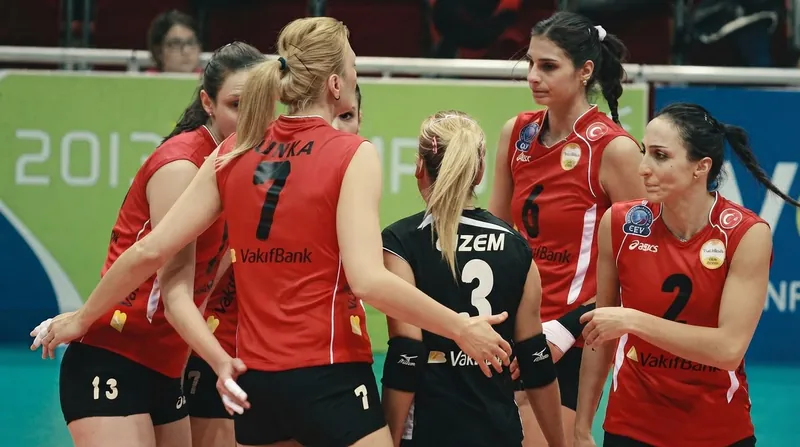
Vodafone Sultanlar Ligi 2026/27 Preview: VakıfBank Opens Title Defense as Turkish Volleyball Returns
6 sources
Injury
Global Volleyball Injury Report: Wachholz and Vander Wal Suffer Season-Ending Blows as Lavia Returns
6 sources
Injury
Global Volleyball Injury Report: Rowan Faces Surgery as Sigler Escapes Serious Setback
6 sources
Comments
Every angle. Every day.
Get Sports stories with full source coverage and perspective breakdowns, free every day.