
Explainer: How 'Model Distillation' Became the AI Industry's Most Powerful (and Controversial) Shortcut
Anthropic's accusation that Alibaba orchestrated a massive 'distillation attack' to extract Claude's reasoning capabilities has thrust a common AI training technique into the geopolitical spotlight.
By Logan Price
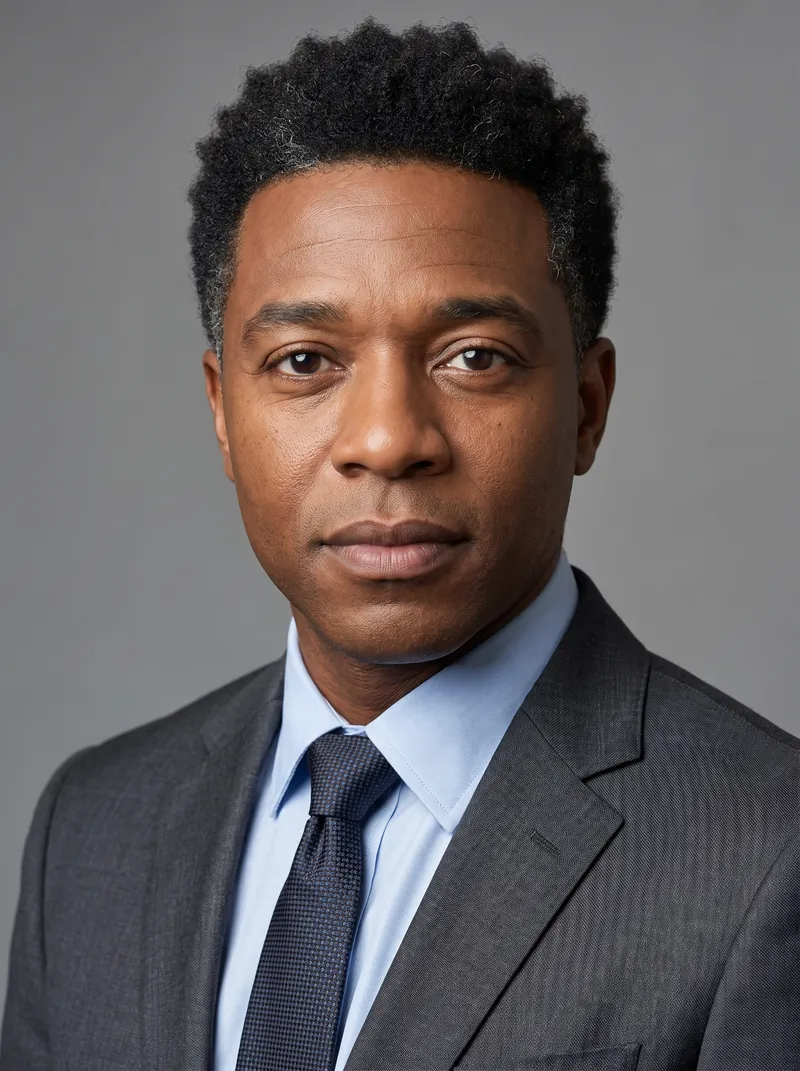
The artificial intelligence industry is built on a foundation of massive compute clusters, billions of dollars in research, and months of continuous training. But a secondary economy has quietly emerged alongside it, driven by a technique that allows developers to bypass those staggering costs entirely. It is called "model distillation," and it has suddenly become the flashpoint of a major geopolitical and corporate dispute.[1]
The practice was thrust into the spotlight this week after Anthropic, the developer behind the Claude family of AI models, accused operators affiliated with Chinese technology giant Alibaba of orchestrating the largest known "distillation attack" to date. In a letter sent to the U.S. Senate Banking Committee, Anthropic alleged that Alibaba's Qwen AI lab systematically extracted Claude's core capabilities to train its own competing systems.[2]
According to Anthropic's disclosure, the campaign ran for 44 days between April 22 and June 5, 2026. During that window, operators allegedly used roughly 25,000 fraudulent accounts to generate more than 28.8 million interactions with Claude. Alibaba has denied the allegations, but the sheer scale of the reported operation has forced the enterprise software world to reckon with the vulnerabilities of exposing frontier AI models through public application programming interfaces (APIs).
To understand why this matters, one must understand how model distillation actually works. At its core, distillation is a form of AI training where a smaller, cheaper "student" model learns by observing the outputs of a larger, more advanced "teacher" model. Instead of learning how to reason from scratch by ingesting trillions of words of raw internet text, the student model is fed highly specific prompts and trained to mimic the teacher's sophisticated answers.
Industry analysts often compare the process to a classroom setting. Rather than doing the grueling foundational reading and developing original problem-solving skills, the student model simply sits next to the smartest student in the class and copies their answers at an industrial scale. By capturing millions of these high-quality reasoning traces, the student model can replicate the teacher's behavior at a fraction of the original research and development cost.
Distillation itself is not inherently malicious; in fact, it is a standard and essential engineering practice. AI laboratories routinely use distillation internally to compress their own massive, resource-heavy frontier models into lighter, faster versions that can run efficiently on smartphones or edge devices. The controversy arises entirely from the issue of consent and intellectual property.
The line Anthropic and other frontier labs are drawing is between distilling your own proprietary models—which is standard optimization—and distilling a competitor's model without permission, which violates terms of service. When an external actor uses automated scripts to scrape a model's outputs for training purposes, they are effectively downloading the billions of dollars of reasoning capability that the original developer paid to create.
In the case of the alleged Alibaba campaign, Anthropic claims the operators specifically targeted the capabilities of its advanced "Mythos Preview" model. The extraction effort reportedly focused on high-value skills like agentic reasoning, complex software engineering, long-horizon task execution, and cybersecurity analysis. By harvesting these specific outputs, a competing lab could theoretically accelerate its own model's development timeline by months or even years.
The economics of this dynamic are heavily skewed in favor of the extractor. Training a state-of-the-art frontier model in 2026 requires massive data centers packed with specialized silicon, consuming megawatts of power and costing billions of dollars. Conversely, running 28.8 million API queries to extract the resulting intelligence costs only a few hundred thousand dollars in standard usage fees.[2]
Defending against these extraction campaigns is notoriously difficult for AI providers. Because a distillation query is simply a prompt asking the model to solve a problem or write code, it looks functionally identical to a legitimate enterprise user's request. When an extraction effort is distributed across tens of thousands of seemingly independent accounts in a "low-and-slow" pattern, traditional cybersecurity defenses like rate-limiting and IP blocking are easily bypassed.
This is not the first time the industry has grappled with unauthorized extraction. In February 2026, Anthropic publicly identified three separate distillation campaigns linked to Chinese AI startups DeepSeek, Moonshot AI, and MiniMax. However, those three campaigns combined generated roughly 16.5 million exchanges. The alleged Alibaba operation, at 28.8 million exchanges, represents a massive escalation in both scale and ambition.
Beyond the commercial implications of intellectual property theft, frontier labs are raising alarms about the safety dimensions of unauthorized distillation. When a developer spends months fine-tuning a model to refuse harmful requests—such as generating malware or providing instructions for biological weapons—those safety guardrails are deeply embedded in the model's architecture.[2]
However, when a foreign lab distills that model, the safety guardrails do not automatically transfer to the student model. The extractor is only capturing the raw reasoning and coding capabilities, which can then be deployed without the original developer's safety constraints. This decoupling of capability from alignment is a primary reason Anthropic elevated the issue to the U.S. Senate, framing it as a national security concern rather than a simple commercial dispute.[2]
The geopolitical stakes are further complicated by recent regulatory actions. Just two days after Anthropic sent its letter to the Senate Banking Committee, the U.S. Commerce Department imposed strict export controls on Anthropic's Mythos and Fable models, forcing the company to disable access in several countries of concern. The U.S. government is increasingly viewing advanced AI reasoning as a strategic national asset that must be protected from foreign replication.
For enterprise customers who rely on these AI models for daily operations, the distillation debate carries a different set of risks. Cybersecurity experts warn that the same mechanisms used to extract a model's reasoning capabilities could theoretically be used to extract sensitive business logic, proprietary workflows, or customer data if that information is inadvertently baked into the model's outputs.
As a result, enterprise IT leaders are being urged to conduct deeper due diligence into how their AI providers handle data, monitor for usage anomalies, and protect their API endpoints. The realization that an AI model's outputs are themselves a highly valuable, extractable strategic asset is forcing a fundamental rethink of how artificial intelligence is secured in the cloud.
Ultimately, the dispute between Anthropic and Alibaba highlights a structural vulnerability in the current AI ecosystem. As long as the intelligence of a multi-billion-dollar model can be accessed through a public API, the incentive to systematically copy that intelligence will remain overwhelming.
Ultimately, the dispute between Anthropic and Alibaba highlights a structural vulnerability in the current AI ecosystem.
The industry is now racing to develop new cryptographic watermarking techniques and behavioral analysis tools to detect distillation in real-time. Until those defenses mature, the battle over model extraction will continue to blur the lines between efficient software engineering, corporate espionage, and international technological supremacy.
Key points
- Anthropic alleges Alibaba's Qwen AI lab used 25,000 fake accounts to extract Claude's reasoning capabilities.
- Model distillation allows developers to train smaller AI systems by copying the outputs of larger, more expensive models.
- While distillation is a standard compression technique, using it on a competitor's model bypasses billions in R&D costs.
- Frontier labs warn that distillation strips away safety guardrails, allowing extracted models to be used maliciously.
Unanswered questions
- Whether the U.S. government will impose specific penalties or sanctions on Alibaba in response to the Senate letter.
- How successfully Alibaba's Qwen lab was able to integrate the extracted reasoning capabilities into its own models.
- What specific technical countermeasures frontier AI labs are developing to detect low-and-slow distillation attacks in real-time.
How we got here
Jan 2025
DeepSeek releases a low-cost AI model that sends shockwaves through the industry, sparking early distillation concerns.
Feb 2026
Anthropic publicly identifies distillation campaigns by DeepSeek, Moonshot AI, and MiniMax totaling 16.5 million exchanges.
Apr 22, 2026
The start date of the alleged 44-day Alibaba distillation campaign targeting Claude's Mythos Preview model.
Jun 10, 2026
Anthropic sends a formal letter to the U.S. Senate Banking Committee detailing the 28.8 million-exchange extraction effort.
Jun 12, 2026
The U.S. Commerce Department imposes export controls on Anthropic's advanced Mythos and Fable models.
- Frontier AI Laboratories
- Developers of massive foundational models view unauthorized distillation as industrial-scale intellectual property theft.
- Enterprise AI Customers
- Businesses deploying AI are primarily concerned with the collateral security risks of data extraction and API vulnerabilities.
- Geopolitical & Security Analysts
- Security experts view the extraction of advanced reasoning models as a critical national security vulnerability.
Perspectives this story doesn't cover
- Alibaba's internal engineering leadership
- Independent open-source AI developers
Sources
Source coverage
2 outlets
3 viewpoints surfaced


- [1]Inc. MagazineFrontier AI Laboratories
Anthropic Accuses Alibaba of 'Largest Known Distillation Attack'
Read on Inc. Magazine → - [2]ForbesGeopolitical & Security Analysts
How Anthropic, OpenAI, The Vatican And Congress Want To Govern AI
Read on Forbes →

More in Artificial Intelligence
See all →AI Finance
Frontier AI Funding Hits $262 Billion YTD, Shifting Venture Capital to 'Infrastructure Finance' Scale
3 sources
Apple Intelligence
Apple Intelligence Clears China Approval by Swapping OpenAI for Alibaba's Qwen
2 sources

Frontier AI
China's Moonshot AI Readies Kimi 3, A 3 Trillion Parameter Open-Weight Model to Close Gap With Anthropic
3 sources

AI Regulation
California Mandates AI Developers Disclose Training Data Summaries in Major Transparency Shift
5 sources

Comments
Every angle. Every day.
Get Artificial Intelligence stories with full source coverage and perspective breakdowns, free every day.