
The Engineering of Zero-Emissions Cruising: Inside the World's First Hydrogen-Powered Ship, the Viking Libra
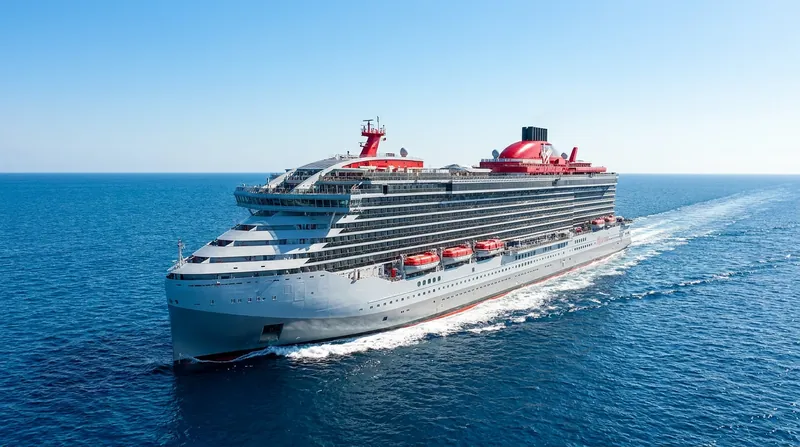
Viking Cruises has floated out the Viking Libra, a 998-passenger vessel equipped with liquid hydrogen fuel cells that allow it to operate with zero emissions in ports and sensitive marine environments.
By Kabir Mehra

The cruise industry has long been defined by its massive scale and equally massive environmental footprint, but a quiet revolution is taking shape in an Italian shipyard. In March 2026, Viking Cruises and shipbuilder Fincantieri celebrated the float-out of the Viking Libra in Ancona, Italy. When it is delivered in November 2026, the 54,300-gross-ton vessel will claim a historic maritime title: the world's first cruise ship powered by liquid hydrogen.[1]
The Viking Libra is not a conceptual rendering or a distant prototype; it is a fully realized, 998-passenger luxury ship entering the final stages of its interior build-out. While it shares the identical 239-meter length and Scandinavian aesthetic of Viking's existing award-winning ocean fleet, its internal architecture represents a radical departure from traditional maritime engineering. The ship is equipped with a hybrid propulsion system that integrates conventional marine engines with advanced proton exchange membrane (PEM) fuel cells.[1][2]
This hybrid architecture allows the Viking Libra to achieve what was previously considered impossible for a vessel of its size: zero-emission operations. By drawing on liquefied hydrogen stored onboard, the ship can generate up to six megawatts of electricity to power both its propulsion pods and its "hotel load"—the massive energy required for lighting, climate control, and passenger amenities. When operating in this mode, the ship's only exhaust is pure water vapor.[2]
To understand the significance of this engineering leap, one must look at the traditional mechanics of global cruising. Historically, the industry has relied on heavy fuel oil (HFO) or marine diesel, which produce significant carbon dioxide, sulfur oxides, and particulate matter. In recent years, many cruise lines have transitioned to liquefied natural gas (LNG) as a "bridge fuel" to reduce particulate emissions, but LNG still relies on fossil fuels and carries the risk of atmospheric methane slip.
Hydrogen represents a true zero-emission alternative, but adapting it for the high seas requires overcoming immense physical and logistical hurdles. Hydrogen is the most abundant element in the universe, but it is notoriously difficult to store and transport. To carry enough fuel for a maritime journey, the hydrogen must be liquefied, which requires chilling it to a staggering minus 253 degrees Celsius (minus 423 degrees Fahrenheit).
Maintaining these cryogenic temperatures on a moving vessel subjected to ocean swells requires highly specialized, heavily insulated storage tanks that take up significantly more physical space than traditional diesel bunkers. This is why the Viking Libra's fuel cell technology, developed by Fincantieri subsidiary Isotta Fraschini Motori (IFM), is considered a breakthrough in "marinized" hydrogen applications. IFM recently inaugurated a dedicated production line in Bari, Italy, specifically to scale this technology for the maritime sector.[2]
The Viking Libra will not run entirely on hydrogen for the duration of a multi-week transoceanic voyage; the energy density of liquid hydrogen and the current lack of global refueling infrastructure make that impossible today. Instead, the ship operates as a strategic hybrid. It will use its hydrogen fuel cells to navigate silently and cleanly through the world's most environmentally sensitive areas, such as the Norwegian fjords or Arctic waters, where strict new emission regulations are effectively banning traditional diesel ships.[1][2]
Crucially, the hydrogen system also allows the Viking Libra to operate with zero emissions while docked in port. Port pollution is a major flashpoint for the cruise industry, with historic coastal cities from Venice to Amsterdam pushing back against the smog and noise generated by idling cruise ships. By switching to hydrogen power at the dock, the Libra eliminates both the exhaust fumes and the low-frequency engine rumble that plague port communities.[2]
For passengers, the shift to hydrogen fuel cells promises a fundamentally different onboard experience. Traditional marine combustion engines generate persistent vibrations and a baseline hum that permeates the lower decks of a ship. Fuel cells, by contrast, generate electricity through a silent electrochemical reaction. When the Viking Libra switches to hydrogen mode, the vessel will glide through the water with the eerie, vibration-free quiet of an electric vehicle.[2]
Viking's leadership views this multi-hundred-million-dollar investment not just as an environmental initiative, but as a competitive necessity. Viking Chairman and CEO Torstein Hagen has described the move to hydrogen as a "principled choice" that aligns with the company's focus on smaller, destination-focused ships. By future-proofing their fleet against impending environmental regulations, Viking ensures its ships will retain access to pristine, highly regulated waterways that larger, dirtier mega-ships will soon be locked out of.[1][2]
The Libra is not a one-off experiment. Viking and Fincantieri have already confirmed that a sister ship, the Viking Astrea, is currently under construction and scheduled for delivery in 2027 with the exact same hydrogen propulsion architecture. Furthermore, Viking has placed orders for additional newbuilds stretching into the 2030s, signaling a fleet-wide commitment to the technology.[1][2]
The success of the Viking Libra will be closely watched by maritime engineers and rival cruise lines alike. If Fincantieri's marinized fuel cells prove reliable in the harsh, corrosive environment of the open ocean, it could trigger a broader industry shift. However, the ultimate viability of hydrogen cruising will depend heavily on the development of "green hydrogen"—hydrogen produced using renewable energy rather than fossil fuels—and the construction of cryogenic refueling infrastructure at major global ports.[2]
Until that global supply chain matures, the Viking Libra serves as a vital proof of concept. It demonstrates that the technology to decarbonize the world's most luxurious form of travel already exists, moving the industry one step closer to a future where exploring the oceans no longer means polluting them.[1]
Key points
- Viking Cruises and Fincantieri have floated out the Viking Libra, scheduled for delivery in November 2026.
- The 54,300-ton vessel is the world's first cruise ship equipped with liquid hydrogen fuel cells for propulsion and hotel load.
- The hybrid system generates up to six megawatts of power, allowing the ship to operate with zero emissions in ports and sensitive areas.
- A sister ship, the Viking Astrea, is already under construction and slated for delivery in 2027.
What we don’t know
- How quickly major global cruise ports will be able to build the cryogenic refueling infrastructure required to supply liquid hydrogen.
- Whether the maritime industry can secure enough "green hydrogen" (produced via renewable energy) to ensure the fuel is truly carbon-free from production to use.
- The exact premium passengers might pay for itineraries that feature zero-emission, hydrogen-powered sailing.
How we got here
2012
Viking and Fincantieri begin their long-term shipbuilding partnership.
2022
Viking tests a small-scale hydrogen fuel cell on the Viking Neptune to prove the concept.
April 2025
Viking and Fincantieri officially announce the Viking Libra project.
March 2026
The Viking Libra is floated out of its dry dock in Ancona, Italy.
November 2026
Scheduled delivery of the Viking Libra for its inaugural season.
2027
Scheduled delivery of the sister ship, the Viking Astrea.
- Maritime Innovators
- Shipbuilders and cruise operators view hydrogen as the only viable path to true zero-emission sailing.
- Environmental Advocates
- Climate groups welcome the technology but stress that the source of the hydrogen matters immensely.
- Industry Analysts
- Maritime economists focus on the massive infrastructure hurdles required to scale this technology.
Perspectives this story doesn't cover
- Port Authority Regulators
- Green Hydrogen Producers
Sources
Source coverage
2 outlets
3 viewpoints surfaced


- [1]Viking CruisesMaritime Innovators
Set to Debut in Fall 2026, the Viking Libra Meets Water for the First Time
Read on Viking Cruises → - [2]Seatrade Cruise NewsMaritime Innovators
Hydrogen-powered Viking ship in '26, more newbuilds ordered
Read on Seatrade Cruise News →
More in Travel
See all →Maritime Tech
Floating Smart Cities: The Engineering Behind Zero-Emission and Sustainable Cruising
4 sources
Tourism Policy
The Mechanics of the Perfect Day Crisis: How Mexico Halted Royal Caribbean's Mega-Resort
2 sources
Outbreak Response
The Mechanics of the Hantavirus Evacuation: Inside the WHO-Led Response to a Deadly Cruise Ship Outbreak
4 sources
Maritime Access
The Mechanics of the Charter Denial: How Turkey and Egypt Barred an LGBTQ+ Cruise Ship
2 sources
Comments
Every angle. Every day.
Get Travel stories with full source coverage and perspective breakdowns, free every day.