
Supreme Court Rejects Trump's Final Bid to Overturn $5 Million E. Jean Carroll Verdict
The Supreme Court has denied President Donald Trump's request to rehear his appeal of a 2023 civil verdict, finalizing the $5 million judgment finding him liable for sexually abusing and defaming writer E. Jean Carroll.
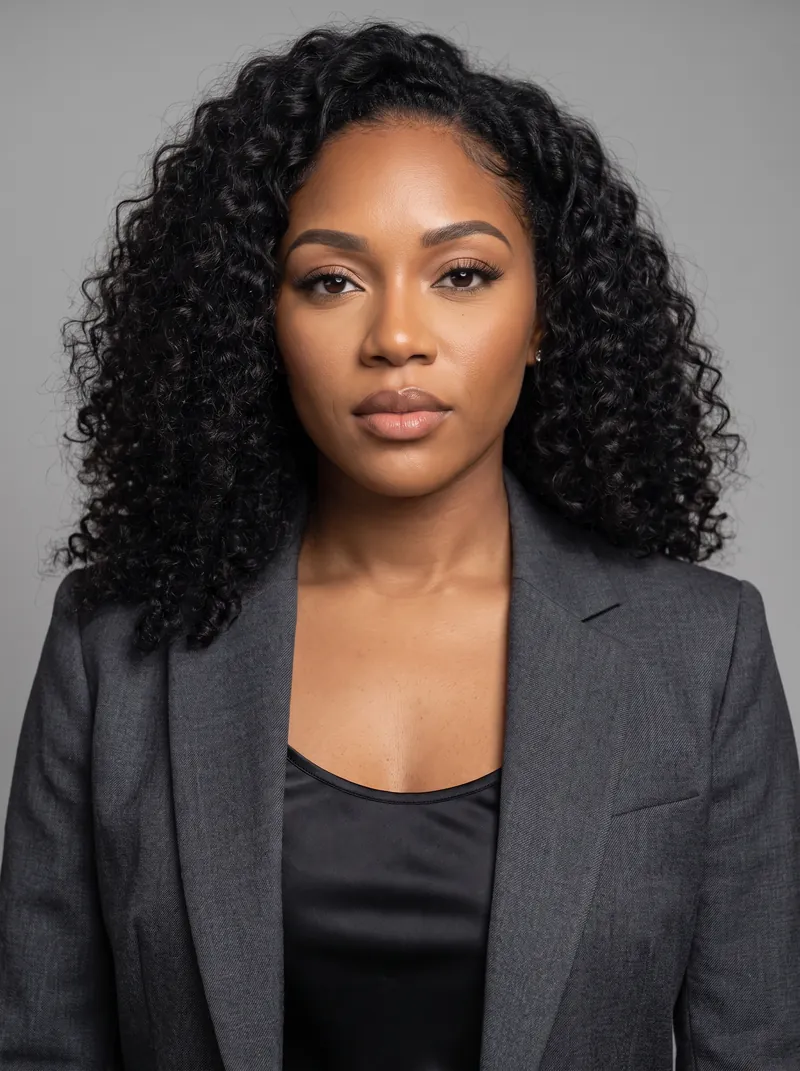
The Supreme Court has permanently closed the door on President Donald Trump's effort to overturn a $5 million civil judgment finding him liable for sexually abusing and defaming writer E. Jean Carroll. In an unsigned order released Monday, the justices denied Trump's request for a rehearing, cementing the 2023 jury verdict.[1][2]
The decision, which came without explanation or noted dissents, exhausts Trump's appellate options in this specific case. It marks the final legal word on a lawsuit that stemmed from a 1996 encounter in a Manhattan department store and a subsequent 2022 social media post in which Trump branded Carroll's allegations a "hoax."[3][4]
Rehearings at the Supreme Court are exceedingly rare; the justices have not granted such a petition since the mid-1960s. Trump's legal team had asked the court to reconsider its initial June refusal to take up the case, arguing that unresolved questions about presidential immunity warranted a second look.[2][6]
The finality of Monday's order means the $5 million judgment—which grew to approximately $5.6 million with accrued interest—is now fully settled. The funds, which Trump had deposited into a court-controlled escrow account during the appeals process, were already disbursed to Carroll in July following the Supreme Court's first denial.[1][5]
Roberta Kaplan, the lead attorney representing Carroll, welcomed the court's decision. In a public statement, Kaplan emphasized that the jury's unanimous verdict is now unchallengeable in any court, bringing a definitive end to Trump's quest to avoid financial liability for the 2023 findings.[1]
Trump's legal defense had built its appeal on evidentiary objections, arguing that the trial judge improperly allowed jurors to hear testimony from other women who accused Trump of sexual misconduct, as well as the infamous 2005 "Access Hollywood" recording.[6][7]
The defense team contended that this evidence was highly inflammatory and prejudiced the jury before the trial even began. However, the Second U.S. Circuit Court of Appeals previously rejected those arguments, ruling that the district judge acted within his discretion to admit the evidence to establish a pattern of behavior.[1][6]
In his petition for a rehearing, Trump's attorneys introduced a new angle, attempting to link this case to a separate, pending appeal regarding an $83.3 million defamation judgment awarded to Carroll in 2024. They argued that both cases hinged on statements Trump made while serving as president, which should be shielded by presidential immunity.[2][3]
The defense asserted that official presidential acts cannot be used as evidence to impose civil liability for other conduct. By denying the rehearing, the Supreme Court effectively decoupled the finalized $5 million verdict from the ongoing immunity debate surrounding the larger defamation award.[2][6]
The mechanics of the two Carroll lawsuits highlight a complex legal strategy. The $5 million verdict originated from a lawsuit filed under the New York Adult Survivors Act, a state law that temporarily lifted the statute of limitations for civil claims involving sexual offenses.[2][4]
In that 2023 trial, the jury found Trump liable for sexual abuse and for defamation based on a post he made on his Truth Social platform in 2022, after he had left office. Because the defamatory statement occurred during his post-presidency, the core immunity defense was less directly applicable than in his other legal battles.[3][4]
Conversely, the separate $83.3 million judgment stems from comments Trump made in 2019 while actively serving in the White House. Trump's legal team is currently asking the Supreme Court to review that larger verdict, relying heavily on the argument that a president cannot be sued for statements made in an official capacity.[1][2]
The Supreme Court's recent landmark ruling on presidential immunity in criminal contexts—which granted former presidents broad protection for official acts—has emboldened Trump's defense strategy across his civil litigation. However, Monday's order signals that the justices are unwilling to retroactively apply those questions to a settled civil verdict involving post-presidency conduct.[2][6]
For Carroll, the disbursement of the $5.6 million represents a tangible victory after years of litigation. The funds were released by a Manhattan federal judge over the summer, freeing the money from the legal limbo of the appeals process.[1][4]
Trump, who has consistently denied knowing Carroll and characterized her allegations as a politically motivated fabrication, has not publicly commented on the specific denial of the rehearing. His legal team, however, released a statement condemning the broader litigation as "lawfare" and a "witch hunt."[4][5]
Legal analysts note that while this specific chapter is closed, the broader legal war between Trump and Carroll remains active. The Supreme Court is expected to decide later this year whether it will take up Trump's appeal of the $83.3 million defamation judgment, a case that will directly test the boundaries of presidential immunity in civil defamation suits.[1][2]
Key points
- The Supreme Court denied Donald Trump's request to rehear his appeal of a 2023 civil verdict.
- The decision finalizes the $5 million judgment finding Trump liable for sexually abusing and defaming E. Jean Carroll.
- The $5.6 million, which includes accrued interest, was already disbursed to Carroll in July after the court's initial refusal to hear the case.
- Trump is separately appealing an $83.3 million defamation judgment to the Supreme Court, arguing presidential immunity.
What we don’t know
- Whether the Supreme Court will agree to hear Trump's separate appeal regarding the $83.3 million defamation judgment later this year.
- How the court's recent rulings on presidential immunity in criminal cases will influence its approach to civil defamation claims involving official statements.
How we got here
1996
The year E. Jean Carroll alleged Donald Trump sexually abused her in a Manhattan department store.
2019
Carroll goes public with her allegations in a memoir excerpt; Trump denies the claims while in office.
Nov 2022
Carroll files a lawsuit under the New York Adult Survivors Act for sexual abuse and defamation regarding a post-presidency social media post.
May 2023
A federal jury finds Trump liable for sexual abuse and defamation, awarding Carroll $5 million.
Jan 2024
A separate jury awards Carroll $83.3 million for defamation regarding Trump's 2019 statements.
Jun 2026
The Supreme Court declines to hear Trump's appeal of the $5 million verdict; the funds are subsequently released to Carroll.
Aug 2026
The Supreme Court denies Trump's request for a rehearing, permanently closing the $5 million case.
- Carroll's Legal Team
- Argues the Supreme Court's decision represents a final victory for accountability and the rule of law.
- Trump's Legal Defense
- Maintains the trial was structurally unfair and that presidential immunity should shield him from liability.
- Constitutional Analysts
- Focuses on the Supreme Court's procedural norms and the boundaries of presidential immunity.
Perspectives this story doesn't cover
- Advocates for Sexual Assault Survivors
Sources
Source coverage
7 outlets
3 viewpoints surfaced







- [1]The GuardianCarroll's Legal Team
US supreme court again rejects Trump's bid to overturn E Jean Carroll verdict
Read on The Guardian → - [2]TimeCarroll's Legal Team
Supreme Court Once Again Rejects President Donald Trump's Appeal in E. Jean Carroll Sexual Abuse Case
Read on Time → - [3]Al JazeeraConstitutional Analysts
Supreme Court denied Trump's latest request to challenge the $5m sexual abuse and defamation verdict
Read on Al Jazeera → - [4]ForbesCarroll's Legal Team
Supreme Court Rejects Trump's Final Appeal Of $5 Million E. Jean Carroll Verdict
Read on Forbes → - [5]CBS NewsConstitutional Analysts
Supreme Court declines to hear Trump appeal of $5 million E. Jean Carroll verdict
Read on CBS News → - [6]Courthouse NewsTrump's Legal Defense
Supreme Court denies Trump's long-shot bid to review E. Jean Carroll case
Read on Courthouse News → - [7]AxiosTrump's Legal Defense
Trump fails to undo E. Jean Carroll verdict at Supreme Court
Read on Axios →
More in Law & Justice
See all →First Amendment
The Three Criteria That Define Obscenity Under the First Amendment's Miller Standard
6 sources
Judicial Review
The Three Requirements That Justify Judicial Review Under Marbury v. Madison
9 sources
Regulatory Takings
The Three Factors That Determine a Regulatory Taking Under the Fifth Amendment's Penn Central Test
6 sources
Severability Doctrine
The Two Requirements That Determine If an Unconstitutional Statute Can Be Severed
6 sources
Comments
Every angle. Every day.
Get Law & Justice stories with full source coverage and perspective breakdowns, free every day.