
Scientists Identify Molecular 'Switch' in Sperm, Unlocking Potential for On-Demand Male Contraceptive
Researchers have discovered the enzyme-driven mechanism that supercharges sperm for fertilization, paving the way for a safe, non-hormonal male birth control pill that works on demand.
By Factlen Editorial Team

- Reproductive Biologists
- Focus on the cellular mechanisms of sperm motility and the challenge of safely targeting these pathways without systemic side effects.
- Family Planning Advocates
- Emphasize the need for gender equity in contraceptive responsibility and the reduction of unplanned pregnancies.
- Pharmaceutical Developers
- Prioritize the translation of these molecular discoveries into viable, marketable, and rigorously tested consumer drugs.
Why this matters
For decades, the burden of chemical contraception has fallen almost entirely on women, often accompanied by severe hormonal side effects. An on-demand, non-hormonal male pill would fundamentally transform family planning by offering a highly effective, reversible alternative without altering testosterone levels.
Key points
- Researchers have identified aldolase as the enzyme that triggers a massive energy spike in sperm.
- This metabolic switch allows sperm to rapidly transition from a dormant state to active swimming.
- Targeting this enzyme could lead to an on-demand, non-hormonal male contraceptive pill.
- Because the approach does not involve hormones, it avoids the side effects that derailed past efforts.
For over sixty years, the pharmacological burden of preventing pregnancy has fallen squarely on women. While female birth control pills, patches, and implants are highly effective, they rely on systemic hormonal changes that can cause significant side effects, ranging from mood disorders to cardiovascular risks. Men, meanwhile, have been limited to two primary options: single-use condoms or surgical vasectomies.[3]
That stark imbalance is poised to change. Researchers at Michigan State University have identified the exact molecular "switch" that supercharges sperm metabolism during their final sprint toward an egg.[2]
By mapping this metabolic pathway, scientists have unlocked a novel target for male contraception. The discovery paves the way for an "on-demand," non-hormonal male birth control pill—a medication that could be taken shortly before intercourse to temporarily paralyze sperm, with fertility fully returning the next day.[1][2]
The research, led by Dr. Melanie Balbach and conducted in collaboration with Memorial Sloan Kettering Cancer Center and the Van Andel Institute, fundamentally alters how reproductive biologists view sperm motility.[1]
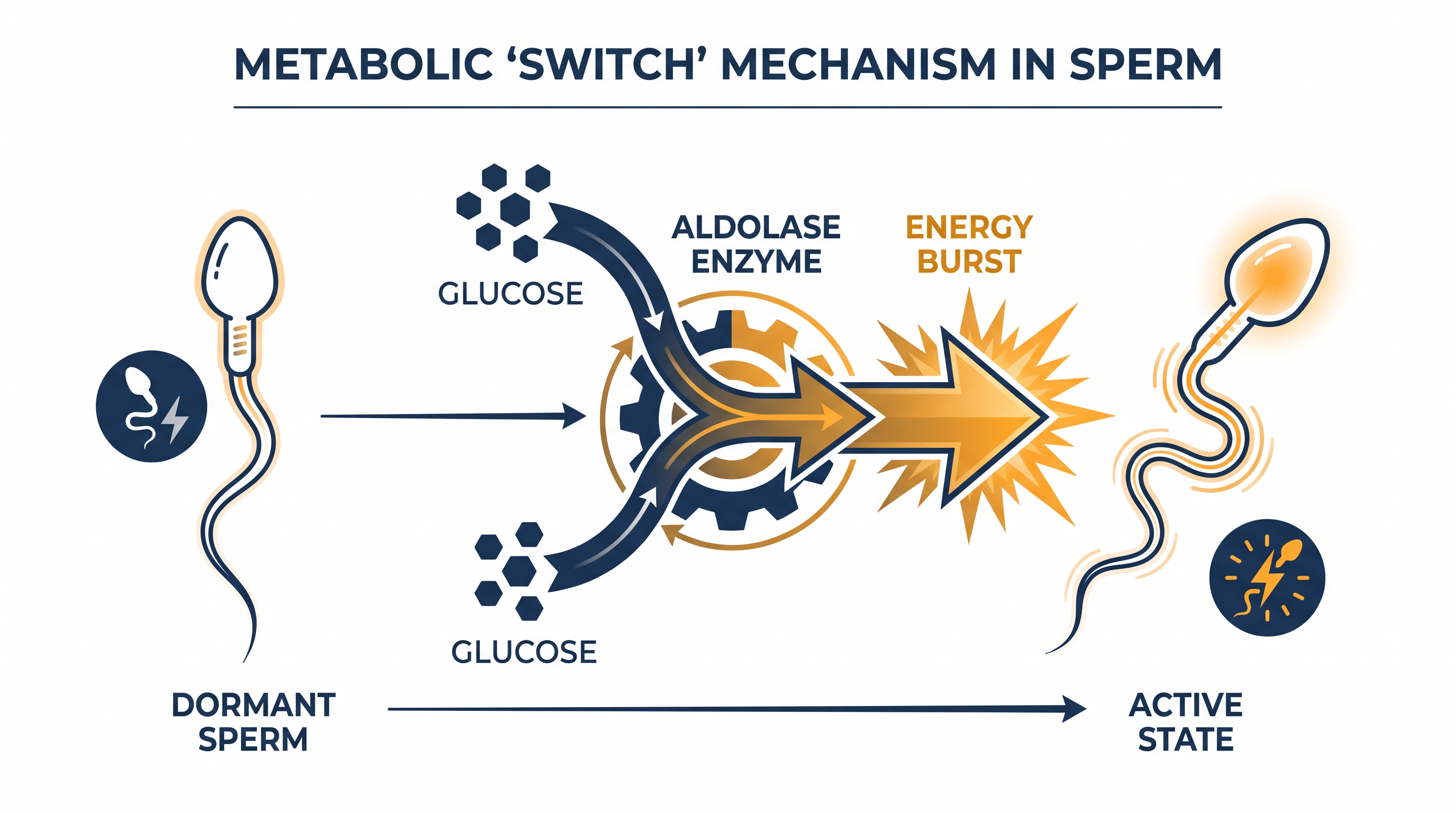
To understand the breakthrough, one must look at the lifecycle of mammalian sperm. Before ejaculation, sperm reside in a low-energy, dormant state. They are essentially waiting in a metabolic sleep.[3][4]
Once introduced into the female reproductive tract, however, they must undergo a rapid and violent transformation. They begin swimming forcefully and alter their outer membranes to prepare for interaction with the egg. This sudden shift requires a massive, instantaneous spike in energy production.[4]
"Sperm metabolism is special since it's only focused on generating more energy to achieve a single goal: fertilization," Dr. Balbach explained to reporters. The question that has long plagued biologists is exactly how sperm manage this sudden metabolic reprogramming.[1][4]
"Sperm metabolism is special since it's only focused on generating more energy to achieve a single goal: fertilization," Dr.
To find the answer, the research team developed a novel technique to track glucose metabolism in real-time. By tracing the chemical trail of glucose—the primary fuel source for the cells—they observed stark differences between dormant and activated sperm.[2][4]
The tracking revealed that an enzyme called aldolase acts as the critical switch. Aldolase helps sperm convert glucose into the explosive burst of usable energy required for fertilization. Other enzymes in the pathway act as traffic controllers, directing the flow of this molecular fuel.[1][2]
The contraceptive application of this discovery is profound. If scientists can introduce a small-molecule inhibitor that temporarily blocks aldolase or its associated "traffic controller" enzymes, the sperm are denied their energy spike. Without that energy, they remain sluggish and incapable of reaching or penetrating the egg.[1][3]
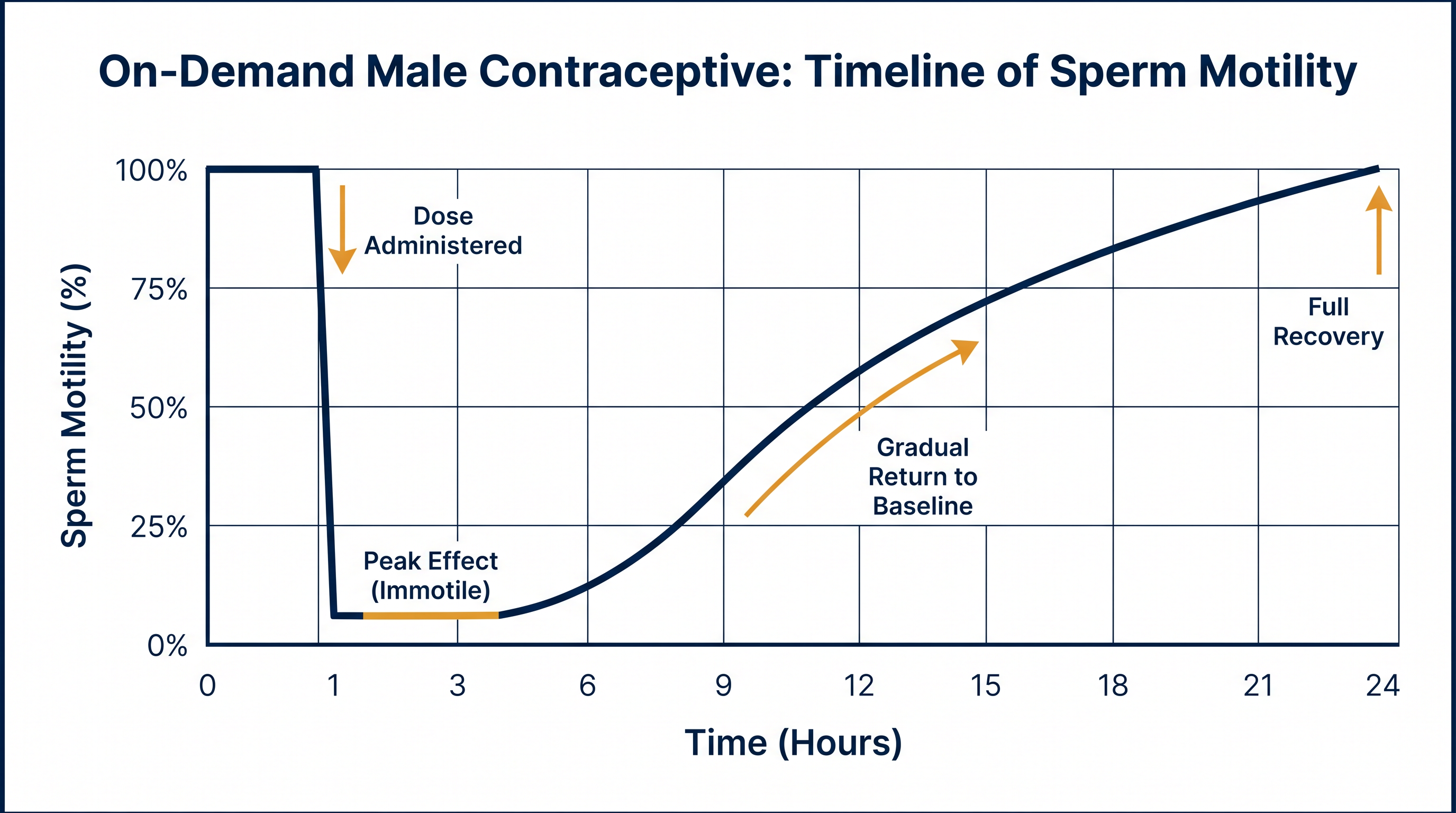
Because this approach targets a specific metabolic process unique to sperm activation, it does not interfere with testosterone production or the central nervous system. This sidesteps the severe side effects that have derailed previous attempts to create a hormonal male contraceptive.[3][5]
Furthermore, the metabolic inhibitor approach is inherently temporary. Preclinical trials involving similar sperm-enzyme inhibitors have demonstrated that the paralyzing effect takes hold rapidly and washes out of the system within 24 hours, allowing for a fully reversible, on-demand application.[1][6]
This discovery joins a sudden renaissance in non-hormonal male contraceptive research. In recent years, scientists have identified other highly specific targets, such as the STK33 kinase protein and soluble adenylyl cyclase (sAC).[5][6][7]
A landmark study published in Nature Communications demonstrated that inhibiting sAC immobilized mouse sperm for up to two and a half hours, with full fertility returning the next day. Similarly, researchers at Baylor College of Medicine recently proved that blocking the STK33 protein safely rendered male mice infertile without shrinking testes or altering hormones.[6][7]
While the Michigan State discovery provides a highly promising new target, the transition from cellular mechanism to pharmacy shelf will require years of rigorous testing. The next phase involves screening thousands of compounds to find a small-molecule drug that safely and effectively blocks the aldolase switch in humans.[1]
If successful, an on-demand male pill would not only grant men greater agency over their reproductive health but also relieve millions of women from the physical and emotional toll of hormonal contraception. With roughly half of all global pregnancies currently classified as unplanned, a safe, reversible male option could represent one of the most significant public health advancements of the century.[2][3]
How we got here
Feb 2023
Researchers publish proof-of-concept for an on-demand male contraceptive targeting the sAC enzyme in mice.
May 2024
A study in Science demonstrates that inhibiting the STK33 protein safely induces reversible infertility in male mice.
Late 2025
Michigan State University scientists identify aldolase as the metabolic 'switch' that supercharges sperm, providing a new non-hormonal target.
Early 2026
Early-stage human safety trials for various non-hormonal male contraceptive candidates begin to show promising results.
Viewpoints in depth
Reproductive Biologists
Scientists are focused on the precision of targeting sperm metabolism without causing off-target cellular damage.
For cellular biologists, the holy grail of male contraception is specificity. Because enzymes like aldolase and sAC are utilized in various forms throughout the body, researchers must design small-molecule inhibitors that only bind to the specific isoforms found in the testes or mature sperm. The excitement surrounding the Michigan State University discovery stems from the ability to pinpoint the exact 'traffic controllers' of glucose in sperm, allowing drug developers to paralyze the reproductive cells without inadvertently starving other vital tissues of energy.
Family Planning Advocates
Advocates view non-hormonal male options as a necessary step toward gender equity in reproductive health.
Public health experts and family planning advocates argue that the current contraceptive landscape places an unfair physical and financial burden on women. Hormonal birth control is frequently accompanied by side effects ranging from weight gain and depression to an increased risk of blood clots. Advocates emphasize that an on-demand male pill would not only give men more agency over their own reproductive timelines but would also drastically reduce the global rate of unplanned pregnancies by providing couples with multiple, overlapping methods of reversible contraception.
Pharmaceutical Developers
The pharmaceutical industry is weighing the massive market potential against the stringent safety requirements for a male pill.
While the market for a male contraceptive is virtually untapped and potentially highly lucrative, pharmaceutical developers face immense regulatory hurdles. Because a male birth control pill would be taken by healthy individuals, regulatory agencies like the FDA require an exceptionally high safety profile with near-zero tolerance for severe side effects. Developers must prove that these metabolic inhibitors do not cause long-term DNA damage to sperm, ensuring that once a man stops taking the pill, his future offspring will not be affected.
What we don't know
- Whether the aldolase inhibitor will prove safe and effective in large-scale human clinical trials.
- How frequently an on-demand metabolic inhibitor can be taken without causing long-term cellular fatigue.
- The exact timeline for when a non-hormonal male contraceptive pill will reach the consumer market.
Key terms
- Aldolase
- An enzyme that helps convert glucose into energy; in sperm, it acts as a critical switch to trigger rapid swimming.
- Soluble adenylyl cyclase (sAC)
- An enzyme essential for sperm motility and maturation, currently being targeted by experimental on-demand contraceptives.
- STK33
- A protein kinase crucial for male fertility; blocking it has been shown to cause temporary infertility in animal models without affecting overall health.
- Metabolic reprogramming
- The rapid process by which a cell changes how it generates and uses energy, such as a sperm cell waking from dormancy to fertilize an egg.
Frequently asked
Will this male birth control pill affect testosterone?
No. Because the drug targets a specific metabolic enzyme (aldolase) used only for sperm motility, it does not interfere with hormones or testosterone production.
How long does the contraceptive effect last?
Preclinical models of similar metabolic inhibitors show that the paralyzing effect takes hold rapidly and wears off within 24 hours, making it an 'on-demand' option.
When will this be available to the public?
The discovery of the aldolase switch is still in the preclinical phase. It will require years of compound screening and human clinical trials before reaching the market.
Does this protect against sexually transmitted infections?
No. Like female birth control pills, this metabolic inhibitor would only prevent pregnancy. Condoms would still be required to protect against STIs.
Sources
Source coverage
7 outlets
3 viewpoints surfaced







[1]NewsweekFamily Planning Advocates
Molecular Switch That 'Supercharges' Sperm Could Lead to Male Birth Control
Read on Newsweek →[2]ScienceDailyReproductive Biologists
Male birth control breakthrough: Scientists pinpoint enzyme-driven energy boost
Read on ScienceDaily →[3]Drug Target ReviewFamily Planning Advocates
Scientists discover molecular 'switch' powering sperm for fertilisation
Read on Drug Target Review →[4]Labmate OnlineReproductive Biologists
Researchers identify molecular switch that supercharges sperm
Read on Labmate Online →[5]NDTVPharmaceutical Developers
Scientists Find Reversible Male Birth Control That Stops Sperm Production
Read on NDTV →[6]Nature CommunicationsReproductive Biologists
On-demand male contraception via acute inhibition of soluble adenylyl cyclase
Read on Nature Communications →[7]ScienceReproductive Biologists
Reversible male contraception by targeted inhibition of serine/threonine kinase 33
Read on Science →
Comments
Every angle. Every day.
Get health stories with full source coverage and perspective breakdowns delivered to your inbox.