
13-Year-Old Rory van Ulft Shatters World Records as Georgia Tops Medal Table at Youth Worlds
Aruba's Rory van Ulft set new youth world records in the 44kg category, while Georgia claimed the overall team title in a historically diverse IWF World Youth Championships.
By Factlen Editorial Team
- Independent Talent Development
- Argues that modern coaching and social media allow athletes to reach elite levels outside state systems.
- National Program Strategy
- Emphasizes that deep, strategic team building is still required to win overall international medal tables.
- Global Standardization
- Analyzes the rising baseline of youth weightlifting worldwide and the impact of new scoring metrics.
Why this matters
Van Ulft’s transition from a viral social media sensation to an officially sanctioned world record holder proves that elite strength talent can be developed outside traditional state-sponsored programs. Meanwhile, the unprecedented spread of medals across 15 nations signals a rising, decentralized global standard in the sport's next generation.
Key points
- 13-year-old Rory van Ulft broke the U44KG youth world records in the clean and jerk and total weight at the IWF World Youth Championships.
- Van Ulft scored over 1,300 GAMX points, making her the most dominant pound-for-pound lifter of the competition.
- Georgia topped the overall medal table with a highly efficient team strategy, securing the crown with just two individual champions.
- The championships featured the most diverse medal distribution in history, with 15 different nations producing a gold medalist.
The 2026 International Weightlifting Federation (IWF) World Youth Championships in Cali, Colombia, concluded this week with a series of historic milestones that underscore a shifting landscape in the sport. The event was highlighted by a remarkable spread of global talent, drawing competitors from 44 nations to the platform. Among the most captivating narratives was a 13-year-old prodigy who successfully transitioned from viral internet fame to rewriting the official record books. Simultaneously, a surprising European nation claimed the overall team crown, demonstrating that strategic excellence can outmaneuver sheer roster size on the international stage.[1][4]
Aurora "Rory" van Ulft, representing Aruba, entered the competition as a well-known social media phenomenon. For years, she had built an enormous following by posting training clips of eye-popping lifts, including deadlifts and squats that routinely exceeded senior world records for her body weight. However, the weightlifting community often views gym lifts with a degree of skepticism until they are replicated under the strict judging standards of a sanctioned international meet. In Cali, van Ulft proved her strength translates flawlessly to the official platform, completely dominating the women's 44-kilogram category on her international debut.[2][3]
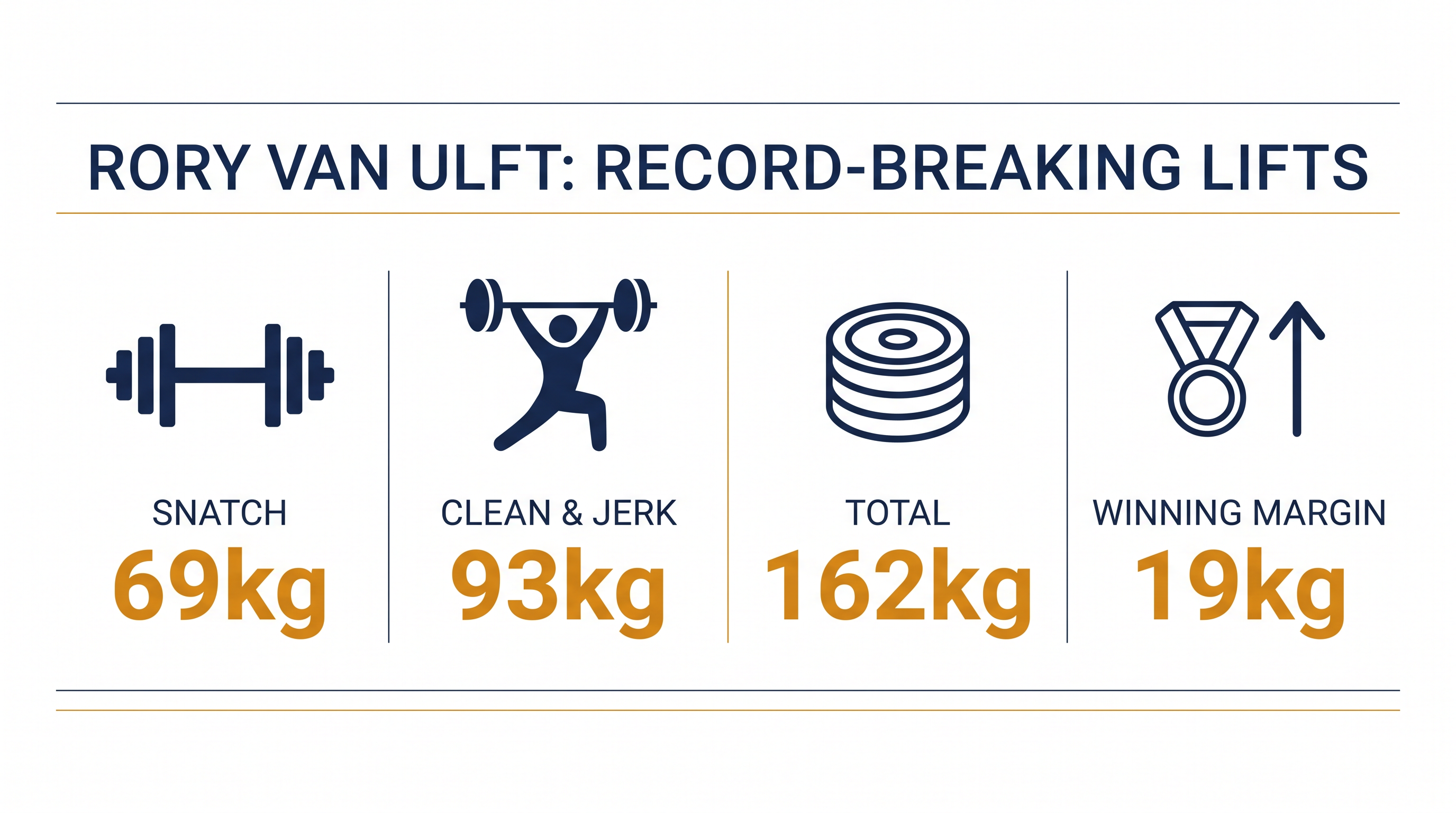
Weighing in at just 43.60 kilograms—comfortably below the 44-kilogram limit—van Ulft began her campaign with the snatch. The snatch is a highly technical movement where the athlete must lift the barbell from the floor to an overhead locked-out position in one continuous, explosive motion. She opened with a successful 67-kilogram lift, immediately establishing her presence. Though she missed her second attempt at 69 kilograms, she maintained her composure, returning to the platform to successfully secure the 69-kilogram weight on her third and final try, giving her a commanding early lead over the rest of the field.[2]
The true spectacle, however, came during the clean and jerk, a two-part lift requiring the athlete to first bring the heavy barbell to their shoulders before thrusting it overhead. Van Ulft successfully hoisted 93 kilograms on her second attempt. This lift did not merely win her the gold medal for the event; it obliterated the previous youth world record for the 44-kilogram class. The prior clean and jerk record of 92 kilograms had been set by India's Priteesmita Bhoi at the 2025 Asian Youth Games, making van Ulft's achievement a significant leap forward for the division.[2][3]
By combining her 69-kilogram snatch and her 93-kilogram clean and jerk, van Ulft achieved a massive total of 162 kilograms. This aggregate score secured the overall gold medal by a staggering 19-kilogram margin over the silver medalist, Turkey's Asel Şenel. Furthermore, the 162-kilogram mark shattered the U44KG total youth world record, making van Ulft the first athlete in her division to exceed the IWF's youth world standard of 161 kilograms. She attempted to push the boundary even further with a 95-kilogram clean and jerk on her final attempt but was unsuccessful.[2][3]
Van Ulft's performance was statistically anomalous even when compared to athletes in much heavier weight classes. Under the newly approved GAMX points system—a complex formula used by the International Weightlifting Federation to compare the relative strength and performance of athletes across entirely different body weights—van Ulft was the only competitor in Cali to score higher than 1,300 points. This metric effectively crowned her as the most dominant pound-for-pound lifter of the entire championships, validating the immense hype that had surrounded her early career.[1]
A dual-national born in Ottawa, Canada, van Ulft competes internationally for Aruba through her father's Dutch heritage. Her victory brought unprecedented recognition to the small island nation, marking a proud moment for Aruban sports on the global stage. Following the event, van Ulft expressed her satisfaction with the result, noting that she hit her exact target for the clean and jerk, though she acknowledged a lingering desire to return and capture the snatch world record that narrowly eluded her in Colombia.[3][6]
While van Ulft captured the individual headlines with her record-breaking feats, the broader team narrative of the championships belonged to Georgia. The European nation topped the overall medal table, an achievement driven by pinpoint strategic excellence rather than fielding the largest possible team. In weightlifting, nations earn points and medals not just for the total weight lifted, but also for individual placements in the snatch and the clean and jerk, creating a complex tactical environment for national coaches.[1][4]
While van Ulft captured the individual headlines with her record-breaking feats, the broader team narrative of the championships belonged to Georgia.
Georgia secured two gold, one silver, and two bronze medals in the "Big" or total result rankings. Remarkably, this made them the first team since the inception of the World Youth Championships in 2009 to finish at the absolute top of the medal table with only two individual overall champions. Their success highlights a highly efficient program that maximizes the podium potential of every athlete they send, ensuring that their lifters consistently place within the top three across multiple disciplines and weight classes.[1][4]
The final team standings underscore a rapidly evolving and decentralizing landscape in youth weightlifting. The 2026 championships featured 16 different medal events, and astonishingly, 15 distinct nations produced a winner. More than half of the 44 competing teams reached the podium in the total rankings. Officials noted that this made the Cali event the best in the tournament's history in terms of spreading the medals around, proving that high-level weightlifting infrastructure is expanding far beyond the sport's traditional geographic strongholds.[1]
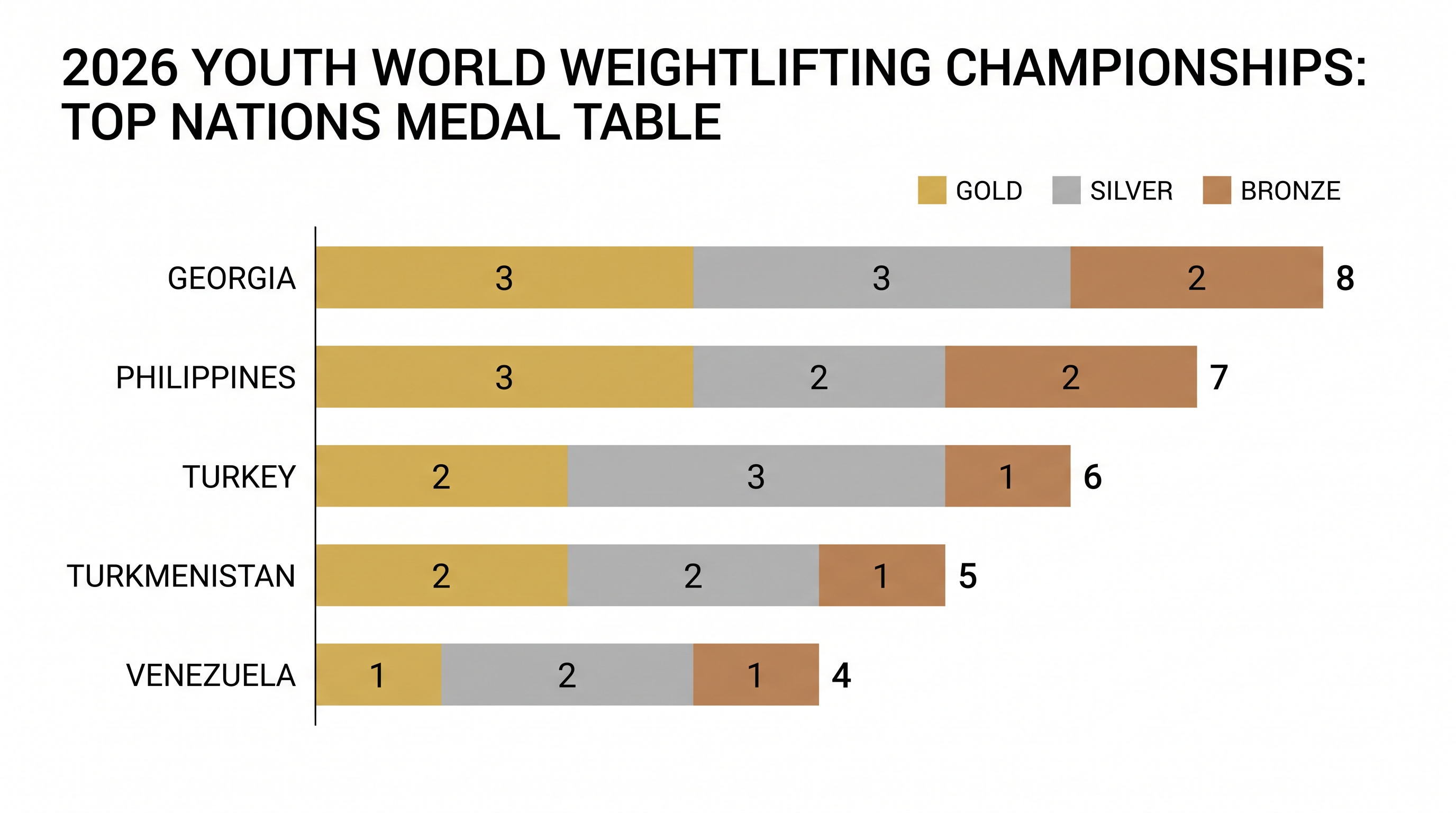
The Philippines also delivered a standout team performance, securing the most total medals of any nation with six overall podium finishes. Their highly successful campaign was highlighted by the exceptional lifting of 15-year-old Alexsandra Diaz, who won the 48-kilogram category in dominant fashion. Diaz did not just win the gold medal; she set two youth world records of her own during the competition, proving that van Ulft was not the only young athlete pushing the absolute boundaries of human strength at the Cali championships.[1][4]
Diaz's victory carries significant cultural and historical weight in her home country. She is the niece of Hidilyn Diaz, the legendary lifter who won the Philippines' first-ever Olympic gold medal at the Tokyo Games. Upon returning home, the teenager explicitly stated her ambition to follow in her aunt's footsteps, declaring her intention to become an Olympian and eventually win an Olympic gold medal. Her performance in Cali suggests that the Philippines has successfully established a multi-generational pipeline of elite female weightlifters.[1]
Some statistical analysts and weightlifting historians point out that the wide distribution of medals in Cali was partially influenced by the notable absence of traditional Asian powerhouses. China, which boasts one of the most dominant weightlifting programs on earth, has only competed at the World Youth Championships once in its history. Similarly, North Korea has not participated in the youth event since 2019, leaving a potential vacuum at the very top of the youth ranks that other nations eagerly filled.[1]
However, a closer look at the raw lifting numbers suggests that the athletes competing in Cali were not simply capitalizing on a depleted or weakened field. The top three individual performers at the World Youths posted aggregate totals that actually exceeded those of the gold medal winners at the recent Asian Youth Games. This is a crucial comparative metric, as Chinese and North Korean lifters set an astonishing 21 youth world records at that specific Asian regional competition just last year, indicating the Cali lifters are truly world-class.[1]
For instance, cross-referencing the data reveals that two of China's gold-medal champions from the Asian Youth Games would not have won gold in Cali if they had posted those exact same numbers. This data point strongly indicates that the global standard for youth weightlifting is rising universally. Rather than being monopolized by a few heavily funded, state-sponsored programs in Asia or Eastern Europe, elite strength is being cultivated across the Americas, Western Europe, and Southeast Asia at an unprecedented rate.[1]
The success of athletes like van Ulft and Diaz highlights a distinct shift in how modern weightlifting talent is identified and developed globally. Van Ulft's rapid rise, documented heavily on visual platforms like Instagram, demonstrates how independent coaching, advanced biomechanical analysis, and modern training methodologies can produce world-class results entirely outside of traditional national federations. Her ability to peak perfectly for a high-pressure international debut speaks volumes about the increasing professionalization of youth sports coaching and programming in the digital age.[3]
Looking ahead, the record-breaking performances in Cali set a thrilling stage for the next Olympic cycle leading into 2028 and 2032. While early youth success does not always guarantee senior Olympic medals due to the physical toll of the sport, the sheer statistical dominance of the top lifters suggests they are on a direct trajectory to challenge senior records. The International Weightlifting Federation views this deep pool of young talent as a vital sign of the sport's enduring global health.[1][5]
For van Ulft, the immediate focus remains on incremental improvement and chasing the few milestones she has yet to conquer. Despite her historic, record-breaking day in Colombia, she openly noted her minor disappointment at missing the snatch world record. This relentless mindset signals that her 162-kilogram total is merely a baseline for her future international career, ensuring that the weightlifting world will be watching closely every time the Aruban teenager steps onto the platform in the years to come.[3]
How we got here
2025
India's Priteesmita Bhoi sets the U44KG clean and jerk youth world record at 92 kilograms during the Asian Youth Games.
July 5, 2026
Rory van Ulft makes her international debut at the IWF World Youth Championships in Cali, Colombia, shattering two world records.
July 11, 2026
The championships conclude with Georgia topping the overall medal table and 15 different nations claiming gold.
Viewpoints in depth
Independent Talent Development
Argues that modern coaching and social media allow athletes to reach elite levels outside state systems.
Proponents of this view point to Rory van Ulft's viral rise as proof that traditional, centralized national weightlifting programs are no longer the only path to the podium. By leveraging independent coaching, specialized biomechanical programming, and the financial support generated by a massive social media following, athletes can bypass legacy federations. This decentralized model allows for highly individualized training blocks that can produce record-shattering results on the international stage.
National Program Strategy
Emphasizes that deep, strategic team building is still required to win overall international medal tables.
While acknowledging the brilliance of individual outliers, traditional coaches and federation officials argue that overall dominance still relies on systemic infrastructure. Georgia's ability to top the medal table with only two individual champions demonstrates the power of a deep, tactically managed roster where every athlete is positioned to score maximum points across the snatch and clean and jerk disciplines. This perspective maintains that long-term national success requires state-level investment in talent pipelines, as seen in the multi-generational success of the Philippines.
Global Standardization
Analyzes the rising baseline of youth weightlifting worldwide and the impact of new scoring metrics.
Statistical analysts focus on the broader trends revealed by the Cali championships, particularly the unprecedented distribution of medals across 15 nations. They argue that the introduction of the GAMX points system provides a clearer, more objective measure of pound-for-pound strength, proving that the current crop of youth champions are statistically superior to previous generations. Furthermore, they contend that the high totals posted in Cali prove the global standard is rising independently of traditional powerhouses like China and North Korea.
What we don't know
- Whether van Ulft will move up to a heavier weight class as she continues to develop through her teenage years.
- How the current crop of youth champions will fare when they eventually transition to the senior international circuit.
Key terms
- Snatch
- A highly technical weightlifting movement where the barbell is lifted from the floor to an overhead locked-out position in one continuous, explosive motion.
- Clean and Jerk
- A two-part weightlifting movement requiring the athlete to first bring the heavy barbell to their shoulders (the clean) before thrusting it overhead (the jerk).
- GAMX Points
- A newly approved scoring formula used by the International Weightlifting Federation to compare the relative strength and performance of athletes across entirely different body weight categories.
- Total
- The combined aggregate weight of an athlete's best successful snatch and best successful clean and jerk during a competition.
Frequently asked
Who is Rory van Ulft?
A 13-year-old weightlifter from Canada who competes internationally for Aruba and holds multiple youth world records.
What records did she break in Cali?
She broke the U44KG youth world records for the clean and jerk (93 kg) and the total weight lifted (162 kg).
How did Georgia top the medal table?
Georgia won the overall medal table by securing two golds, one silver, and two bronzes in the total results, maximizing their points through strategic placements despite having fewer champions than in previous years.
Why didn't China compete at the Youth Worlds?
China has historically participated in the World Youth Championships very rarely, focusing its youth development resources instead on regional competitions like the Asian Youth Games.
Sources
Source coverage
6 outlets
3 viewpoints surfaced






[1]International Weightlifting FederationGlobal Standardization
2026 IWF World Youth Championships Conclude in Cali
Read on International Weightlifting Federation →[2]Fitness VoltIndependent Talent Development
13-Year-Old Rory van Ulft Sets Two U44KG IWF Youth World Records
Read on Fitness Volt →[3]Panam SportsIndependent Talent Development
Rory van Ulft Turns Social Media Hype Into Official History at World Youth Championships
Read on Panam Sports →[4]WikipediaNational Program Strategy
2026 World Youth Weightlifting Championships
Read on Wikipedia →[5]Weightlifting HouseNational Program Strategy
2026 Youth World Weightlifting Championships Results
Read on Weightlifting House →[6]Aruba NewsGlobal Standardization
Aruba's Rory van Ulft Wins Gold at 2026 IWF Youth World Championship
Read on Aruba News →
Comments
More in sports
See all 31 stories →Injury
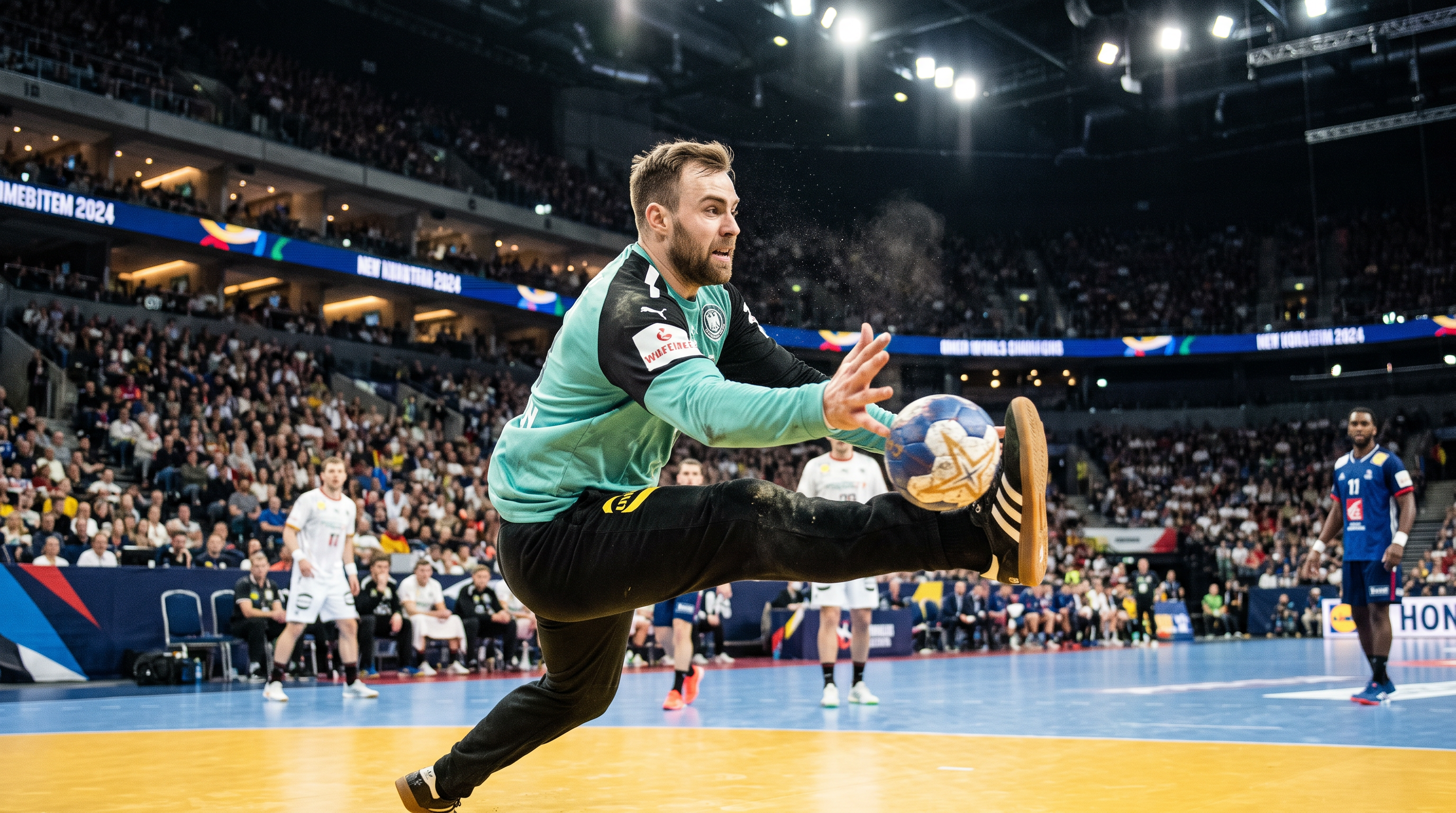
Global Handball Injury Desk: Simić’s Triumphant Return and Gilme’s Non-Surgical Comeback Highlight a Summer of Resilience
6 sources
Standings
Las Vegas Mega Event Standings: Füchse Berlin and Győri ETO Surge in Race for Inaugural US Crown
7 sources
Injury
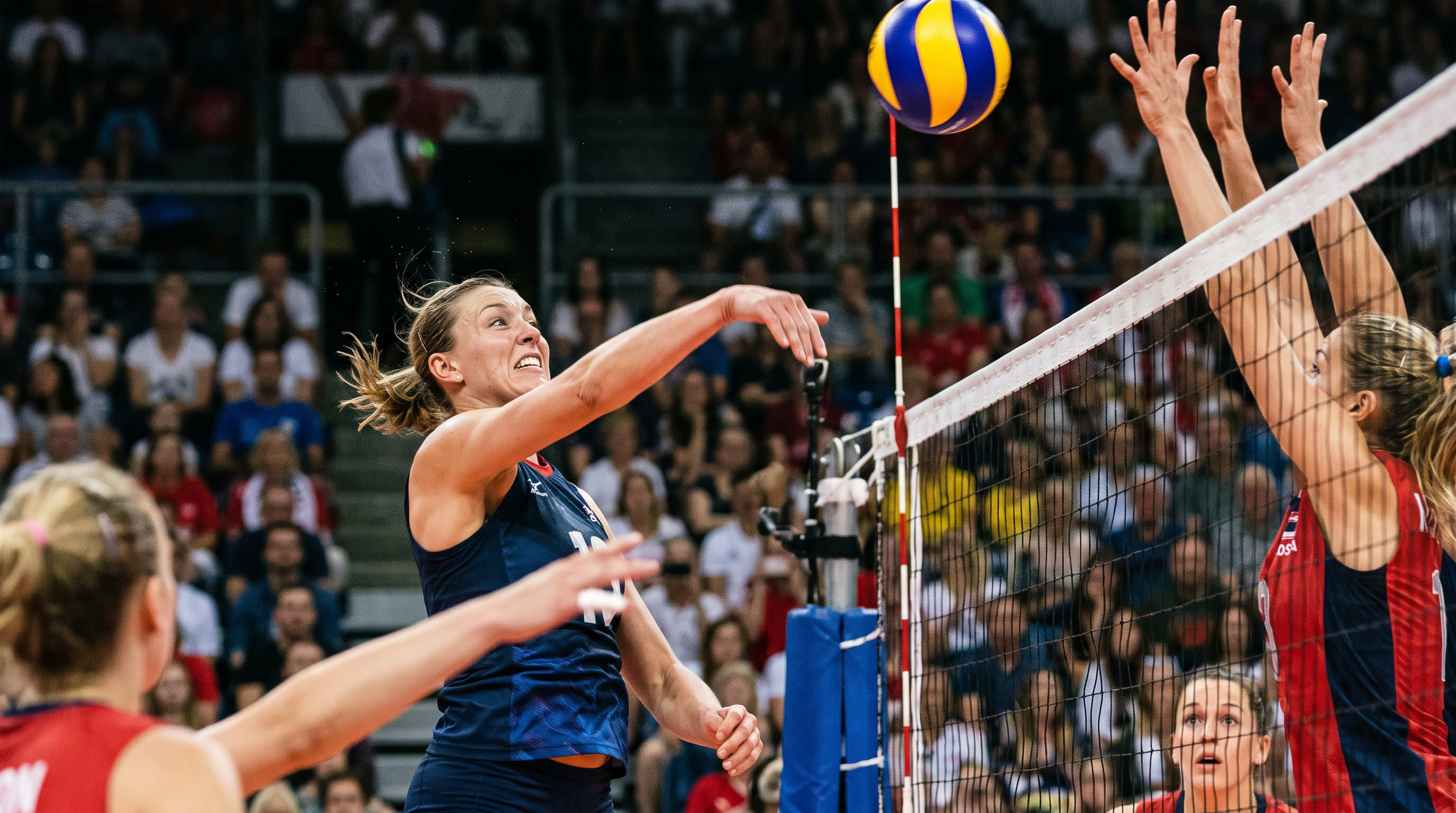
Chinese Volleyball Star Li Yingying Undergoes Successful Heart Surgery, Will Miss Asian Games
6 sources
Standings
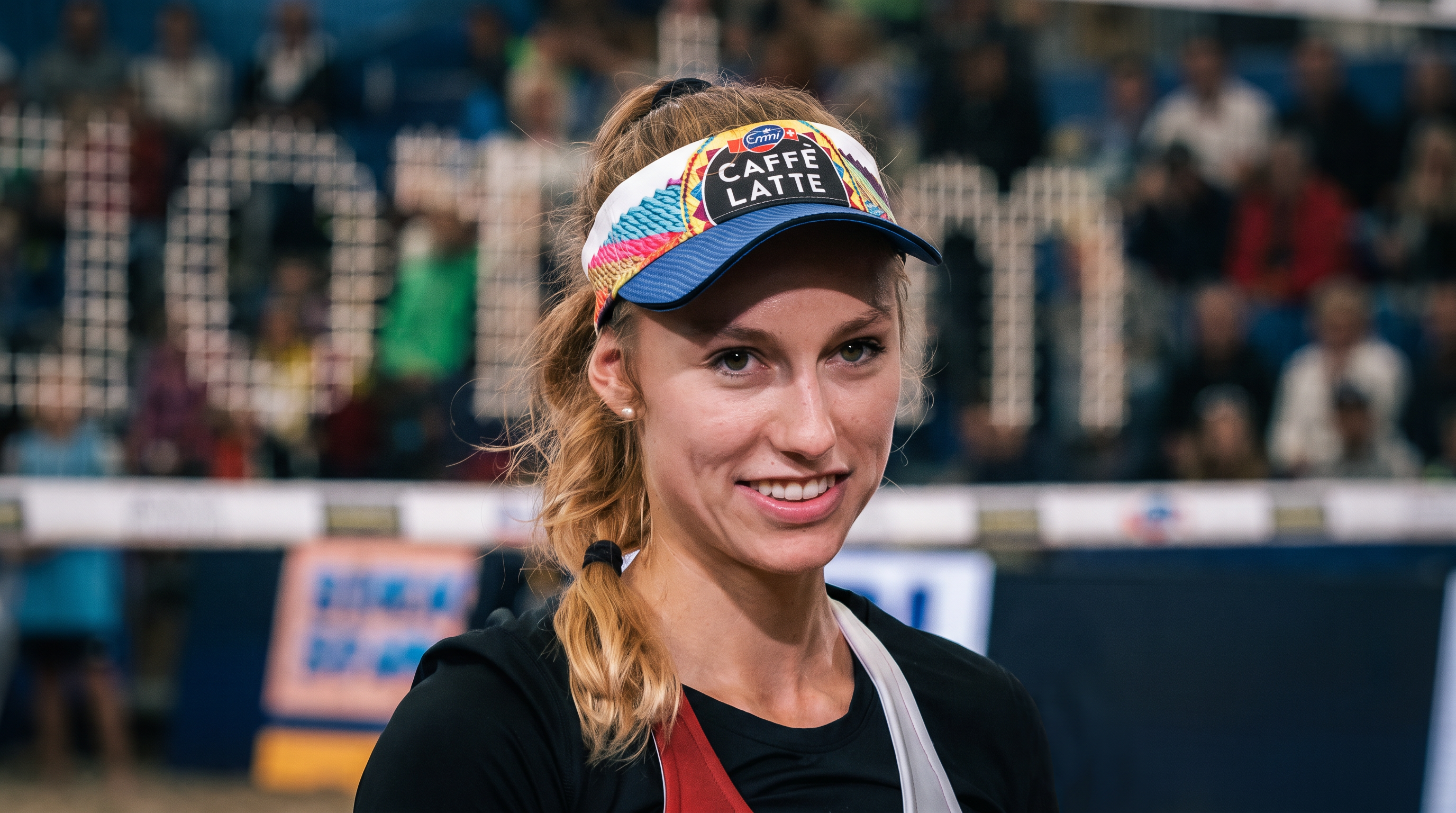
Swedish Prodigies Hölting Nilsson and Andersson Seize World No. 1 Ranking Ahead of Hamburg Elite16
6 sources
Every angle. Every day.
Get sports stories with full source coverage and perspective breakdowns delivered to your inbox.