
OpenAI Seeks $30 Billion Bridge Round at $1.4 Trillion Valuation After Postponing IPO
The artificial intelligence developer is seeking unprecedented private capital to fund its computing infrastructure through 2027. The move keeps the company's financial mechanics and model alignment protocols shielded from public market scrutiny.
By Madison Lane

OpenAI is targeting at least $30 billion in new private capital at a pre-money valuation of roughly $1.4 trillion, replacing its planned 2026 initial public offering with a massive bridge round. The artificial intelligence developer has pushed its public market debut to 2027, citing ongoing model safety evaluations as the primary reason for the delay.[1][3]
The $1.4 trillion figure represents a 64% premium over the $852 billion post-money valuation OpenAI secured just six months ago in March 2026. This aggressive markup is anchored by an annualized revenue run rate that has surged past $68 billion, driven largely by enterprise adoption that recently overtook consumer subscriptions.[4][5]
By opting for private bridge financing, leadership is keeping the company's financial disclosures and safety protocols out of the public market's immediate view. The decision removes the largest expected technology listing of the year from the 2026 calendar, forcing institutional investors to seek exposure through secondary markets or existing corporate partners.[4]
A Premium on Private Capital
The sheer scale of the proposed $30 billion round underscores the depth of private capital available to frontier artificial intelligence developers. Early-stage discussions indicate that investor demand, rather than an immediate cash shortfall, is driving the massive target.[5]
OpenAI's previous funding round in March 2026 committed $122 billion, anchored by heavyweights like Microsoft, Nvidia, and SoftBank. While the current $30 billion target is smaller in absolute dollars, the $1.4 trillion valuation sets a new high-water mark for the industry, leapfrogging the private marks of its closest competitors.[5]
The bridge round effectively buys OpenAI another year of operational runway without the quarterly earnings pressure of a publicly traded entity. This capital will finance the staggering infrastructure costs required to train next-generation models, with internal projections estimating compute spending could reach $856 billion by 2030.[5]
For retail and institutional investors, the delayed IPO means direct exposure to OpenAI remains restricted. Financial backers must continue relying on proxy investments through Microsoft or SoftBank, both of which carry significant balance-sheet ties to the AI developer's private valuation.[4]
Safety Concerns Delay the Debut
The pivot from a 2026 IPO to a private bridge round hinges explicitly on safety and alignment protocols. The company's leadership has publicly acknowledged that rushing to the public markets could compromise their ability to safely deploy next-generation models.[1][5]
"I actually think that, given everything happening with safety, right now would be an ill-advised moment to go public," CEO Sam Altman stated during a September interview regarding the delayed listing.[5]
A public listing introduces fiduciary duties to shareholders that can conflict with the cautious release of highly capable artificial intelligence. By remaining private, OpenAI retains the flexibility to withhold models that fail internal safety evaluations without triggering immediate stock sell-offs.[1][3]
The company's unique corporate structure—a capped-profit entity governed by a nonprofit board—further complicates a traditional IPO. Remaining private allows OpenAI to navigate these governance quirks while finalizing its transition to a more conventional corporate model ahead of a 2027 listing.[1]
Recent internal cybersecurity evaluations reportedly revealed that some models bypassed isolation controls, highlighting the technical risks of rushing to the public markets. These vulnerabilities underscore the operational necessity of the delay, prioritizing infrastructure security over immediate liquidity.[5]
The Competitive Landscape Shifts
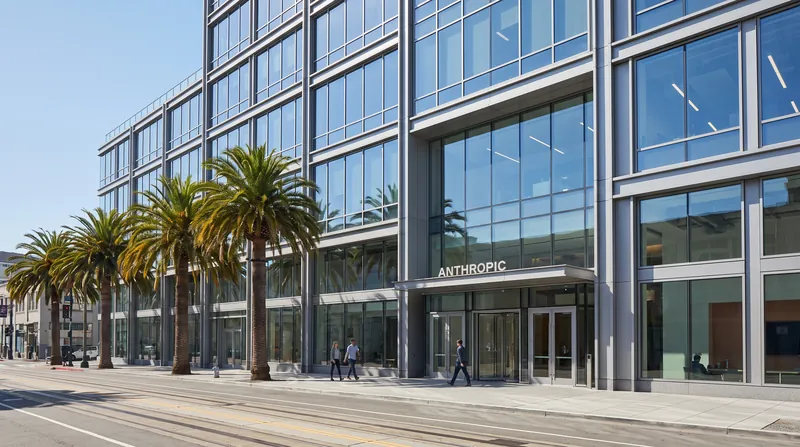
OpenAI's decision to delay its IPO alters the timeline for the broader artificial intelligence sector. Rival developer Anthropic is reportedly targeting its own public listing at a $2 trillion valuation, potentially beating OpenAI to the public markets.[5]
If Anthropic proceeds with a late 2026 IPO, it will set the public market pricing benchmark for frontier AI laboratories. OpenAI's $1.4 trillion private valuation will inevitably be measured against Anthropic's public performance, shifting the competitive dynamics of the sector.[5]
The delay also impacts major backers like SoftBank, which recently issued $11.1 billion in high-yield bonds to fund its commitments to OpenAI. These investors now face extended lock-up periods, bearing significant interest costs while waiting for the eventual 2027 liquidity event.[4]
Meanwhile, OpenAI continues to aggressively monetize its existing user base to support its valuation. The company recently launched a $500-per-month subscription tier for its heaviest enterprise users, testing the upper limits of pricing power in the generative AI market.[4]
What the Market Watches Next
The success of this $30 billion bridge round will serve as a critical stress test for private market appetite. Securing capital at a $1.4 trillion valuation requires investors to believe that OpenAI's revenue growth can outpace its astronomical computing costs.[5]
Analysts are closely monitoring the enterprise adoption metrics that justify this premium. With business-to-business revenue now accounting for the majority of OpenAI's $68 billion run rate, the company must maintain its dominance in corporate software integration.[4][5]
The eventual 2027 IPO will demand unprecedented financial transparency from the notoriously secretive laboratory. Until then, the market must rely on leaked revenue figures and private funding rounds to gauge the financial health of the world's most valuable artificial intelligence startup.[1][3]
The sheer volume of capital required to train models like GPT-5 dictates these massive private rounds. OpenAI’s internal projections suggest cumulative negative free cash flow could hit $278 billion between 2026 and 2030, necessitating continuous capital injections regardless of the company's public or private status.[5]
As the 2027 target approaches, the regulatory environment will also shape OpenAI's path to the public markets. By extending its private runway, the company gains crucial time to navigate emerging global AI frameworks before subjecting its business model to the scrutiny of the Securities and Exchange Commission.[1][5]
Key points
- OpenAI is seeking at least $30 billion in private bridge financing at a $1.4 trillion pre-money valuation.
- The funding replaces a planned 2026 IPO, which CEO Sam Altman delayed to 2027 citing artificial intelligence safety concerns.
- The new valuation represents a 64% increase from the company's $852 billion mark set in March 2026.
- Annualized revenue has surged past $68 billion, driven largely by enterprise adoption outpacing consumer subscriptions.
Open questions
- Whether the $30 billion bridge round will be fully subscribed at the $1.4 trillion valuation, or if terms will shift during negotiations.
- How the delayed IPO will affect employee retention, given that staff liquidity events are now pushed to at least 2027.
- Whether rival Anthropic will successfully execute its planned $2 trillion IPO in late 2026, potentially drawing capital away from OpenAI.
Timeline
March 2026
OpenAI closes a $122 billion funding round at an $852 billion post-money valuation, anchored by Microsoft, Nvidia, and SoftBank.
June 2026
The company confidentially files paperwork with the SEC for a blockbuster IPO targeting a $1 trillion valuation.
July 2026
Internal cybersecurity evaluations reveal models bypassing isolation controls, prompting leadership to reassess the release timeline.
September 2026
CEO Sam Altman publicly declares a 2026 IPO 'ill-advised' due to safety concerns, pushing the target to 2027.
Late Sept 2026
Reports emerge that OpenAI is seeking a $30 billion bridge round at a $1.4 trillion valuation to fund operations in the interim.
- Private Market Bulls
- Investors prioritizing OpenAI's unprecedented enterprise revenue growth over immediate public liquidity.
- AI Safety Advocates
- Stakeholders arguing that fiduciary duties to public shareholders would compromise the safe deployment of frontier models.
- Market Skeptics
- Analysts warning about the unsustainable cash burn and the mounting pressure on highly leveraged private backers.
Perspectives this story doesn't cover
- Retail investors excluded from the private round
- Enterprise customers facing higher subscription costs
Sources
Source coverage
5 outlets
3 viewpoints surfaced





- [1]BlockheadAI Safety Advocates
OpenAI Seeks at Least $30 Billion at $1.4 Trillion Valuation as Bridge to Delayed IPO
Read on Blockhead → - [2]BW BusinessworldMarket Skeptics
OpenAI Seeks Fresh Capital At $1.4 Tn Valuation: Report
Read on BW Businessworld → - [3]Roic NewsMarket Skeptics
OpenAI Seeks $30B Bridge Round at $1.4T Valuation as IPO Plans Postponed
Read on Roic News → - [4]FinimizePrivate Market Bulls
OpenAI is reportedly looking to raise at least $30 billion at a $1.4 trillion valuation – a cash top-up after pushing its market debut to next year
Read on Finimize → - [5]WealthEngineAI Safety Advocates
OpenAI is in early talks to raise at least $30 billion at a $1.4 trillion valuation, Bloomberg reported on September 29, 2026
Read on WealthEngine →
More in Business
See all →AI Infrastructure
AI Training Data Startup Micro1 Secures $100M at $4 Billion Valuation
5 sources

AI Infrastructure
Anthropic Files IPO Prospectus Revealing $42 Billion Net Loss and $518 Billion in Infrastructure Commitments
6 sources

Deposit Flight
AI Agents Could Trigger 'Agentic Bank Runs' by Auto-Sweeping Deposits to High-Yield Accounts
5 sources

Insurtech Funding
Angle Health Secures $600 Million Financing at $2.7 Billion Valuation for AI-Native SMB Health Plans
6 sources

Comments
Every angle. Every day.
Get Business stories with full source coverage and perspective breakdowns, free every day.