
How Utah's Automated Book Ban Law Set Up a Historic First Amendment Showdown
Utah's House Bill 29 allows just three school districts to trigger a statewide ban on a book. A federal lawsuit led by the Kurt Vonnegut Estate and the ACLU is now testing whether this mechanism violates decades of Supreme Court precedent.
By Austin Blake

In short
- Utah's HB 29 allows just three school districts to trigger a statewide book ban.
- The ACLU and the Kurt Vonnegut Estate are suing the state, citing First Amendment violations.
- At least 36 books have been banned statewide as of August 2026.
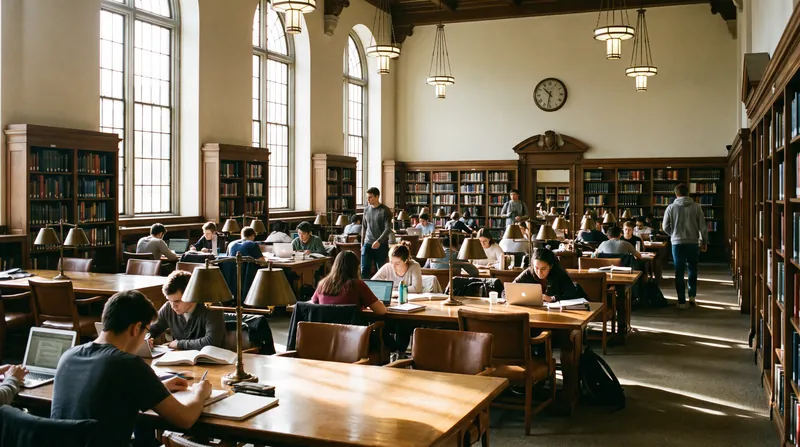
Imagine walking into your local public high school library, looking for a classic novel you were assigned to read, only to find an empty space on the shelf. For students across Utah, this isn't a hypothetical scenario—it is the direct result of a novel legal mechanism that allows a tiny fraction of the state's school districts to dictate what everyone else is allowed to read.
At the center of the debate is House Bill 29, a law that automates the removal of library books across all public schools if just three districts deem them inappropriate.[3]
The legislation has sparked a historic First Amendment showdown, culminating in a federal lawsuit filed by the American Civil Liberties Union (ACLU) of Utah. The plaintiffs include award-winning authors, anonymous high school students, and the estate of literary icon Kurt Vonnegut, setting the stage for a legal battle that could redefine students' rights nationwide.[2]
To understand the stakes of Vonnegut v. Utah, one must look at the mechanics of the law itself. Enacted in 2024, HB 29 expanded upon previous legislation by creating a statewide trigger. If at least three of Utah's 41 school districts—or two districts and five charter schools—remove a book for containing "objective sensitive material," that book is automatically banned in every public school library in the state.[3]
This automated cascade effect means that decisions made by local school boards representing a small minority of the state's students can bypass the review processes of the vast majority. By August 2026, this mechanism had resulted in the statewide banning of 36 titles, transforming local disputes into state-level mandates.[2]
The list of removed books includes acclaimed works of literature that have been taught in classrooms for decades. Among them are Toni Morrison's The Bluest Eye, Maya Angelou's I Know Why the Caged Bird Sings, and Kurt Vonnegut's 1969 anti-war classic, Slaughterhouse-Five.[2]
The inclusion of Slaughterhouse-Five carries a profound, almost wry historical irony. In 1982, the novel was at the center of Island Trees School District v. Pico, a landmark Supreme Court case. In that ruling, the Court determined that local school boards could not remove books from library shelves simply because they disliked the political or moral ideas contained within them.[4]
The plaintiffs in the current Utah lawsuit argue that HB 29 effectively short-circuits the Pico precedent. By automating the bans at the state level, the law strips local districts of their ability to conduct the nuanced, case-by-case reviews that the Supreme Court mandated over forty years ago.[2][4]
Furthermore, the lawsuit contends that the law's definition of sensitive material is unconstitutionally overbroad. The ACLU argues that the statute forces the removal of books without any consideration of their literary, scientific, medical, or political value as a whole—a standard traditionally required when evaluating whether material is appropriate for minors.[2]
Proponents of the law, however, maintain that the state has a compelling duty to protect children from sexually explicit content. Supporters argue that the statewide trigger is a necessary tool to ensure that community standards are upheld uniformly, preventing a scenario where students in one district have access to material deemed harmful just a few miles away.[3]
From the perspective of parental rights advocates, the legislation empowers families to have a greater say in the educational environment. They argue that public school libraries are curated spaces, and that removing books with explicit content does not prevent students from accessing them through public libraries or private purchases.[1]
Yet, free speech advocates counter that a public school library is a unique marketplace of ideas. For many students, particularly those from marginalized backgrounds, the school library is the primary—and sometimes only—access point to literature that reflects their lived experiences.[2]
The lawsuit highlights that many of the books targeted under HB 29 are written by or about LGBTQ+ individuals and people of color. The plaintiffs argue that this pattern of removals disproportionately silences diverse voices, transforming a measure ostensibly aimed at decency into a tool for ideological censorship.[2]
As Vonnegut v. Utah winds its way through the federal court system, legal scholars are watching closely. The case represents one of the most significant challenges to the new wave of state-level book restriction laws sweeping the country, testing whether automated mechanisms can survive constitutional scrutiny.[1][5]
If the courts uphold the constitutionality of the statewide trigger mechanism, it could provide a blueprint for other states seeking to bypass local school board discretion. Conversely, a ruling in favor of the plaintiffs could reaffirm the enduring strength of the First Amendment in public education.[4][5]
Jargon, explained
- First Amendment
- The constitutional amendment that protects freedom of speech and the right to receive information and ideas.
- Objective Sensitive Material
- A legal standard used in Utah's HB 29 to define content, typically involving sexual descriptions, that triggers a book's removal.
- Declaratory Judgment
- A court order that officially declares a law or action unconstitutional without necessarily awarding damages.
Common questions
What is Utah's HB 29?
A 2024 law that requires a book to be banned in all Utah public schools if at least three school districts deem it to contain 'objective sensitive material'.
Why is the Kurt Vonnegut Estate involved?
Vonnegut's classic novel Slaughterhouse-Five has been targeted for removal under the law, prompting his estate to join the lawsuit to defend students' First Amendment rights.
What did the Supreme Court rule in 1982?
In Island Trees School District v. Pico, the Court ruled that local school boards cannot remove library books simply because they disagree with the ideas contained in them.
How many books have been banned under this law?
As of August 2026, the automated trigger mechanism has resulted in the statewide banning of 36 titles.
Competing readings
Free Speech Advocates
Argue that the law is an unconstitutional overreach that censors marginalized voices.
Organizations like the ACLU and the plaintiffs in the lawsuit argue that HB 29's automated mechanism is fundamentally flawed because it ignores the literary, scientific, or political value of a book as a whole. By allowing a small fraction of the state's districts to make decisions for everyone, they contend the law silences authors and denies students their First Amendment right to access information. They point out that many of the targeted books are written by or about LGBTQ+ individuals and people of color, suggesting a discriminatory impact.
Parental Rights Proponents
Maintain that the state must protect minors from sexually explicit content.
Supporters of the legislation, including conservative lawmakers and groups like Utah Parents United, argue that the state has a compelling interest in shielding children from material they define as pornographic or indecent. They assert that the statewide trigger is a necessary efficiency to ensure that standards are uniformly applied, preventing a patchwork where students in one district have access to explicit material while others do not. From this perspective, the law empowers parents and local boards to maintain community standards.
- Free Speech Advocates
- Argue that the law is unconstitutionally overbroad and censors protected speech.
- Parental Rights Proponents
- Argue that the state has a duty to protect minors from sexually explicit material and that parents should have a say in school library content.
- Legal Scholars
- Focus on the tension between the new automated trigger mechanism and established Supreme Court precedent.
Perspectives this story doesn't cover
- Librarians tasked with enforcing the bans
- Students in districts that did not initiate the bans
Sources
Source coverage
5 outlets
3 viewpoints surfaced




- [1]AP NewsLegal Scholars
Utah Bans 13 Books at Schools Under New Law
Read on AP News → - [2]ACLU of UtahFree Speech Advocates
Vonnegut Estate, Authors, and Student Plaintiffs Take Utah to Court Over the Freedom to Read
Read on ACLU of Utah → - [3]Utah State LegislatureParental Rights Proponents
H.B. 29 Sensitive Material Review Amendments
Read on Utah State Legislature → - [4]WikipediaLegal Scholars
Island Trees School District v. Pico
Read on Wikipedia → - [5]Factlen Editorial TeamLegal Scholars
Synthesis by Factlen editorial team
Read on Factlen Editorial Team →
More in Culture
See all →Narrative Theory
The Five-Part Structure: How Gustav Freytag's Pyramid Maps the Dramatic Arc of Classical Tragedy
6 sources
Story Structure
The 12 Stages: How Joseph Campbell's Monomyth Maps the Universal Hero's Journey
6 sources
Adversarial Typography
How Adversarial Fonts Use Glyph Substitution to Poison AI Training Data
4 sources

Sociological Theory
Habitus, Field, and Cultural Capital: Pierre Bourdieu's Three Concepts for Analyzing Social Class and Taste
6 sources
Comments
Every angle. Every day.
Get Culture stories with full source coverage and perspective breakdowns, free every day.