
Grid-Edge Storage Becomes Mainstream: $1 Billion Investment in US-Made Home Batteries Signals Market Shift
Texas-based startup Base Power has raised $1 billion to expand its fleet of subscription-based home batteries, pushing its valuation to $13 billion. The massive capital injection highlights a growing reliance on decentralized, residential storage to support an increasingly strained US power grid.
By Hunter Cole

The conventional wisdom surrounding grid resilience assumes that meeting surging electricity demand requires massive, centralized infrastructure—years of permitting, miles of new high-voltage transmission lines, and sprawling utility-scale power plants. But a quiet shift at the edge of the grid is proving that assumption incomplete. Instead of building outward, the energy sector is increasingly building inward, transforming residential backyards into critical nodes of a decentralized power network.[1][2]
This week, that distributed model received one of its most significant financial validations to date. Texas-based startup Base Power closed a $1 billion Series D funding round, pushing its valuation to $13 billion less than a year after its previous billion-dollar raise. The capital injection, led by major institutional players including JPMorganChase's Strategic Investment Group, Ribbit, and Addition, signals a structural market shift: home batteries are no longer viewed merely as luxury backup appliances for individual homeowners, but as scalable, utility-grade infrastructure.[1][2][4]
The mechanics of this shift rely on the concept of a virtual power plant (VPP). Rather than requiring customers to pay upwards of $10,000 upfront for a battery, Base Power installs unusually large, 39.2-kilowatt-hour units—dubbed the Base Core—at homes for a nominal installation fee of around $695, paired with an ongoing electricity subscription.[1][3]
In exchange for providing homeowners with seamless backup power during outages, the company retains the ability to dispatch the stored energy. When electricity is cheap and abundant, the fleet of batteries charges from the grid. When demand spikes and wholesale power prices surge, the software-controlled network discharges that stored capacity back into the system, effectively operating as a decentralized peaker plant.[1][4]
The scale of this deployment is already rivaling traditional generation assets. Base Power has deployed more than 500 megawatt-hours of storage capacity across Texas and Illinois, installing approximately 100 batteries per day. At that pace, the company is adding roughly 8 megawatt-hours of capacity to the grid daily, bypassing the multi-year interconnection queues that currently bottleneck utility-scale solar and wind projects.[2][3]
This rapid deployment model directly addresses the foundational shift in U.S. energy demand. Driven by the electrification of heating and transport, a manufacturing renaissance, and the explosive growth of artificial intelligence data centers, grid operators are scrambling for capacity. Distributed storage offers a modular, highly responsive buffer that can be deployed exactly where the load is growing fastest: at the distribution level.[2][4]
To support this expansion, the latest funding round will also finance the domestic manufacturing of the Base Core units. The batteries are currently rolling off the line at the company's 90,000-square-foot facility in Austin, Texas. By vertically integrating its supply chain and assembling the hardware in the United States, the company is insulating itself from international trade volatility while capitalizing on federal incentives designed to reshore critical energy infrastructure.[1][3]
Utility companies, traditionally wary of behind-the-meter assets they do not own, are beginning to embrace the model. Base Power has already secured partnerships with utilities such as Austin Energy, El Paso Electric, and CoServ, representing over 200 megawatts of capacity. These agreements demonstrate that grid operators are increasingly willing to rely on aggregated residential storage to manage peak loads and defer expensive substation upgrades.[3][4]
The implications of this $1 billion investment extend far beyond a single company's balance sheet. It establishes a new asset class at the intersection of physical infrastructure and subscription economics. As the deployment of these grid-edge devices accelerates, the traditional boundary between energy consumer and energy producer continues to blur, laying the groundwork for a more resilient, software-defined electrical grid.[1][2]
Viewpoints in depth
Grid Operators & Utilities
Utilities view distributed storage as a vital tool to manage peak demand without building expensive new peaker plants.
For grid operators, the appeal of virtual power plants lies in their speed and location. Traditional infrastructure upgrades—like new substations or transmission lines—can take years to permit and build. Aggregated home batteries, however, can be deployed in months directly at the edge of the grid where load is highest. Utilities like Austin Energy and El Paso Electric are partnering with storage providers to tap into this distributed capacity, using it to smooth out demand spikes and prevent localized blackouts during extreme weather events.
Infrastructure Investors
Institutional capital sees residential battery fleets as a highly scalable, recurring-revenue asset class.
The influx of billions of dollars from firms like JPMorganChase and Valor Equity Partners highlights a shift in how Wall Street values energy assets. Investors are drawn to the subscription-based model, which generates predictable, long-term recurring revenue while simultaneously participating in wholesale energy markets. By treating a fleet of home batteries as a single, software-controlled power plant, financial institutions can deploy capital into the energy transition with faster returns and lower permitting risks than traditional utility-scale generation projects.
Key points
- Base Power raised $1 billion in Series D funding, reaching a $13 billion valuation.
- The company installs 39.2-kilowatt-hour home batteries for a low upfront fee and a monthly subscription.
- The networked batteries operate as a virtual power plant, discharging electricity to the grid during peak demand.
- The company is currently installing roughly 100 batteries per day across Texas and Illinois.
- Distributed Energy Advocates
- Argues that decentralized, behind-the-meter storage is the fastest and most resilient way to modernize the grid.
- Institutional Investors
- Values the scalable, recurring-revenue model of treating aggregated home batteries as utility-grade infrastructure.
- Grid Modernization Proponents
- Focuses on integrating these distributed assets safely into the broader grid to manage peak loads and defer infrastructure costs.
Perspectives this story doesn't cover
- Traditional Power Generators
- Residential Consumers
Sources
Source coverage
4 outlets
3 viewpoints surfaced




- [1]Canary MediaDistributed Energy Advocates
Base Power raises $1B to get big batteries into more homes
Read on Canary Media → - [2]ESG TodayInstitutional Investors
Home Battery Startup Base Power Raises $1 Billion at $13 Billion Valuation
Read on ESG Today → - [3]Renewables NowGrid Modernization Proponents
Base Power secures USD 1bn Series D, launches Texas-made home battery
Read on Renewables Now → - [4]Pulse 2.0Institutional Investors
Base Power Raises $1 Billion Series D At $13 Billion Valuation And Launches U.S.-Made Home Battery
Read on Pulse 2.0 →
More in Energy
See all →Grid Security
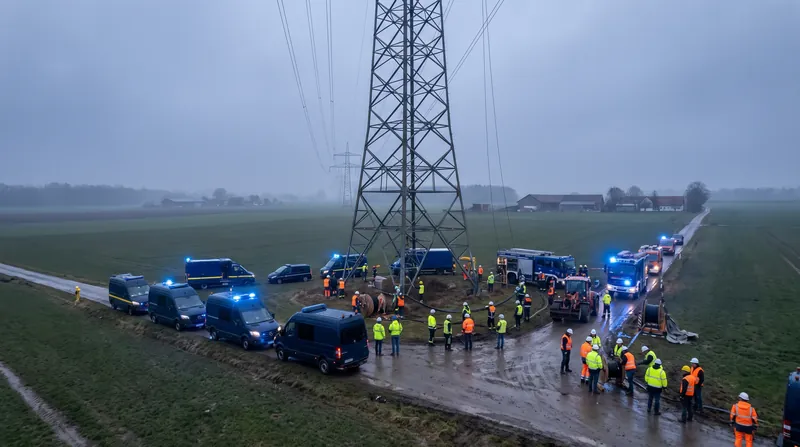
Sabotage Attacks on German Power Grid Force Temporary Shutdown of 4.2 GW of Coal Capacity
6 sources
Wildfire Liability
California Legislature Rejects Utility Wildfire Liability Bill, Sending PG&E and Edison Stocks Down 20%
5 sources

US LNG Export
Cheniere Completes Corpus Christi Stage 3, Boosting US LNG Export Capacity by Over 20%
8 sources

Grid Interconnection
PJM Removes Oklo's 750-Megawatt Advanced Nuclear Project From Grid Queue Over Voltage Standards
5 sources
Comments
Every angle. Every day.
Get Energy stories with full source coverage and perspective breakdowns, free every day.