
Final Seven Champions League League Phase Spots Decided as Play-Offs Conclude
The UEFA Champions League is finalizing its 36-team field this week, officially ushering in the new 'Swiss model' league phase that replaces the traditional group stage.
By Meera Iyer

The most common misconception about the newly expanded UEFA Champions League is that adding more teams simply waters down the product with filler matches. The reality is exactly the opposite. By blowing up the traditional group stage and introducing a 36-team single league table, European football's governing body has engineered a system specifically designed to force the continent's heavyweights into high-stakes collisions from day one.[1]
That reality is crystallizing this week as the final play-off round concludes, officially locking in the last seven spots of the 2026/27 tournament. Across the continent, clubs are navigating the ultimate high-wire act to secure their golden tickets and a share of the massive broadcast revenues that come with entering the new era of the competition.
Twenty-nine clubs have already punched their tickets directly to the league phase, a grueling gauntlet that now stretches deep into January. The final seven entrants are surviving a qualification path that culminates in tense two-legged ties, finalizing a 36-team roster that represents the most radical structural overhaul in modern Champions League history.
Gone are the eight groups of four that defined the competition for decades. In their place is the "Swiss model"—a massive, single league table where every club is ranked from first to 36th. Instead of playing three opponents twice in a familiar home-and-away loop, each team will now face eight entirely different opponents, hosting four matches at home and traveling for four away.[1][3]
To ensure no one gets an easy ride, the 36 clubs are divided into four seeding pots of nine teams each, dictated by their UEFA club coefficient. A team in Pot 1—a tier currently boasting titans like Real Madrid, Manchester City, Bayern Munich, and Inter Milan—does not simply get to feast on the lower pots to pad their goal difference.[1][3]
Under the new rules, every club must play two teams from each of the four pots, including their own. That means the defending champions and the Premier League winners are guaranteed to face two other Pot 1 juggernauts before the knockout rounds even begin, delivering blockbuster television matchups in the autumn rather than waiting for the spring.[1]
The stakes attached to the final league table are immense, turning every goal and every point into a potential lifeline. The top eight teams at the end of January will advance directly to the round of 16, earning a crucial bye and a lighter schedule. For the teams finishing between ninth and 24th, the punishment for missing the top tier is a brutal, two-legged knockout play-off round in February just to survive.[2][3]
Perhaps the most ruthless change is the elimination of the European safety net. For years, teams that stumbled to third place in their Champions League group were parachuted into the Europa League to salvage their season. Now, any club that finishes 25th or lower in the 36-team table is eliminated from continental competition entirely.[3]
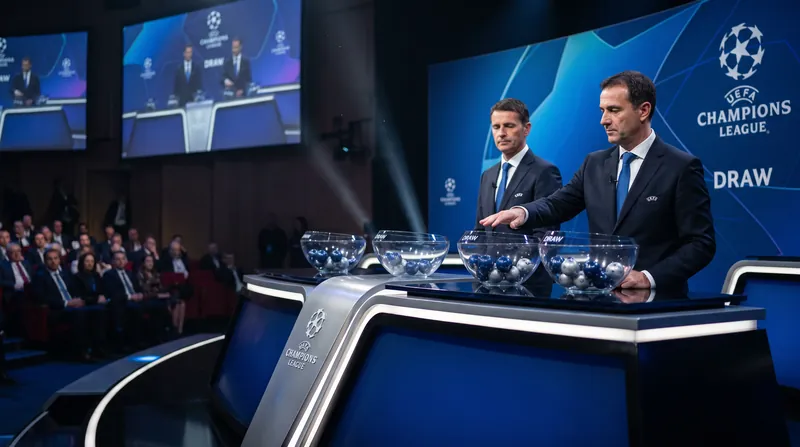
As the final play-off whistles blow on Wednesday night, the focus shifts immediately to Monaco for the highly anticipated league phase draw on August 27. Because a manual draw for this complex format would take hours, a specialized computer system will instantly map out the eight-match gauntlet for every club, officially launching a new, unforgiving era of elite European football.[2][3]
Where opinion splits
UEFA Organizers
Tournament officials argue the new format maximizes competitive balance and fan engagement.
For UEFA, the transition to the Swiss model is a necessary evolution to keep the competition fresh. Organizers point out that the traditional group stage often suffered from 'dead rubber' matches by matchday five, where top teams had already qualified and had nothing to play for. By placing all 36 teams in a single table, every point and every goal matters until the final whistle in January, ensuring that the stakes remain high throughout the entire autumn schedule.
Top-Tier Clubs
Elite clubs welcome the guaranteed blockbuster matchups but remain wary of the expanded schedule.
The continent's biggest clubs have largely supported the format change, as it guarantees them more high-profile matches—and the lucrative broadcast revenue that accompanies them. Playing two other Pot 1 teams in the league phase is a massive commercial draw. However, club executives and managers continue to express concerns about player welfare, noting that the addition of two extra matches in the league phase, plus a potential two-legged play-off for teams finishing 9th to 24th, pushes an already congested calendar to its absolute limit.
Broadcast Partners
Media networks are thrilled by the elimination of the safety net and the introduction of the knockout play-offs.
For broadcasters, the new format is a goldmine of jeopardy. The elimination of the Europa League safety net means that massive clubs can no longer afford a slow start, as finishing 25th results in total elimination. Furthermore, the newly introduced knockout play-off round in February for teams finishing 9th through 24th creates an entirely new window of do-or-die television inventory that didn't exist under the old system.
Key points
- The Champions League expands to 36 teams this season under a new 'Swiss model' format.
- The traditional group stage is replaced by a single league table where every team plays eight matches.
- Clubs will face two opponents from each of the four seeding pots, guaranteeing heavyweight clashes early on.
- The top eight teams advance directly to the round of 16, while teams finishing 9th to 24th enter a play-off.
Unanswered questions
- How the specialized computer software will handle the complexities of the draw in real-time.
- Whether the expanded eight-match league phase will lead to increased player injuries due to calendar congestion.
- How smaller clubs will fare financially if they are eliminated entirely rather than dropping into the Europa League.
- UEFA Organizers
- Tournament officials argue the new format maximizes competitive balance and fan engagement.
- Top-Tier Clubs
- Elite clubs welcome the guaranteed blockbuster matchups but remain wary of the expanded schedule.
- Broadcast Partners
- Media networks are thrilled by the elimination of the safety net and the introduction of the knockout play-offs.
Perspectives this story doesn't cover
- Domestic League Executives
- Player Unions
Sources
Source coverage
3 outlets
3 viewpoints surfaced



- [1]beIN SPORTSTop-Tier Clubs
How Are the Champions League Pots Determined?
Read on beIN SPORTS → - [2]Sky SportsBroadcast Partners
Champions League 26/27 draw, dates, schedule, format and who has qualified from Premier League and around Europe
Read on Sky Sports → - [3]Inter Milan OfficialTop-Tier Clubs
The league phase draw for the UEFA Champions League
Read on Inter Milan Official →

More in Sports
See all →Champions League Records
Erling Haaland Reaches 59 Champions League Goals in 59 Games, Closing in on Lionel Messi's Age Record
6 sources

Coefficient Rules
The 20% Association Floor and the Five-Year Rolling Average: How the UEFA Club Coefficient Actually Works
7 sources
Como 1907
The Relational Engine: How Cesc Fàbregas Engineered Como 1907's Historic Champions League Debut
6 sources

Tournament Rules
Opponent Performance and Disciplinary Points: The 10 Tie-Breakers for the Champions League League Phase
6 sources
Comments
Every angle. Every day.
Get Sports stories with full source coverage and perspective breakdowns, free every day.