
Federal Court Strikes Down New Hampshire Voter Law Requiring Documentary Proof of Citizenship
A federal judge has ruled that New Hampshire cannot eliminate sworn affidavits as a fallback method for proving citizenship during voter registration, striking down key provisions of a 2024 election law.
By Javier Cruz

On May 28, 2026, a federal judge struck down key provisions of a New Hampshire law that required prospective voters to provide documentary proof of citizenship in order to register. U.S. District Court Judge Samantha Elliott ruled that the state cannot eliminate the use of sworn affidavits—a long-standing fallback method that allowed voters without immediate access to a birth certificate or passport to attest to their citizenship under penalty of perjury. The ruling reinstates the affidavit option ahead of the state's September primary and the November midterm elections.[3][5]
The frozen statute, known as House Bill 1569, was signed into law by former Governor Chris Sununu in September 2024. It mandated that anyone registering to vote for the first time in New Hampshire produce physical evidence of U.S. citizenship, explicitly banning the use of the state's Qualified Voter Affidavit. The law also removed a separate affidavit option previously available to voters whose eligibility was challenged on Election Day.[3][5]
Supporters of the legislation, including the New Hampshire Attorney General's office, argued that closing the affidavit loophole was a necessary, common-sense measure to guarantee election integrity. The state contended that requiring hard documentation ensures that only eligible citizens cast ballots and boosts public confidence in the electoral process. Proponents also pointed to polling indicating that a majority of Granite Staters support requiring physical evidence of citizenship to register.[4][5]
A coalition of voting rights organizations, including the ACLU of New Hampshire, the League of Women Voters, and the New Hampshire Youth Movement, immediately challenged the law in federal court. The plaintiffs argued that obtaining a passport or birth certificate can be costly and time-consuming, effectively creating an unconstitutional barrier to the ballot box. During a nine-day bench trial, they presented evidence that the elimination of the affidavit had already disenfranchised voters.[1][3][6]
The real-world impact of HB 1569 became apparent shortly after its implementation. In low-turnout 2025 municipal elections, hundreds of eligible Granite Staters were reportedly turned away at the polls because they lacked the required paperwork on hand. Voting rights advocates highlighted cases of long-time residents, including an 89-year-old former ward clerk who had voted in the state for decades, being denied the ability to cast a ballot.[2][6]
In her ruling, Judge Elliott found that the burden placed on voters significantly outweighed the state's interest in preventing fraud. She noted that a sworn affidavit exposing the signer to criminal prosecution is a valid method of proving citizenship, not merely an exception to the rule. Furthermore, testimony from state election officials revealed that noncitizen voting in New Hampshire is exceedingly rare, with only one prosecution for the offense occurring over the past 26 years.[3][5]
Following the May decision, the New Hampshire Attorney General's office appealed to the First Circuit Court of Appeals and requested that the ruling be paused. The state argued that a new online database available to election officials mitigated any burden on voters. However, in late July 2026, the federal court refused to stay the injunction, blasting state officials for failing to track the full effect of the new law on voter turnout and ensuring the block remains in place while the appeal proceeds.[2][4][5]
The legal battle in New Hampshire mirrors a larger national conflict over ballot access. Republican lawmakers across the country have pushed for strict documentary proof of citizenship requirements, framing them as vital safeguards, while voting rights advocates argue they disproportionately affect young and low-income voters. With the affidavit option restored, New Hampshire election officials have been directed to accept sworn statements, leaving the First Circuit to ultimately decide the fate of HB 1569.[4][6]
Viewpoints in depth
Voting Rights Advocates
Civil rights groups argue that strict documentary requirements function as an unconstitutional barrier to the ballot box.
Organizations like the ACLU and the League of Women Voters contend that requiring a birth certificate or passport disproportionately harms young voters, low-income residents, and marginalized communities who may not have immediate access to vital records. They point to the 2025 municipal elections, where hundreds of eligible voters were turned away, as proof that the law arbitrarily disenfranchises citizens. These groups maintain that the sworn affidavit, which carries severe criminal penalties for perjury, is a highly effective and legally sufficient method of confirming eligibility without suppressing turnout.
Election Security Proponents
Supporters of the law argue that physical proof of citizenship is necessary to maintain public trust in the electoral process.
Proponents of HB 1569, including state Republican leaders and election integrity advocates, argue that the affidavit system represents a loophole that could be exploited by noncitizens. They emphasize that the burden of producing a birth certificate or passport is minimal compared to the state's compelling interest in ensuring that only eligible Americans cast ballots. Supporters frequently cite polling data showing broad public approval for strict voter ID measures, arguing that such laws are essential for preserving the legitimacy of election results in an era of heightened political polarization.
Key points
- A federal judge struck down key provisions of a 2024 New Hampshire law requiring documentary proof of citizenship to register to vote.
- The ruling reinstates the use of sworn affidavits for voters who do not have immediate access to a birth certificate or passport.
- The court found that eliminating the affidavit option placed an unjustifiable burden on voters, violating the First and Fourteenth Amendments.
- State officials argued the law was necessary to prevent voter fraud and boost public confidence in elections.
How we got here
September 2024
Governor Chris Sununu signs HB 1569 into law, eliminating the use of sworn affidavits for voter registration.
2025
The law takes effect, resulting in hundreds of voters being turned away during local municipal elections.
May 28, 2026
A federal judge strikes down the affidavit ban, ruling it an unconstitutional burden on the right to vote.
July 2026
The federal court refuses to pause the ruling, keeping the block in place while the state appeals to the First Circuit.
- Voting Rights Advocates
- Argue that documentary proof of citizenship requirements disenfranchise eligible voters who lack immediate access to vital records.
- Election Security Proponents
- Argue that requiring physical proof of citizenship is a necessary measure to prevent voter fraud and ensure public confidence.
- Neutral Legal Observers
- Focus on the procedural history, court rulings, and the administrative impact on state election officials.
Perspectives this story doesn't cover
- Local poll workers administering the changes
- Voters who were turned away in 2025
Sources
Source coverage
6 outlets
3 viewpoints surfaced






- [1]ACLU of New HampshireVoting Rights Advocates
Federal Court Strikes Down New Hampshire's Anti-Voter Law
Read on ACLU of New Hampshire → - [2]Democracy DocketNeutral Legal Observers
Judge Keeps Block on New Hampshire's Proof of Citizenship Law in Place
Read on Democracy Docket → - [3]The DartmouthVoting Rights Advocates
N.H. voter registration law ruled unconstitutional
Read on The Dartmouth → - [4]NH JournalElection Security Proponents
NHDems Cheer as Federal Judge Blocks Voter ID Registration Mandate
Read on NH Journal → - [5]BallotpediaNeutral Legal Observers
Federal judge strikes down part of New Hampshire's documentary proof of citizenship law
Read on Ballotpedia → - [6]Priorities USAVoting Rights Advocates
Federal judge rules GOP law eliminating affidavit option unconstitutional ahead of 2026 midterms
Read on Priorities USA →
More in Law & Justice
See all →Voting Rights
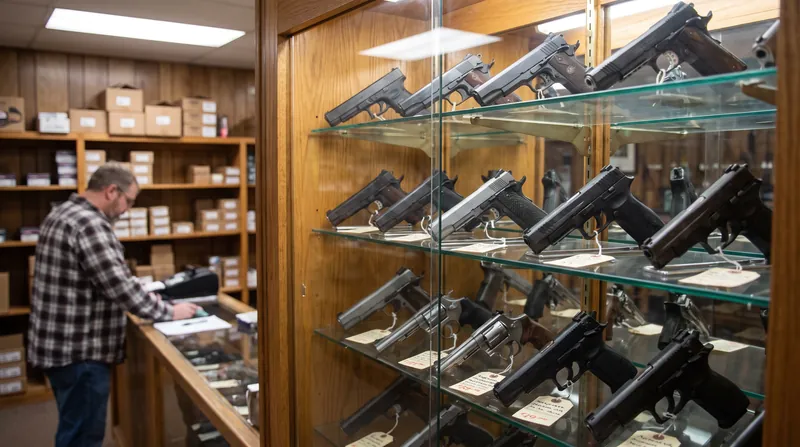
Civil Rights Groups and Denver Sue to Block Armed ICE Officers From Polling Places
4 sources
Second Amendment
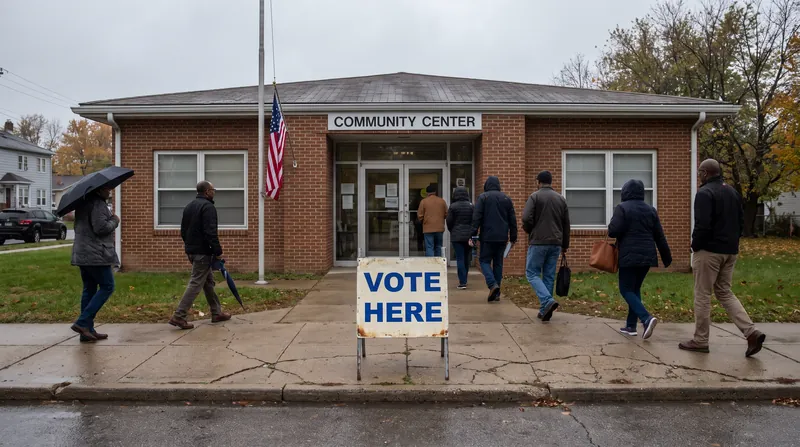
Delaware Supreme Court Reinstates 21-and-Older Firearm Purchasing Law
6 sources
Immigration Enforcement
Federal Judge Upholds New Jersey's Refusal to Assist Federal Immigration Enforcement
5 sources
EPR Legislation
Federal Court Upholds Oregon's Extended Producer Responsibility Packaging Law
7 sources
Comments
Every angle. Every day.
Get Law & Justice stories with full source coverage and perspective breakdowns, free every day.