
Fact-Check: How the End of the Medicare Part D Subsidy Actually Affects 2027 Premiums
The federal government is ending a $3.6 billion stabilization program that kept Medicare prescription drug premiums artificially low. Here is the evidence on what is changing, what statutory protections remain, and how it impacts seniors.
By Hailey Scott

The Centers for Medicare and Medicaid Services (CMS) has announced the termination of the Part D Premium Stabilization Demonstration, a temporary federal program designed to offset insurance premium increases for seniors. The initiative will officially expire at the end of 2026, setting up a structural shift in how standalone Medicare prescription drug plans are priced for the 2027 coverage year. Because the policy change involves complex healthcare financing, it has generated conflicting claims regarding its impact on the 25 million Americans enrolled in Part D plans.[1][4]
By examining agency data, health policy research, and the mechanics of the Inflation Reduction Act, beneficiaries can separate confirmed statutory facts from political framing. This evidence pack breaks down exactly what the expiring subsidy did, why it was implemented, and how its removal will alter the financial landscape for seniors preparing for the upcoming Medicare open enrollment period.[2][5]
To understand the evidence surrounding the subsidy's removal, it is necessary to examine why the program was created. The 2022 Inflation Reduction Act fundamentally restructured Medicare Part D by introducing a hard cap on out-of-pocket prescription drug spending. For 2026, that statutory cap is set at $2,100. This legislative change was designed to shield patients from catastrophic pharmacy bills, which previously could run into the tens of thousands of dollars for those requiring specialty medications for conditions like cancer or rheumatoid arthritis.[1][7]
While the out-of-pocket cap provided unprecedented financial security for patients at the pharmacy counter, it did not inherently reduce the underlying cost of the drugs. Instead, it shifted a massive new financial liability onto the private insurance companies that administer Part D plans. Under the new rules, once a patient hits the $2,100 threshold, the insurance provider becomes responsible for a significantly larger share of the remaining medication costs for the rest of the year.[1][5]
Anticipating that insurers would drastically raise upfront monthly premiums to cover their new out-of-pocket liabilities, the Biden administration implemented the stabilization demonstration in 2024. The program paid billions of dollars directly to insurers on the condition that they artificially suppress premium hikes during the transition period. In essence, the federal government subsidized the insurance companies' increased risk to ensure that seniors did not experience sudden, exorbitant spikes in their monthly bills.[1][6]
The central debate now revolves around whether this multibillion-dollar program functioned as a necessary consumer protection or an unwarranted corporate subsidy. CMS Administrator Dr. Mehmet Oz characterized the stabilization funds as a taxpayer bailout for insurers. The administration argues that health plans have now operated under the redesigned Part D structure long enough to possess sufficient actuarial data, allowing them to price their offerings accurately without requiring ongoing government assistance.[1][3]
Agency officials project that terminating the program will save billions in federal funds, noting that the subsidy cost the government an estimated $3.6 billion in 2026 alone. CMS maintains that the insurance market has stabilized and estimates that despite the loss of the federal offset, most beneficiaries will see premium increases of less than $10 per month in 2027. The agency asserts that competition among insurers will naturally keep prices in check.[2][4]
However, independent health policy organizations present a different financial model regarding the impending cost shift. Researchers at KFF, a nonpartisan health policy nonprofit, note that the federal subsidy reduced average standalone drug plan premiums by $16 per month in 2026. With the average monthly premium for a standalone Part D plan currently sitting at roughly $36, the removal of a $16 federal offset represents a substantial proportional shift in the underlying economics of the plans.[1][2]
Analysts caution that without this financial backing, insurers building their 2027 bids may pass those unmitigated costs directly to seniors, resulting in steeper increases than the agency projects. Because the stabilization funds went directly to the insurers rather than the beneficiaries, many seniors were entirely unaware that their 2025 and 2026 premiums were being artificially suppressed by federal dollars, making any sudden market correction in 2027 potentially jarring.[2][4][6]
The termination also highlights a structural disparity between standalone Part D plans and Medicare Advantage plans. Medicare Advantage providers can utilize broader Medicare funding—drawn from the medical coverage side of the program—to subsidize their prescription drug offerings, allowing them to keep drug premiums artificially low. Standalone Part D plans, which only cover medications, do not have this financial flexibility and must price their premiums based solely on pharmacy risk.[5]
Health policy advocates warn that if standalone premiums spike in 2027, more seniors might be financially pressured into abandoning traditional Medicare and switching to privatized Medicare Advantage plans. While these all-in-one plans offer lower upfront premiums, they often come with restrictive provider networks and stringent prior authorization requirements that limit patient choice, fundamentally altering how seniors access their healthcare.[2][5]
Amid the policy shift, a widespread point of misinformation is the status of the out-of-pocket spending cap itself. The statutory cap on pharmacy spending is entirely separate from the expiring stabilization demonstration and remains firmly enshrined in federal law. Seniors will still be protected by the $2,100 limit, and the $35 monthly cap on insulin remains fully active. The upcoming changes apply exclusively to the upfront monthly premiums charged by the plans.[1][6]
The exact financial impact on individual beneficiaries remains the most significant area of transparent uncertainty. Because insurance providers are currently finalizing their 2027 plan structures in response to the CMS announcement, exact premium rates and deductible changes will not be published until September. Until those bids are finalized and approved by the government, any specific premium projections remain speculative.[2][3]
As the October 15 open enrollment period approaches, healthcare navigators emphasize the necessity of active plan comparison. Because individual insurers will respond differently to the loss of the federal subsidy—with some raising premiums and others altering their covered drug formularies—beneficiaries who automatically renew their current standalone plans may face unexpected cost increases. Proactive evaluation will be essential for seniors seeking to balance their specific medication needs against a shifting landscape of monthly premiums.[1][6]
Key points
- The Part D Premium Stabilization Demonstration, which subsidized insurer costs, will expire at the end of 2026.
- CMS officials argue the $3.6 billion program was a corporate bailout that is no longer necessary for market stability.
- Health policy analysts warn the removal of the $16 average monthly subsidy could lead to proportional premium hikes.
- The $2,100 statutory cap on out-of-pocket prescription drug spending remains in federal law and is unaffected by this change.
What we don’t know
- The exact premium increases individual insurers will implement for 2027 standalone Part D plans.
- Whether the potential cost increases will drive a mass migration of seniors from traditional Medicare into privatized Medicare Advantage plans.
- How insurers might alter their drug formularies (covered medication lists) to offset the loss of federal stabilization funds.
How we got here
August 2022
The Inflation Reduction Act is signed, capping out-of-pocket drug costs but shifting liabilities to insurers.
January 2024
The Biden administration launches the Premium Stabilization Demonstration to prevent insurers from spiking premiums.
January 2026
The out-of-pocket spending cap adjusts to $2,100 for the calendar year.
July 2026
The Trump administration announces the stabilization program will end a year early, expiring after 2026.
October 2026
Medicare Open Enrollment begins, allowing seniors to select their 2027 plans.
- Consumer Health Advocates
- Warns that removing the federal subsidy will directly increase monthly premiums for seniors on fixed incomes.
- Federal Health Administrators
- Argues the stabilization program was an unnecessary bailout for insurers and that the market can now sustain itself without taxpayer funds.
- Market Analysts
- Focuses on the structural shifts in the insurance market and the potential migration of beneficiaries to Medicare Advantage plans.
Perspectives this story doesn't cover
- Independent pharmacists who must navigate changing reimbursement rates from Part D insurers.
- Beneficiaries with high-cost specialty medication needs who rely heavily on standalone Part D plans.
Sources
Source coverage
7 outlets
3 viewpoints surfaced







- [1]ForbesMarket Analysts
Medicare's Part D Premium Stabilization Demonstration will end after this year
Read on Forbes → - [2]The Washington PostConsumer Health Advocates
Medicare drug coverage premiums are expected to rise in 2027
Read on The Washington Post → - [3]Fast CompanyFederal Health Administrators
A Biden-era program meant to help seniors save money on prescription premiums is ending in 2027
Read on Fast Company → - [4]Houston ChronicleFederal Health Administrators
The Trump administration is ending a Medicare drug subsidy program. Here's how it could affect costs.
Read on Houston Chronicle → - [5]Medicare Rights CenterConsumer Health Advocates
Premium Subsidy Reduced in 2026, Eliminated in 2027
Read on Medicare Rights Center → - [6]Senior Healthcare SolutionsConsumer Health Advocates
Medicare Part D subsidies are ending after 2026
Read on Senior Healthcare Solutions → - [7]Centers for Medicare & Medicaid ServicesFederal Health Administrators
Final CY 2026 Part D Redesign Program Instructions
Read on Centers for Medicare & Medicaid Services →

More in News & Politics
See all →Surveillance Law
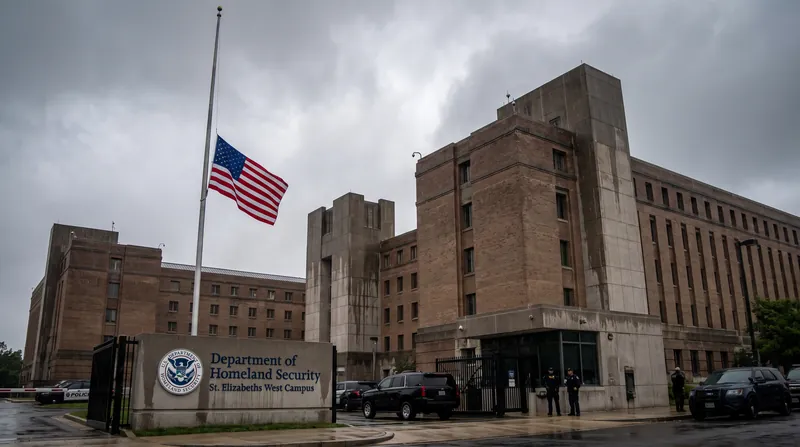
DHS Used Obscure Customs Law to Subpoena Journalist and Non-Profit Records, Bypassing Courts
6 sources
Tax Policy
White House Lacks Data to Support Trump's Claim of $10,000 Tax Savings for Tipped Workers
3 sources

Vaccine Policy
Trump Executive Order Reduces Recommended Childhood Vaccines, Falsely Links MMR Shot to Autism
7 sources
Airspace Defense
Spanish F/A-18 Shoots Down Suspected Russian Drone in Romanian Airspace, Marking Direct NATO Military Action
6 sources

Comments
Every angle. Every day.
Get News & Politics stories with full source coverage and perspective breakdowns, free every day.