
Explainer: How Apple's 'Private Cloud Compute' Solved the AI Privacy Problem
Apple's rollout of 'Apple Intelligence' fundamentally shifts consumer AI away from data-hungry cloud models toward a hybrid architecture. By combining localized small language models with cryptographically verifiable 'Private Cloud Compute,' the system delivers personalized AI without compromising user privacy.
By Ishani Patel

Apple's latest iteration of 'Apple Intelligence' marks a definitive pivot in how consumers interact with artificial intelligence, shifting the industry's focus from massive, data-harvesting cloud models to highly secure, on-device processing. For years, the tech industry operated under the assumption that highly capable AI required massive centralized servers to process user requests.
Apple's new architecture fundamentally breaks this compromise. By deeply integrating AI into the core of iOS, iPadOS, and macOS, the company has built a system that understands deep personal context without ever surrendering that sensitive data to the cloud. This approach redefines the baseline for consumer technology, proving that utility does not require the sacrifice of personal privacy.[1]
The generative AI boom that began in late 2022 relied on a fundamental trade-off: to get smart, context-aware answers, users had to send their personal queries, private documents, and intimate photos to third-party servers operated by massive tech conglomerates. These servers acted as black boxes, processing the data and often retaining it to train future iterations of their models.
This created a massive privacy vulnerability, as highly sensitive personal information was aggregated in centralized databases vulnerable to breaches, insider threats, and opaque corporate data policies. Apple Intelligence was explicitly designed to dismantle this paradigm by moving the brain of the AI directly into the user's pocket.
The foundation of this privacy-first system is a family of highly optimized Small Language Models (SLMs) that run entirely locally on the user's hardware. Unlike frontier models that boast trillions of parameters and require massive data centers to function, Apple's on-device models are compact, utilizing roughly three billion parameters.
Despite their smaller size, these models are highly specialized to handle the vast majority of daily computational tasks. Whether a user is summarizing a long email thread, proofreading a text message, or categorizing a flood of push notifications, the processing happens directly on the physical device, ensuring the data never leaves the user's possession.[3]
This localized processing is made possible by the specialized Neural Engine embedded inside modern Apple Silicon. By dedicating specific hardware pathways to machine learning tasks, Apple ensures that these on-device models run efficiently without draining the device's battery or monopolizing the central processing unit.
Because this computation requires no internet connection, it guarantees absolute privacy while also providing near-instantaneous response times. Users do not have to wait for a distant server to process a request and return an answer; the AI responds with the fluidity of a native application, bypassing the latency inherent in traditional cloud-based AI systems.[1][3]
To make the localized AI genuinely useful rather than just a generic text generator, Apple introduced the 'Semantic Index,' a highly secure, localized database that maps the intricate relationships between a user's disparate apps and personal data. When a user asks Siri a complex, context-heavy question like, "When is my mom's flight landing?", the Semantic Index springs into action.
It securely cross-references the user's contact card for "mom" with recent emails, text messages, or PDF itineraries containing flight numbers, pulling the exact arrival time in milliseconds. Crucially, this rich web of personal context is sandboxed within the device's secure enclave.[1][2]
Building upon the Semantic Index, Apple Intelligence utilizes 'App Intents' to allow Siri to take concrete actions across different applications. Instead of just answering questions, the AI can execute multi-step workflows. A user can say, "Pull up the photos from my trip to Tokyo and email the ones of the temple to Sarah," and the on-device model will seamlessly navigate the Photos app, identify the correct images, open the Mail app, draft the message, and attach the files.
This level of deep, cross-application integration is only possible because the AI has system-level access to the device's data, a privilege that would be a massive security risk if the processing occurred in the cloud.[2]
However, on-device models have strict computational and physical limits. They simply cannot perform complex logical reasoning, write extensive software code, or synthesize vast amounts of external, real-time knowledge with the same proficiency as massive data center models. A three-billion-parameter model cannot replace the encyclopedic knowledge and advanced reasoning capabilities of a frontier model. When a user's request exceeds the iPhone's local processing capabilities, the operating system transparently evaluates the complexity of the task and determines that external computational power is required to fulfill the prompt.[3]
This is where Apple's most significant engineering feat, Private Cloud Compute (PCC), comes into play. When a query is deemed too complex for the local hardware, the operating system routes the request to Apple's custom-built server infrastructure.
This handoff is designed to be entirely seamless to the user, providing the illusion of boundless computational power while maintaining a strict, cryptographically enforced boundary between the user's personal device and the external cloud environment. PCC represents a fundamental reimagining of cloud architecture, built from the ground up to prioritize data security over data harvesting.
Unlike traditional cloud AI architectures, which often log user interactions to train future models, Private Cloud Compute servers are built entirely with custom Apple Silicon and run a hardened, stripped-down operating system designed exclusively for stateless processing. Stateless processing means that the server receives the encrypted request, decrypts it just long enough to process the answer, returns the result to the user, and immediately wipes all memory of the transaction.
There are no persistent logs, no user profiles, and no data retention. Apple cannot see the data, cannot retrieve the request after the fact, and explicitly guarantees at the architectural level that user data is never used to train its foundational models.[3]
To prove that these privacy claims are not merely corporate marketing, Apple has taken the unprecedented step of making the virtual software images of its Private Cloud Compute servers publicly available for independent security researchers to audit. By opening up the underlying code, Apple allows the global cybersecurity community to verify that the servers are indeed stateless and that no hidden backdoors exist.
If a researcher finds a vulnerability or a mechanism that could compromise user data, Apple offers massive financial bug bounties. This approach effectively crowdsources the cryptographic verification of its privacy guarantees, shifting the burden of trust from blind faith to mathematically provable security protocols.
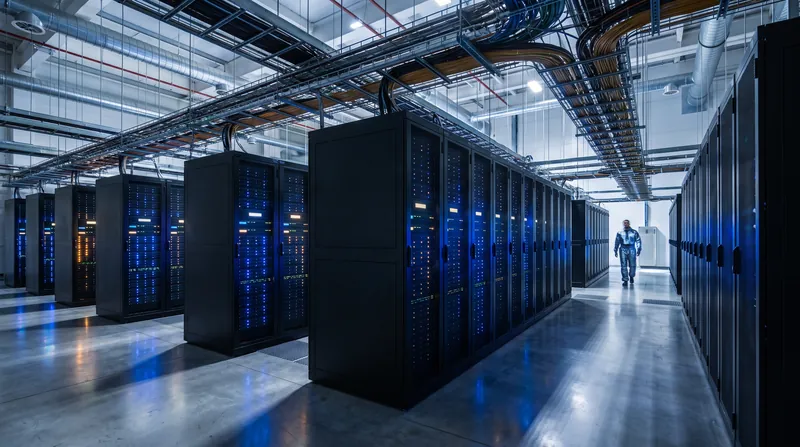
Despite the cryptographic elegance of the Private Cloud Compute architecture, the system introduces new economic and engineering realities. Maintaining millions of custom, highly secure servers powered by Apple Silicon is vastly more expensive than renting standard, off-the-shelf cloud compute from providers like Amazon or Microsoft.
Apple is effectively building a parallel cloud infrastructure dedicated solely to secure AI inference. This massive capital expenditure highlights the company's commitment to its privacy-first strategy, but it also raises questions about the long-term scalability of the system as user demand for complex AI processing continues to grow exponentially.[3]
Furthermore, while Apple Intelligence excels at navigating personal context and executing device-level commands, its foundational models still trail behind the massive frontier models from companies like OpenAI, Google, and Anthropic in pure, unconstrained reasoning capabilities.
To bridge this capability gap without compromising its core privacy tenets, Apple has implemented a modular approach, allowing users to opt-in to third-party frontier models like ChatGPT for specific, highly complex tasks. However, this integration is strictly gated; the operating system requires explicit user permission before sending any prompt or contextual data to an external provider, keeping the user in absolute control of the data flow.[1]
Ultimately, Apple's architecture proves that the technology industry does not have to choose between delivering advanced, context-aware capabilities and protecting fundamental human privacy. By successfully deploying Private Cloud Compute and highly capable on-device models at a global scale, Apple has set a new, mathematically verifiable baseline for consumer artificial intelligence.
This architectural pivot forces competitors to either match these stringent privacy standards or explicitly justify to consumers why their AI systems require the continuous harvesting of personal data. The era of the black-box AI cloud is facing its most significant challenge yet.
Key points
- Apple Intelligence shifts the majority of AI processing directly onto the user's device, utilizing roughly 3-billion-parameter models.
- The 'Semantic Index' allows Siri to cross-reference personal data across apps without sending that data to the cloud.
- Complex requests are routed to 'Private Cloud Compute,' custom servers that process data statelessly and retain zero logs.
- Apple has opened its server software to independent security researchers to cryptographically verify its privacy claims.
What we don’t know
- How the massive capital expenditure required to build custom Apple Silicon server farms will impact Apple's long-term margins.
- Whether independent security researchers will eventually find a vulnerability in the Private Cloud Compute architecture.
- How quickly competitors like Google and Samsung can replicate the deep OS-level integration of the Semantic Index without compromising their ad-based business models.
How we got here
Late 2022
The generative AI boom begins, relying heavily on massive, data-harvesting cloud models.
June 2024
Apple initially previews Apple Intelligence and the Private Cloud Compute architecture at WWDC.
Late 2025
Apple rolls out full system-wide App Intents, allowing Siri to take complex actions across third-party applications.
June 2026
Apple expands Private Cloud Compute capacity and opens the architecture to broader independent security auditing.
- Privacy Advocates
- Applaud the stateless architecture and cryptographic verification as a massive leap forward for consumer data protection.
- AI Capabilities Researchers
- Emphasize the inherent limitations of small language models and the ongoing need for massive frontier models for complex reasoning.
- Consumer Tech Analysts
- Focus on the seamless user experience, cross-app integration, and how this architecture locks users deeper into the ecosystem.
Perspectives this story doesn't cover
- Cloud Infrastructure Providers
- Open-Source AI Developers
Sources
Source coverage
3 outlets
3 viewpoints surfaced



- [1]The VergeConsumer Tech Analysts
Siri AI makes the Apple Watch finally feel like a wrist computer
Read on The Verge → - [2]TechCrunchConsumer Tech Analysts
Beyond Siri: Here are the practical AI features coming to your iPhone in iOS 27
Read on TechCrunch → - [3]BloombergAI Capabilities Researchers
Apple's AI Strategy Relies Heavily on Custom Server Chips
Read on Bloomberg →
More in Artificial Intelligence
See all →Macroeconomics
Federal Reserve Raises US Growth Forecast, Citing Surging AI Infrastructure Investment
4 sources

Protein Design
Microsoft's BioEmu and BindCraft Spark a New 'AlphaFold Moment' in Protein Engineering
5 sources

AI Governance
Anthropic Sues US Defense Department Over 'Supply Chain Risk' Label After Refusing to Remove AI Safety Guardrails
2 sources

AI Regulation
How the US Government Blocked OpenAI's GPT-5.6: Inside the New AI Safety Regime
5 sources

Comments
Every angle. Every day.
Get Artificial Intelligence stories with full source coverage and perspective breakdowns, free every day.