
EPA Approves New Fluorinated Pesticides for US Crops: What Consumers Need to Know
The EPA has authorized new agricultural herbicides that contain carbon-fluorine bonds, sparking a debate over chemical definitions and food safety. Here is how the new regulations impact the food supply and what they mean for consumers.
By Derya Kaplan

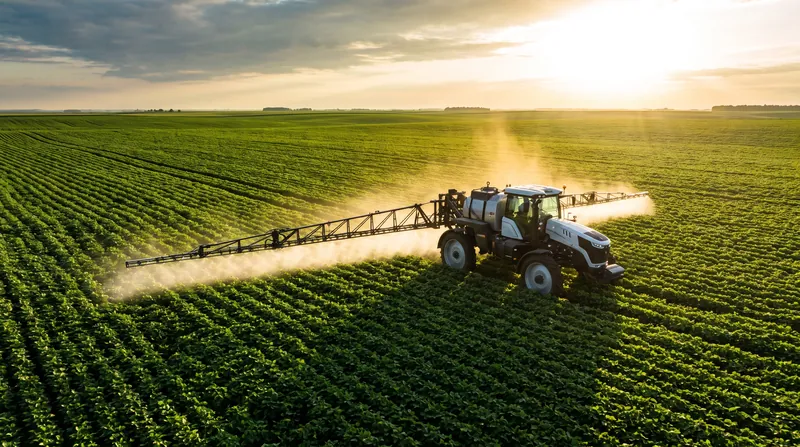
On June 30, 2026, the Environmental Protection Agency (EPA) under the Trump administration authorized the use of new agricultural herbicides, including diflufenican and epyrifenacil, for major U.S. crops. These chemicals are now approved for application on millions of acres of corn, soybeans, wheat, and fallow land. The decision has triggered a complex scientific and regulatory debate about how modern agricultural chemicals are classified and monitored. While the agriculture industry welcomes these new tools to fight increasingly resistant weeds, environmental watchdogs are raising alarms, classifying the compounds as "forever chemicals."[1][5]
To understand the controversy surrounding these approvals, it is necessary to look closely at the underlying chemistry. The debate centers on per- and polyfluoroalkyl substances, commonly known as PFAS. This is a broad family of synthetic chemicals utilized across various industries for their incredible durability. The defining characteristic of a PFAS compound is the presence of carbon-fluorine bonds, which are among the strongest chemical bonds found in nature. This strength makes the chemicals highly effective, but it also means they are notoriously resistant to breaking down in the environment.[6][7]
The core of the current regulatory dispute lies in how different organizations define a PFAS. Under a strict structural definition adopted by the EPA in recent years, a chemical must contain specific saturated carbon-fluorine chains to be officially labeled and regulated as a PFAS. Because diflufenican and epyrifenacil do not meet this exact structural criteria, the EPA does not classify or regulate them as forever chemicals. This narrower definition dictates how the agency assesses the environmental impact and safety thresholds for new agricultural products.[3]
However, international organizations, independent scientists, and environmental advocacy groups often use a much broader definition. In their view, any chemical containing at least one fully fluorinated carbon atom should be grouped into the PFAS family. Organizations like the Center for Biological Diversity and the Environmental Working Group (EWG) argue that the EPA's definition is dangerously narrow. They point out that regardless of the specific chain structure, these new pesticides still rely on highly persistent carbon-fluorine bonds that behave similarly to recognized forever chemicals in the environment.[1][2]
The primary environmental concern is what happens to these pesticides after they are sprayed on fields. Researchers warn that as these fluorinated compounds degrade in the soil and water, they do not simply disappear. Instead, they can break down into smaller, highly persistent PFAS variants. One notable byproduct is trifluoroacetic acid (TFA), an ultra-short-chain PFAS that is highly mobile in water. Environmental advocates argue that assessing these chemicals individually ignores the cumulative risk of their breakdown products accumulating in local watersheds and drinking water supplies over time.[1][2]
On the agricultural side, the push for these new chemicals is driven by a genuine crisis in American farming: herbicide-resistant weeds. Over the past two decades, invasive species like waterhemp and Palmer amaranth have evolved to survive older, widely used chemicals. These "superweeds" can devastate crop yields, threatening the economic viability of farms across the Midwest and the broader stability of the food supply. Farmers have been urgently requesting new chemical tools to manage these resistant populations.[3]
Diflufenican offers a novel mechanism of action that these weeds have not yet adapted to. It acts as a phytoene desaturase (PDS) inhibitor. In simple terms, the chemical blocks the weed's ability to produce essential pigments, causing the susceptible plant to bleach white and eventually die. For the agricultural industry, introducing a new mechanism of action is a crucial strategy for breaking the cycle of weed resistance and maintaining high-yield crop production.[3]
Toxicologists also note that adding fluorine to pesticide molecules can make them significantly more stable and effective at lower concentrations. Proponents of the new approvals argue that this increased efficiency is actually a benefit. Because the chemicals are more potent, farmers theoretically need to spray a lower overall volume of pesticides on their fields compared to older, less effective alternatives. The EPA maintains that when used according to the approved labels, these products offer unique benefits for users and the public without exceeding safety thresholds.[4]
For home gardeners and everyday consumers, the immediate impact of these approvals is indirect but highly relevant. It is important to note that diflufenican and epyrifenacil are approved strictly for large-scale commercial agriculture and industrial weed management. They are not authorized for residential lawn care, nor will they be found on the shelves of local garden centers for use in backyard vegetable plots.[3]
However, because these chemicals are approved for use on widely consumed staple crops, residues can potentially enter the broader food supply. A recent report highlighted by environmental groups found that a significant percentage of non-organic produce already contains traces of various fluorinated pesticides. While the EPA sets maximum residue limits designed to protect human health, critics argue that these limits often fail to account for the combined exposure of multiple chemicals consumed over a lifetime.[2][7]
Consumers looking to minimize their exposure to agricultural chemicals can take several practical, evidence-based steps in the kitchen. Thoroughly washing all produce under running water and using a vegetable brush on firm items can help remove surface residues. Peeling root vegetables and removing the outer leaves of leafy greens are also effective strategies for reducing topical chemical exposure, though these methods cannot remove compounds that have been absorbed systemically into the plant.[2]
For those who want to avoid synthetic fluorinated pesticides entirely, purchasing certified organic produce is the most reliable option. National organic standards strictly prohibit the use of synthetic herbicides, including diflufenican and epyrifenacil. Additionally, engaging with local growers at farmers' markets allows consumers to ask direct questions about weed management practices and support farms that prioritize mechanical or non-chemical weed control methods.[2]
As the EPA continues to review additional fluorinated compounds for agricultural use, the debate over how to define, monitor, and regulate forever chemicals is far from settled. The tension between the agricultural need for effective weed control and the environmental imperative to protect water systems will likely shape American farming policy for years to come. For now, understanding the science behind these approvals empowers consumers to make informed choices about the food they buy and the agricultural systems they support.[4][5]
Key points
- The EPA recently approved new agricultural herbicides, including diflufenican and epyrifenacil, for use on major U.S. crops.
- Environmental groups classify these compounds as PFAS 'forever chemicals' due to their strong carbon-fluorine bonds.
- The EPA does not regulate them as PFAS because they do not meet the agency's strict structural definition.
- Farmers argue the new chemicals are urgently needed to combat herbicide-resistant 'superweeds' that threaten crop yields.
Open questions
- The long-term cumulative health effects of consuming trace amounts of multiple different fluorinated pesticides over a lifetime.
- Exactly how quickly these specific new compounds will break down into secondary chemicals like TFA in various soil types.
- Whether the EPA will eventually broaden its official definition of PFAS to align with international scientific standards.
Timeline
2023
The EPA finalizes a narrower structural definition for what constitutes a PFAS chemical in regulatory contexts.
November 2025
The EPA approves the fluorinated pesticides cyclobutrifluram and isocycloseram for use on crops like lettuce and potatoes.
June 30, 2026
The EPA approves diflufenican and epyrifenacil for major U.S. crops, sparking renewed debate over chemical classifications.
- Environmental Watchdogs
- Advocates argue that any chemical with carbon-fluorine bonds should be regulated as a PFAS due to persistence and breakdown risks.
- Agricultural Industry
- Farmers and industry groups stress the urgent need for new chemical tools to combat crop-destroying superweeds.
- Regulatory Agencies
- Regulators maintain that strict structural definitions are necessary to accurately assess chemical safety and toxicity.
Perspectives this story doesn't cover
- Municipal Water Treatment Operators
- Organic Farmers
Sources
Source coverage
7 outlets
3 viewpoints surfaced







- [1]Center for Biological DiversityEnvironmental Watchdogs
EPA Approves Two New 'Forever Chemical' Pesticides for Use on Major US Crops
Read on Center for Biological Diversity → - [2]Environmental Working GroupEnvironmental Watchdogs
EPA quietly unleashes three toxic 'forever chemical' pesticides onto America's food supply
Read on Environmental Working Group → - [3]Goldberg SegallaAgricultural Industry
EPA Approves Three New Pesticides That May Constitute PFAS
Read on Goldberg Segalla → - [4]The Washington PostRegulatory Agencies
EPA just approved new 'forever chemical' pesticides for use on food
Read on The Washington Post → - [5]Common DreamsEnvironmental Watchdogs
Trump EPA Approves Highly Persistent Pesticides for Food Crops
Read on Common Dreams → - [6]PBS NewsRegulatory Agencies
The EPA is starting to allow the use of pesticides containing PFAS on food
Read on PBS News → - [7]PFAS CentralEnvironmental Watchdogs
PFAS pesticides approved after EPA adopts new toxicity definition
Read on PFAS Central →
More in Home
See all →Pesticide Regulation
EPA Finalizes Vulnerable Species Action Plan, Mandating New Pesticide Use Limits in Protected Habitats
3 sources

Soil Chemistry
The Chemistry of NPK: How Plants Actually Use Nitrogen, Phosphorus, and Potassium for Growth
5 sources

Soil Science
The Science of Biochar: How Pyrolyzed Biomass Actually Changes Soil Structure
3 sources

Property Rights
How the 'Right to Garden' Movement is Rewriting the Rules of the American Front Yard
5 sources

Comments
Every angle. Every day.
Get Home stories with full source coverage and perspective breakdowns, free every day.