
DOE Unveils $17.5 Billion Loan Program for 10 New Nuclear Reactors to Power AI Boom
The Department of Energy is offering $17.5 billion in conditional loans to accelerate the construction of 10 standardized nuclear reactors, aiming to meet the massive electricity demands of artificial intelligence data centers.

Share this story
The US Department of Energy has unveiled a $17.5 billion federal financing initiative designed to jumpstart the construction of 10 new large-scale commercial nuclear reactors. Announced by Energy Secretary Chris Wright, the conditional loans aim to break a decades-long stagnation in American nuclear development. The primary catalyst for this sudden urgency is the explosive growth of artificial intelligence, which is driving unprecedented electricity demand from massive data centers.[1][3]
The financing will be administered through the DOE's newly rebranded Office of Energy Dominance Financing (EDF). Rather than funding the entirety of the construction, the $17.5 billion in low-interest debt is specifically earmarked for long-lead components. These are highly specialized parts like pressure vessels, steam generators, and main coolant pumps that take years to forge and manufacture. By securing these components early, federal officials estimate the deployment timeline for the reactors could be shortened by up to three years.[2][4]
The sheer scale of the initiative represents a fundamental shift in how the United States approaches nuclear infrastructure. The DOE plans to select five sites across the country, with each location hosting two reactors. To qualify for the federal debt, which caps at $3.5 billion per site, the utility companies and their partners must contribute a combined $5 billion in private equity across the five projects. Seven utilities have already signed letters of intent, signaling strong market appetite.[1][5]
The driving force behind this nuclear renaissance is the tech industry. Hyperscalers—the massive technology companies operating the world's largest data centers, such as Meta, Microsoft, and Google—are facing a severe energy bottleneck. Artificial intelligence computations require exponentially more power than traditional cloud computing, and these companies have strict internal mandates to power their operations with carbon-free energy. Wind and solar, while cheap, lack the 24/7 reliability required to keep data centers running continuously.[2][4]
Nuclear power provides the ideal solution: a steady, uninterrupted flow of baseload electricity without greenhouse gas emissions. Energy Secretary Wright noted that hyperscalers are expected to play a direct role in underwriting these new reactors. By signing long-term Power Purchase Agreements upfront, tech giants guarantee a buyer for the electricity at a fixed rate, which dramatically de-risks the multi-billion-dollar construction process for the utility companies. Some tech firms may even take direct equity stakes in the plants.[2][4]
To avoid the pitfalls of past nuclear projects, the DOE is mandating a standardized approach. All 10 of the proposed reactors will utilize the exact same design: the Westinghouse AP1000. This is the nation's flagship advanced light-water reactor, capable of generating roughly 1,100 megawatts of electricity per unit—enough to power a midsize city or a cluster of hyper-dense AI data centers.[4][6]
Standardization is the industry's strategy to overcome its most glaring vulnerability: cost overruns. For decades, the U.S. treated every nuclear plant as a bespoke mega-project, leading to immense regulatory and construction friction. The only two large reactors built from scratch in the U.S. in recent years—Georgia Power's Plant Vogtle Units 3 and 4—also used the AP1000 design. However, they arrived years behind schedule and billions of dollars over budget.[1][4]
Officials argue that Vogtle's struggles were the growing pains of a dormant industry trying to rebuild its supply chain from scratch amid a global pandemic. By committing to a bulk order of 10 identical reactors, the DOE aims to transition nuclear construction from a custom craft to an industrialized, repeatable process. By building in volume and at multiple locations, the government believes it can stand up a large supply chain and build a deep reservoir of construction expertise.[1][4]
This fleet-level procurement strategy provides certainty to heavy manufacturers. When a forge knows it has orders for 10 pressure vessels rather than just one, it can invest in specialized tooling, hire permanent workforces, and optimize its assembly lines. This economies-of-scale approach is precisely how international competitors have managed to build their own fleets of advanced reactors at a fraction of the cost and time seen in the West.[2][4]
The timeline for the U.S. initiative is aggressive but reflects the long horizons of nuclear engineering. The DOE hopes to finalize site selections and begin preliminary construction by 2030. If the supply chain optimizations hold true, the first of these new reactors could become operational in the mid-2030s. This aligns with projections that U.S. electricity demand could surge by 20% over the next decade, driven largely by the electrification of transport and the proliferation of AI.[1][3]
Despite the federal backing and tech-industry enthusiasm, significant uncertainties remain. The nuclear regulatory process in the United States is notoriously stringent, designed to prioritize safety above all else. While using a pre-licensed design like the AP1000 streamlines the approval process, site-specific environmental reviews and public hearings will still take years to navigate.[3][5]
Furthermore, the financial risk has not been entirely eliminated. While the $17.5 billion in federal loans covers the critical early-stage components, the total cost of building 10 large reactors will likely exceed $100 billion. Utility companies must convince their state-level public utility commissions that ratepayers will not be left holding the bag if construction timelines slip or tech companies unexpectedly alter their data center expansion plans.[2][5]
Another looming bottleneck is the nuclear fuel supply. The U.S. is simultaneously racing to rebuild its domestic uranium enrichment capabilities to ensure these new reactors have a reliable, secure fuel source. The DOE has already awarded billions to enrichment companies to jumpstart the production of advanced nuclear fuels, attempting to decouple the Western nuclear industry from reliance on foreign state-owned enterprises.[2][3]
Ultimately, this $17.5 billion loan program represents a high-stakes wager that the United States can reclaim its historical leadership in nuclear engineering. If successful, it will provide a blueprint for decarbonizing the most energy-intensive sectors of the modern economy. By aligning the deep pockets of the AI industry with federal financing mechanisms, the U.S. is attempting to engineer a nuclear renaissance that is driven not just by climate goals, but by the raw economic imperative of technological supremacy.[3][4]
Key points
- The DOE is offering $17.5 billion in conditional loans for 10 new nuclear reactors.
- The initiative aims to meet the skyrocketing electricity demand from AI data centers.
- Loans will fund long-lead components to shorten deployment timelines by up to three years.
- All 10 reactors will use the standardized Westinghouse AP1000 design to reduce costs.
Open questions
- Which five specific sites will be selected to host the 10 new reactors.
- Whether standardizing the reactor design will actually prevent the cost overruns seen in previous U.S. nuclear projects.
- How quickly the U.S. can rebuild its domestic supply chain for specialized nuclear components.
Timeline
1970–1990
The vast majority of the current U.S. nuclear power fleet is constructed and brought online.
2023–2024
Georgia Power's Plant Vogtle Units 3 and 4 enter commercial operation after years of delays and billions in cost overruns.
May 2026
The administration sets a national goal to quadruple U.S. nuclear energy capacity by 2050.
June 2026
The DOE announces $17.5 billion in conditional loans to finance 10 new AP1000 reactors.
2030
Target date for the selected utility companies to begin preliminary construction on the new reactor sites.
- Nuclear Industry & Utilities
- Argues that standardizing reactor designs and securing federal debt for long-lead components will finally break the cycle of crippling cost overruns.
- Tech Industry & Hyperscalers
- Views nuclear energy as the only viable path to secure the massive, carbon-free baseload power required to sustain the exponential growth of artificial intelligence.
- Fiscal & Environmental Watchdogs
- Cautions that despite standardization efforts, nuclear mega-projects carry inherent financial risks and unresolved long-term waste storage challenges.
Perspectives this story doesn't cover
- Local communities near potential reactor sites
- Renewable energy advocates pushing for grid-scale battery storage
Sources
Source coverage
6 outlets
3 viewpoints surfaced






- [1]PBSFiscal & Environmental Watchdogs
U.S. energy secretary announces $17.5 billion in loans for 10 new large nuclear reactors
Read on PBS → - [2]Latitude MediaTech Industry & Hyperscalers
DOE's Office of Energy Dominance Financing plans to provide $17.5 billion in low-interest loans
- [3]GovCIO MediaTech Industry & Hyperscalers
DOE Launches $17.5 Billion Nuclear Effort Amid AI Power Demand
- [4]S&P GlobalNuclear Industry & Utilities
US DOE to loan $17.5 billion to five nuclear reactor projects for long-lead components
Read on S&P Global → - [5]Utility DiveNuclear Industry & Utilities
DOE offers $17.5B in loans to help build 10 large nuclear reactors
- [6]Industrial InfoNuclear Industry & Utilities
New U.S. Nuclear Reactor Loan Program
More in Energy
See all →Grid Storage
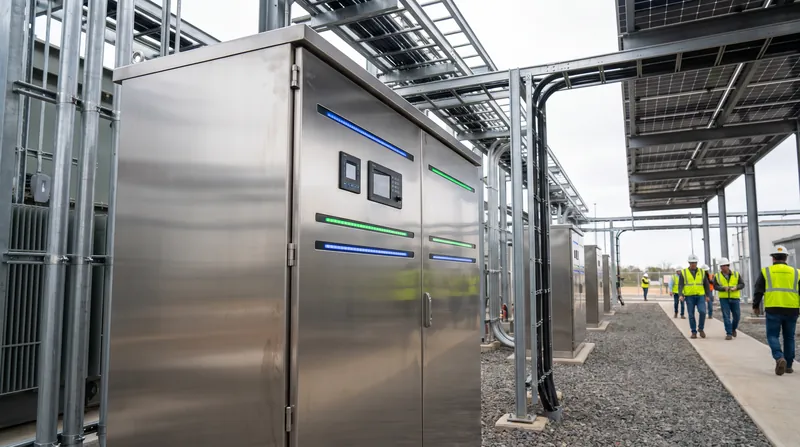
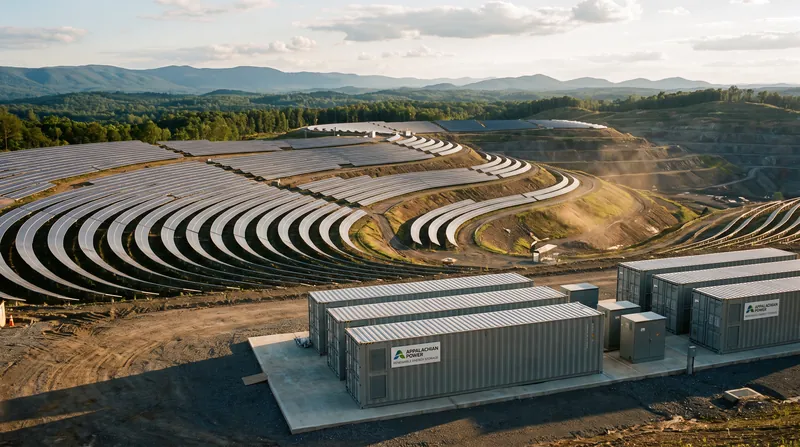
Google and MN8 Energy Launch $350 Million Solar and Zinc Battery Project on Former West Virginia Coal Mine
6 sources
Grid Expansion
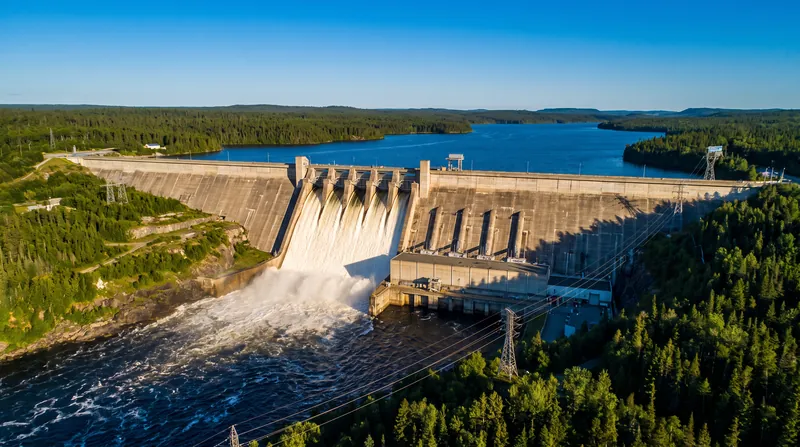
Canada Commits CA$70 Billion to Hydropower, Wind, and Transmission Projects in Record North American Clean Energy Investment
5 sources
Grid Security
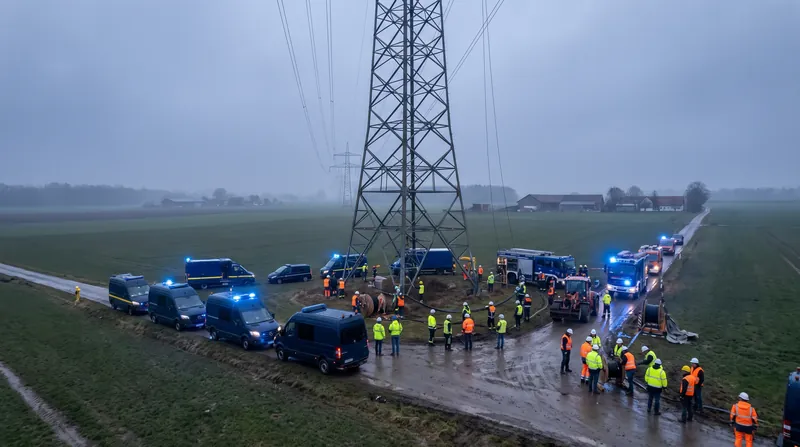
Sabotage Attacks on German Power Grid Force Temporary Shutdown of 4.2 GW of Coal Capacity
6 sources
Wildfire Liability
California Legislature Rejects Utility Wildfire Liability Bill, Sending PG&E and Edison Stocks Down 20%
5 sources
Comments
Every angle. Every day.
Get Energy stories with full source coverage and perspective breakdowns, free every day.