
Appeals Court Strikes Down Executive Branch's Strategy to Bypass Senate Confirmation for U.S. Attorneys
A unanimous federal appeals court has ruled that the Justice Department cannot use administrative loopholes to install acting U.S. attorneys without Senate approval. The decision marks a significant judicial rebuke of the administration's nationwide strategy to bypass congressional oversight.
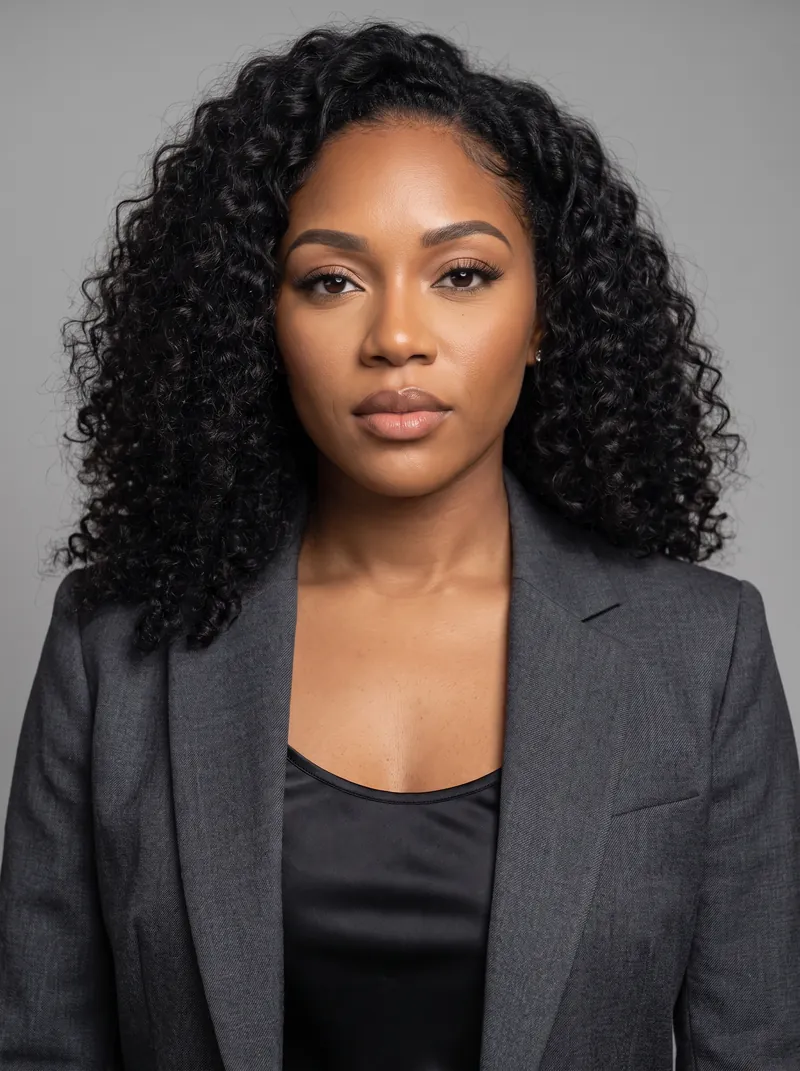
A common misconception about federal power is that when the Senate refuses to confirm a president's nominees, the executive branch can simply install its preferred candidates indefinitely through administrative loopholes. The reality, as reinforced by a unanimous federal appeals court this week, is that the constitutional requirement for Senate confirmation cannot be bypassed simply because it is politically inconvenient.[1][2]
On Monday, the 9th U.S. Circuit Court of Appeals struck down the Department of Justice's strategy for installing acting U.S. attorneys without congressional approval. The three-judge panel ruled that Sigal Chattah, a staunch ally of President Donald Trump, has been unlawfully serving as the top federal prosecutor in Nevada.[1][3]
The decision marks a significant judicial rebuke of a nationwide strategy employed by the administration to place loyalists at the helm of federal prosecutors' offices. By utilizing a novel interpretation of federal vacancy laws, the executive branch had sought to circumvent both the Senate and the district judges who traditionally fill long-term vacancies.[2]
The legal dispute centers on the mechanics of the Federal Vacancies Reform Act of 1998, a statute designed to keep the government functioning when Senate-confirmed officials leave their posts. Under the default rule of the act, the "first assistant" to a vacant office automatically assumes the role of acting official for a limited period.[5]
However, the law does not explicitly define who qualifies as a first assistant, nor do the statutes governing U.S. attorneys designate one. The Justice Department attempted to exploit this ambiguity. After Chattah's initial 120-day interim appointment expired, former Attorney General Pam Bondi designated her as the first assistant to the vacant office, arguing this triggered the automatic succession provision and allowed her to remain in charge.[1][5]
The 9th Circuit panel, which included two judges appointed by Trump and one by former President Bill Clinton, unanimously rejected this maneuver. Writing for the court, U.S. Circuit Judge Eric Miller concluded that the rule of automatic succession applies exclusively to a first assistant who already held that position at the time the vacancy arose.[1][4]
The court emphasized that the statute does not permit the executive branch to fill an existing vacancy by designating a new first assistant after the fact. Furthermore, the panel held that the attorney general cannot create a de facto acting U.S. attorney by simply delegating all the functions and duties of the office to an unconfirmed individual.[3][4]
This ruling in Nevada is not an isolated incident but part of a broader judicial pushback against the administration's appointment tactics. In December 2025, the 3rd U.S. Circuit Court of Appeals issued a similar unanimous ruling disqualifying Alina Habba, Trump's former personal attorney, from serving as the acting U.S. attorney in New Jersey.
In that case, the appellate court warned that the government's delegation theory was so broad that it bypassed the constitutional appointment and confirmation process entirely. Similar challenges have resulted in the removal of unconfirmed prosecutors in Virginia and New York, where judges have warned that novel leadership plans undermine the rule of law.[2]
The immediate consequence of the 9th Circuit's decision is the disqualification of Chattah from supervising or participating in three specific federal criminal cases. Defense attorneys across the country have seized on these rulings, moving to dismiss indictments and disqualify prosecution teams led by unlawfully appointed officials.[1][3]
While the district court in Nevada declined to dismiss the underlying indictments in Chattah's cases, the instability injected into the justice system is profound. When the individuals running federal prosecutor offices lack lawful authority, every subpoena, indictment, and plea agreement they authorize becomes vulnerable to due process challenges under the Fifth and Sixth Amendments.[2]
The administration has signaled its intention to appeal the 9th Circuit's decision to the Supreme Court. Until the high court intervenes, the Justice Department faces a fractured legal landscape where its preferred prosecutors are barred from exercising authority in multiple jurisdictions, forcing a reckoning over the limits of executive power.[1]
Viewpoints in depth
Constitutional Separation of Powers Advocates
Argue that the Senate's confirmation role is a non-negotiable check on executive power.
This camp, which includes legal scholars and civil rights organizations, views the administration's maneuvers as a dangerous overreach. They argue that the Founders intentionally designed the "advice and consent" clause to prevent the President from unilaterally installing loyalists in powerful law enforcement positions. By exploiting the Federal Vacancies Reform Act, they contend, the executive branch is not just bending the rules but actively subverting the constitutional balance of power.
Executive Branch Proponents
Maintain that the President requires flexibility to staff critical roles when the Senate is slow or hostile.
Supporters of the administration's strategy argue that the executive branch must have the tools to keep the government functioning, especially when facing a gridlocked or adversarial Senate. They interpret the Federal Vacancies Reform Act broadly, asserting that the Attorney General possesses the inherent authority to delegate duties and designate first assistants to ensure that federal prosecutors' offices do not fall into paralysis during prolonged confirmation battles.
Criminal Defense Bar
Focus on the due process rights of defendants prosecuted by unlawfully appointed officials.
Defense attorneys are less concerned with the political battle over appointments and more focused on the legal validity of the prosecutions themselves. They argue that if a U.S. attorney is holding office illegally, every action taken under their authority—from issuing subpoenas to securing indictments—is fundamentally flawed. This camp is actively leveraging these appellate rulings to challenge convictions and demand the dismissal of cases overseen by unconfirmed prosecutors.
Key points
- A federal appeals court ruled that the DOJ cannot bypass Senate confirmation by designating unconfirmed loyalists as 'first assistants' after a vacancy occurs.
- The 9th Circuit unanimously disqualified Sigal Chattah from serving as acting U.S. attorney in Nevada.
- The ruling is part of a broader judicial pushback against the administration's strategy to install preferred prosecutors in blue states.
- The decision bars Chattah from supervising three federal criminal cases, opening the door for further due process challenges by defense attorneys.
What we don’t know
- How the Supreme Court will rule if it takes up the administration's expected appeal on the Federal Vacancies Reform Act.
- Whether defense attorneys will successfully use these appellate rulings to overturn convictions secured under unlawfully appointed prosecutors.
- How the Justice Department will staff these vacant offices in the interim without relying on the struck-down loophole.
How we got here
April 2025
Sigal Chattah is appointed as interim U.S. attorney for Nevada for a 120-day term.
July 2025
As her term expires, the Attorney General designates Chattah as 'first assistant' to keep her in power.
September 2025
A federal district judge rules Chattah's continued appointment violates federal law.
December 2025
The 3rd Circuit Court of Appeals strikes down a similar appointment scheme in New Jersey.
August 2026
The 9th Circuit Court of Appeals unanimously upholds the ruling disqualifying Chattah.
- Constitutional Separation of Powers Advocates
- Argue that the Senate's confirmation role is a non-negotiable check on executive power.
- Executive Branch Proponents
- Maintain that the President requires flexibility to staff critical roles when the Senate is slow or hostile.
- Criminal Defense Bar
- Focus on the due process rights of defendants prosecuted by unlawfully appointed officials.
Perspectives this story doesn't cover
- Career federal prosecutors working under unlawfully appointed leadership
- Senators whose 'blue slip' privileges are bypassed by these maneuvers
Sources
Source coverage
5 outlets
3 viewpoints surfaced





- [1]Democracy DocketConstitutional Separation of Powers Advocates
Appeals court rules Nevada's top federal prosecutor was unlawfully appointed
Read on Democracy Docket → - [2]Talking Points MemoConstitutional Separation of Powers Advocates
Appeals Court Blocks Trump Scheme on US Attorneys
Read on Talking Points Memo → - [3]Washington Examiner
Appeals court rules Nevada's top federal prosecutor illegally holds office over lack of Senate confirmation
Read on Washington Examiner → - [4]U.S. Courts
UNITED STATES OF AMERICA v. GIANN ICOB SALAZAR DEL REAL
Read on U.S. Courts → - [5]EveryCRSReport
Statutes Governing U.S. Attorney Vacancies
Read on EveryCRSReport →

More in Law & Justice
See all →Habeas Corpus
Defining the 'Unreasonable Application' Standard That Blocks Federal Habeas Relief for State Prisoners
4 sources
Jurisdictional Limits
The Four Requirements That Block Federal Courts From Rewriting State Judgments
7 sources
Constitutional Law
The Three-Part Calculus That Defines Procedural Due Process in Administrative Law
8 sources
Proportionality Doctrine
The Four-Part Proportionality Test High Courts Use to Weigh Fundamental Rights
9 sources
Comments
Every angle. Every day.
Get Law & Justice stories with full source coverage and perspective breakdowns, free every day.