
The Mechanics of Stock Market Orders: Comparing Market, Limit, Stop, and Stop-Limit Orders and Their Execution Risk
While market orders guarantee execution at the expense of price certainty, limit and stop orders offer investors precise control over their entry and exit points. Understanding the mechanical trade-offs between execution risk and price slippage is critical for navigating volatile trading environments.

- Price Control Advocates
- Emphasize strict risk management and the elimination of slippage through limit constraints.
- Execution Certainty Advocates
- Prioritize guaranteed fills and immediate market entry over precise price control.
- Structural Analysts
- Focus on the mechanical interplay between order types, time qualifiers, and market liquidity.
Summary
- Market orders guarantee immediate execution but offer no protection against price slippage during volatile periods.
- Limit orders guarantee a specific execution price or better, but carry the risk of never being filled if the market moves away.
- Stop orders act as defensive triggers that convert to market orders once a specified price is reached, exposing them to gap-down risks.
- Stop-limit orders combine a trigger price with a firm execution boundary, preventing extreme slippage but increasing the risk of non-execution.
- Time qualifiers like Good-'til-Canceled (GTC) and Fill-Or-Kill (FOK) provide additional granular control over how long an order remains active.
Every trading day, millions of shares change hands across global exchanges, but the mechanics dictating precisely how those trades execute remain widely misunderstood by retail participants. When an investor clicks "buy" or "sell," they are not simply executing a transaction; they are broadcasting a specific set of instructions to a broker and, ultimately, to a market maker or exchange. The core tension in every trade is the trade-off between execution certainty and price certainty. Understanding this mechanical divide is the foundation of market structure and risk management.[1][7]
The most fundamental instruction is the market order. A market order prioritizes speed and execution certainty above all else. When an investor submits a market order, they are instructing their broker to buy or sell a security immediately at the best available current price. This guarantees that the order will be filled, provided there are willing buyers or sellers in the market. However, it offers absolutely zero guarantee regarding the final execution price.[1][3]
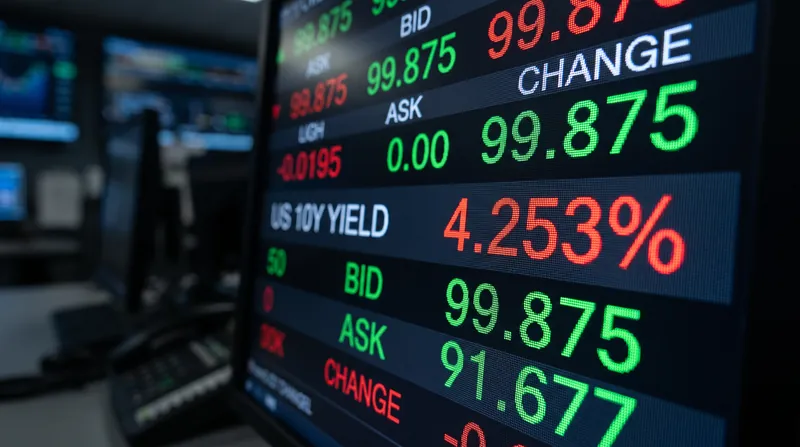
In highly liquid markets with tight bid-ask spreads—such as large-cap stocks during normal trading hours—a market order will typically execute at or very near the last quoted price. But during periods of high volatility, low liquidity, or immediately after the market opens, the price an investor pays or receives can deviate significantly from the quote they saw on their screen. This phenomenon is known as price slippage, and it represents the primary risk of relying exclusively on market orders.[3][7]
To eliminate slippage risk, investors utilize limit orders. A limit order flips the priority of a market order: it guarantees price certainty but sacrifices execution certainty. When placing a limit order, the investor specifies the exact maximum price they are willing to pay (for a buy limit) or the minimum price they are willing to accept (for a sell limit). The broker is instructed to execute the trade only at that specific price or better.[6][7]
For example, if a stock is trading at $50, an investor might place a buy limit order at $48. The order will sit on the broker's book and will only trigger if the market price drops to $48 or lower. If the stock never reaches that threshold, the order simply expires unfilled. While limit orders protect investors from paying more than they intend, they carry the inherent risk of missed opportunities, particularly in rapidly rising or falling markets where the price moves away from the limit threshold before the order can be filled.[3][6]
Beyond simple entry and exit instructions, investors need mechanisms to protect existing positions from sudden downturns. This is the function of the stop order, commonly referred to as a stop-loss order. A stop order remains dormant until the stock reaches a specific price, known as the stop price. Once that threshold is breached, the stop order is immediately converted into a traditional market order.[4][5]
Beyond simple entry and exit instructions, investors need mechanisms to protect existing positions from sudden downturns.
Stop orders are primarily defensive tools. An investor who owns a stock trading at $100 might place a sell stop order at $90 to cap their potential downside. If the stock price falls to $90, the order activates, and the broker sells the shares at the next available market price. Conversely, short sellers use buy stop orders, placed above the current market price, to protect against theoretically unlimited losses if a shorted stock begins to rally unexpectedly.[4][5]
However, the mechanical conversion of a stop order into a market order introduces a critical vulnerability during extreme market events. Because the activated order becomes a market order, it is subject to the same slippage risks described earlier. If a stock gaps down overnight from $100 to $80, a sell stop order set at $90 will trigger at the open, but it will execute at the prevailing market price of $80—not the $90 stop price. The investor's intended protection is bypassed by the speed of the market's decline.[5][7]
To bridge the gap between the protective trigger of a stop order and the price control of a limit order, exchanges offer the stop-limit order. This hybrid instruction requires the investor to set two distinct price points: a stop price and a limit price. When the stock reaches the stop price, the order is triggered—but instead of becoming a market order, it becomes a limit order that will only execute at the specified limit price or better.[5][7]
The mechanics of a stop-limit order provide precise control over execution parameters. Using the previous example, an investor might set a stop price at $90 and a limit price at $88. If the stock drops to $90, the order activates as a limit order to sell at $88 or higher. If the stock price plummets straight to $85, bypassing the limit threshold, the order will not execute. This protects the investor from selling at an unacceptably low price during a flash crash, but it reintroduces the risk that they may be left holding a depreciating asset if the price never recovers to their limit.[5][7]
The effectiveness of these order types is heavily influenced by the time parameters attached to them. By default, most orders are treated as "Day" orders, meaning they automatically expire if they are not executed by the end of the regular trading session. Investors seeking longer-term positioning must explicitly attach a "Good-'til-Canceled" (GTC) qualifier, which keeps the order active on the broker's books for an extended period, typically up to 60 days, until it is either filled or manually canceled.[2][7]
Additional qualifiers allow for even more granular control over execution mechanics. An "All-Or-None" (AON) instruction dictates that the broker must fill the entire order at once; partial fills are prohibited. A "Fill-Or-Kill" (FOK) order combines the AON requirement with an immediate time constraint: the entire order must be executed the moment it reaches the market, or it is instantly canceled. These specialized instructions are particularly useful for institutional traders managing large blocks of shares, where partial executions could signal their intentions to the broader market.[2][7]
The choice of order type fundamentally alters an investor's risk profile. Market orders expose the trader to liquidity and volatility risks, while limit orders expose them to execution and opportunity risks. Stop orders provide a psychological safety net but can fail catastrophically during market gaps, whereas stop-limit orders offer rigid price protection at the cost of potential non-execution during severe downturns.[3][5][7]
Ultimately, mastering the mechanics of stock market orders requires recognizing that no single instruction is optimal for every scenario. The decision rests on a continuous evaluation of market conditions, the liquidity of the specific asset being traded, and the investor's personal tolerance for price deviation versus their absolute need to enter or exit a position. By strategically deploying the right order type, investors transition from passive participants accepting whatever price the market dictates, to active managers dictating the terms of their own execution.[1][7]
Definitions
- Bid-Ask Spread
- The difference between the highest price a buyer is willing to pay (bid) and the lowest price a seller is willing to accept (ask).
- Price Slippage
- The difference between the expected price of a trade and the price at which the trade is actually executed, common in fast-moving markets.
- Market Maker
- A financial firm that stands ready to buy and sell securities at publicly quoted prices, providing liquidity to the market.
- Flash Crash
- A rapid, deep, and volatile drop in security prices occurring within an extremely short time period, often exacerbated by automated trading.
- Payment for Order Flow (PFOF)
- The compensation a brokerage firm receives for directing customer orders to specific market makers for execution.
Sources
Source coverage
7 outlets
3 viewpoints surfaced





- [1]FINRA.orgStructural Analysts
Order Types
Read on FINRA.org → - [2]FINRA.orgStructural Analysts
Trading Terms: Time Parameters and Qualifiers on Stock Orders
Read on FINRA.org → - [3]Charles SchwabExecution Certainty Advocates
3 Order Types: Market, Limit, and Stop Orders
Read on Charles Schwab → - [4]SEC.govPrice Control Advocates
Stop Order
Read on SEC.gov → - [5]Investor.govPrice Control Advocates
Types of Orders
Read on Investor.gov → - [6]SEC.govPrice Control Advocates
Limit Orders
Read on SEC.gov → - [7]Factlen Editorial TeamStructural Analysts
Synthesis by Factlen editorial team
Read on Factlen Editorial Team →
Comments
Every angle. Every day.
Get finance stories with full source coverage and perspective breakdowns delivered to your inbox.