
Global Fencing Injury Report: Resilient Returns for Catantan and Bhavani Devi as FIE Launches New Safety Initiatives
Elite fencers Sam Catantan and CA Bhavani Devi are making triumphant returns to the piste following major surgeries, highlighting a wave of resilient comebacks. Meanwhile, the FIE is rolling out new biomechanical tracking protocols to reduce overuse injuries across the sport.
By Omar Haddad
- Sports Medicine & Biomechanics
- Medical experts emphasize the hidden toll of cumulative overuse rather than acute trauma.
- Athlete & Coach Experience
- Competitors balance the physical pain of recovery with the psychological pressure to return to the piste.
- Federation Safety Analysts
- Governing bodies focus on systemic tracking and data-driven safety protocols to protect their rosters.
Why this matters
While fencing remains statistically one of the safest combat sports, the asymmetric, high-impact nature of lunging takes a cumulative toll on joints and tendons. The successful return of elite athletes from severe injuries, coupled with new global medical protocols, offers a blueprint for load management and recovery that benefits fencers at every level.
Key points
- Elite fencers Sam Catantan and CA Bhavani Devi have successfully returned to international competition following severe ACL and shoulder surgeries.
- A 2026 study in PLOS ONE revealed that nearly 90 percent of adult competitive fencers experience injuries, primarily driven by overuse and tendonitis.
- Despite the high rate of cumulative wear-and-tear, USA Fencing data shows the sport remains incredibly safe, with a medical withdrawal rate of just 0.338 percent.
- The International Fencing Federation has launched the Fencing Injury Surveillance System to track biomechanical stress and proactively prevent injuries.
Fencing is a sport defined by explosive asymmetry. The rapid lunges, sudden changes of direction, and repetitive blade work place immense, one-sided stress on the human body. While catastrophic, bout-ending incidents are statistically rare, the cumulative toll on knees, ankles, and shoulders is a universal reality for elite competitors. Yet, as the 2026 international season unfolds across the globe, the prevailing narrative is not about the athletes sidelined by these physical demands, but rather the remarkable resilience of those returning to the piste. Across multiple weapons and continents, elite fencers are demonstrating that severe injuries—once considered potential career-enders—are now manageable hurdles thanks to advanced surgical interventions and smarter rehabilitation protocols.[4]
One of the most inspiring comebacks of the current cycle belongs to Filipina foil specialist Sam Catantan. After suffering a devastating anterior cruciate ligament (ACL) tear that forced her to withdraw from the finals of the 2023 Southeast Asian Games in Cambodia, Catantan faced a grueling rehabilitation process. Rather than rushing her return, she methodically rebuilt her knee strength. Her patience paid off spectacularly when she secured a spot at the Paris Olympics, winning three straight matches in the qualifying tournament. Now, she is fully back on the regional stage, eyeing redemption and aiming to finish her "unfinished business" at the upcoming SEA Games alongside her sisters.[7]
A similarly grueling path was navigated by Indian sabreuse CA Bhavani Devi, who battled chronic shoulder pain for two years before finally opting for surgery in late 2025. The Olympian revealed that the initial post-operative period was incredibly difficult, leaving her unable to walk properly for the first two weeks as her body adjusted to the trauma and the restrictive sling. However, after dedicating six months to a full, uninterrupted recovery, Bhavani Devi made a triumphant return to international competition. She successfully took the strip at the 2026 Asian Senior Fencing Championships in New Delhi, finishing 23rd and proving that taking the necessary time to heal yields sustainable results.[2]
While some athletes are returning from long hiatuses, others are learning to manage acute, active injuries in real-time. At the 2026 Kerry Fencing World Championships in Hong Kong, local foil star Chun Yin Ryan Choi navigated the immense pressure of competing on home soil while battling a persistent left-hamstring injury. Choi, who had been carrying the strain for several weeks leading up to the tournament, openly acknowledged the physical challenge, noting that it was his first time fencing through such a significant physical limitation. His ability to adapt his explosive footwork to protect the hamstring highlighted the delicate, high-stakes balance elite fencers must strike between pushing for the podium and protecting their long-term health.[1]
While some athletes are returning from long hiatuses, others are learning to manage acute, active injuries in real-time.
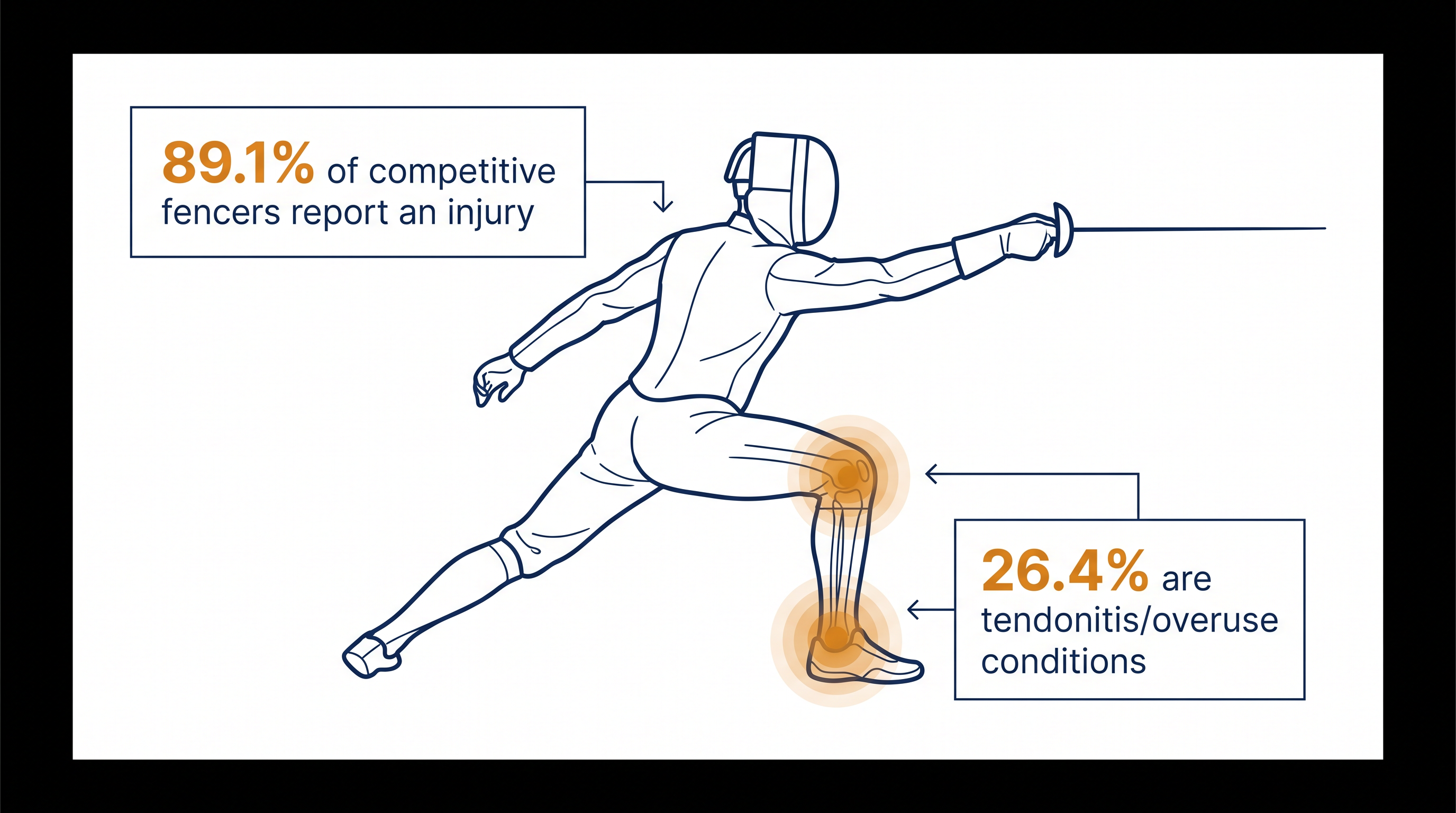
The individual stories of Catantan, Bhavani Devi, and Choi underscore a broader clinical reality within the sport. A comprehensive March 2026 study published in PLOS ONE investigated the cumulative injury burden among adult competitive fencers, revealing that approximately 89.1 percent of respondents had experienced at least one fencing-related injury. The researchers found that overuse conditions predominated, with tendonitis and tenosynovitis accounting for over a quarter of all reported issues. Unsurprisingly, the knee and ankle were the most frequently affected anatomical sites, bearing the brunt of the sport's sustained, asymmetric mechanical demands during years of repetitive training.[4]
These findings align with recent epidemiological data tracking fencing injuries across the United States. A 2026 report in the Clinical Journal of Sport Medicine analyzed emergency department presentations over a nearly two-decade span, determining that strains and sprains were the most common acute injuries, particularly among higher-level competitors. The data confirmed that while lacerations occasionally occur among beginners, the true risk for experienced fencers lies in the lower extremities. The rapid acceleration and deceleration required to execute and defend against lunges place extraordinary torque on the patellar tendon and ankle ligaments, necessitating targeted strength and conditioning programs.[6]
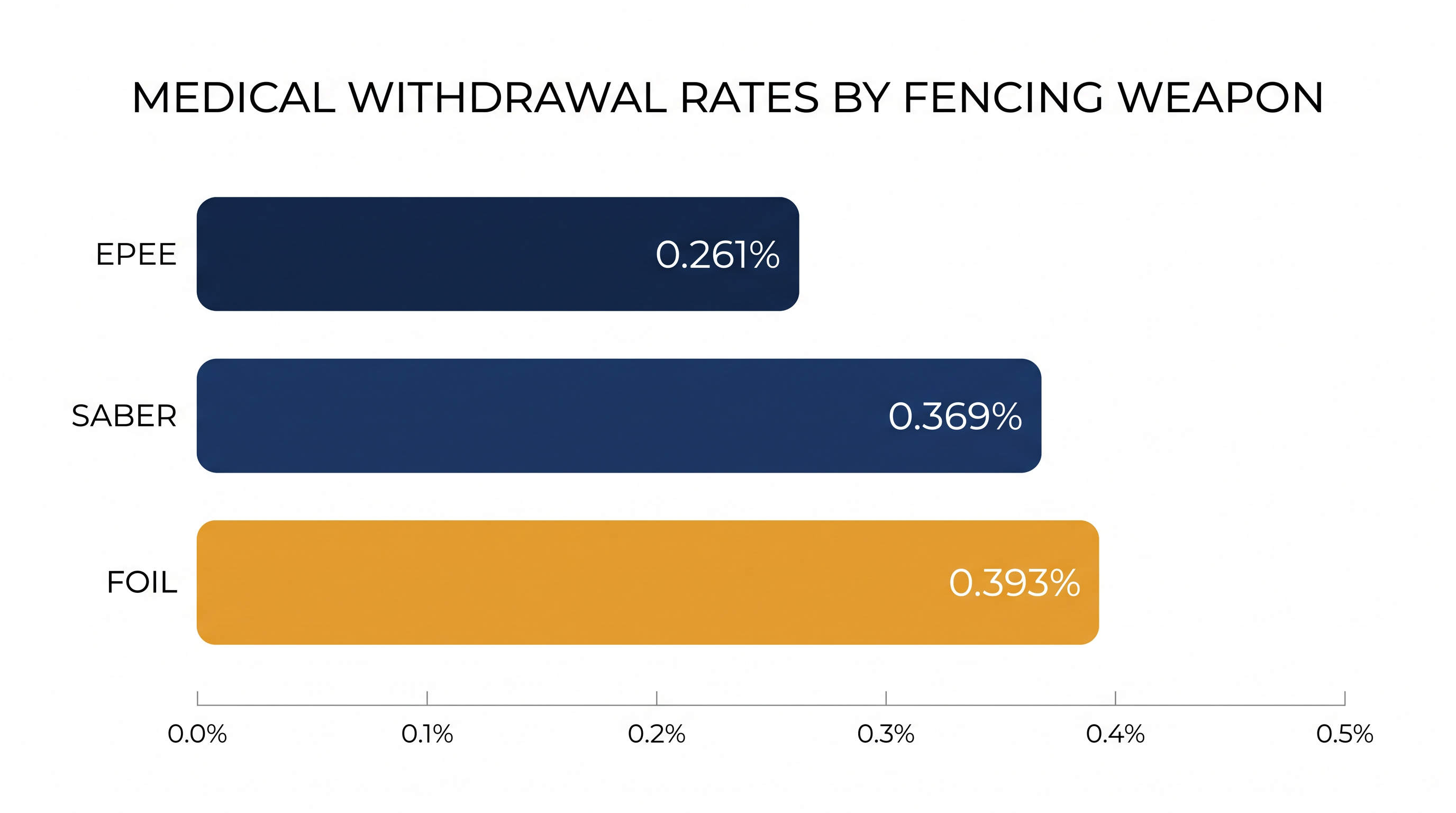
Despite these cumulative wear-and-tear realities, fencing remains remarkably safe compared to other combat and contact sports. A massive six-season data analysis released by USA Fencing in 2026 examined more than 637,000 direct elimination bouts and found an incredibly low medical withdrawal rate of just 0.338 percent. The comprehensive review demonstrated that acute, bout-ending emergencies are vanishingly rare, with épée recording the lowest withdrawal rate among the three weapons. This stark contrast between high cumulative overuse injuries and low acute bout withdrawals indicates that fencers are generally safe on the strip, but must be highly vigilant about their off-strip load management and recovery routines.[5]
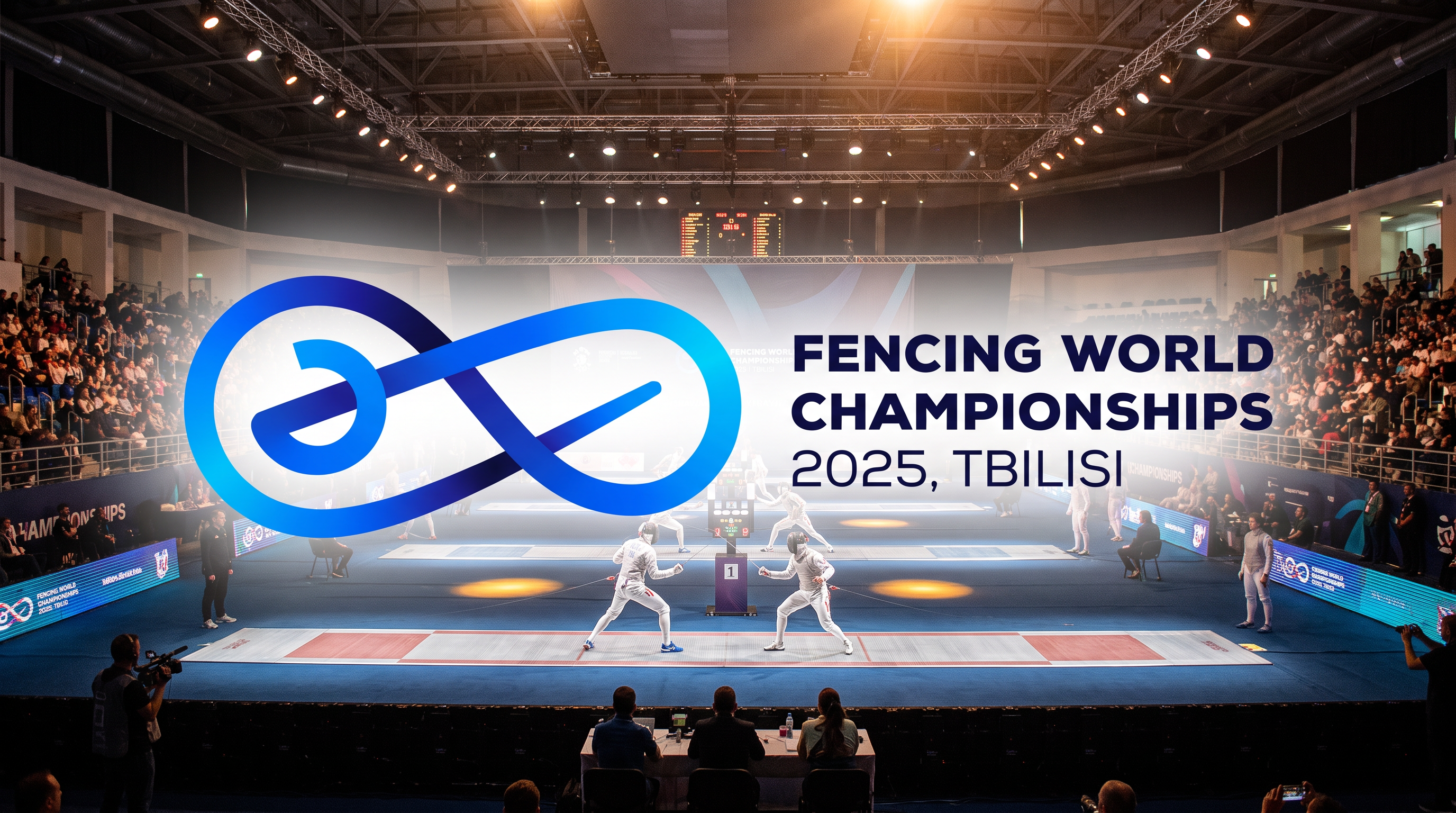
Recognizing this dynamic, the International Fencing Federation (FIE) has launched aggressive new initiatives to protect athlete health and optimize performance. Coinciding with the 2026 Senior World Championships, the FIE hosted the Hong Kong Sports Medicine Conference, a landmark multidisciplinary event focused heavily on injury prevention and biomechanics. A central pillar of this new medical push is the implementation of the Fencing Injury Surveillance System (FISS), designed to track epidemiological trends, monitor training loads, and address environmental stressors globally. By systematically gathering data on how and why fencers get hurt, the governing body aims to shift the culture from reactive treatment to proactive prevention.[3]
Ultimately, the evolving landscape of fencing medicine is empowering athletes to extend their careers and return from setbacks stronger than before. The days of athletes quietly fencing through severe structural damage until their bodies simply give out are being replaced by a culture of strategic rehabilitation, biomechanical tracking, and holistic support. For resilient competitors like Catantan and Bhavani Devi, the scars of surgery are no longer the end of the road, but rather the beginning of a second act. As the sport continues to refine its approach to load management, the global fencing community is proving that a devastating injury is just another attack that can be successfully parried.[2][3][7]
How we got here
August 2025 - July 2026
USA Fencing concludes its massive six-season injury data analysis.
December 2025
Sam Catantan confirms her return to the SEA Games following ACL rehabilitation.
March 2026
PLOS ONE publishes landmark study on cumulative overuse injuries in adult fencers.
June 2026
CA Bhavani Devi returns to the piste at the Asian Championships after shoulder surgery.
July 2026
FIE launches the Fencing Injury Surveillance System at the Hong Kong Sports Medicine Conference.
Viewpoints in depth
Sports Medicine Professionals
Medical experts emphasize the hidden toll of cumulative overuse rather than acute trauma.
For sports physicians and physical therapists, the true danger in fencing isn't the blade, but the biomechanics of the lunge. The asymmetric nature of the sport places extraordinary, repetitive stress on the lead knee and trailing ankle. Medical professionals argue that while acute injuries are rare, the culture of 'fencing through the pain' leads to chronic tenosynovitis and joint degradation. They advocate for mandatory load management, cross-training to correct muscular imbalances, and strict adherence to rehabilitation timelines before athletes are cleared to return to the piste.
Elite Fencers
Athletes balance the physical pain of recovery with the psychological pressure to compete.
From the perspective of the competitors, an injury is as much a psychological battle as a physical one. Elite fencers operate in a high-stakes environment where missing a single World Cup or Zonal Championship can derail Olympic qualification or national team seeding. Athletes often feel immense pressure to return prematurely, risking re-injury. However, the recent wave of successful, patient comebacks is shifting the athlete mindset, proving that taking six to nine months for a full surgical recovery ultimately extends a career rather than ending it.
National Governing Bodies
Federations focus on systemic tracking and data-driven safety protocols to protect their rosters.
For organizations like USA Fencing and the FIE, injury prevention is a matter of both athlete welfare and competitive viability. Federations are increasingly turning to big data—analyzing hundreds of thousands of bouts—to identify risk factors and withdrawal trends. By implementing global tracking tools like the Fencing Injury Surveillance System (FISS), governing bodies aim to standardize medical care, adjust tournament schedules to allow for adequate recovery, and educate coaches on the early warning signs of overuse injuries before they require surgical intervention.
What we don't know
- It remains unclear how the new Fencing Injury Surveillance System will alter the international competition calendar to mandate longer recovery periods.
- Long-term data on whether modern shock-absorbing fencing footwear significantly reduces the incidence of patellar tendonitis is still being collected.
- The exact impact of Ryan Choi's hamstring injury on his performance in upcoming team events has not been fully determined.
Key terms
- Anterior Cruciate Ligament (ACL)
- A crucial stabilizing ligament in the knee, frequently stressed during the explosive lunging motions of fencing.
- Tenosynovitis
- Inflammation of the fluid-filled sheath surrounding a tendon, a common overuse injury among fencers.
- Fencing Injury Surveillance System (FISS)
- A new global tracking protocol introduced by the FIE to monitor biomechanical demands and prevent injuries.
- Medical Withdrawal
- When a fencer is forced to forfeit a bout due to an acute injury, illness, or physical inability to continue.
Frequently asked
Is fencing considered a dangerous sport?
No. Despite the use of weapons, fencing is statistically one of the safest combat sports, with a medical withdrawal rate of less than 1 percent during bouts.
What are the most common injuries in fencing?
Overuse injuries to the lower extremities, particularly patellar tendonitis and ankle sprains, are the most frequent issues due to repetitive lunging.
How is the FIE addressing athlete safety?
The International Fencing Federation recently launched the Fencing Injury Surveillance System to track training loads and biomechanical stress across the sport.
Sources
Source coverage
7 outlets
3 viewpoints surfaced







[1]South China Morning PostAthlete & Coach Experience
Hong Kong music superstar Jackson Wang named fencing ambassador as foilists, épéeists exit
Read on South China Morning Post →[2]The BridgeAthlete & Coach Experience
Olympian CA Bhavani Devi opens up about her shoulder injury, the surgery that followed and her return
Read on The Bridge →[3]International Fencing FederationSports Medicine & Biomechanics
FIE Hong Kong Sports Medicine Conference 2026 - A multidisciplinary approach to Health, Performance and Safety
Read on International Fencing Federation →[4]PLOS ONESports Medicine & Biomechanics
Injury patterns and cumulative injury burden among U.S. Competitive fencers: A survey
Read on PLOS ONE →[5]USA FencingFederation Safety Analysts
A six-season analysis of more than 637,000 direct elimination bouts confirms fencing safety
Read on USA Fencing →[6]Clinical Journal of Sport MedicineSports Medicine & Biomechanics
Epidemiology of Fencing Injuries Presenting to Emergency Departments in the United States: 2003 to 2022
Read on Clinical Journal of Sport Medicine →[7]ABS-CBN NewsAthlete & Coach Experience
Fencing: After recovering from ACL injury, Sam Catantan eyes SEAG redemption
Read on ABS-CBN News →
Comments
More in sports
See all 36 stories →Standings
Bibisara Assaubayeva Holds Commanding Lead in FIDE Women's Circuit Standings as Race for 2028 Candidates Heats Up
6 sources
Injury
Global Netball Injury Report: Wilkinson's Triumphant Return and Howard's Sisterly Succession Highlight Roster Moves
4 sources

Standings
Standings Watch: High-Stakes Constellation Cup Looms After New Zealand's Commonwealth Games Triumph
6 sources

Injury
AFLW Injury Relief: Tayla Harris and Georgia Campbell Cleared for Round 1 as Clubs Welcome Back Key Stars
6 sources
Every angle. Every day.
Get sports stories with full source coverage and perspective breakdowns delivered to your inbox.