
The Financial Mechanics of the 2026/27 Champions League: How UEFA Distributes €2.467 Billion
As the 36-team league phase kicks off, UEFA's expanded Champions League format is set to distribute a record €2.467 billion. Here is a complete breakdown of the participation fees, performance bonuses, and the controversial 'value pillar' that dictates European football's economy.
By Omar Haddad

Share this story
Two point four six seven billion euros. That is the exact, staggering figure UEFA will inject directly into the 36 clubs contesting the 2026/27 Champions League over the next nine months.
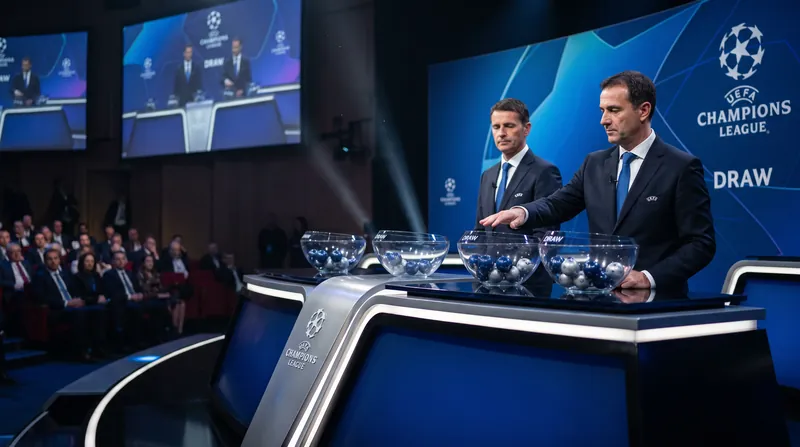
As the league phase kicks off following the late-August draw in Monaco, the tournament is no longer just a quest for continental glory—it is the single largest financial engine in global club football. For the executives and sporting directors watching the balls being drawn, the sporting matchups are secondary to the immense revenue streams now locked in for the season.[1][6]
The stakes have never been higher. Now entering the third year of its expanded "Swiss model" format, the Champions League has entirely abandoned the traditional four-team group stage. Instead, 36 clubs share a single massive league table, with each team guaranteed eight matches against eight different opponents. For the clubs involved, every single touch of the ball carries a quantifiable euro value, fundamentally altering how front offices budget for the season and approach their domestic campaigns.[1][4][6]
The baseline reward simply for showing up is immense. Every club that qualified for the league phase—from heavyweights like Real Madrid and Manchester City to debutants navigating the grueling summer playoff paths—receives a guaranteed participation fee of €18.62 million. That initial down payment alone dwarfs the entire annual broadcasting revenue of many smaller European domestic leagues, instantly elevating the financial baseline of the participants before a single whistle is blown.[1][6]
But the true financial mechanism of the 2026/27 tournament lies in its performance-related bonuses. Under the Swiss model, there are no dead rubbers. Every single victory in the league phase triggers a €2.1 million payout from UEFA, while a draw earns a club €700,000. A perfect eight-game winning streak in the opening phase would net a club nearly €17 million in performance bonuses alone, incentivizing teams to field strong lineups even after they have secured qualification for the knockout rounds.[1][4][6]
The financial engineering goes deeper with the league-phase ranking bonus. UEFA has divided a massive bonus pool into 666 equal shares, each worth €275,000. The 36th-placed team at the end of January will receive exactly one share. The 35th-placed team receives two. This arithmetic scales all the way to the top of the table, where the first-placed team claims 36 shares—a cool €9.9 million simply for their final position in the standings.[1][6]
Beyond the raw match results, UEFA has consolidated its former "market pool" and historical coefficient payouts into a single, highly lucrative "value pillar." This €853 million fund rewards clubs based on a complex formula that weighs their domestic television market value alongside their ten-year historical performance in European competitions. It is a mechanism designed to appease the continent's biggest brands, ensuring that legacy powerhouses maintain a massive financial advantage even if they suffer a string of poor results on the pitch.[2][6]
This guaranteed revenue stream allows elite clubs to amortize massive transfer fees and comply with UEFA's strict Profit and Sustainability Rules (PSR). The value pillar acts as a financial moat, protecting the established hierarchy of European football from upstart challengers. For a legacy club, simply qualifying for the Champions League guarantees a massive payout from the value pillar, while a smaller club from a less lucrative television market receives a fraction of that fund, regardless of how far they advance.[2][5][6]
The disparity between the Champions League and UEFA's secondary competitions highlights the brutal financial cliff edge of European football. While the Champions League distributes €2.467 billion, the Europa League shares a comparatively modest €565 million among its 36 teams, and the Conference League allocates just €285 million. Dropping out of the premier competition is a catastrophic revenue hit that can force clubs to sell star players to balance their books.[1][6]
Qualification itself has become a high-stakes arms race. Because of the expanded format, UEFA now awards two "European Performance Spots" to the domestic leagues whose clubs performed best in the previous season. For the 2026/27 campaign, England and Spain secured these extra berths, allowing teams like Liverpool and Real Betis to bypass the qualification rounds and directly access the €18.62 million league-phase windfall.[1][2][6]
Once the league phase concludes in late January, the tournament shifts into a ruthless, high-yield knockout bracket. The top eight teams in the 36-club table advance directly to the Round of 16, while teams finishing ninth through 24th must survive a two-legged playoff to join them. Teams finishing 25th or lower are eliminated entirely, with no safety net dropping them into the Europa League.[1][4][6]
The financial escalators in the knockout rounds are staggering. Reaching the Round of 16 guarantees an additional €11 million. The quarter-finals trigger a €12.5 million payout, and the semi-finals unlock €15 million. For the two clubs that survive the gauntlet to reach the final at Madrid's Metropolitano Stadium on June 5, 2027, UEFA awards €18.5 million, with the ultimate champion taking home an extra €6.5 million.[1][3][6]
When combining the participation fee, a strong league-phase performance, the value pillar, and a run to the title, the 2026/27 Champions League winner could realistically amass well over €100 million in direct UEFA prize money. That figure entirely excludes matchday ticket sales and independent commercial sponsorships, cementing the tournament's status as the ultimate kingmaker in the modern sporting economy.[1][6]
Analysis by camp
Elite European Clubs
Top-tier franchises rely on the Champions League's value pillar to sustain their financial dominance.
For the continent's legacy powerhouses, the Champions League is less a tournament and more a foundational pillar of their annual operating budget. The introduction of the 'value pillar'—which heavily weights a ten-year historical coefficient—ensures that clubs with a long track record of success receive a disproportionate share of the €2.467 billion pie. This guaranteed revenue stream allows them to amortize massive transfer fees and comply with Profit and Sustainability Rules, creating a financial moat that is incredibly difficult for domestic challengers to cross.
Domestic League Advocates
Critics argue the immense prize pool actively damages the competitive balance of national leagues.
While UEFA celebrates the record-breaking distributions, advocates for domestic parity point to the distorting effect of Champions League wealth. When a single participation fee of €18.62 million exceeds the entire annual broadcasting payout of a mid-table domestic side, the financial gap becomes unbridgeable. These voices argue that the Swiss model's guaranteed eight matches only exacerbate the problem, locking in a baseline of wealth that turns domestic leagues into predictable processions dominated by the same few Champions League regulars.
Emerging Market Teams
Smaller clubs view the expanded format as a transformative opportunity to secure generational wealth.
For clubs navigating the grueling qualification paths from leagues outside the traditional 'Big Five,' reaching the 36-team league phase is a franchise-altering achievement. The guaranteed eight fixtures provide unprecedented exposure and matchday revenue, while the €18.62 million entry fee can fund stadium infrastructure, youth academies, and squad development for a decade. For these teams, the Swiss model is a vital lifeline that offers a rare chance to close the gap on the continent's elite.
- Elite European Clubs
- Top-tier franchises rely on the Champions League's value pillar to sustain their financial dominance.
- Domestic League Advocates
- Critics argue the immense prize pool actively damages the competitive balance of national leagues.
- Emerging Market Teams
- Smaller clubs view the expanded format as a transformative opportunity to secure generational wealth.
Sources
Source coverage
6 outlets
3 viewpoints surfaced


- [1]Wikipedia - Champions League OverviewDomestic League Advocates
2026–27 UEFA Champions League
Read on Wikipedia - Champions League Overview → - [2]Wikipedia - UEFA CoefficientsDomestic League Advocates
UEFA coefficient
Read on Wikipedia - UEFA Coefficients → - [3]Wikipedia - 2026 FinalElite European Clubs
2026 UEFA Champions League final
Read on Wikipedia - 2026 Final → - [4]Wikipedia - Swiss-System FormatEmerging Market Teams
Swiss-system tournament
Read on Wikipedia - Swiss-System Format → - [5]Wikipedia - Financial Fair PlayElite European Clubs
UEFA Financial Fair Play Regulations
Read on Wikipedia - Financial Fair Play → - [6]Factlen Editorial TeamElite European Clubs
Synthesis by Factlen editorial team
Read on Factlen Editorial Team →

More in Sports
See all →Champions League Records
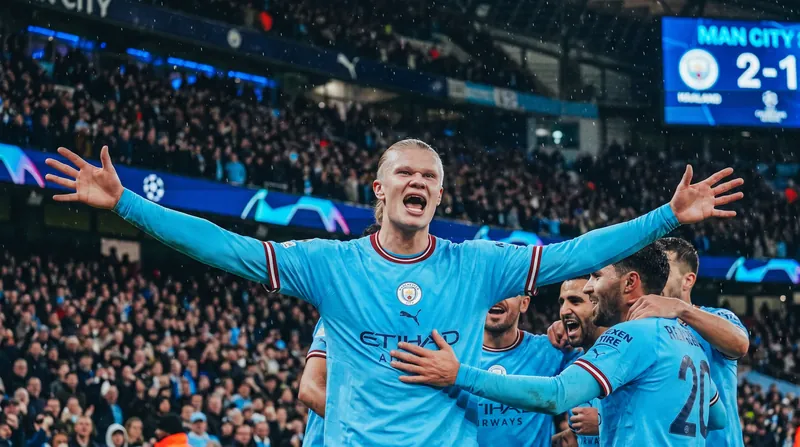
Erling Haaland Reaches 59 Champions League Goals in 59 Games, Closing in on Lionel Messi's Age Record
6 sources
Coefficient Rules
The 20% Association Floor and the Five-Year Rolling Average: How the UEFA Club Coefficient Actually Works
7 sources
Como 1907
The Relational Engine: How Cesc Fàbregas Engineered Como 1907's Historic Champions League Debut
6 sources

Tournament Rules
Opponent Performance and Disciplinary Points: The 10 Tie-Breakers for the Champions League League Phase
6 sources
Comments
Every angle. Every day.
Get Sports stories with full source coverage and perspective breakdowns, free every day.