
DOT Unveils 'Corridors of Commerce' Policy Allowing Utilities on Rail Rights-of-Way
The U.S. Department of Transportation has launched a voluntary initiative to co-locate power lines, fiber optics, and water pipelines along existing highway and rail corridors. The program aims to accelerate grid expansion while generating lease revenue to fund transportation infrastructure repairs.

Share this story
The U.S. Department of Transportation is preparing to select up to five initial transit routes to serve as testbeds for a sweeping new infrastructure model, allowing private companies to lease highway and rail rights-of-way for high-voltage power lines, fiber-optic cables, and water pipelines.
Unveiled by Transportation Secretary Sean P. Duffy as the "America's Great Corridors of Commerce" (AGCC) program, the initiative aims to transform the nation's existing transportation arteries into multi-use utility corridors. The voluntary framework is designed to solve two systemic infrastructure challenges simultaneously: accelerating the deployment of critical grid and telecommunications capacity while generating a novel, sustainable revenue stream to address a multi-trillion-dollar maintenance backlog across the country's aging surface transportation network.[2][3]
At the core of the AGCC strategy is a reliance on public-private partnerships to manage the complex logistics of infrastructure co-location. Under the proposed model, state transportation agencies and private rail operators will have the authority to lease their adjacent land—often sitting underutilized alongside tracks and highways—to private-sector entities designated as "Corridor Managers."
These specialized firms will take on the responsibility of overseeing the design, development, operation, and maintenance of the utility infrastructure within the shared space. By centralizing the management of these multi-use zones, the federal government hopes to shield transportation owners from the operational liabilities of hosting high-voltage transmission lines or pressurized pipelines, making the proposition far more attractive to risk-averse state departments and freight railroads.[1][2][3]
By confining new utility construction to established transportation footprints, developers can bypass the most expensive and time-consuming hurdles of modern infrastructure expansion: acquiring new private property through eminent domain. The Department of Transportation anticipates that projects built within these existing rights-of-way will be able to leverage categorical environmental exemptions, sidestepping the lengthy federal reviews that routinely stall interstate transmission projects for years.
Using land that has already been cleared, graded, and environmentally assessed for transportation purposes provides a ready-made pathway for utilities, significantly reducing both the capital expenditure and the administrative friction that typically accompany cross-country infrastructure deployment.[1][2][3]
The financial architecture of the program offers a compelling incentive for transportation stakeholders who might otherwise be hesitant to share their operational corridors. Revenues generated from the utility leases will not be absorbed into a general federal fund; instead, they are earmarked to be channeled directly back into the host corridors.
This capital will be used to fund critical repairs and structural upgrades for the specific roads, bridges, tunnels, and rail beds running alongside the new utilities. For railroads and state departments of transportation facing chronic funding shortfalls and deteriorating assets, the ability to monetize their existing real estate without compromising operational safety represents a fundamental shift in infrastructure economics.[1][2][3]
The push to streamline utility deployment arrives as the United States faces surging electricity demands driven by the rapid expansion of artificial intelligence data centers, advanced semiconductor manufacturing hubs, and the broader electrification of the economy. Grid operators have repeatedly warned that the current pace of transmission construction is insufficient to meet the projected load growth over the next decade.
By opening up thousands of miles of contiguous, linear real estate, the AGCC initiative provides a spatial solution to a grid capacity crisis. The inclusion of fiber-optic lines in the program also ensures that the same corridors powering new industrial hubs will provide the high-speed data backbone required for smart transportation systems and automated logistics networks.[1][2]
Implementation of the framework is being spearheaded by the USDOT's Build America Bureau, which serves as the central node for federal infrastructure financing and technical assistance. The Bureau has published a formal Request for Information, open for public and industry comment until September 12, to refine the public-private partnership models and identify the regulatory friction points that could hinder deployment.
Once the initial feedback period concludes, the Bureau will designate the first five priority corridors, providing those projects with dedicated technical support, streamlined permitting coordination, and access to federal credit programs to prove the viability of the co-location model.[2][3]
Initial reactions from the infrastructure sector have been largely positive, though industry groups have highlighted the practical challenges of integrating disparate systems. The Transportation Construction Coalition expressed support for the concept of maximizing existing rights-of-way, but cautioned that the long-term viability of co-locating heavy utilities ultimately depends on the structural integrity and sustained funding of the underlying transportation networks themselves.
Building a world-class utility corridor on a deteriorating highway or a structurally deficient rail bed introduces cascading risks, meaning the success of the AGCC program will still require foundational investments in the primary transportation assets.
As the September deadline for industry feedback approaches, state transportation departments and Class I freight railroads are evaluating their network maps to identify segments that could serve as the initial test cases. The selection of the first five priority corridors will likely focus on routes that connect emerging industrial hubs or regions facing acute transmission bottlenecks.
Key points
- The "America's Great Corridors of Commerce" program allows utilities to be built along existing highway and rail rights-of-way.
- State transportation departments and private railroads can lease their adjacent land to private-sector "Corridor Managers."
- Co-locating infrastructure avoids the need to acquire new private property, reducing project costs and permitting timelines.
- Revenues generated from utility leases will be reinvested directly into repairing the host roads, bridges, and railroads.
- Federal Transportation Officials
- Focus on streamlining permitting, reducing costs, and generating revenue for infrastructure repair.
- Utility & Telecom Developers
- View the initiative as a critical spatial solution to bypass eminent domain and accelerate grid expansion.
- Transportation Infrastructure Owners
- See the program as a novel monetization strategy for underutilized land, provided it does not compromise operational safety.
Perspectives this story doesn't cover
- Environmental conservation groups
- Local municipalities and adjacent private landowners
Sources
Source coverage
3 outlets
3 viewpoints surfaced



- [1]Railway-NewsUtility & Telecom Developers
US DOT Launches Programme to Develop Utilities Along Rail Corridors
Read on Railway-News → - [2]Progressive RailroadingFederal Transportation Officials
USDOT launches 'America's Great Corridors of Commerce'
Read on Progressive Railroading → - [3]AASHTO JournalFederal Transportation Officials
USDOT Unveils 'Great Corridors of Commerce' Program
Read on AASHTO Journal →
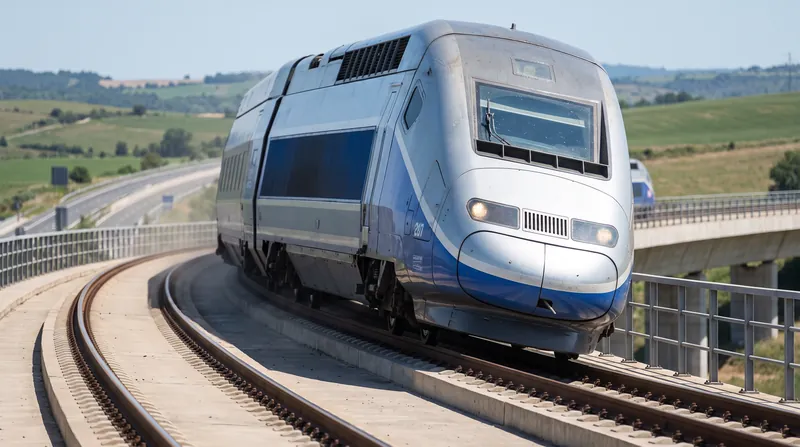
More in Transportation
See all →Rail Infrastructure
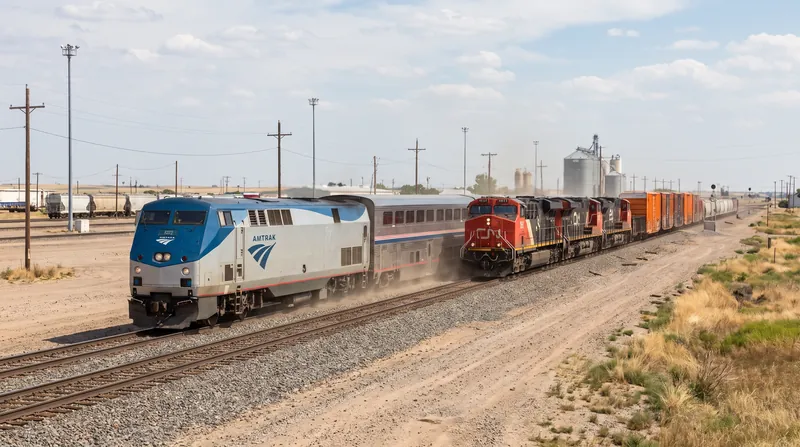
Amtrak and CN Sign Eight-Year Operating Agreement, Resolving Decade-Long Regulatory Dispute
5 sources
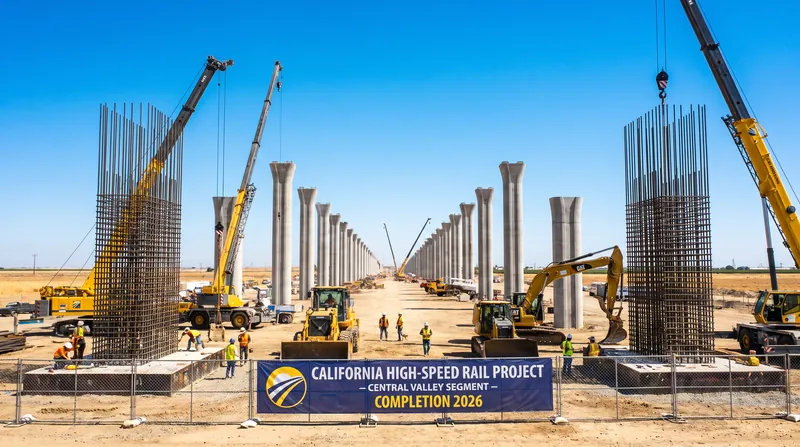
Oversight Audit
Inspector General Finds California High-Speed Rail Paid $600,000 in Unallowable Consultant Travel Expenses
6 sources
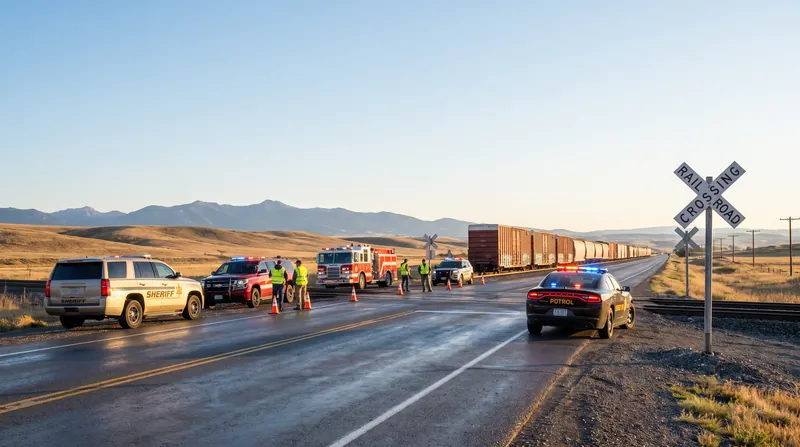
Freight Rail Safety
Multi-Car Train Derailment in Montana Prompts Precautionary Evacuations With No Hazardous Spills
5 sources
Break of Gauge
Rebuild the Track or Rebuild the Train: The Engineering Behind Variable-Gauge Railways
5 sources
Comments
Every angle. Every day.
Get Transportation stories with full source coverage and perspective breakdowns, free every day.