
The Mechanics of the Federal Reserve Clash: Bond Yields, Board Firings, and Institutional Independence
The Trump administration is deploying unprecedented Treasury interventions and renewed attempts to fire a Federal Reserve governor in an effort to force down borrowing costs against the will of the bond market.

- The Federal Reserve
- Prioritizes fighting inflation over political demands for lower rates, defending its institutional independence.
- Bond Market Analysts
- Argues that high yields are the inevitable mathematical result of a $40 trillion national debt and structural deficits.
- The Administration
- Views high interest rates as an artificial constraint and seeks to manage borrowing costs through executive action.
The conventional wisdom in American politics is that the President controls the economy through tax legislation and trade tariffs. The evidence, however, points to a different reality: the true arbiter of American economic conditions is the bond market, and the institution designed to manage it is currently under unprecedented political siege. Over the final weeks of August 2026, a structural conflict between the White House, the Treasury Department, and the Federal Reserve has escalated from rhetorical frustration into direct institutional intervention.
The friction originates in the sovereign debt market. As the national debt breached the $40 trillion threshold, investors began demanding higher compensation to hold long-term government bonds. By mid-August, the yield on the 30-year Treasury bond spiked above 5.3 percent, reaching its highest level since 2007. Because Treasury yields serve as the benchmark for borrowing costs across the broader economy, this surge directly translates into higher mortgage rates for homebuyers and steeper financing costs for corporations.[1]
Facing a frozen housing market and rising corporate distress, the Trump administration attempted to force the market's hand. Treasury Secretary Scott Bessent executed an unusual intervention, announcing that the government would double its planned buyback of long-term Treasury securities to $4 billion. The mechanical goal was simple: by using government funds to repurchase debt from private investors, the Treasury aimed to artificially reduce the supply of those bonds, driving their prices up and their yields down.[1]
The intervention failed to hold. While yields briefly dipped following Bessent's announcement, they rapidly rebounded to near their previous highs within days. The bond market effectively rejected the Treasury's price management. Prominent investors, including billionaire Stanley Druckenmiller, publicly criticized the move, arguing that the administration must address the underlying arithmetic of the budget deficit rather than attempting to suppress the symptoms through market manipulation.
With the Treasury's market intervention stalling, the administration's focus has intensified on the Federal Reserve. President Trump has repeatedly demanded that the central bank lower its benchmark interest rates to ease borrowing costs. However, the Fed operates under a dual mandate to maximize employment and stabilize prices, and its leadership maintains that inflation has not yet been fully contained.
With the Treasury's market intervention stalling, the administration's focus has intensified on the Federal Reserve.
This dynamic was starkly illustrated on August 28 at the Federal Reserve's annual economic symposium in Jackson Hole, Wyoming. Delivering his first major address as Fed Chair, Kevin Warsh—who was appointed by President Trump—declined to signal the rate cuts the White House desires. Instead, Warsh warned that persistent inflation remains excessively high and explicitly opened the door to potential rate hikes in the coming months if price pressures do not abate.[4]
Warsh used the platform to establish a high bar for further monetary easing, cautioning that the central bank must not become a reactive tool for financial markets. He argued that if market participants look primarily to the Fed for their next trade, policymakers risk being blinded to underlying economic developments. The speech reaffirmed the institution's commitment to its inflation-fighting credibility, even at the cost of elevated borrowing rates.[4][5]
Unable to sway the Fed Chair, the administration has simultaneously pursued a structural alteration of the Federal Reserve Board of Governors. The White House has renewed a campaign to fire Fed Governor Lisa Cook, a Biden appointee, over allegations that she committed mortgage fraud by claiming two different properties as her primary residence on loan documents. Removing Cook would allow the President to appoint a replacement, thereby securing a majority of Trump appointees on the seven-member board.[2][3]
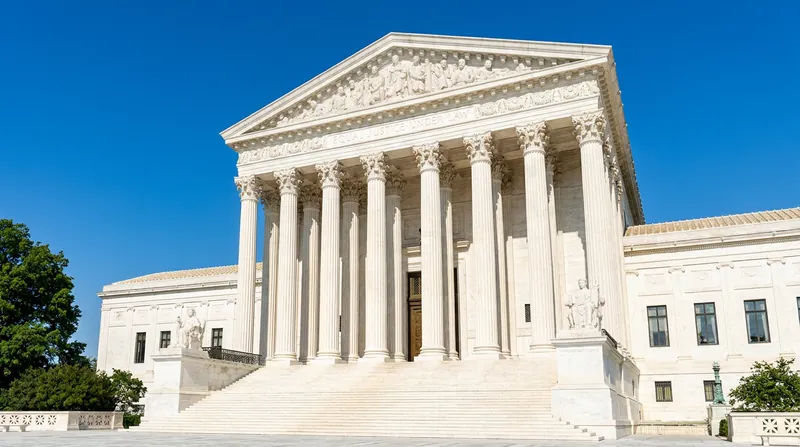
The Federal Reserve Act stipulates that a President can only remove a Fed governor "for cause," a standard designed to insulate monetary policy from political turnover. The Supreme Court previously blocked an attempt to oust Cook in June, ruling 5-4 that she was denied statutory procedural protections and the right to contest the charges. In response, the White House initiated a formal process in August, setting an August 26 deadline for Cook to respond to the allegations.[2][3]
Cook's legal team, led by Abbe Lowell, submitted a forceful rebuttal just ahead of the deadline. The response denied any intentional wrongdoing, characterizing the mortgage paperwork discrepancies as inadvertent errors. Her counsel pointedly noted that multiple cabinet members and the President himself have reportedly engaged in similar real estate documentation practices without facing legal or professional consequences.[2][3]
The defense explicitly framed the firing attempt as a pretextual maneuver designed to break the central bank's political independence. By attempting to establish "cause" through unrelated personal financial paperwork, the administration is testing the legal boundaries of executive power over independent agencies. The outcome of this specific personnel dispute will likely set a lasting precedent for how insulated future Fed governors will be from presidential pressure.[2][3][5]
The convergence of these events—the Treasury's failed bond buybacks, the Fed Chair's hawkish stance at Jackson Hole, and the legal battle over a governor's seat—highlights a profound structural tension. The executive branch is seeking immediate relief from the political consequences of high borrowing costs, while the bond market and the central bank are enforcing the mathematical realities of a $40 trillion national debt and persistent inflation.[1][4][5]
Key points
- The 30-year Treasury yield spiked above 5.3 percent in August, driving up borrowing costs across the economy.
- Treasury Secretary Scott Bessent attempted to lower yields by doubling a bond buyback program, but the market quickly reversed the effects.
- Fed Chair Kevin Warsh used his Jackson Hole address to signal that inflation remains too high and rate hikes may still be necessary.
- The White House set an August 26 deadline in a renewed effort to fire Fed Governor Lisa Cook over alleged mortgage paperwork errors.
- Cook's legal team rebutted the charges, framing the firing attempt as a pretext to secure a Trump-appointed majority on the Fed board.
Key terms
- Treasury Yield
- The effective interest rate the U.S. government pays to borrow money, which serves as a baseline for consumer and corporate interest rates.
- Bond Buyback
- A financial operation where the government repurchases its own debt from investors to reduce supply and artificially lower yields.
- For Cause Removal
- A legal standard protecting certain independent agency officials from being fired by the President over policy disagreements, requiring proof of malfeasance or neglect of duty.
- Dual Mandate
- The statutory directive requiring the Federal Reserve to balance two economic goals: maximizing employment and keeping consumer prices stable.
Sources
Source coverage
5 outlets
3 viewpoints surfaced




- [1]The Washington PostThe Administration
Here's what's behind the bond market roller coaster
Read on The Washington Post → - [2]CBS NewsThe Federal Reserve
Federal Reserve Governor Lisa Cook defends herself against mortgage fraud allegations from Trump administration
Read on CBS News → - [3]AxiosThe Federal Reserve
Fed governor Lisa Cook: 'No legitimate basis for removal' on Trump mortgage claims
Read on Axios → - [4]PBSThe Federal Reserve
Warsh raises stakes for Fed's next meeting, and other takeaways from Jackson Hole conference
Read on PBS → - [5]Fast CompanyBond Market Analysts
The Federal Reserve—one of the world's most powerful institutions—affects the U.S. economy in a way that no other part of government can
Read on Fast Company →
Comments

Every angle. Every day.
Get news politics stories with full source coverage and perspective breakdowns delivered to your inbox.