
How Geopolitical Conflict is Driving Up G7 Borrowing Costs
The escalation of the US-Iran conflict has triggered a global surge in sovereign bond yields, adding tens of billions to G7 debt burdens and fundamentally reshaping the stock market's risk calculus.

In short
- G7 sovereign borrowing costs have surged to multi-decade highs amid the US-Iran conflict.
- The US national debt has crossed $40 trillion, with annual interest payments exceeding $1 trillion.
- Rising bond yields make government debt more attractive, pulling capital away from the stock market.
Global fixed-income markets are undergoing a seismic repricing, with G7 sovereign borrowing costs surging to multi-decade highs and adding tens of billions of dollars in new debt-servicing burdens. Driven by the inflationary pressures of the escalating US-Iran conflict, the yield on 30-year US Treasury bonds has climbed to levels unseen since the 2008 financial crisis.
This surge in yields represents a profound shift in the macroeconomic landscape, ending the era of cheap sovereign borrowing and forcing governments to allocate increasingly large portions of their budgets simply to pay interest on existing obligations.[1]
To understand why this is happening, it is essential to look at the mechanics of a government bond. A government bond is essentially a standardized IOU issued by a sovereign state to fund its public spending, infrastructure projects, and budget deficits.
Investors purchase these debt securities in exchange for regular interest payments, known as coupons, and the guaranteed return of their initial principal upon the bond's maturity date. Because they are backed by the taxing authority of the issuing government, sovereign bonds from developed nations are traditionally viewed as the bedrock of a low-risk investment portfolio.[5]
However, the price and yield of these bonds are not static. Once issued, government bonds are actively traded on the secondary market, where their prices fluctuate based on broader economic conditions. Bond yields move inversely to bond prices. If a newly issued bond offers a higher interest rate because central banks have raised rates, the older bonds with lower rates become less attractive. Consequently, their prices fall on the secondary market until their effective yield matches the new, higher market rate.[5]
This inverse relationship is currently playing out on a massive scale due to geopolitical instability. When conflicts—such as the escalating US-Iran war—threaten global supply chains and energy markets, they stoke fears of persistent inflation. To combat this inflationary pressure, central banks must maintain restrictive monetary policies. Recently at the Jackson Hole economic symposium, Federal Reserve Chair Kevin Warsh charted a forward-looking, hawkish path, indicating that the US central bank is prepared to keep interest rates elevated to prevent inflation from becoming entrenched.[2]
The Federal Reserve's stance acts as an anchor for global borrowing costs. When the US central bank signals that the federal funds rate will remain high, the yields on US Treasury bonds naturally rise to reflect those expectations. Because US Treasuries are considered the global risk-free benchmark, higher yields in the United States exert upward pressure on sovereign debt yields around the world. Investors will not buy riskier European or Japanese debt unless they are compensated with yields that are competitive with the elevated returns offered by the US government.[2][6]
The scale of the impact on the United States is staggering. The US national debt recently crossed the unprecedented $40 trillion threshold, a figure driven by decades of deficit spending, pandemic-era stimulus, and rising entitlement costs. As the yield on long-term US Treasury bonds climbs, the cost to service this massive debt load is compounding rapidly. Annual interest payments on the US national debt have now surpassed $1 trillion, consuming a larger share of the federal budget than national defense.[3][4]
What happens in the US bond market rarely stays there, and the contagion has quickly spread across the G7. The United Kingdom, France, and Italy are all facing significantly higher financing costs, which weigh heavily on their public finances.
In the UK, gilt yields have surged, forcing the government to allocate tens of billions of additional pounds to debt servicing. Italy, which already carries a high debt-to-GDP ratio, is on a trajectory where interest payments could consume an outsized portion of its government revenue, limiting its ability to enact fiscal stimulus or invest in domestic growth.[1][6]
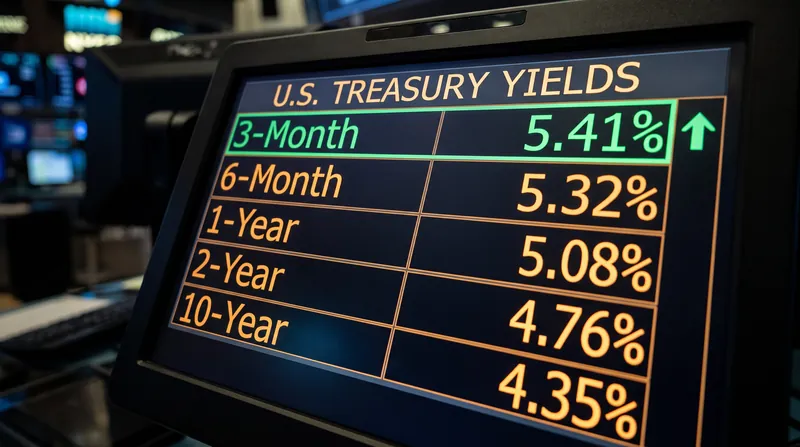
For the stock market, this dynamic acts as a powerful gravitational pull downward. Equity valuations are fundamentally tied to interest rates; when risk-free government bonds offer yields exceeding 5%, the relative attractiveness of the stock market diminishes.
Institutional investors, pension funds, and retail traders naturally rotate capital out of riskier equities and into sovereign debt to lock in guaranteed, high returns. This capital flight depresses stock prices, particularly in growth-oriented sectors like technology, which rely heavily on cheap borrowing to fund future expansion and whose future cash flows are discounted more heavily when rates are high.[6]
The ultimate trajectory of these yields depends heavily on the duration of the geopolitical conflict and the subsequent energy market fallout. If inflation proves stickier than anticipated, central banks may be forced to maintain restrictive policies even longer, ensuring that elevated debt costs remain a persistent drag on both G7 budgets and global equity markets. Conversely, if the conflict de-escalates and inflation cools, central banks could begin to lower rates, easing the pressure on sovereign borrowing costs and providing a much-needed tailwind for the stock market.[1][2][6]
The ultimate trajectory of these yields depends heavily on the duration of the geopolitical conflict and the subsequent energy market fallout.
Ultimately, the current environment underscores the fragile interconnectedness of geopolitics, sovereign debt, and equity markets. The era of near-zero interest rates that defined the 2010s allowed G7 nations to accumulate massive debt loads with minimal immediate consequence. Now, as conflict-driven inflation forces a return to historically normal borrowing costs, governments are discovering the painful reality of servicing that debt. For investors, navigating this landscape requires a careful balancing act, recognizing that the bond market is no longer just a safe haven, but a primary driver of global financial volatility.[6]
Terms to know
- Government Bond
- A debt security issued by a government to support public spending, paying periodic interest and returning the principal at maturity.
- Bond Yield
- The annualized return an investor realizes on a bond, calculated by dividing the fixed interest payment by the bond's current market price.
- Federal Funds Rate
- The target interest rate set by the US Federal Reserve at which commercial banks borrow and lend their excess reserves to each other overnight.
- Secondary Market
- The financial market where previously issued financial instruments, such as bonds, are bought and sold by investors.
Questions readers ask
What is a government bond yield?
A bond yield is the effective annual return an investor receives based on the bond's current market price. Because bond prices and yields move in opposite directions, falling bond prices result in higher yields.
Why are G7 borrowing costs rising?
Geopolitical conflicts, such as the US-Iran war, have stoked inflation fears, prompting central banks to keep interest rates high. This makes newly issued government debt more expensive to service.
How does this affect the stock market?
When government bonds offer high, risk-free returns, investors often move their money out of the stock market and into bonds, which depresses stock valuations.
Different angles
Fiscal Analysts
Focus on the long-term sustainability of government budgets in a high-rate environment.
Fiscal analysts argue that the current surge in debt-servicing costs is a long-overdue reckoning for decades of unchecked deficit spending. They point out that G7 nations took advantage of the historically low interest rates of the 2010s to expand public debt without immediate consequence. Now that geopolitical shocks have forced rates higher, these analysts warn that governments will be forced to make painful choices between cutting essential public services, raising taxes, or allowing inflation to erode the real value of their debt.
Market Strategists
Emphasize the gravitational pull that high bond yields exert on equity valuations.
From the perspective of equity investors and market strategists, the bond market is currently the single biggest headwind for stock prices. When risk-free sovereign debt offers yields upwards of 5%, the equity risk premium shrinks, making stocks fundamentally less attractive. Strategists note that this dynamic particularly punishes growth sectors, which rely on cheap capital to fund expansion. Until bond yields stabilize or begin to fall, they argue that capital will continue to rotate out of the stock market and into fixed-income assets.
Central Bankers
Prioritize the containment of inflation over the immediate fiscal pain of higher borrowing costs.
Central bankers maintain that elevated interest rates—and by extension, high bond yields—are a necessary mechanism to tighten financial conditions and cool the economy. In the face of supply chain disruptions and energy price spikes driven by geopolitical conflict, their primary mandate is to prevent inflation from becoming permanently entrenched. While acknowledging the strain this places on government budgets, central bankers argue that failing to control inflation would ultimately cause far more severe economic damage than the current spike in sovereign borrowing costs.
- Macroeconomic Observers
- Prioritize the containment of inflation over the immediate fiscal pain of higher borrowing costs.
- Fiscal Analysts
- Focus on the long-term sustainability of government budgets in a high-rate environment.
- Market Strategists
- Emphasize the gravitational pull that high bond yields exert on equity valuations.
Perspectives this story doesn't cover
- Taxpayers facing potential austerity measures
- Corporate borrowers competing for capital
Sources
Source coverage
6 outlets
3 viewpoints surfaced




- [1]Financial TimesMacroeconomic Observers
Rising bond yields add tens of billions to G7 countries’ debt costs
Read on Financial Times → - [2]Financial TimesMacroeconomic Observers
Warsh charts a forward-looking path for the Fed at Jackson Hole
Read on Financial Times → - [3]WikipediaFiscal Analysts
National debt of the United States
Read on Wikipedia → - [4]US Debt ClockFiscal Analysts
U.S. National Debt Clock
Read on US Debt Clock → - [5]WikipediaFiscal Analysts
Government bond
Read on Wikipedia → - [6]Factlen Editorial TeamMarket Strategists
Synthesis by Factlen editorial team
Read on Factlen Editorial Team →

More in Finance
See all →Market Mechanics
How Market Depth and Price-Time Priority Dictate the Execution Price of a Large Market Order
6 sources

Portfolio Theory
How the Efficient Frontier and the Capital Allocation Line Optimize Portfolio Risk and Return
4 sources

Risk-Free Rate
The Near-Zero Duration and Minimal Default Risk That Make the 3-Month Treasury Bill the Standard Risk-Free Rate Proxy
7 sources
Derivatives Pricing
How Volatility, Time to Expiration, and the Risk-Free Rate Dictate the Theoretical Value of a European Option in the Black-Scholes Model
3 sources

Comments
Every angle. Every day.
Get Finance stories with full source coverage and perspective breakdowns, free every day.