
Comparing Long-Duration Energy Storage Technologies: Pumped Hydro, Compressed Air, and Flow Batteries
As renewable energy generation expands, grid operators are increasingly turning to long-duration energy storage to manage multi-day intermittency. While pumped hydro remains the dominant technology, compressed air and flow batteries are emerging as scalable alternatives to balance decarbonized power systems.
By Marina Lopez

- Grid Reliability Planners
- Prioritize system stability and the need for multi-day dispatchable capacity to replace retiring fossil fuel plants.
- Storage Technology Developers
- Focus on scaling alternative technologies like flow batteries and CAES to overcome the geographic limits of pumped hydro.
- Energy Policymakers
- Emphasize the need for targeted grants and market reforms to bridge the commercialization gap for emerging storage solutions.
At a glance
- Long-duration energy storage (LDES) is essential for managing multi-day renewable energy intermittency and replacing retiring fossil fuel baseload plants.
- Pumped-storage hydropower remains the dominant LDES technology, offering massive capacity but facing strict geographic and capital constraints.
- Compressed air energy storage (CAES) provides scalable, long-duration backup by utilizing widely distributed underground geological formations.
- Flow batteries decouple power from capacity, allowing for highly modular and safe liquid-based storage that can operate for thousands of cycles.
- Governments and grid operators are accelerating investments and grants to bridge the commercialization gap for emerging non-hydro storage solutions.
Why it matters now
The transition to a fully renewable grid depends on the ability to store excess wind and solar power for days or weeks, not just hours. The commercial viability of these technologies will determine whether utilities can maintain reliable electricity during extended periods of low renewable output without relying on fossil fuels.
The electricity that powers homes, hospitals, and data centers is undergoing a fundamental shift in how it is stored and dispatched. As the global power grid becomes increasingly reliant on weather-dependent wind and solar generation, the challenge is no longer just producing clean energy, but ensuring it is available during prolonged periods of low wind or overcast skies. This requirement has triggered a surge in investment and regulatory support for long-duration energy storage (LDES) technologies capable of discharging power for 10 to 100 hours or more.[1][7]
The scale of the challenge is immense. In Europe, a recent Eurelectric-AFRY analysis found that each gigawatt of LDES could generate €150-250 million in annual variable operating cost savings at the system level by reducing renewable curtailment and easing network congestion. In the United States, the Department of Energy has defined LDES as systems capable of delivering electricity for 10 or more hours, launching a $100 million pilot program to advance these technologies toward commercial viability. Across the globe, grid operators are recognizing that standard lithium-ion batteries, which typically discharge over two to four hours, cannot bridge multi-day weather events.[1][2][7]
Currently, the backbone of long-term grid flexibility is pumped-storage hydropower (PSH). This mature technology involves pumping water from a lower reservoir to an upper reservoir when electricity is abundant and cheap. When demand peaks, the water is released back down through turbines to generate power. Pumped hydro accounts for the vast majority of global energy storage capacity, offering high round-trip efficiency and lifespans that can exceed 50 years.[2][5][7]
Recent developments underscore the continued reliance on this established method. In Canada, TC Energy recently appointed Worley to advance the development of a massive 1-gigawatt, 11-gigawatt-hour pumped storage project in Ontario. However, pumped hydro is geographically constrained. It requires specific topographical features—namely, significant elevation changes and access to large volumes of water—and often faces lengthy permitting processes, environmental reviews, and high upfront capital costs.[5][7]
As a result, grid operators are increasingly looking to alternative LDES technologies that can be deployed in a wider variety of locations. One such alternative is compressed air energy storage (CAES). This technology uses surplus electricity to run compressors that force air into underground geologic formations, such as salt caverns, aquifers, or depleted gas fields. When power is needed, the highly pressurized air is released, heated, and expanded through a turbine to generate electricity.[2][7]
CAES offers the advantage of large-scale, long-duration storage without the strict surface topographical requirements of pumped hydro. While it still relies on specific geological formations, these underground structures are more widely distributed than suitable pumped hydro sites. The technology can provide days or even weeks of backup power, making it a critical component for managing seasonal variations in renewable energy output. However, traditional CAES systems require natural gas to heat the expanding air, producing some emissions, though advanced adiabatic CAES designs aim to capture and reuse the heat of compression to achieve zero emissions.[2][7]
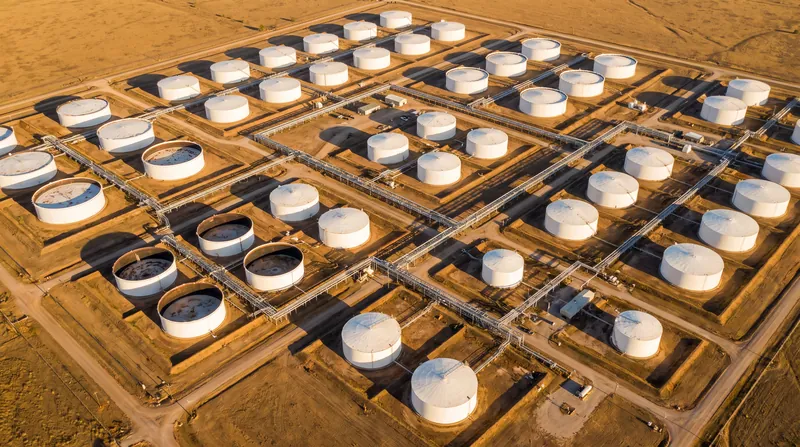
A third major category of LDES is the flow battery. Unlike conventional lithium-ion batteries, which store energy in solid electrodes, flow batteries store energy in liquid electrolytes contained in external tanks. The power output (measured in megawatts) is determined by the size of the electrochemical cell stack, while the storage capacity (measured in megawatt-hours) is dictated entirely by the size of the external tanks.[7]
Unlike conventional lithium-ion batteries, which store energy in solid electrodes, flow batteries store energy in liquid electrolytes contained in external tanks.
This decoupling of power and capacity makes flow batteries highly scalable and particularly well-suited for long-duration applications. To double the duration of a flow battery, developers simply install larger tanks of electrolyte, rather than purchasing entirely new battery cells. Flow batteries, such as vanadium redox or iron-based systems, can operate for thousands of cycles with minimal degradation, offering a longer operational life than standard lithium-ion systems.[2][7]
They are also inherently safer, as the liquid electrolytes are typically non-flammable and operate at ambient temperatures. However, they currently face challenges related to lower energy density—meaning they require a larger physical footprint—and higher upfront capital costs compared to established battery technologies. The supply chains for materials like vanadium are also less mature than those for lithium and cobalt.[7]
The urgency to commercialize these alternatives is accelerating rapidly. In the United Kingdom, the government recently launched a £28 million Ultra-Long Duration Energy Storage Challenge, offering grants to support the development of technologies capable of supplying clean electricity for 100 hours or more. This initiative specifically targets advanced electrochemical systems and underground storage solutions to reduce reliance on expensive fossil fuel backups during extended lulls in wind generation.[4]
Meanwhile, the sheer volume of storage required is driving rapid market expansion. In Germany, grid operators approved more than three times the battery storage capacity for connection in 2025 compared to the previous year. This approved capacity roughly matches the storage volume of the country's entire pumped hydro fleet, signaling a massive shift in how the grid will manage intermittency.[6]
In the United States, state-level initiatives are also driving deployment. The California Energy Commission has allocated over $247 million to invest in the demonstration and deployment of non-lithium-ion long-duration energy storage technologies. This includes funding for 100-hour storage systems and microgrid projects designed to maintain critical operations during extreme weather events and grid outages.[3]
Despite the technological progress, the transition is not without its economic uncertainties. While the technical feasibility of CAES and flow batteries has been demonstrated, their financial viability at grid scale remains a hurdle. High upfront capital costs and the lack of established market mechanisms to adequately compensate long-duration storage for the resilience it provides make financing these projects difficult.[2][7]
Current electricity markets are largely designed to reward short-term energy arbitrage and rapid frequency regulation—services where lithium-ion batteries excel. To unlock the full potential of LDES, regulators and grid operators will need to develop new capacity markets or long-term contracts that value the ability to dispatch power continuously for days at a time.[2][7]
The trajectory, however, is clear. As the penetration of renewable energy deepens, the grid's need for flexibility will only grow. The successful deployment of a diverse portfolio of LDES technologies—spanning the established scale of pumped hydro, the geographic flexibility of compressed air, and the modularity of advanced flow batteries—will be the linchpin in achieving a reliable, decarbonized power system.[1][2][7]
Terms to know
- Long-Duration Energy Storage (LDES)
- Energy storage systems capable of discharging electricity continuously for 10 or more hours, designed to manage multi-day fluctuations in renewable energy.
- Pumped-Storage Hydropower (PSH)
- A system that stores energy by pumping water to a higher elevation and generates electricity by releasing it through turbines when demand peaks.
- Compressed Air Energy Storage (CAES)
- A technology that stores surplus energy by compressing air into underground geological formations, releasing and heating it to drive a turbine when power is needed.
- Flow Battery
- An electrochemical storage system that stores energy in liquid electrolytes contained in external tanks, allowing capacity to be scaled independently of power output.
- Curtailment
- The deliberate reduction of renewable energy output below what could have been produced, typically because the grid cannot absorb the excess power.
Questions readers ask
Why can't we just use lithium-ion batteries for everything?
Lithium-ion batteries are highly efficient for short-duration storage (typically 2 to 4 hours) and daily energy shifting. However, scaling them to provide days or weeks of continuous backup power is currently cost-prohibitive, making alternative technologies necessary for long-duration needs.
Where can pumped hydro facilities be built?
Pumped hydro requires specific topographical features, namely a significant difference in elevation between two large bodies of water. This geographic constraint limits where new facilities can be developed, driving the need for alternative storage methods.
Are flow batteries safe?
Yes, flow batteries are generally considered very safe. Unlike some lithium-ion chemistries, the liquid electrolytes used in flow batteries are typically non-flammable and operate at ambient temperatures, significantly reducing the risk of fire.
How does compressed air storage impact the environment?
While CAES has a smaller surface footprint than pumped hydro, traditional systems require burning some natural gas to heat the expanding air. Advanced designs are being developed to capture and reuse the heat generated during compression, aiming for zero emissions.
Sources
Source coverage
7 outlets
3 viewpoints surfaced







- [1]Department of EnergyGrid Reliability Planners
Long-Duration Energy Storage
Read on Department of Energy → - [2]EurelectricGrid Reliability Planners
Innovative Long-Duration Energy Storage (LDES) technologies
Read on Eurelectric → - [3]California Energy CommissionGrid Reliability Planners
Long Duration Energy Storage (LDES) program
Read on California Energy Commission → - [4]UK Research and InnovationEnergy Policymakers
Ultra-Long Duration Energy Storage (Ultra-LDES) Challenge
Read on UK Research and Innovation → - [5]Energy-Storage.newsStorage Technology Developers
TC Energy appoints Worley to advance development of 11GWh Ontario pumped hydro energy storage project
Read on Energy-Storage.news → - [6]Clean Energy WireStorage Technology Developers
Germany approves large battery storage on a par with its pumped hydro fleet
Read on Clean Energy Wire → - [7]Factlen Editorial TeamStorage Technology Developers
Synthesis by Factlen editorial team
Read on Factlen Editorial Team →
Comments
Every angle. Every day.
Get energy stories with full source coverage and perspective breakdowns delivered to your inbox.