
The Roman Space Telescope Launches: Why Astrophysics is Trading Deep Stares for Wide Surveys
NASA's Nancy Grace Roman Space Telescope has successfully launched aboard a Falcon Heavy rocket, marking a fundamental architectural shift in space observatories from narrow precision targeting to massive wide-field data surveys.

Share this story
In short
- The Nancy Grace Roman Space Telescope launched today aboard a SpaceX Falcon Heavy rocket.
- Roman features a 2.4-meter mirror, identical in size to Hubble, but utilizes a 300-megapixel camera to capture a field of view 100 times larger.
- The observatory will downlink 2,500 terabytes of data over five years, dwarfing the historical output of previous telescopes.
The tension in modern astrophysics is a battle between depth and breadth. For decades, the public has been sold the idea that bigger mirrors and deeper stares are the only way to understand the universe. But as the Nancy Grace Roman Space Telescope launches today on a SpaceX Falcon Heavy, the astronomical community is pivoting. The tension is clear: do we learn more by staring at a single grain of sand for a week, or by photographing the entire beach in an afternoon?[1][6]
Roman’s launch forces a reckoning in how we measure astronomical progress. Marketing materials from the agency call Roman a "speed machine" and promise a "new atlas of the universe." But beneath the press releases, Roman represents a fundamental architectural trade-off. It does not look deeper than the James Webb Space Telescope; it looks wider.[4][6]
What actually shipped today is not a larger light-bucket, but a massively expanded focal plane. Roman uses a donated 2.4-meter primary mirror originally built by the National Reconnaissance Office for a classified spy satellite. That is the exact same mirror diameter as the 36-year-old Hubble Space Telescope.[2][4]
The technological leap is entirely in the sensors. Roman’s Wide-Field Instrument is a 300-megapixel camera that captures a field of view 100 times larger than Hubble’s. A single full-resolution image covers an area of the sky equivalent to 45 city blocks.[2][4]
This stands in stark contrast to the James Webb Space Telescope, which is stationed at the same L2 Lagrange point Roman is currently traveling toward. Webb uses a massive 6.5-meter segmented mirror to peer into the extreme infrared. It is a precision sniper rifle designed to isolate the faintest targets. Roman is a wide-angle floodlight.[3][5][6]
The data pipelines reflect this divergence in mission. Webb generates highly specific, targeted datasets. Roman is an industrial data hose. It is projected to downlink a staggering 2,500 terabytes of data over its five-year primary mission. By comparison, Hubble has beamed back roughly 172 terabytes over three decades.[2][6]
Roman will scan the sky 1,000 times faster than Hubble, collecting as much data in one month as its older cousin could manage in a century. This volume is necessary because Roman’s scientific targets are statistical, not individual.[4]
Webb is built to analyze the atmospheric composition of a single exoplanet or the structure of a single primordial galaxy. Roman is built to count billions of galaxies to map the invisible scaffolding of dark matter and measure the repulsive force of dark energy.[1][3][5]
The new observatory also carries a secondary payload: a coronagraph technology demonstration. This instrument is designed to physically block the glare of host stars to directly image large exoplanets.[1][2]
While the agency hypes the coronagraph as a tool for finding habitable worlds, the skeptical reality is that this specific iteration is a proof-of-concept. It is a stepping stone for future observatories, and its immediate yield of Earth-like planets remains to be proven.[6]
The journey to the L2 Lagrange point will take Roman approximately 100 days. Located a million miles from Earth on the opposite side of the sun, L2 offers a gravitationally stable parking spot where the telescope's sunshield can simultaneously block the light and heat of the Sun, Earth, and Moon.[1][2]
Operating at L2 is a strict requirement for infrared astronomy. Because infrared light is essentially heat, the telescope must remain incredibly cold to prevent its own thermal emissions from blinding its sensitive detectors.[2][3]
The trade-off of the L2 orbit is serviceability. Unlike Hubble, which resided in low Earth orbit and received multiple space shuttle servicing missions to upgrade instruments and fix optics, Roman is entirely beyond human reach. What launched today is the final hardware.[2][6]
This finality places immense pressure on the automated deployment sequences. Over the coming weeks, Roman must successfully deploy its solar panels, high-gain antenna, and articulated aperture cover without human intervention.[1][2]
If successful, Roman will fundamentally alter the pacing of astronomical discovery. Instead of individual principal investigators hoarding telescope time to look at specific stars, Roman’s vast datasets will be dumped into public archives for the entire scientific community to mine simultaneously.[4][6]
Ultimately, the universe requires both architectures. You cannot map the cosmic web with a sniper rifle, and you cannot analyze a specific alien atmosphere with a floodlight. Roman’s launch marks the moment astrophysics fully embraces the era of big data surveys.[6]
Where opinion splits
Wide-Field Survey Architecture (Roman)
Maximizing the field of view to map large-scale cosmic structures and statistical populations.
For: Captures 100x more sky per exposure than legacy precision telescopes, generating massive datasets (2,500 terabytes) for statistical analysis of dark energy and dark matter. Against: Limited by a smaller 2.4-meter primary mirror, restricting its ability to resolve the absolute faintest, most distant individual objects in the early universe. Evidence: Roman will capture as much data in one month as Hubble did in a century, mapping billions of galaxies simultaneously. Fits well when: The scientific goal requires population statistics, mapping the cosmic web, or discovering thousands of new exoplanets via microlensing. Does not fit when: The goal is detailed spectroscopic analysis of a single, extremely faint target.
Deep-Field Precision Architecture (JWST)
Maximizing mirror size and light-gathering power to observe the faintest, oldest, or smallest individual targets.
For: Unmatched light-gathering capability (6.5-meter mirror) and extreme infrared sensitivity, capable of detecting the atmospheric composition of exoplanets and the light of the universe's first stars. Against: Extremely narrow field of view. Surveying large portions of the sky is prohibitively slow and expensive in terms of observation time. Evidence: JWST has successfully detected carbon dioxide and methane in exoplanet atmospheres, a feat requiring its massive light bucket and specialized spectrographs. Fits well when: Observing a known, specific target that requires extreme magnification and spectral breakdown. Does not fit when: Searching for unknown phenomena across vast swaths of the sky, or mapping the large-scale distribution of dark matter.
- Survey Astronomers
- Focus on mapping large-scale structures, dark matter, and statistical populations.
- Precision Astrophysicists
- Focus on deep-field spectroscopy, early galaxy formation, and individual exoplanet atmospheres.
- Mission Architects
- Focus on the engineering trade-offs, data pipeline management, and orbital logistics.
Perspectives this story doesn't cover
- Ground-based observatory operators whose facilities may be tasked with following up on Roman's millions of new targets.
- Data scientists and cloud infrastructure providers tasked with hosting and distributing the unprecedented data volume.
Sources
Source coverage
6 outlets
3 viewpoints surfaced




- [1]The VergeSurvey Astronomers
The Nancy Grace Roman Space Telescope launches to study dark matter and dark energy
Read on The Verge → - [2]WikipediaPrecision Astrophysicists
Nancy Grace Roman Space Telescope
Read on Wikipedia → - [3]WikipediaPrecision Astrophysicists
James Webb Space Telescope
Read on Wikipedia → - [4]NASASurvey Astronomers
Nancy Grace Roman Space Telescope
- [5]NASASurvey Astronomers
James Webb Space Telescope
- [6]Factlen Editorial TeamMission Architects
Synthesis by Factlen editorial team
Read on Factlen Editorial Team →

More in Technology
See all →Orbital Mechanics
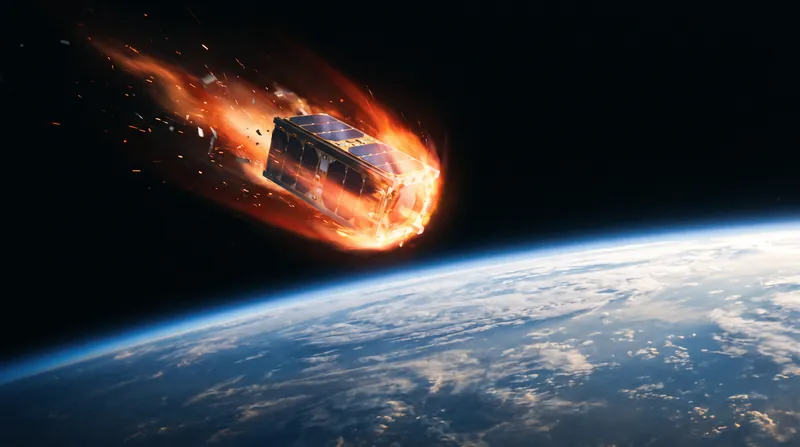
The 5-Year vs. 25-Year Deorbit Rule: Trade-offs in Clearing Low Earth Orbit
7 sources
Propulsion Systems
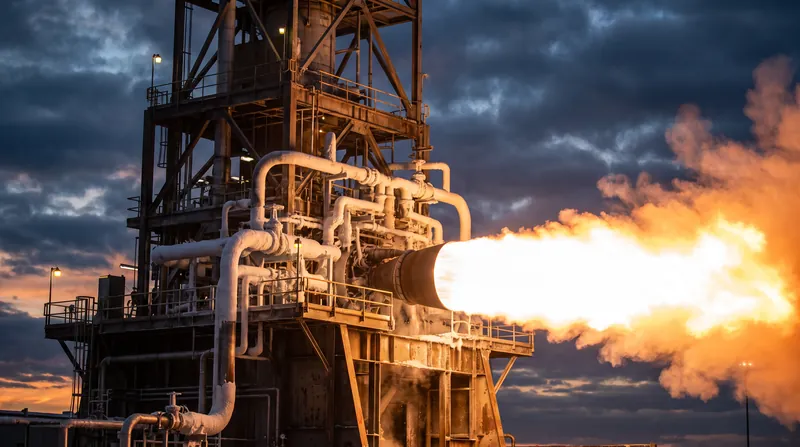
Rocket Engine Cycles Compared: The Trade-offs in Thrust, Efficiency, and Complexity
6 sources
Satellite Servicing
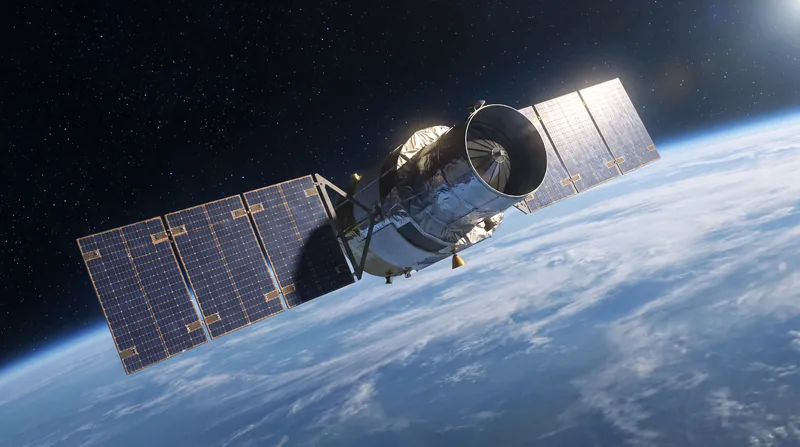
NASA Aborts Swift Telescope Rescue Mission, Sealing Observatory's Fiery Re-Entry
3 sources
VLEO Propulsion
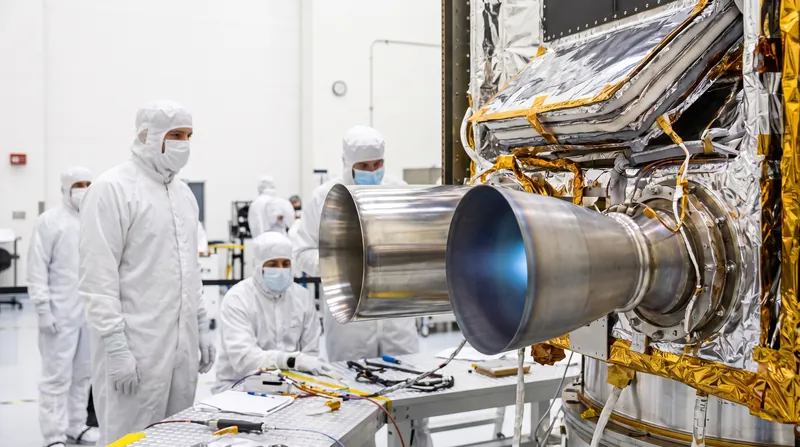
World's First Air-Breathing Satellite Thruster Set for Test, Unlocking Very Low Earth Orbit
4 sources
Comments
Every angle. Every day.
Get Technology stories with full source coverage and perspective breakdowns, free every day.