
World's First Air-Breathing Satellite Thruster Set for Test, Unlocking Very Low Earth Orbit
Spanish startup Kreios Space has contracted Kongsberg NanoAvionics to build a demonstration satellite powered by an air-breathing electric thruster. The mission aims to prove spacecraft can operate indefinitely in Very Low Earth Orbit by using residual atmospheric gases as infinite propellant.

In short
- Spanish startup Kreios Space has contracted Kongsberg NanoAvionics to build the first commercial satellite powered by an air-breathing electric thruster.
- The 200-kilogram demonstration mission will deploy between 300 and 350 kilometers, using atmospheric oxygen and nitrogen as propellant.
- Operating in Very Low Earth Orbit (VLEO) enables sub-meter optical resolution and lower latency without the congestion of traditional LEO.
The popular conception of spaceflight assumes that once a satellite reaches orbit, it floats effortlessly in a perfect vacuum. The reality is far more abrasive. In low Earth orbit (LEO), spacecraft constantly wade through a tenuous but persistent thermosphere, experiencing aerodynamic drag that steadily saps their momentum.[1]
To avoid falling back to Earth, traditional satellites must carry heavy tanks of chemical propellant or xenon gas to periodically boost their altitude. This creates a hard physical limit on a mission's lifespan: the moment a spacecraft exhausts its onboard fuel reserves, its operational life is effectively over, and gravity reclaims it.[2][3]
A new orbital demonstration aims to bypass that limitation entirely. Spanish aerospace startup Kreios Space has contracted Lithuanian manufacturer Kongsberg NanoAvionics to supply the satellite bus for the world's first commercial test of an Air-Breathing Electric Propulsion (ABEP) system. The mission is designed to prove that a spacecraft can scoop up the very atmosphere that causes drag and use it as infinite fuel.[1][4]
The 200-kilogram demonstration satellite will be built around a modified NanoAvionics MP42 microsatellite bus. According to the flight plan, the spacecraft will deploy at an altitude between 300 and 350 kilometers and slowly drift downward, firing its engine at various altitudes to study atmospheric conditions in the largely unexploited Very Low Earth Orbit (VLEO) regime.[1][4]
The mechanics of the ABEP system represent a significant departure from standard electric thrusters. Instead of drawing from an internal pressurized tank, the satellite features a specialized forward-facing intake designed to capture residual oxygen and nitrogen molecules from the upper atmosphere.[1][2]
Once collected, these trace gases are channeled into a helicon plasma thruster, where they are ionized and accelerated out the rear of the spacecraft using a solenoidal magnetic field. By generating continuous thrust from the ambient environment, the system theoretically allows a satellite to maintain an altitude of 150 to 300 kilometers indefinitely without the mass penalty of carrying its own propellant.[1][4]
The commercial stakes for unlocking VLEO are substantial. Operating closer to the planet's surface provides unmatched advantages for Earth observation, allowing relatively small, inexpensive optical payloads to capture sub-meter resolution imagery that would normally require massive telescope mirrors at higher altitudes.[1]
For telecommunications, flying below 300 kilometers dramatically reduces signal propagation latency and improves link budgets. It also offers a pristine operating environment. Traditional LEO has become increasingly congested, with over 10,900 working satellites currently in orbit—the vast majority belonging to broadband mega-constellations. VLEO, by contrast, is virtually empty.[1][4]
Furthermore, VLEO is naturally self-cleaning. If a satellite fails at 200 kilometers, atmospheric drag will pull it into a fiery reentry within weeks, entirely sidestepping the space debris crisis that threatens higher orbital lanes.[4]
Despite the marketing promises of "sustained operations" and multi-year mission lifespans, the upcoming demonstration is fundamentally a sprint rather than a marathon. Because the off-the-shelf MP42 bus is not aerodynamically optimized for the severe drag of VLEO, the initial test flight is only expected to survive for six to ten months before succumbing to orbital decay.[1][4]
Operating in the upper thermosphere is brutally difficult. Spacecraft face severe aerodynamic torques that can cause violent tumbling, requiring heavy modifications to attitude control systems and mass properties just to keep the intake pointed forward.[2][4]
Kreios Space intends to use the telemetry gathered during this short-lived descent to design a fully custom, drag-compensated satellite bus by 2029. If the air-breathing thruster proves viable in actual flight conditions, it could fundamentally alter satellite economics, trading the cost of heavy fuel tanks for the engineering challenge of flying aerodynamically in space.[1][4]
Different angles
The Case for VLEO via Air-Breathing Propulsion
Operating below 300 kilometers by scooping residual atmosphere for infinite propellant.
**For:** Unmatched optical resolution (sub-meter imagery from smaller 200 kg sensors), dramatically lower communication latency, and a naturally self-cleaning orbit that avoids the congestion of traditional LEO. **Against:** High atmospheric drag requires continuous thruster firing; the environment is thermally and aerodynamically harsh, requiring specialized bus designs to prevent violent tumbling. **Evidence:** Kreios Space's upcoming demonstration on a NanoAvionics MP42 bus aims to prove that a helicon plasma thruster can maintain an altitude of 150-300 km without onboard fuel. **Fits well when:** Missions require ultra-high-resolution Earth observation or low-latency communications, and can tolerate the developmental risk of early-stage intake technology. **Does not fit when:** The mission requires a proven, off-the-shelf satellite bus or cannot risk the aerodynamic torques present in the upper thermosphere.
The Case for Traditional LEO via Onboard Propellant
Operating above 400 kilometers using proven chemical or xenon electric thrusters.
**For:** Decades of flight heritage, predictable orbital dynamics, and the ability to use standard, mass-produced satellite buses without specialized aerodynamic modifications. **Against:** Hard limits on mission lifespan dictated by onboard fuel capacity; increasing orbital congestion with over 10,900 active satellites currently in LEO requiring active collision avoidance. **Evidence:** SpaceX's Starlink constellation relies entirely on this paradigm, managing thousands of working satellites that require routine drag compensation and controlled deorbiting when their fuel depletes. **Fits well when:** Deploying large constellations using standardized hardware where a 5-to-7 year lifespan is acceptable before replacement. **Does not fit when:** The mission requires the absolute highest optical resolution from a small payload, or when launch mass constraints prohibit carrying heavy propellant tanks.
- VLEO Innovators
- Startups and engineers pushing to exploit the lower thermosphere for better sensor resolution and reduced latency.
- Traditional LEO Operators
- Established constellation managers relying on proven altitudes and onboard propellant to ensure predictable mission lifespans.
- Space Sustainability Advocates
- Observers focused on orbital debris and the self-cleaning nature of very low orbits.
Perspectives this story doesn't cover
- Launch Providers
- Traditional Satellite Bus Manufacturers
Sources
Source coverage
4 outlets
3 viewpoints surfaced




- [1]Space.comVLEO Innovators
Exploring 'very low Earth orbit': The world's 1st air-breathing satellite thruster could soon get a test run
Read on Space.com → - [2]European Space Agency (ESA)Space Sustainability Advocates
World-first firing of air-breathing electric thruster
Read on European Space Agency (ESA) → - [3]Phys.orgTraditional LEO Operators
World-first firing of air-breathing electric thruster
Read on Phys.org → - [4]Factlen Editorial TeamVLEO Innovators
Synthesis by Factlen editorial team
Read on Factlen Editorial Team →

More in Technology
See all →Orbital Mechanics
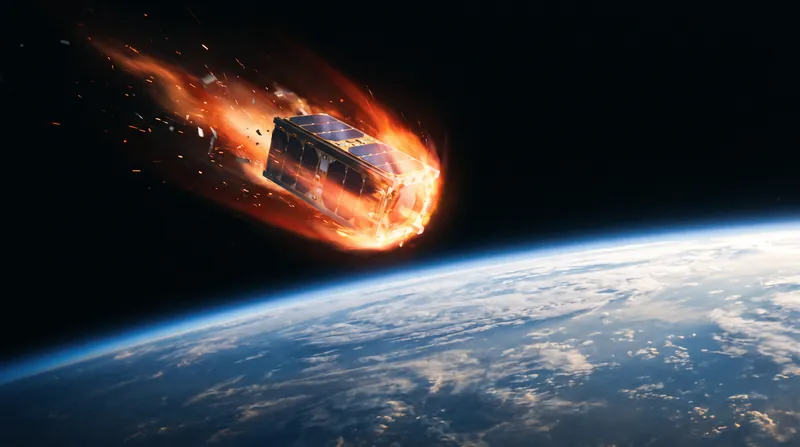
The 5-Year vs. 25-Year Deorbit Rule: Trade-offs in Clearing Low Earth Orbit
7 sources
Propulsion Systems
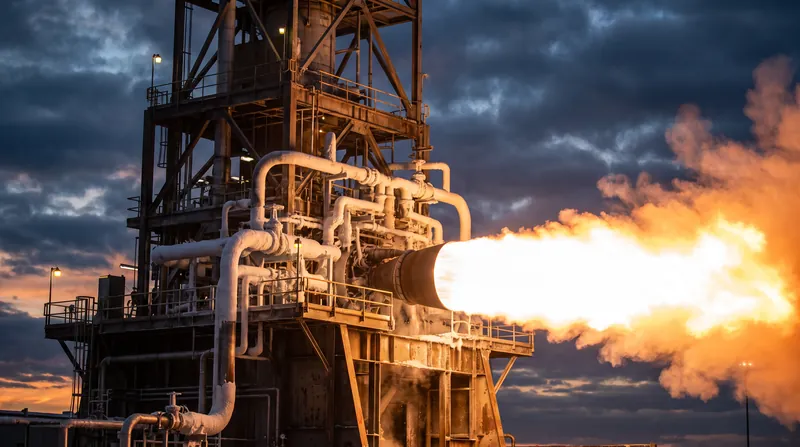
Rocket Engine Cycles Compared: The Trade-offs in Thrust, Efficiency, and Complexity
6 sources
Space Observatory
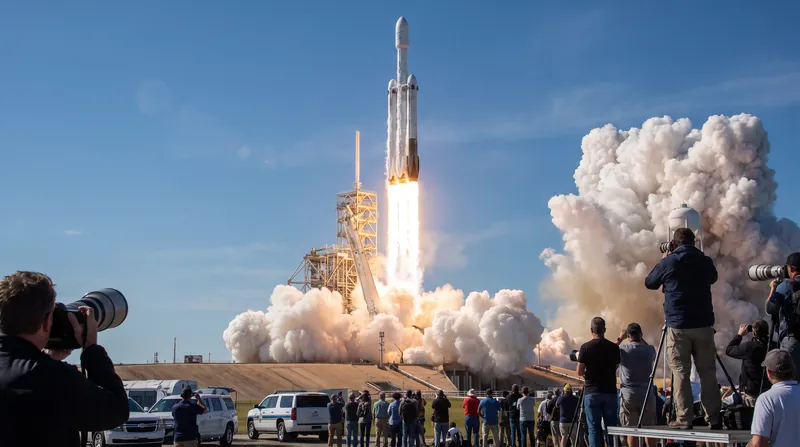
The Roman Space Telescope Launches: Why Astrophysics is Trading Deep Stares for Wide Surveys
6 sources
Satellite Servicing
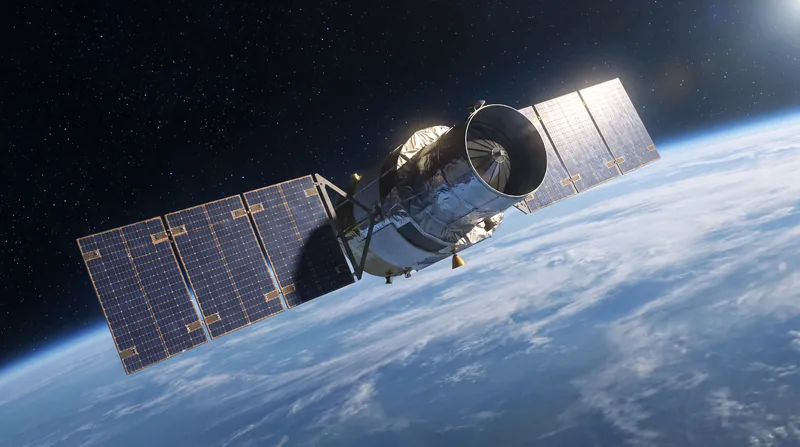
NASA Aborts Swift Telescope Rescue Mission, Sealing Observatory's Fiery Re-Entry
4 sources
Comments
Every angle. Every day.
Get Technology stories with full source coverage and perspective breakdowns, free every day.