
ICE Arabica Coffee Stocks Fall to 27-Year Low, Signaling Major Supply Crunch
Certified Arabica coffee inventories on the ICE exchange have plummeted to their lowest levels since 2000, keeping futures prices elevated above $3 per pound. Despite forecasts for a record Brazilian harvest, logistical bottlenecks and farmers holding back sales have created an acute near-term physical shortage.
By Baran Demir

Share this story
When you step into your favorite neighborhood café and order a carefully sourced pour-over, the price you pay is tethered to a sprawling, invisible architecture of global trade. Long before those beans are roasted to bring out notes of jasmine or dark chocolate, their baseline value is negotiated on trading floors and stored in specialized warehouses.
Right now, that underlying system is flashing a historic warning sign that could eventually ripple down to your morning cup. Understanding how this market operates reveals why a bumper crop in South America hasn't immediately translated into cheaper lattes.
In late August 2026, certified Arabica coffee stocks on the Intercontinental Exchange (ICE) plummeted to roughly 224,000 bags—their lowest level since the year 2000. This historic drawdown has kept benchmark Arabica futures trading above $3.00 per pound, a threshold that signals acute physical tightness in the market.
For context, exchange stocks generally ranged between one million and five million bags from the mid-2000s until early 2022. Dropping below a quarter-million bags leaves the global supply chain with a razor-thin margin for error, forcing traders to scramble for the limited beans available on the spot market.[1][2]
To understand why a number on a screen in New York matters to your local roaster, you have to look at the ICE Coffee "C" futures contract. This contract serves as the principal global benchmark for exchange-grade Arabica, with each standard contract representing 37,500 pounds of green coffee beans.
The prices quoted dictate the baseline cost for buyers worldwide, acting as the foundation upon which specialty premiums are built. When the "C" price surges, the cost of acquiring raw materials rises for everyone from massive multinational beverage companies to independent third-wave coffee shops.[6][7]
Not just any coffee can back these contracts. Exchange-certified stocks represent coffee that meets strict quality requirements and is physically sitting in approved, exchange-licensed warehouses. When roasters or traders need immediate, guaranteed supply, they can draw from these certified inventories. The current drawdown suggests that buyers are pulling coffee out of these exchange warehouses faster than producers are replenishing them. This dynamic often occurs when buyers find it difficult or too expensive to source the exact quality of beans they need directly from the origin countries.[3][7]
The paradox driving this shortage is that the world is not actually running out of coffee. In fact, the global coffee market is projected to post a surplus of 8.2 million bags in the 2026-27 season. Brazil, the world's largest producer and exporter, is widely expected to harvest a record crop of nearly 72 million bags. On paper, this massive agricultural output should be more than enough to satisfy global demand and rebuild the depleted exchange inventories, pushing prices back down to historical averages.[1][4]
However, a massive crop on the trees does not automatically translate into deliverable supply at the exchange. Brazilian farmers, who are currently well-capitalized, face little pressure to sell their beans immediately. As logistical backlogs mount at ports and local warehouses fill to capacity, many producers are choosing to hold their crop in domestic storage, which remains highly cost-effective. This holding pattern creates a bottleneck: the coffee exists, but it is not flowing into the export channels that feed the ICE certified warehouses.[1][2]
Furthermore, the pace of the Brazilian harvest has lagged behind seasonal norms. By late August, the Arabica harvest was roughly 86 percent complete, trailing the 95 percent completion rate seen at the same point last year. This slight delay has been enough to keep near-term physical supplies constrained. When the physical market is tight, traders are forced to buy back contracts or pay steep premiums for immediate delivery, reinforcing the high benchmark prices and keeping the market in a state of elevated volatility.[1][2]
There is also a lingering question about the quality of the beans currently being harvested. Heavy rainfall during parts of June and early July raised concerns about bean development and harvesting conditions in some Brazilian regions.
If a significant portion of the crop fails to meet the strict grading standards required for ICE certification, the volume of coffee eligible to replenish the exchange warehouses will be smaller than the headline harvest numbers suggest. Quality issues can effectively trap coffee in lower-tier markets, preventing it from easing the shortage of exchange-grade Arabica.[4][7]
Looking ahead, traders are closely monitoring the skies. The emergence of a strong El Niño weather pattern poses a significant risk for the upcoming flowering season in September and October. If rains are delayed in Brazil's key growing regions, the optimistic projections for the 2027 crop could quickly evaporate, keeping the pressure on existing stocks. The coffee market is notoriously forward-looking, and any threat to future harvests is immediately priced into today's futures contracts, adding another layer of support to the current high prices.[2]
The situation is further complicated by impending regulatory shifts in Europe. The European Union Deforestation Regulation (EUDR), set to take effect in January 2027, will add significant administrative requirements to rebuild certified inventories. Exporters and roasters have only a few months left to buy and ship coffee under the current, simpler framework, adding a layer of urgency to the market. This regulatory deadline is prompting some buyers to secure physical supplies now, further draining the available stocks before the new compliance rules reshape the import landscape.[5]
Meanwhile, the dynamics of Robusta coffee—the hardier bean typically used in instant blends and espresso—tell a different story. While Arabica stocks have dwindled, ICE Robusta inventories recently climbed to a nine-month high. This divergence highlights the specific premium and vulnerability of the high-altitude Arabica market, which remains highly sensitive to both weather shocks and supply chain bottlenecks. It also illustrates how different segments of the coffee industry can experience entirely different economic realities at the exact same time.[2]
For the everyday coffee drinker, this intricate dance of futures contracts, certified warehouses, and weather patterns ultimately shapes the cost of the daily ritual. While the anticipated Brazilian surplus may eventually flow into the market and ease the current bottleneck, the historic low in certified stocks serves as a stark reminder of how delicate the global coffee supply chain remains. Until those warehouse levels begin to recover, the premium on your morning cup is likely here to stay.[1][7]
Key points
- Certified Arabica coffee stocks on the ICE exchange have fallen to roughly 224,000 bags, the lowest level since 2000.
- The historic drawdown has kept benchmark Arabica futures trading above $3.00 per pound.
- Despite the shortage of exchange stocks, the global coffee market is projected to post an 8.2 million bag surplus.
- Brazilian farmers are holding back their record harvest due to logistical backlogs and strong capitalization.
What we don’t know
- Exactly how much of the current Brazilian harvest will meet the strict quality standards required for ICE certification.
- Whether the emerging El Niño weather pattern will delay crucial rains and damage the 2027 crop.
- How quickly the logistical bottlenecks at Brazilian ports will clear to allow physical coffee to flow into exchange warehouses.
How we got here
May 2000
ICE Arabica stocks hit a historic low, a level that would not be seen again for over two decades.
Early 2022
Exchange stocks begin a sustained decline from their typical historical range of one to five million bags.
June 2026
Heavy rainfall in Brazil raises concerns about the quality and development of the incoming Arabica crop.
August 2026
ICE certified Arabica stocks plummet to roughly 224,000 bags, marking a 26-year low and pushing futures prices above $3 per pound.
January 2027
The EU Deforestation Regulation is set to take effect, adding new compliance hurdles for coffee importers.
- Physical Market Buyers
- Roasters and importers focused on securing actual coffee beans for consumption.
- Agricultural Producers
- Farmers and cooperatives managing the world's largest coffee harvests.
- Financial Market Analysts
- Participants trading coffee futures for arbitrage and investment.
Perspectives this story doesn't cover
- Small-scale café owners facing margin compression
- Retail consumers absorbing price hikes at the grocery store
Sources
Source coverage
7 outlets
3 viewpoints surfaced







- [1]The Straits TimesPhysical Market Buyers
Arabica coffee stocks hit 26-year low, supporting prices
Read on The Straits Times → - [2]BarchartFinancial Market Analysts
Coffee Prices Settle Mixed as They Consolidate Above Thursday's Lows
Read on Barchart → - [3]Cocoa IntelAgricultural Producers
Arabica coffee faces tighter supply as ICE stocks fall
Read on Cocoa Intel → - [4]StoneXAgricultural Producers
Arabica coffee futures are beginning the week on firmer ground
Read on StoneX → - [5]Perfect Daily GrindPhysical Market Buyers
Coffee News Recap
Read on Perfect Daily Grind → - [6]Ethio CoffeeFinancial Market Analysts
How ICE Coffee 'C' Futures Set the Global Benchmark
Read on Ethio Coffee → - [7]Achilles Coffee RoastersFinancial Market Analysts
Inventories Matter More Than They Appear
Read on Achilles Coffee Roasters →
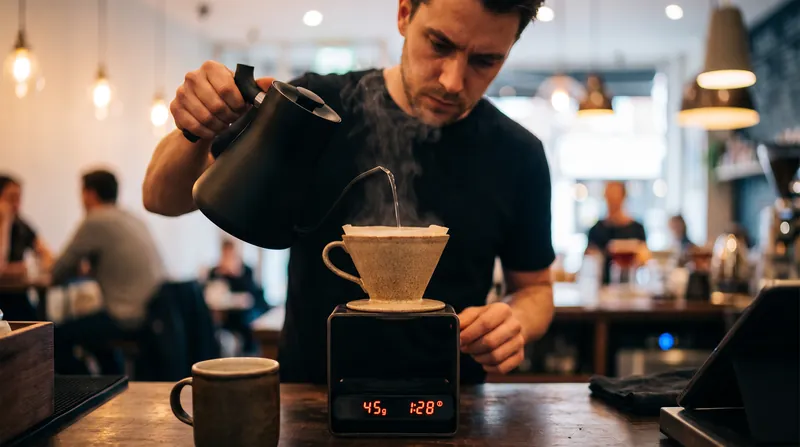
More in Lifestyle
See all →Coffee Retail
Starbucks to Close 250 North American Stores in Second Wave of Turnaround Strategy
5 sources

Coffee Market
Specialty Coffee Consumption Hits Record High, Surpassing Traditional Coffee in the U.S.
4 sources
Coffee Science
150 ppm Total Dissolved Solids: How Water's Mineral Content Dictates Coffee Extraction and Equipment Scale
6 sources
Coffee Chemistry
195°F to 205°F: How Water Temperature Controls the Dissolution of Acids, Sugars, and Melanoidins in Coffee Extraction
5 sources

Comments
Every angle. Every day.
Get Lifestyle stories with full source coverage and perspective breakdowns, free every day.