
Global Ocean Freight Rates Surge 300% to Post-Pandemic Highs Amid Carrier Capacity Control and Geopolitical Rerouting
Ocean freight rates have spiked dramatically in 2026 as shipping carriers artificially restrict vessel capacity and geopolitical tensions force lengthy detours around Africa. The resulting squeeze has driven Transpacific shipping costs to post-pandemic highs, forcing importers to navigate a highly volatile logistics market.

Share this story
The cost to move a 40-foot shipping container from Asia to the United States has violently reversed its downward trajectory. By August 2026, spot quotes for the US East Coast touched $11,200 per forty-foot equivalent unit (FEU), while West Coast rates surged past $7,000.[1]
This represents a massive surge on key Transpacific lanes compared to the pre-crisis baseline established earlier in the year. For businesses that rely on global supply chains, the sudden spike evokes uncomfortable memories of the pandemic-era logistics crunch.[3]
However, the mechanics driving the 2026 surge are fundamentally different. During the pandemic, rates exploded because consumer demand overwhelmed the physical capacity of ports and vessels. Today, the physical capacity exists in abundance—but it is being aggressively managed, rerouted, and restricted.[4]
The most visible driver of the current rate environment is the ongoing geopolitical instability in the Red Sea. With vessels continuing to avoid the Suez Canal due to security risks, carriers are forced to route Asia-to-Europe traffic around the southern tip of Africa via the Cape of Good Hope.[2]
This detour adds 10 to 15 days to a standard transit. While that primarily affects European lanes, the secondary effects ripple across the globe. Longer voyages require more ships to maintain the same weekly service schedules, effectively absorbing roughly 6% to 8% of the world's total container capacity.[2][4]
Yet, even with the Red Sea diversions, the shipping industry is technically oversupplied. During the record-breaking profit years of 2021 and 2022, ocean carriers ordered hundreds of new mega-ships.[6]
That tonnage is hitting the water right now. Industry analysts estimate that new capacity arriving in 2026 equals nearly 6% of the entire existing global fleet. In a normal market, this massive influx of supply would trigger a price collapse.[6]
To prevent that collapse, ocean carriers have deployed a controversial but highly effective strategy: aggressive capacity control. Rather than sailing half-empty ships at rock-bottom prices, carriers are systematically canceling scheduled voyages—a practice known as "blank sailings."[7]
By withdrawing vessels from active rotation, carriers artificially tighten the available space on major trade lanes. When space becomes scarce, spot rates climb. This discipline has allowed shipping lines to maintain profitability despite the underlying supply-demand imbalance.[7]
The situation has been further inflamed by shifting trade policies. In response to anticipated US tariff increases, American importers have engaged in massive "pull-forward" behavior.[5]
Rather than waiting for the traditional late-summer peak season to order holiday inventory, retailers accelerated their shipments into May and June. This frontloading concentrated several months of normal shipping demand into a narrow, highly competitive window.[5]
The sudden rush for container space collided directly with the carriers' blank sailing programs. The result was a classic squeeze: importers desperate to move cargo before tariff deadlines found themselves bidding against each other for artificially limited slots.[7]
For logistics managers, the fallout is measured in blown budgets and delayed timelines. The spread between long-term contract rates and immediate spot market prices has widened dramatically, forcing many shippers to pay premium surcharges just to get their cargo loaded.[1]
Carriers have also reintroduced peak season surcharges (PSS), adding thousands of dollars to the base freight all kinds (FAK) rates. These added fees have turned transportation from a predictable line item into a volatile liability.[1]
Despite the current pain for shippers, maritime analysts caution that the high rates may not be structurally sound. The underlying reality of the 2026 market remains one of historic overcapacity.[4]
If the tariff-driven frontloading subsides in the fall, or if a geopolitical breakthrough allows a safe return to the Suez Canal, the artificial floor supporting current prices could quickly give way.[3]
Until then, the ocean freight market remains locked in a tense standoff. Carriers are proving they have the discipline to manage capacity and protect their margins, while shippers are left to navigate a landscape where volatility is the only constant.[6]
Viewpoints in depth
Ocean Carriers
Ocean carriers maintain that blank sailings and strict capacity controls are necessary defensive measures.
Facing a massive influx of new vessels ordered during the pandemic, carriers argue that without artificially limiting space, freight rates would collapse below operating costs. They view these tactics as essential to maintaining reliable service networks and absorbing the massive operational costs of rerouting ships around Africa.
Importers and Retailers
For importers and retail brands, the sudden rate surge is deeply frustrating as they navigate artificial scarcity.
They argue that carriers are weaponizing blank sailings to manufacture scarcity in a market that is technically oversupplied. Faced with the dual threats of potential tariff hikes and sudden capacity shortages, retailers have been forced to pull their holiday inventory forward into the summer, paying exorbitant spot market premiums just to secure space on departing vessels.
Logistics Analysts
Maritime analysts view the summer 2026 rate spike as a temporary anomaly masking a structural downcycle.
They point to the underlying math: the global container fleet is growing by roughly 6% this year, far outpacing actual consumer demand. Analysts predict that once the pull-forward rush subsides, the sheer weight of new vessel capacity will eventually overwhelm the carriers' ability to prop up rates, triggering a cyclical downturn.
Key points
- Ocean freight spot rates to the US East Coast surged to $11,200 per FEU in August 2026.
- Carriers are aggressively using 'blank sailings' to restrict cargo space and prop up prices despite an oversupplied market.
- Red Sea diversions around the Cape of Good Hope continue to absorb 6% to 8% of global shipping capacity.
- US importers have frontloaded their holiday orders to avoid potential tariffs, creating a sudden demand spike.
What we don’t know
- Exactly when the Red Sea security situation will stabilize enough to allow a full return to Suez Canal transits.
- Whether the summer pull-forward of imports will result in a severe drop in shipping demand during the traditional fall peak season.
- How long ocean carriers can maintain their discipline of blank sailings before the sheer volume of new ships forces a price war.
How we got here
Late 2023
Houthi attacks in the Red Sea force major ocean carriers to begin rerouting vessels around the Cape of Good Hope.
Early 2026
Ocean freight rates moderate from previous highs as a wave of newly built container ships enters the global fleet.
May 2026
Anticipated US tariff policies trigger a massive 'pull-forward' of orders, concentrating peak season demand into the early summer.
July 2026
Spot rates on key Transpacific lanes surge over 250% as importers bid for artificially limited container space.
August 2026
US East Coast freight quotes touch $11,200 per FEU amid widespread carrier blank sailings and peak season surcharges.
- Importers and Retailers
- Prioritizes cost predictability and supply chain stability amid artificial scarcity.
- Logistics Analysts
- Analyzes the structural supply-demand imbalance and forecasts a looming market downcycle.
- Ocean Carriers
- Focuses on maintaining profitability and network resilience through strict capacity management.
Perspectives this story doesn't cover
- Small Business Importers
- Port Labor Unions
Sources
Source coverage
7 outlets
3 viewpoints surfaced







- [1]STU Supply ChainLogistics Analysts
US East & West Freight Rates Surge to $11,200/FEU | 2026 North America Ocean Freight Market Analysis
Read on STU Supply Chain → - [2]YQNLogistics Analysts
Container Shipping Cost 2026: Why Rates Are Surging
Read on YQN → - [3]Shipmate PlusLogistics Analysts
Ocean Freight Rate Trends in 2026
Read on Shipmate Plus → - [4]FreightosOcean Carriers
Container freight is poised for a downcycle
Read on Freightos → - [5]Southern Star NavigationImporters and Retailers
Peak Season Is Shifting Forward
Read on Southern Star Navigation → - [6]ZinepsImporters and Retailers
Six Forces Reshaping Ocean Freight in 2026
Read on Zineps → - [7]PGS LogisticsOcean Carriers
How Blank Sailings Are Increasing Ocean Freight Rates
Read on PGS Logistics →
More in Business
See all →Supply Chain
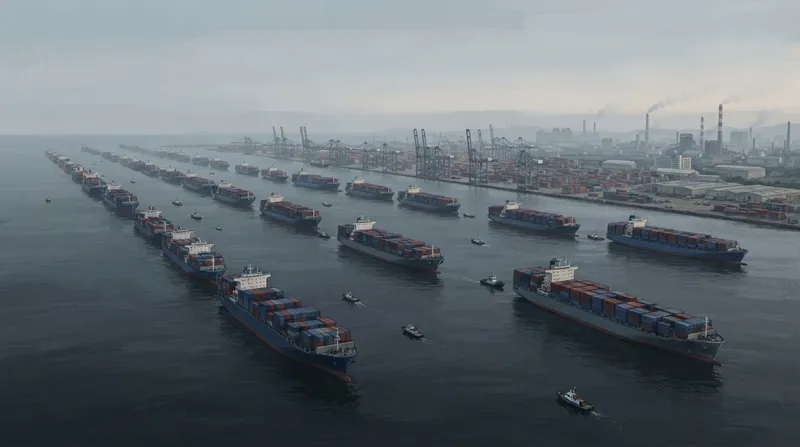
Chinese Ports Handle Record 7.3 Million Containers in One Week as Exporters Rush Shipments
5 sources
Semiconductor Trade
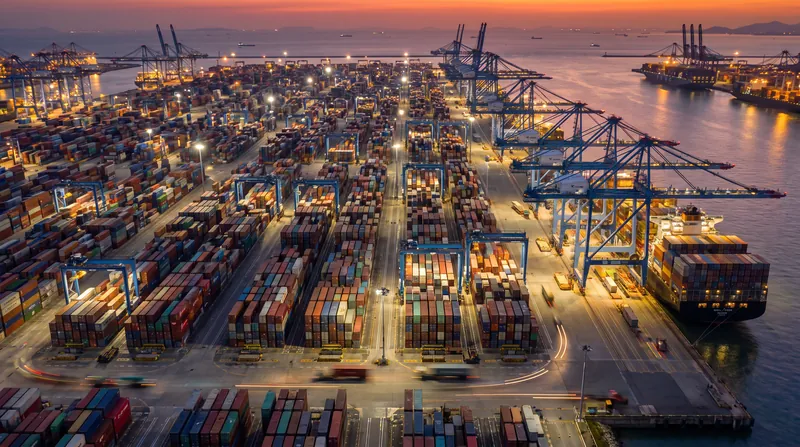
South Korea Semiconductor Exports Surge 259% to Record $34.1 Billion on AI Demand
6 sources

Inventory Strategy
Why Consolidating Warehouses Reduces Safety Stock Under the Square Root Law
6 sources
Supply Chain Strategy
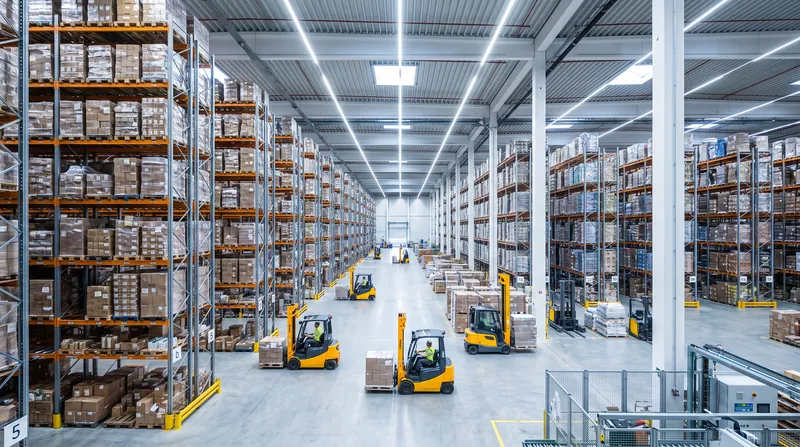
The Three Pillars of Supply Chain Resilience: Visibility, Flexibility, and Collaboration
11 sources

Comments
Every angle. Every day.
Get Business stories with full source coverage and perspective breakdowns, free every day.