
US Retires Worst-Case Climate Models, Rewriting Basis for Federal Climate Planning
The White House has officially instructed federal agencies to stop using the most extreme climate change scenarios as baselines for infrastructure and regulatory planning. The move aligns with a scientific consensus that the 'worst-case' models are now implausible, but critics warn the administration is using the shift to broadly deregulate environmental protections.

Share this story
The White House has officially instructed federal agencies to stop using "worst-case" climate change scenarios—specifically the high-emissions pathway known as RCP8.5—as the baseline for infrastructure planning, environmental regulations, and federal grant funding. The U.S. Global Change Research Program (USGCRP), the interagency body responsible for coordinating federal climate research, published a proposed amendment to the Fifth National Climate Assessment (NCA5) this week. The amendment mandates that any federal planning relying on RCP8.5 or its successor, SSP5-8.5, must include explicit disclaimers that the scenarios are "implausible."[1][5]
The directive prohibits these high-end projections from serving as the central or "business-as-usual" baseline for funding decisions, infrastructure design, or regulatory rules. Local governments building sea walls, power grids, and zoning laws based on federal guidelines will now see those guidelines recalibrated to intermediate warming scenarios. The USGCRP director stated that the amendment is intended to ensure the federal government's principal climate assessment reflects current scientific understanding, bringing the national climate assessment back into a realm of plausible scenarios rather than extreme outliers.[1][2]
The administrative move aligns with a growing consensus in the broader climate science community. Earlier in 2026, the United Nations Intergovernmental Panel on Climate Change (IPCC) and the international climate-modeling community moved to retire RCP8.5 and similar extreme pathways from their primary reference cases.
For more than a decade, RCP8.5 represented a future in which greenhouse gas emissions rose dramatically, leading to extreme warming of about 4.4 degrees Celsius by 2100. It assumed the world would burn roughly five times more coal by the end of the century and actively resist the energy transition.[7]
However, updated assessments have deemed that trajectory implausible given real-world trends. Rapid growth in renewable energy, falling costs for solar and wind power, and the plateauing of global coal use have bent the emissions curve downward. Current policies and trends now point toward 2.5 to 3 degrees Celsius of warming by 2100. While this is still enough to intensify heatwaves, droughts, and sea-level rise, it is significantly lower than the catastrophic RCP8.5 baseline that has dominated climate research and media headlines for years.[7]
While the scientific community has acknowledged the implausibility of RCP8.5, the Trump administration's mandate goes further by actively restricting agencies from using these models to justify stringent environmental regulations or infrastructure spending. The USGCRP is now led by Matthew Wielicki, a former University of Alabama geochemist appointed by the White House in July 2026. Wielicki, who has a history of criticizing mainstream climate science and arguing that prior federal assessments overstated certainty, was brought in after the administration dismissed the scientists developing the upcoming Sixth National Climate Assessment.[3][6]
Critics and environmental groups argue the administration is using a legitimate scientific recalibration as a pretext to deregulate and downplay the severe risks of climate change. They note that while the worst-case scenario has been averted, the current trajectory still poses profound risks to global ecosystems and human infrastructure. Environmental advocates warn that the administration is weaponizing a nuanced scientific update to systematically dismantle environmental protections, pointing to the dismissal of federal climate researchers as evidence of a politicized agenda.[6]
Conversely, conservative think tanks and free-market advocates have praised the retirement of RCP8.5 as a long-overdue correction. Organizations like the Competitive Enterprise Institute have long argued that the climate establishment misused the extreme scenario as a baseline projection to exaggerate the magnitude of climate risks and justify expansive government intervention. They contend that federal planning has been fundamentally distorted by these implausible worst-case scenarios, leading to misallocated infrastructure funds and overly burdensome regulations that stifle economic growth without providing proportional environmental benefits.[4]
The immediate impact of the amendment will be felt across federal agencies, which must now audit their existing policies and funding criteria to ensure they do not rely on the retired models without proper disclosure. Engineering standards, insurance catastrophe models, and state regulatory requirements that draw on federal baselines will likely face pressure to adjust their risk assessments accordingly. Retiring these models forces a recalibration of federal planning toward lower warming projections, fundamentally altering how the U.S. government prepares for climate risks over the coming decades.[1][3][5]
Key points
- The White House has ordered federal agencies to stop using the extreme RCP8.5 climate scenario as a baseline for planning and regulations.
- A proposed amendment to the Fifth National Climate Assessment requires disclaimers on any findings relying on the high-emissions pathway.
- The broader scientific community recently retired RCP8.5, noting that rapid renewable energy growth has made the worst-case coal expansion unlikely.
- Critics argue the administration is using the scientific update as a pretext to deregulate and downplay ongoing climate risks.
How we got here
2013-2014
The IPCC's Fifth Assessment Report establishes RCP8.5 as a high-emissions scenario, which becomes widely used as a 'business-as-usual' baseline.
2023
The U.S. government publishes the Fifth National Climate Assessment (NCA5), utilizing high-end emissions scenarios to project climate impacts.
April 2026
The international climate-modeling community and the IPCC officially deem RCP8.5 implausible due to the rapid growth of renewable energy.
July 2026
The White House appoints Matthew Wielicki, a vocal critic of mainstream climate science, to lead the U.S. Global Change Research Program.
August 2026
The USGCRP proposes an amendment to NCA5, formally retiring RCP8.5 from federal planning and regulatory baselines.
- Federal Administration & Free-Market Advocates
- Argues that retiring implausible extreme scenarios prevents the misallocation of federal funds and stops unjustified regulatory burdens.
- Mainstream Climate Science
- Agrees that RCP8.5 is no longer a likely baseline due to clean energy progress, but stresses that current warming trajectories still pose severe risks.
- Environmental & Climate Advocates
- Warns that the administration is weaponizing a scientific recalibration to dismantle climate resilience programs and downplay the crisis.
Perspectives this story doesn't cover
- Local municipal planners who must now adjust their infrastructure designs
- Insurance industry risk modelers
Sources
Source coverage
7 outlets
3 viewpoints surfaced







- [1]The Daily WireFederal Administration & Free-Market Advocates
Exclusive: White House Ditches Outdated Climate Nightmares for Real-World Policy
Read on The Daily Wire → - [2]FreedomsPhoenixFederal Administration & Free-Market Advocates
White House Ditches Outdated Guidelines Based on Worst-Case Climate Scenarios
Read on FreedomsPhoenix → - [3]Environment & Energy LeaderEnvironmental & Climate Advocates
Climate Science Critic Named to Lead National Climate Assessment
Read on Environment & Energy Leader → - [4]Competitive Enterprise InstituteFederal Administration & Free-Market Advocates
RCP8.5: Climate establishment officially retires extreme scenario (Part I)
Read on Competitive Enterprise Institute → - [5]NOAAMainstream Climate Science
Proposed Amendment to the Fifth National Climate Assessment (NCA5)
Read on NOAA → - [6]AtmosEnvironmental & Climate Advocates
Inserting politics into policy: The White House appointed Matthew Wielicki
Read on Atmos → - [7]Carbon BriefMainstream Climate Science
Factcheck: Why the IPCC's 'worst-case' scenario is being retired
Read on Carbon Brief →

More in Environment
See all →Infrastructure Stress
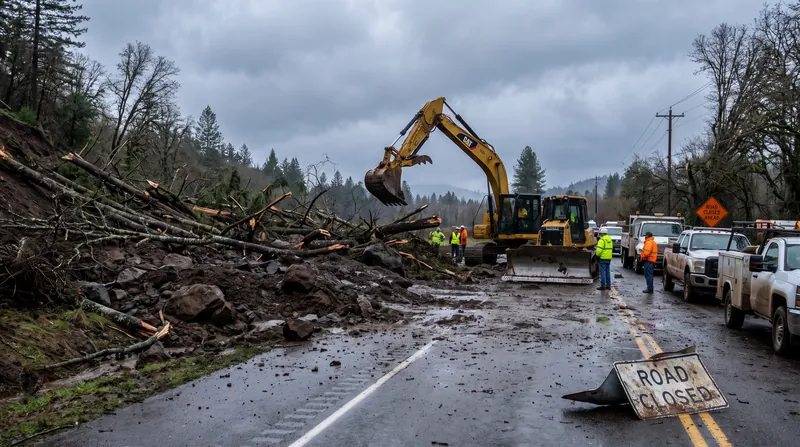
Torrential Rainfall Triggers Flash Flooding and Highway Mudslides Across Southern Minnesota
4 sources
Vietnam Floods
Record 52 Inches of Rain Triggers Deadly Vietnam Floods, Submerging 16,300 Homes
4 sources

Earthquake Mechanics
The Stored Elastic Strain Energy That Causes Earthquakes
8 sources

Climate Litigation
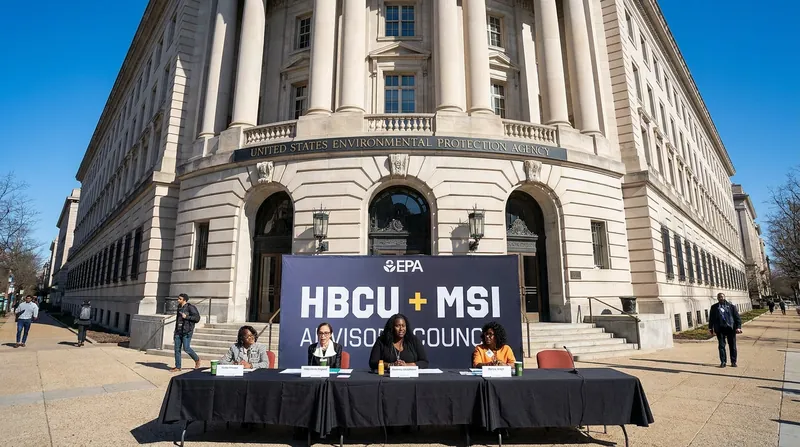
Environmental Coalition Sues EPA Over Repeal of Power Plant Carbon Standards
5 sources
Comments
Every angle. Every day.
Get Environment stories with full source coverage and perspective breakdowns, free every day.