
Supreme Court Ruling Opens Freight Brokers to Massive Negligent Hiring Lawsuits, Reshaping $16 Billion Industry
A unanimous Supreme Court decision stripped freight brokers of a long-standing federal preemption shield, allowing them to be sued under state law for negligently hiring unsafe motor carriers. The ruling fundamentally alters liability and compliance standards across the logistics sector.
By Anaya Sharma

- Highway Safety Advocates
- Argues that broker liability is essential to incentivize the hiring of safe motor carriers and reduce highway accidents.
- Logistics & Brokerage Industry
- Maintains that brokers are administrative intermediaries and that state-level tort liability undermines federal deregulation.
- Legal & Insurance Analysts
- Focuses on the shift in litigation strategy from preemption defenses to factual disputes over reasonable care and duty.
Common questions
Can freight brokers now be sued for any truck accident?
No. Brokers can only be held liable if a plaintiff proves they failed to exercise reasonable care when selecting the specific motor carrier involved in the crash.
Does this ruling eliminate all federal protections for brokers?
No. The Supreme Court clarified that state laws related to prices, routes, and services that have no connection to motor vehicle safety remain preempted by the FAAAA.
How will this affect shipping costs?
Industry experts and concurring Supreme Court justices acknowledge that increased litigation and insurance costs for brokers will likely cascade through the economy, potentially raising prices for consumers.
The short answer
- The Supreme Court unanimously ruled that freight brokers can be sued under state law for negligently hiring unsafe motor carriers.
- The decision strips the logistics industry of a long-standing federal preemption defense under the FAAAA.
- Negligent-hiring claims were found to fall within the FAAAA's safety exception because they concern motor vehicle safety.
- Brokers must now rigorously vet carriers, as they face massive tort liability for catastrophic highway accidents.
- The ruling resolves a deep circuit split and establishes a uniform national standard for broker liability.
On a 2017 afternoon along an Illinois interstate, Shawn Montgomery pulled his tractor-trailer onto the highway shoulder, a routine stop that ended when a truck operated by Caribe Transport II veered off the road and struck him, resulting in the amputation of his leg. The catastrophic crash set in motion a legal battle that would eventually reach the highest court in the nation. It targeted not just the driver who caused the accident, but C.H. Robinson, the massive freight brokerage that hired the trucking company. For decades, the $16 billion freight brokerage industry—the administrative matchmakers of the American supply chain—operated behind a robust legal shield, largely insulated from liability when the trucks they dispatched caused severe harm.[4][6][7]
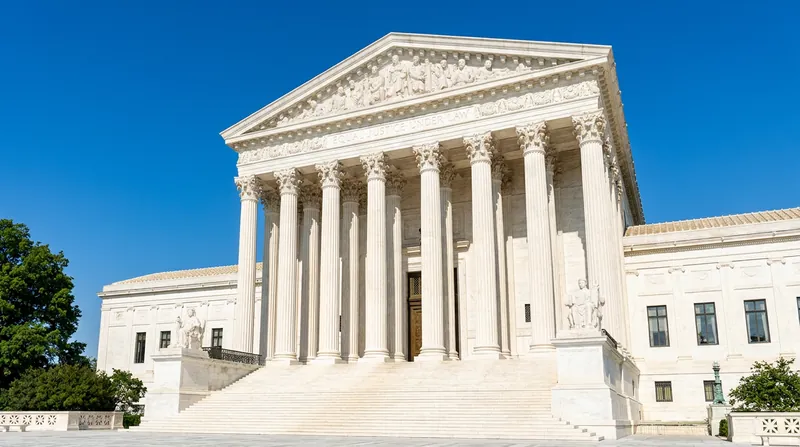
On May 14, 2026, the United States Supreme Court unanimously dismantled that shield. In a 9-0 decision in Montgomery v. Caribe Transport II, LLC, the Court ruled that state-law negligent-hiring claims against freight brokers are not preempted by federal law. The landmark ruling establishes a uniform national standard, declaring that brokers can face massive state tort liability if they fail to exercise reasonable care when selecting a motor carrier.[3][4]
The core of Montgomery's legal argument centered on what C.H. Robinson knew, or should have known, before arranging the shipment. At the time of the dispatch, Caribe Transport II held a "conditional" safety rating from the Federal Motor Carrier Safety Administration. Federal regulators had previously cited the carrier for documented deficiencies regarding driver qualifications, hours-of-service compliance, and vehicle maintenance. The lawsuit alleged that by hiring a carrier with glaring red flags, the broker breached its ordinary duty of care to the public.[2][6]
In its defense, C.H. Robinson invoked the Federal Aviation Administration Authorization Act of 1994 (FAAAA). Congress designed the statute to deregulate the trucking industry and prevent a patchwork of state laws from disrupting the national logistics network. Specifically, Section 14501(c)(1) broadly bars states from enforcing laws "related to a price, route, or service" of any motor carrier or broker. For years, brokers successfully argued that negligent-hiring lawsuits were a backdoor attempt by states to regulate broker services, and thus were preempted by the FAAAA.[1][5]
However, the FAAAA contains a critical structural carve-out known as the safety exception. Section 14501(c)(2)(A) explicitly states that the preemption clause shall not restrict the "safety regulatory authority of a State with respect to motor vehicles." The central legal question before the Supreme Court was whether a common-law negligent-hiring claim against a broker qualifies as a safety regulation concerning motor vehicles, or if it is merely an economic regulation of the broker's service.[1][2]
Writing for the unanimous Court, Justice Amy Coney Barrett concluded that the safety exception applies. The opinion clarified that requiring a freight broker to exercise reasonable care in selecting a motor carrier directly concerns the safety of the trucks used in transportation. Because the core of the negligence claim is tied to the safe operation of motor vehicles on public roadways, it falls squarely within the state's preserved authority to regulate safety.[1][3]
Writing for the unanimous Court, Justice Amy Coney Barrett concluded that the safety exception applies.
The Supreme Court's decision resolves a deep and long-standing split among the federal appellate courts. Previously, the Sixth and Ninth Circuits had allowed negligent-hiring claims against brokers to proceed, while the Seventh and Eleventh Circuits had dismissed them as expressly preempted. By reversing the Seventh Circuit's prior stance in the Montgomery case, the Supreme Court has established a definitive rule that applies nationwide, fundamentally altering the litigation landscape for catastrophic injury claims.[5][6]
While the ruling opens the door to state-level lawsuits, it does not impose automatic or strict liability on freight brokers. Plaintiffs must still prove the traditional elements of negligence: duty, breach, causation, and damages. Brokers retain the ability to defend themselves by demonstrating that they acted reasonably, followed industry standards, and arranged transportation with reputable carriers that lacked obvious regulatory warnings.[2][5]
In a concurring opinion joined by Justice Samuel Alito, Justice Brett Kavanaugh acknowledged the profound economic implications of the ruling. He noted that subjecting brokers to unpredictable state tort laws will likely trigger a surge in litigation and drive up insurance premiums across the logistics sector. Kavanaugh recognized that these increased costs will inevitably cascade through the supply chain, ultimately resulting in higher prices for American consumers.[1][3]
Despite these economic concerns, Kavanaugh emphasized that the Court's role is to interpret the statute as written. He pointed out that while the FAAAA was intended as an economic deregulation statute, Congress deliberately chose not to deregulate safety. If the logistics industry believes the current liability framework is economically untenable, Kavanaugh suggested that the appropriate remedy lies with the legislative branch, not the judiciary.[1]
The immediate practical fallout for the freight brokerage industry is immense. Legal analysts advise that brokers can no longer rely on preemption as a categorical defense to dismiss lawsuits in their early stages. Instead, defense strategies will now pivot to factual disputes over the reasonableness of the carrier selection process, regulatory compliance, and intervening causes of the accident.[5]
To mitigate this newly confirmed exposure, logistics companies are rapidly overhauling their internal compliance protocols. Brokers are being urged to document their vetting processes meticulously, establish rigid carrier selection policies, and actively monitor publicly available safety data. Hiring a carrier with a conditional safety rating or a history of severe regulatory violations now carries a tangible and severe financial risk.[1][2]
The insurance market is also bracing for the structural impact of the Montgomery decision. Underwriters are reassessing broker liability limits, scrutinizing the endorsements attached to policies, and demanding tighter contractual risk allocation between brokers and motor carriers. The era of treating brokers merely as administrative intermediaries is over; they are now viewed as active, liable participants in the safety ecosystem of the American highway network.[5][7]
Why it matters
The Supreme Court's decision fundamentally alters the risk landscape for the $16 billion freight brokerage industry, removing a federal shield that protected middlemen from liability in catastrophic truck crashes. By exposing brokers to state-level negligence lawsuits, the ruling incentivizes stricter safety vetting of motor carriers, potentially reducing highway accidents while simultaneously threatening to increase supply chain costs for consumers.
Jargon, explained
- Freight Broker
- A logistics intermediary that connects shippers needing to transport goods with motor carriers willing to haul them.
- FAAAA Preemption
- A provision in the Federal Aviation Administration Authorization Act of 1994 that prevents states from enacting laws affecting the prices, routes, or services of motor carriers and brokers.
- Safety Exception
- A specific carve-out in the FAAAA that preserves a state's traditional authority to regulate safety with respect to motor vehicles.
- Negligent Hiring
- A legal claim alleging that a company failed to exercise reasonable care when selecting a contractor or employee, resulting in harm to a third party.
- FMCSA Safety Rating
- An evaluation issued by the Federal Motor Carrier Safety Administration indicating a motor carrier's compliance with federal safety regulations.
Sources
Source coverage
7 outlets
3 viewpoints surfaced







- [1]Crowell & MoringLegal & Insurance Analysts
What You Need to Know
Read on Crowell & Moring → - [2]McFarlane LawHighway Safety Advocates
Supreme Court: Freight Brokers Can Be Held Liable for Hiring Unsafe Truckers — What the Montgomery v. Caribe Ruling Means for Highway Safety and Accountability
Read on McFarlane Law → - [3]DLA PiperLegal & Insurance Analysts
Supreme Court rules freight brokers can be held liable under state negligence law
Read on DLA Piper → - [4]Ogletree DeakinsLegal & Insurance Analysts
Supreme Court Holds Freight Broker Liable for Negligent Hiring
Read on Ogletree Deakins → - [5]Wood Smith Henning & BermanLogistics & Brokerage Industry
Supreme Court Expands Exposure for Freight Brokers in Negligent-Hiring Suits
Read on Wood Smith Henning & Berman → - [6]HonigmanLogistics & Brokerage Industry
Supreme Court issued an opinion in Montgomery v. Caribe Transport II, LLC
Read on Honigman → - [7]Factlen Editorial TeamLegal & Insurance Analysts
Synthesis by Factlen editorial team
Read on Factlen Editorial Team →
Comments

Every angle. Every day.
Get law justice stories with full source coverage and perspective breakdowns delivered to your inbox.