
MotoGP Overhauls Premier Class: Engine Size Cut to 850cc, Ride-Height Devices Banned for 2027
The FIM has finalized a sweeping regulatory reset for MotoGP's 2027 season, shrinking engines, banning shapeshifting suspension, and mandating 100% sustainable fuels. The overhaul aims to curb cornering speeds, reduce aerodynamic turbulence, and make prototype racing more relevant to consumer street bikes.
By Dev Anand

In short
- Engine capacity will drop from 1,000cc to 850cc to reduce top speeds and improve safety.
- All ride-height and holeshot devices will be strictly banned to return focus to rider skill.
- Aerodynamic fairings will be narrowed and subjected to stricter homologation rules.
For years, MotoGP has been locked in an aerodynamic and mechanical arms race. Bikes have sprouted wings, spoilers, and hydraulic ride-height devices that lower the chassis on corner exit. The result is staggering cornering speeds and shattered lap records, but also a growing problem for the actual viewer: turbulent "dirty air" that makes overtaking nearly impossible, and front-tire pressure spikes that ruin races. The sport's governing body, the FIM, alongside Dorna Sports, had to intervene before the bikes outgrew the safety limits of existing circuits.[1]
The resolution arrives in 2027. The newly finalized technical regulations represent the most aggressive "zoning rewrite" in modern motorcycle racing. By stripping away the most extreme aerodynamic appendages and shrinking the engine capacity, the rulebook forces manufacturers to return the focus to the rider's raw skill. For the fan buying a grandstand ticket, it promises a return to the close-quarters, slipstreaming battles that defined the sport's golden eras.[4]
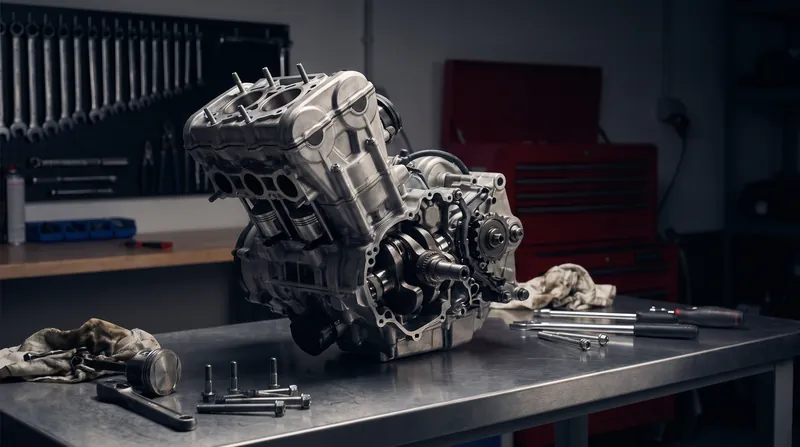
The most fundamental shift happens inside the frame. Since 2012, the premier class has relied on 1,000cc engines. Starting in 2027, maximum displacement drops to 850cc, and the maximum cylinder bore shrinks from 81 millimeters to 75 millimeters. This reduction is designed to shave off top-end speed and limit overall performance, keeping the bikes within the safety margins of historic tracks.[2]
But this engine downsizing isn't just about track safety; it's about the local dealership floor. By moving to a smaller, highly efficient 850cc platform, the prototypes become significantly more road-relevant. The technologies developed to extract maximum power from these smaller blocks will directly inform the next generation of middleweight sportbikes that everyday riders actually buy and insure. To force further efficiency, the allocation of engines per rider is being cut from seven per season down to six.[3][4]
The most visible change will be the eradication of "shapeshifting" motorcycles. Over the past five years, teams exploited loopholes to introduce ride-height and holeshot devices—mechanical systems that compress the suspension to lower the bike's center of gravity during acceleration. In 2027, all such devices are strictly banned. Riders will no longer push buttons to drop the rear end out of corners; they will have to manage wheelie control entirely through throttle application and body position.[2][3]
Aerodynamics are also facing strict new property lines. The maximum permitted width of the front fairing is being reduced by 50 millimeters, and the nose must be pushed back by 50 millimeters. Furthermore, the rear aerodynamic appendages—the "stegosaurus fins" and tail wings—will now be subject to strict homologation, meaning teams can only update them once per season. This prevents the wealthiest factory teams from endlessly outspending independent outfits on wind-tunnel development.[3]
For the independent satellite teams—the "renters" of the paddock who lease equipment from the major factories—the 2027 rules offer a massive leveling of the playing field. In a first-of-its-kind move, GPS data from all riders will be made available to every team at the end of each session. A privateer squad will now be able to see exactly where a factory champion is braking and accelerating, democratizing the data that used to be locked inside factory hard drives.[4]
The fuel powering these machines is also undergoing a total overhaul. MotoGP currently mandates a 40 percent sustainable fuel mix, but 2027 requires a jump to 100 percent non-fossil fuel. This can be achieved through synthetic e-fuels or advanced biofuels. Simultaneously, the fuel tank capacity is being reduced from 22 liters to 20 liters for Sunday Grand Prix races, and down to 11 liters for Saturday Sprints.[2][3]
This fuel mandate is perhaps the most critical trend for the broader automotive market. As governments worldwide debate the timeline for phasing out internal combustion, MotoGP is positioning itself as a high-speed laboratory for carbon-neutral liquid fuels. If manufacturers can prove that 100 percent sustainable fuels work reliably at 220 mph, it provides a lifeline for the millions of existing internal combustion motorcycles already sitting in consumer garages.[4]
To ensure the transition doesn't result in one manufacturer running away with the championship, the concession system is being reset. When the 2027 season begins, all manufacturers will be placed in "Rank B" for development allowances. Their performance will be reassessed at the mid-season summer break, allowing struggling factories to unlock more testing days and engine updates if they fall behind the curve.
The paddock is already mobilizing. Behind closed doors, manufacturers have already begun testing their 850cc prototypes. Because the rules ban wildcard entries in the premier class starting in 2027, factories are rushing to gather as much real-world data as possible before the current 1,000cc era closes. The countdown to the sport's new era has officially begun, promising a safer, closer, and more sustainable grid.[4]
Definitions
- Ride-height device
- A mechanical system that compresses a motorcycle's suspension to lower its center of gravity, reducing wheelies during acceleration.
- Homologation
- The official approval process where a specific part, like an aerodynamic fairing, is frozen in its design and cannot be freely changed during the season.
- Satellite team
- An independent racing outfit that leases motorcycles and equipment from a major factory manufacturer rather than building their own.
- Dirty air
- Turbulent aerodynamic wake left behind a leading motorcycle, which makes it difficult for a following rider to brake and corner effectively.
- Sustainable fuel
- Non-fossil liquid fuel created either from biological waste sources or synthetically by capturing carbon dioxide from the atmosphere.
Questions & answers
Why is MotoGP reducing engine sizes to 850cc?
The reduction from 1,000cc to 850cc is primarily designed to lower top speeds and improve safety, keeping the bikes within the run-off limits of existing racetracks. It also makes the engines more relevant to the middleweight street bikes sold to consumers.
Will the bikes be significantly slower in 2027?
Top speeds on long straights will decrease, but overall lap times may remain highly competitive. Engineers often find ways to carry more corner speed when overall power is reduced, though the aerodynamic restrictions will limit how hard they can brake.
What happens to the current 1,000cc bikes?
The current 1,000cc prototypes will be raced through the end of the 2026 season. After that, they will be retired, and all teams must transition to the new 850cc specification for 2027.
How does the GPS data sharing work?
Starting in 2027, the precise GPS telemetry of every rider on the grid will be made available to all teams at the end of each practice and race session, allowing slower teams to analyze the lines and braking points of the fastest riders.
Analysis by camp
Factory Engineering Teams
Major manufacturers face a complete redesign of their prototype platforms.
For the engineering departments at Ducati, Aprilia, KTM, Honda, and Yamaha, the 2027 regulations represent a massive resource challenge. Because the engine displacement, aerodynamics, and ride-height rules are changing simultaneously, factories cannot simply iterate on their current designs. They must build entirely new 850cc platforms from the ground up. While the rules aim to cut costs long-term by banning ride-height devices and limiting aero updates, the short-term reality is a costly parallel development phase where factories must fund their current 1,000cc campaigns while simultaneously testing their 2027 prototypes.
Independent Satellite Teams
Privateer outfits view the rules as a crucial financial and competitive equalizer.
For the independent teams that lease motorcycles from the major factories, the 2027 overhaul is a major victory. The outright ban on ride-height devices removes one of the most expensive and maintenance-heavy components from their leasing agreements. More importantly, the mandate that GPS data from all riders must be shared across the paddock after every session democratizes performance secrets. A satellite rider will now have access to the exact braking markers and throttle traces of the factory champions, closing the gap between the haves and the have-nots.
The Consumer Market
The motorcycle industry looks to MotoGP to validate sustainable liquid fuels.
Beyond the racetrack, the broader motorcycle industry is heavily invested in the 2027 fuel mandate. Unlike passenger cars, which are rapidly transitioning to battery-electric power, motorcycles face severe weight and packaging constraints that make electrification difficult for high-performance models. By forcing the fastest bikes in the world to run on 100 percent non-fossil fuels, MotoGP is serving as a high-speed laboratory for synthetic e-fuels. If these fuels prove reliable and powerful at the prototype level, it paves the way for their commercialization, potentially saving the internal combustion engine for everyday street riders.
- Factory Engineering Teams
- Major manufacturers face a complete redesign of their prototype platforms.
- Street Riders & Consumers
- The motorcycle industry looks to MotoGP to validate sustainable liquid fuels and trickle-down engine tech.
- Independent Satellite Teams
- Privateer outfits view the rules as a crucial financial and competitive equalizer.
Perspectives this story doesn't cover
- Track Designers & Safety Commissions
- Tire Manufacturers
Sources
Source coverage
4 outlets
3 viewpoints surfaced




- [1]FIM Grand Prix RegulationsStreet Riders & Consumers
FIM Grand Prix World Championship Regulations 2027
Read on FIM Grand Prix Regulations → - [2]Autocar IndiaFactory Engineering Teams
MotoGP 2027 rules: 850cc engines, no ride-height devices
Read on Autocar India → - [3]SilverstoneIndependent Satellite Teams
MotoGP's radical 2027 rules and regulations explained
Read on Silverstone → - [4]Factlen Editorial TeamStreet Riders & Consumers
Synthesis by Factlen editorial team
Read on Factlen Editorial Team →
More in Automotive & Transportation
See all →Emissions Tech
The 10-to-1 Ratio: How a Catalytic Converter's Precious Metal Load Dictates Its Scrap Value and Theft Risk
6 sources
Drivetrain Mechanics
The Torque-Splitting Flaw: Why an Open Differential Sends All Power to the Wheel With the Least Traction
6 sources
Engine Architecture
How Variable Valve Timing and Lift Optimize Engine Volumetric Efficiency Across the RPM Range
7 sources
Engine Architecture
Power Stroke Frequency: Why Two-Stroke Engines Sacrifice Fuel Efficiency for Power-to-Weight Ratios
8 sources
Comments
Every angle. Every day.
Get Automotive & Transportation stories with full source coverage and perspective breakdowns, free every day.