
Micron Secures $22 Billion in Upfront AI Contracts, Restructuring as 'AI Utility'
Memory chip giant Micron has locked in $22 billion in long-term supply agreements, fundamentally shifting its business model from a cyclical hardware manufacturer to a stable utility provider for the AI industry.

Micron Technology has fundamentally rewired its business model, announcing $22 billion in upfront supply contracts that will transform the memory chip manufacturer into what executives are calling a "stable AI utility." The agreements, signed with a coalition of leading cloud providers and artificial intelligence developers, lock in guaranteed purchases of High-Bandwidth Memory (HBM) and enterprise storage for the next three to five years.
By securing this massive capital injection upfront, the Boise-based semiconductor giant is attempting to insulate itself from the notorious boom-and-bust cycles that have defined the memory market for decades. Financial markets reacted swiftly to the unprecedented restructuring, viewing the guaranteed revenue floor as a watershed moment for hardware infrastructure.[1][2]
Historically, the memory chip sector has been one of the most volatile segments of the global technology industry. Companies like Micron, Samsung, and SK Hynix would invest billions in cutting-edge fabrication plants based on projected demand, only to face catastrophic price crashes when macroeconomic conditions cooled and the market flooded with excess inventory.
This cyclical nature made long-term financial planning incredibly difficult and routinely wreaked havoc on the pricing of consumer electronics. The new "utility" model flips this dynamic entirely. By forcing the world's largest AI developers to fund capacity expansion before the chips are even manufactured, Micron is effectively operating like a regional power company securing baseload demand before building a new power plant.[3][4]
The catalyst for this structural shift is the insatiable demand for High-Bandwidth Memory, a specialized type of stacked DRAM that is critical for training and running large language models. Modern AI accelerators, such as those produced by Nvidia and AMD, are severely bottlenecked by how fast they can access data; HBM solves this by placing memory chips directly adjacent to the processor.
Because manufacturing HBM is incredibly complex and prone to lower yield rates than traditional memory, supply has remained critically constrained. Cloud providers, terrified of losing their competitive edge due to hardware shortages, have realized that securing guaranteed memory supply is just as vital as acquiring the GPUs themselves.[6]
The $22 billion capital infusion provides Micron with a massive strategic advantage as it builds out its next generation of fabrication facilities in New York and Idaho. Traditional semiconductor expansion requires taking on significant corporate debt or relying on government subsidies, both of which come with strings attached.
With its customers effectively financing its capital expenditures, Micron can accelerate its transition to extreme ultraviolet (EUV) lithography and next-generation node development without exposing its balance sheet to the whims of the broader economy. Analysts note that this de-risked expansion model could allow the company to capture a significantly larger share of the premium AI memory market by the end of the decade.[2][4]
Micron's aggressive move places immense pressure on its primary rivals in South Korea, SK Hynix and Samsung Electronics. SK Hynix has historically dominated the HBM market, serving as the primary supplier for Nvidia's earlier AI chips.
However, as the South Korean government unveils a massive $1.3 trillion national investment plan to maintain its semiconductor dominance, Micron's ability to lock in guaranteed, multi-year Western contracts threatens to erode that lead. Industry watchers suggest that Samsung and SK Hynix may now be forced to offer similar utility-style contracts to their own major clients, fundamentally altering how the entire $150 billion global memory industry operates.[6]
While the immediate focus of the restructuring is on enterprise AI data centers, the ripple effects will be deeply felt in the consumer gadget market. For years, the pricing and profitability of smartphones, laptops, and gaming consoles have been heavily dictated by the spot price of memory. When memory was cheap, manufacturers could pack devices with RAM; when prices spiked, consumers bore the cost.
If the world's largest memory suppliers transition a significant portion of their production to stable, long-term contracts, the remaining spot market for consumer DRAM and NAND flash is expected to become less volatile. This stabilization could lead to more predictable pricing and feature upgrades for everyday consumer electronics.[5]
The transition to an AI utility is not without its risks. By committing so much of its future production capacity to a handful of hyperscale cloud providers, Micron is tying its fate directly to the sustained commercial viability of generative AI.
If the AI bubble were to deflate, or if algorithmic breakthroughs suddenly reduced the need for massive memory bandwidth, the company could find itself locked into contracts that its partners are desperate to renegotiate. However, current market indicators suggest the opposite trajectory, with AI models growing exponentially larger and requiring increasingly vast pools of fast memory to function at commercial scale.[1]
Ultimately, Micron's $22 billion contract milestone represents a maturation of the artificial intelligence hardware ecosystem. The initial frantic scramble for GPUs has evolved into a methodical, long-term infrastructure build-out. By transforming memory from a volatile commodity into a predictable utility, the semiconductor industry is laying the financial and logistical groundwork for the next decade of technological advancement.
Key points
- Micron secured $22 billion in upfront contracts for AI memory chips.
- The deal shifts the company from a cyclical manufacturer to a stable 'utility' model.
- Cloud providers are funding new fabrication plants before the chips are even built.
- The move puts pressure on South Korean rivals SK Hynix and Samsung.
What we don’t know
- Whether the AI industry's growth will sustain the massive memory demand required to fulfill these 5-year contracts.
- How smaller tech companies will secure HBM supply if the world's largest cloud providers lock up all available manufacturing capacity.
- Exactly how quickly Micron's competitors will pivot to offer similar upfront utility contracts.
How we got here
Mid-2023
The generative AI boom creates a severe global shortage of High-Bandwidth Memory.
Early 2024
Micron announces its entire supply of next-generation HBM3E is sold out for the year.
Late 2025
Major cloud providers begin negotiating long-term supply guarantees to protect their AI infrastructure investments.
June 2026
Micron officially announces its $22 billion upfront contract milestone and its pivot to an AI utility model.
- Institutional Investors
- View the restructuring as a massive win that de-risks capital expenditure and guarantees long-term revenue.
- AI Infrastructure Providers
- See upfront contracts as a necessary, albeit expensive, insurance policy to guarantee they don't run out of memory for their data centers.
- Consumer Electronics Makers
- Hope that stabilizing the enterprise memory market will lead to less volatile pricing for smartphone and laptop components.
- Asian Competitors
- Face immense pressure to adopt similar long-term contract models to prevent Micron from monopolizing Western AI clients.
Perspectives this story doesn't cover
- Smaller tech startups who may be priced out of securing memory supply due to these massive upfront hyperscaler contracts.
Sources
Source coverage
6 outlets
4 viewpoints surfaced






- [1]BloombergInstitutional Investors
Micron Pivots to 'AI Utility' Model With $22 Billion in Upfront Contracts
Read on Bloomberg → - [2]The Wall Street JournalInstitutional Investors
Micron's $22 Billion AI Deal Ends the Memory Boom-and-Bust Cycle
Read on The Wall Street Journal → - [3]Financial TimesInstitutional Investors
How Micron Turned Semiconductor Memory Into a Baseload Utility
Read on Financial Times → - [4]CNBCInstitutional Investors
Baidu shares jump 7% as AI chip arm Kunlunxin said to target $50 billion Hong Kong IPO
Read on CNBC → - [5]The VergeConsumer Electronics Makers
Adobe’s redesigned AI studio remembers what your creations look like
Read on The Verge → - [6]ReutersAsian Competitors
Micron's Long-Term AI Contracts Put Pressure on South Korean Rivals
Read on Reuters →

More in Technology
See all →Semiconductor Architecture
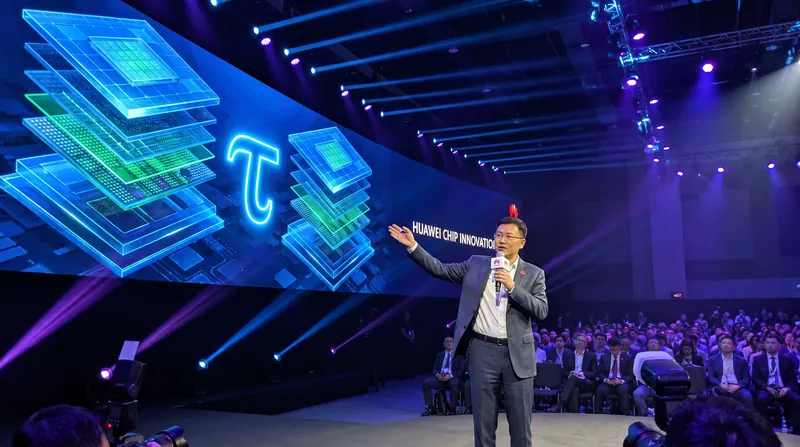
Huawei Unveils 'Tau Scaling' Architecture, Pivoting Chip Design Away from Moore's Law
6 sources
Hardware Economics
Microsoft Hikes Xbox Prices by Up to $150 as AI Memory Demand Squeezes Consumer Tech
6 sources

Semiconductor Supply Chain
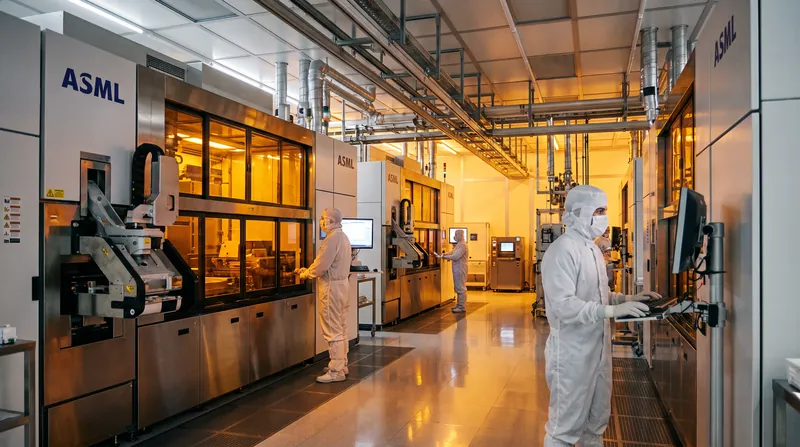
China Begins Mass Production of Homegrown DUV Chipmaking Tools, Advancing Chip Self-Sufficiency
7 sources
Quantum Computing
Google Unveils AI System That Self-Corrects Quantum Computer Errors in Real Time
4 sources

Comments
Every angle. Every day.
Get Technology stories with full source coverage and perspective breakdowns, free every day.