
Federal Law Bans Institutional Investors from Buying Single-Family Homes if Portfolio Exceeds 350 Units
The 21st Century ROAD to Housing Act, which became law in July 2026, prohibits large institutional investors from purchasing additional single-family homes. The landmark legislation targets entities controlling 350 or more units, aiming to curb corporate consolidation of the housing market while exempting new build-to-rent construction.
By Noor Saidi

Share this story
In short
- The 21st Century ROAD to Housing Act officially bans large institutional investors from buying additional single-family homes.
- The restriction applies to any for-profit entity controlling 350 or more single-family properties.
- Violators face civil penalties of up to $1 million or three times the purchase price of the home.
The 21st Century ROAD to Housing Act is now the law of the land, bringing the most significant federal restriction on corporate homeownership in modern U.S. history. As of July 2026, large institutional investors are officially barred from purchasing additional single-family homes if their portfolios already exceed 350 units.
For the prospective homebuyer who has spent the last five years losing out to all-cash corporate offers, the landscape is about to fundamentally shift. Instead of competing against multi-billion-dollar funds that can waive inspections and close in days, local buyers will see a market where the largest players are legally sidelined from acquiring existing inventory.[1][3]
The legislation, which passed the Senate by an overwhelming 89-10 margin before clearing the House, targets entities that have systematically acquired vast swaths of the American suburbs. Under the new framework, any for-profit entity that directly or indirectly controls 350 or more single-family homes is classified as a "large institutional investor."
Once that threshold is met, the corporate entity is legally prohibited from acquiring any existing single-family home with two or fewer units. This definition captures a broad spectrum of ownership structures, including partnerships and investment management roles, ensuring that companies cannot easily bypass the cap through shell corporations.[2][3]
The stakes for local real estate markets are immense. During the pandemic housing boom, institutional investors accounted for a record share of home purchases, particularly in Sun Belt markets like Atlanta, Phoenix, and Charlotte. These firms leveraged massive capital reserves to buy entry-level homes, converting them into permanent rental properties and driving up prices for everyone else. The new federal ban is designed to break that cycle, preserving the limited supply of existing homes for owner-occupants who rely on homeownership to build generational wealth and stabilize their monthly housing costs.[1][4]
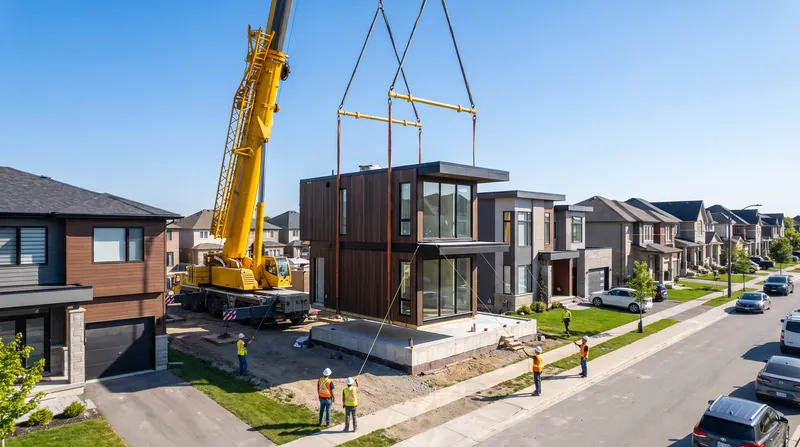
However, the law is carefully tailored to avoid freezing new housing development in communities that desperately need more doors. It includes specific exemptions for "build-to-rent" projects, meaning that corporations can still fund and construct entirely new single-family rental communities from the ground up. They are also permitted to purchase properties for extensive rehabilitation. The legislative intent is clear: if Wall Street wants to profit from the single-family market, it must add new supply to the housing grid rather than simply absorbing the existing stock that first-time buyers rely on.[2][3]
Enforcement of the new restrictions carries severe financial consequences that will force compliance from even the largest asset managers. Violations of the purchasing ban will trigger civil penalties of up to $1 million per violation, or three times the purchase price of the home—whichever figure is greater. This punitive structure is designed to eliminate any financial incentive for corporate buyers to treat fines as a mere cost of doing business. By tying the penalty directly to the property's value, the federal government is ensuring that illegal acquisitions become financially toxic.[2][5]
Crucially, the legislation is prospective, meaning it does not force institutional investors to divest the hundreds of thousands of homes they already own. Companies that amassed massive portfolios prior to the law's enactment in July 2026 are grandfathered in, allowing them to maintain their current rental operations without disruption. While some housing advocates pushed for mandatory sell-offs to flood the market with inventory, lawmakers ultimately settled on a cap to prevent further consolidation without triggering a sudden shock to the rental market that could displace current tenants.[2][4]
The restrictions will officially take effect on January 7, 2027, giving the real estate industry a 180-day transition period to adjust its acquisition strategies. During this window, corporate buyers are expected to pivot heavily toward the exempted build-to-rent sector or shift their capital into multi-family apartment developments, which are not covered by the 350-unit single-family cap. For local zoning boards and city planners, this shift will likely bring a surge in applications for purpose-built rental subdivisions on the outskirts of major metropolitan areas.[2][3]
For the everyday family navigating the housing market, the law represents a structural rebalancing of power. While it will not instantly lower mortgage rates or magically produce millions of new homes overnight, it removes a deep-pocketed competitor from the bidding war. As the 2027 enforcement date approaches, the American front yard is poised to transition back toward its traditional role: a place for families to live and build equity, rather than a line item on a corporate balance sheet.[1][4]
Viewpoints in depth
The Homebuyer's View
Relief from competing against all-cash corporate offers.
For families trying to enter the housing market, the ban addresses one of the most frustrating dynamics of the post-pandemic era: losing a bidding war to a faceless LLC. By removing buyers who can leverage billions in Wall Street capital, prospective homeowners face a less distorted market. Advocates argue this will help stabilize neighborhood pricing and restore the primary vehicle for middle-class wealth creation.
The Institutional Investor's View
A forced pivot toward new construction and multi-family assets.
Large portfolio managers argue that their presence in the market provided high-quality, professionally managed rental options for families who cannot or choose not to buy. With the acquisition of existing homes now capped, these firms are rapidly shifting their capital into the 'build-to-rent' space, utilizing the law's exemptions to construct entirely new subdivisions dedicated exclusively to renters.
- Housing Advocates
- Argue that homes should be for people, not profit centers, and view the cap as essential for preserving homeownership.
- Corporate Investors
- Contend that institutional capital improves the quality of rental housing and that the ban may inadvertently reduce rental availability.
- Real Estate Developers
- Focus on the law's exemptions for new construction, viewing the policy as a catalyst for the booming build-to-rent sector.
Perspectives this story doesn't cover
- Mom-and-pop landlords with fewer than 350 units
- Renters who rely on single-family corporate housing
Sources
Source coverage
5 outlets
3 viewpoints surfaced




- [1]CNNHousing Advocates
Sweeping housing affordability bill becomes law, despite Trump's delay
Read on CNN → - [2]Morgan LewisCorporate Investors
Congress limits institutional acquisition of single-family homes
Read on Morgan Lewis → - [3]Congress.govReal Estate Developers
H.R. 6644 - 21st Century ROAD to Housing Act
Read on Congress.gov → - [4]Factlen Editorial TeamHousing Advocates
Synthesis by Factlen editorial team
Read on Factlen Editorial Team → - [5]Mayer BrownCorporate Investors
Housing Legislation Imposing Limitations on Large Institutional Investors from Purchasing Single-Family Homes Becomes Law
Read on Mayer Brown →
More in Home
See all →Building Codes
2027 Model Building Codes Finalized With Major Changes for Off-Site Construction and Flood Resistance
4 sources

Aging in Place
Proposed Federal Tax Credit Would Offer Seniors Up to $10,000 for 'Aging-in-Place' Home Upgrades
3 sources

Lead Abatement
EPA's Strictest-Ever Lead Dust Standards Take Effect, Forcing Costly Abatement in Millions of Pre-1978 Homes
7 sources

Labor Shortage
Construction Job Openings Surge 36% Mid-Year, Costing Homebuilders $10.8 Billion Annually
7 sources
Comments
Every angle. Every day.
Get Home stories with full source coverage and perspective breakdowns, free every day.