
Samsung Forecast to Reclaim Global Smartphone Crown from Apple Amid Component Shortage
A severe global memory chip shortage is driving up smartphone manufacturing costs, allowing vertically integrated Samsung to overtake Apple as the world's top seller.
By Tiago Sousa

Share this story
The short version stated plainly: Samsung Electronics is projected to reclaim the title of the world's largest smartphone maker from Apple in 2026. This shift is not driven by a sudden surge in consumer demand for Galaxy devices, but rather by a severe global shortage of memory chips that is rewriting the economics of the mobile industry. By controlling its own component supply, Samsung is weathering a storm that is battering its competitors.[1][4]
A worsening drought in DRAM and NAND memory components is driving up the cost of building a smartphone across the board. Market intelligence firm Counterpoint Research forecasts a 14.3 percent decline in global smartphone shipments for 2026, as these soaring component costs force manufacturers to either raise retail prices or slash their production targets. What began as a localized component issue has ballooned into a full-blown demand crisis.[1][3]
Samsung's unique advantage lies in its deep vertical integration. As one of the world's largest memory manufacturers, the South Korean electronics giant is uniquely insulated from the supply crunch. While competitors scramble to secure chips on the open market at heavily inflated prices, Samsung's internal supply chain shields it from the worst of the inflation. This structural advantage allows the company to maintain steady production while others falter.[1][4]
The forecast numbers illustrate the power of this internal supply chain. Counterpoint expects Samsung to eke out a 0.8 percent growth in shipments this year, which is enough to edge past Apple for the global crown. Apple finished 2025 with a 20 percent global share compared to Samsung's 19 percent, but the memory crunch is rapidly flipping the board in Samsung's favor.[1][2]
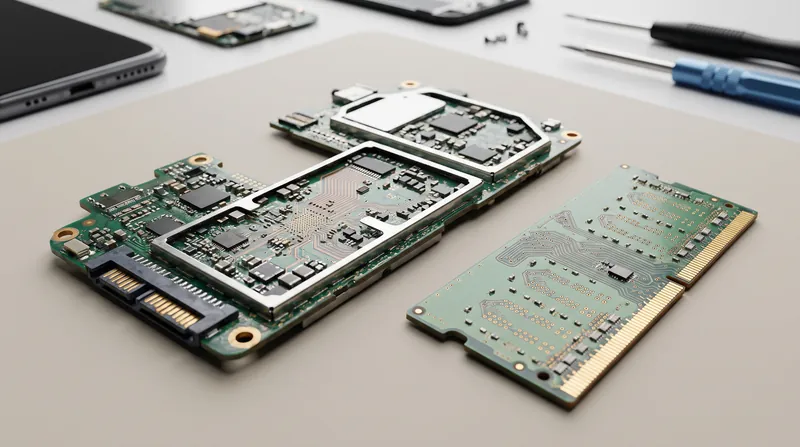
The root cause of this hardware drought is the ongoing artificial intelligence boom. Memory suppliers are aggressively prioritizing the production of High Bandwidth Memory for AI data centers over general-purpose smartphone chips. This lucrative pivot has left mobile manufacturers with compressed margins, insufficient inventory, and a sudden lack of leverage in component negotiations.[3][6]
The shortage is proving particularly devastating to the sub-$200 smartphone segment. Brands that rely heavily on budget devices with tight margins are seeing double-digit shipment declines. Because their bill of materials is so sensitive to price fluctuations, these entry-level devices are becoming structurally unfeasible to produce at their previous price points.[3][6]
By early 2026, the sales share of low-end smartphones priced at $99 and under fell to just 12 percent, marking a sharp drop from 18 percent the previous year. Analysts note that the rate of decline in this budget segment far exceeds the contraction of the overall smartphone market, signaling a fundamental shift in what manufacturers are willing to build.[6]
Apple is relatively insulated from the worst of this crisis because it operates exclusively in the premium segment, where profit margins are wide enough to absorb higher component costs. However, even the iPhone maker is feeling the squeeze as it prepares for its next major upgrade cycle, forcing the company to navigate a much tighter supply environment than it has faced in recent years.[1][3]
To counter these rising costs, manufacturers are being forced to rethink their sourcing strategies. Companies that previously relied on a handful of established memory suppliers are now exploring alternative partnerships to diversify their supply chains and gain leverage against vendors who are prioritizing their AI clients. This scramble for components is reshaping longstanding industry relationships.
This supply chain reshuffle also carries significant geopolitical weight. As global brands look to alternative memory makers to fill the gap, they face headwinds from international export controls and intense lobbying from domestic competitors. The dispute highlights the strategic vulnerability of relying on external memory suppliers in an increasingly constrained and regulated global market.
The regional data underscores how this dynamic is playing out on the ground. In Latin America, the memory shortage contributed to a 10 percent year-over-year contraction in smartphone shipments in the second quarter of 2026. Yet Samsung actually grew its regional share by 6 percent, leveraging its component advantage to flood markets like Colombia and Peru with inventory and aggressive promotions.[5]
Despite the overall contraction in Latin America, Apple shipments also increased by 5 percent in the region. The brand absorbed the component price hikes to maintain steady demand for its premium models, particularly the iPhone 17 Pro Max. This dual dominance by Samsung and Apple highlights how the shortage is consolidating power among the industry's wealthiest players.[5]
Just a year ago, analysts were confidently predicting that Apple would hold the smartphone crown through the end of the decade, fueled by strong sales and an expanding product lineup. The rapid onset of the memory crisis has completely upended those forecasts, proving how quickly hardware supply chain volatility can rewrite market leadership.[7]
For everyday buyers, this supply chain drama translates directly into higher retail prices and fewer budget-friendly options. The era of cheap, high-capacity smartphones is temporarily suspended as manufacturers pass their rising costs onto consumers. Buyers looking for an affordable upgrade are finding a market that has suddenly prioritized premium margins over mass accessibility.[3][6]
Industry analysts do not expect the memory shortage to ease until late 2027 or 2028. Until that recovery begins, the global smartphone market will be dictated more by supply constraints and component pricing than by consumer demand or flashy new features. Samsung's return to the top spot serves as a stark reminder that controlling the underlying hardware remains the ultimate competitive advantage.[1][3]
Key points
- Samsung is projected to overtake Apple as the world's largest smartphone vendor in 2026.
- A severe global shortage of DRAM and NAND memory chips is driving up manufacturing costs.
- Samsung's vertical integration and internal memory production shield it from the worst price inflation.
- Global smartphone shipments are forecast to decline by 14.3 percent in 2026.
What we don’t know
- How much retail prices for flagship devices will increase during the upcoming holiday shopping season.
- Whether Apple will successfully secure alternative memory suppliers to mitigate its rising component costs.
- Exactly when the artificial intelligence sector's demand for memory chips will stabilize enough to ease the consumer electronics crunch.
How we got here
Q3 2025
Apple briefly overtakes Samsung in global smartphone shipments following the launch of the iPhone 17 series.
Late 2025
A global shortage of DRAM and NAND memory begins in earnest as suppliers pivot to High Bandwidth Memory for AI data centers.
Q1 2026
The sales share of low-end smartphones drops to 12 percent as component costs render budget devices structurally unfeasible.
Q2 2026
Global smartphone shipments fall 11 percent year-over-year, marking the lowest second-quarter levels since 2013.
August 2026
Analysts forecast Samsung will reclaim the annual smartphone crown due to its vertically integrated memory supply chain.
- Market Analysts
- Researchers tracking the macroeconomic impact of the memory shortage on global shipments.
- Samsung Ecosystem Watchers
- Outlets and analysts focusing on Samsung's supply chain advantages and market share gains.
- Apple Ecosystem Watchers
- Outlets tracking Apple's resilience in the premium segment despite rising component costs.
Perspectives this story doesn't cover
- AI Data Center Operators
- Semiconductor Foundry Workers
- Emerging Market Consumers
Sources
Source coverage
7 outlets
3 viewpoints surfaced






- [1]The Business TimesSamsung Ecosystem Watchers
Samsung set to overtake Apple in 2026 smartphone market amid memory crunch: Counterpoint
Read on The Business Times → - [2]Sammy FansSamsung Ecosystem Watchers
Samsung may return to No. 1 rank, beating Apple in 2026 smartphone market
Read on Sammy Fans → - [3]Counterpoint ResearchMarket Analysts
Q2 2026 Global Smartphone Shipments Slump to Lowest Q2 Level in 13 Years as Memory Crisis Deepens
Read on Counterpoint Research → - [4]BigGoMarket Analysts
Samsung Poised to Reclaim Smartphone Crown as Memory Crunch Slams 2026 Shipments
Read on BigGo → - [5]Apple World TodayApple Ecosystem Watchers
Latin America smartphone shipments contracted 10% year-over-year (YoY) in quarter two (Q2) of 2026
Read on Apple World Today → - [6]Counterpoint Research AnalysisMarket Analysts
As the memory supply shortage intensifies in 2026, the sales share of low-end smartphones ($99 and under) is declining significantly
Read on Counterpoint Research Analysis → - [7]Android KenyaApple Ecosystem Watchers
Samsung at Risk of Losing Global Smartphone Crown to Major Rival – Report
Read on Android Kenya →
More in Shopping & Reviews
See all →5G Hardware
Sub-6 GHz vs. mmWave 5G: How Frequency Band Dictates Range, Penetration, and Peak Speed
7 sources

Device Durability
Beyond the IP Rating: How Depth, Time, and Pressure Distinguish IP67 from IP68 Water Resistance
5 sources
Battery Tech
Why Heat and High Voltage Degrade Smartphone Batteries More Than Fast Charging
5 sources
Device Pricing
The End of the Ultra-Cheap Smartphone: Why Your Next Phone Will Cost More (But Last Longer)
7 sources

Comments
Every angle. Every day.
Get Shopping & Reviews stories with full source coverage and perspective breakdowns, free every day.