
From Marine to Paralympian: How Jataya Taylor Turned a Life-Altering Injury Into a Global Fencing Mission
After a training accident and a rare medical diagnosis led to the amputation of her leg, former U.S. Marine Jataya Taylor found a new identity in wheelchair fencing. Now a Paralympian, she is expanding the sport's reach from Denver to Namibia.

- Adaptive Athletes & Veterans
- Emphasizes how adaptive sports restore identity and community for those who have suffered life-altering injuries.
- Parafencing Advocates
- Focuses on the global growth of wheelchair fencing and the need for accessible equipment in developing regions.
- Factlen Editorial Synthesis
- Highlights the broader human interest narrative of turning personal tragedy into international ambassadorship.
Inside a Denver gymnasium, the sharp, rhythmic clashing of steel blades echoes off the walls. Athletes lunge, parry, and strike with blinding speed, their movements entirely dictated by their upper bodies. In wheelchair fencing, the chairs are bolted securely to a metal frame on the floor, eliminating footwork and distilling the combat into pure reflexes and blade control. For Jataya Taylor, a member of the U.S. Paralympic fencing team, this piste is more than a competitive arena. It is the place where she reclaimed her life.[1]
Taylor never expected to compete from a wheelchair. Two decades ago, she was a Private First Class in the United States Marine Corps, fully committed to a lifelong military career. But in 2005, a pair of severe training accidents derailed those plans. She suffered torn ligaments in her left leg and a severely dislocated shoulder, injuries that forced her into medical retirement. "At that point, you realize the one thing you worked for, your one plan, is now gone," she recalled.[1]
The physical toll of the accidents was compounded by a baffling medical mystery. Despite extensive rehabilitation, her leg ligaments refused to heal properly. Doctors eventually diagnosed Taylor with Ehlers-Danlos syndrome (EDS), a rare connective tissue disorder that severely compromises the body's ability to repair itself. The diagnosis provided an answer, but it offered no easy solutions. After twelve years of chronic pain and limited mobility, Taylor made the agonizing decision in 2017 to have her left leg amputated.[1]
The amputation plunged Taylor into one of the darkest periods of her life. Stripped of her military identity and her physical autonomy, she struggled to find a path forward. "There was that darkest part in my life where I thought it's easier to not be alive anymore," she admitted. For a former athlete and Marine, the inability to participate in sports felt like losing a fundamental piece of her soul.[1]
Her trajectory shifted when another military veteran introduced her to the world of adaptive sports. Retired Army Sergeant First Class Patricia Dykes, affectionately known in the fencing community as "Mama T," encouraged Taylor to pick up a sword. Dykes, a former paratrooper who had fenced for decades before transitioning to a wheelchair herself, understood the unique psychological landscape of injured veterans. Though initially hesitant, Taylor strapped into the chair and found that the sport demanded exactly what she had been trained to give.
Wheelchair fencing, or parafencing, is a grueling test of speed, strategy, and core strength. Because athletes cannot retreat to avoid an attack, they must rely entirely on blade work, torso evasion, and split-second decision-making. Taylor quickly realized that her Marine Corps background gave her a distinct advantage. "In the military, they train you so much that it's just a natural reaction," she explained. "You don't have to think about it, and so with fencing the same thing occurs."
Channeling her resilience into the sport, Taylor began a rapid ascent through the national and international ranks. Competing in both the epee and foil disciplines, she earned individual gold and silver medals, as well as two team golds, at the 2024 Wheelchair Fencing Americas Championship in Brazil. That dominant performance secured her a spot on Team USA for the 2024 Paralympic Games in Paris, marking her debut on the sport's biggest global stage.
Channeling her resilience into the sport, Taylor began a rapid ascent through the national and international ranks.
By the summer of 2026, Taylor had evolved from a rising star into an ambassador for the sport. In July, she was featured in a local Denver broadcast, where she gave former Denver Broncos offensive lineman and Super Bowl 50 champion Ryan Harris a firsthand lesson in parafencing. After stepping into the chair and attempting to match Taylor's intensity, Harris joked about his own football-related back surgeries before admitting, "I am sweating profusely right now." The interaction highlighted the intense physical demands of a sport that is often misunderstood by able-bodied observers.[1]
Taylor's ambitions now extend far beyond her own competitive success. She envisions Denver becoming a premier hub for adaptive fencing, noting that the local community is already beginning to outgrow its current facilities. But her most profound impact has taken place thousands of miles away, on the African continent, where a chance encounter sparked an entirely new national program.[1]
In the summer of 2023, Taylor handcycled across southern Africa. During the trip, she delivered donated gear from the Denver Fencing Center and ran a brief parafencing demonstration in Namibia. A local coach, Shekinah Mpunwa, was captivated by the sport's potential to empower individuals with disabilities. Mpunwa kept in touch with Taylor, relentlessly asking what it would take to build a formal program in his country.
Two years later, in May 2026, Taylor returned to Namibia to see the fruits of that initial spark. She was stunned to find a highly organized program that had already secured backing from the Namibian National Paralympic Committee. During her visit, Taylor facilitated the donation of an official fencing chair—painted in Namibia's national colors—and FIE-approved gear for athletes preparing for international competition.
Taylor spent her days in Namibia leading a Para Fencing Camp, teaching the fundamentals of blade work and tactical maneuvering. She worked closely with athletes like Nelson Maetja, who showed up every day eager to learn. For the local fencers, the sport represents an unprecedented opportunity. "My dream is to take part in the Paralympic Games in 2028," Maetja said, outlining a vision to recruit talent from schools across different regions of the country.
For Mpunwa and the Namibian athletes, parafencing is a platform to demonstrate their capabilities to a society that often marginalizes people with disabilities. As word of the program spread, requests for equipment and training began pouring in from outlying regions, quickly exceeding what a single coach could manage. Taylor's intervention provided the critical infrastructure needed to sustain that explosive growth.
Reflecting on her journey from a devastated Marine to a Paralympic athlete and global coach, Taylor sees a profound symmetry. "Honestly, I see this as an extension of the military career I never got to have," she said. "It allows me to travel and work with others to make a difference while representing my country."
The sport that saved her life is now the vehicle through which she is saving others. By refusing to let her injuries dictate her limits, Taylor has built a legacy that spans continents. "If I quit now, they win," she said. "I can use everything I've been through and know to help others have a better life."[1][2]
Key points
- Former Marine Jataya Taylor was medically retired after a 2005 training accident.
- Complications from Ehlers-Danlos syndrome led to the amputation of her left leg in 2017.
- Taylor discovered wheelchair fencing, eventually representing Team USA at the 2024 Paralympics.
- In 2026, she helped launch a new Para fencing program in Namibia, donating equipment and coaching.
- Taylor views her global sports diplomacy as an extension of the military career she lost.
Sources
Source coverage
2 outlets
3 viewpoints surfaced


- [1]9NewsAdaptive Athletes & Veterans
Former Marine finds new purpose in wheelchair fencing after life-changing injury
Read on 9News → - [2]Factlen Editorial TeamFactlen Editorial Synthesis
Synthesis by Factlen editorial team
Read on Factlen Editorial Team →
Comments
More in sports
See all →Preview
2026 Wuhan Open Preview: Xiao Guodong Chases Hat-Trick as World No. 1 Race Heats Up
6 sources
Recap
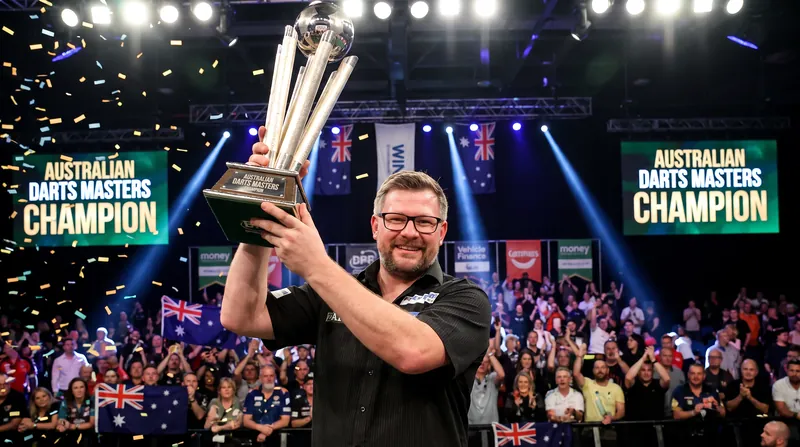
James Wade Ends Five-Year Televised Title Drought with Australian Darts Masters Victory
2 sources
Storyline
Jonny Lynch's First-Half Hat-Trick Powers Ireland Past Malaysia in Historic World Cup Run
6 sources

Storyline
USA Girls' U17 Volleyball Team Achieves Absolute Perfection to Capture World Championship Gold
4 sources
Every angle. Every day.
Get sports stories with full source coverage and perspective breakdowns delivered to your inbox.