
Chinese Automakers Begin Mass Production of Solid-State EVs, Claiming 1,000 km Range and 5-Minute Charging
Dongfeng, Changan, and GAC are rolling out solid-state batteries in 2026, promising to eliminate range anxiety with 620-mile capacities and gas-station-equivalent charging times.

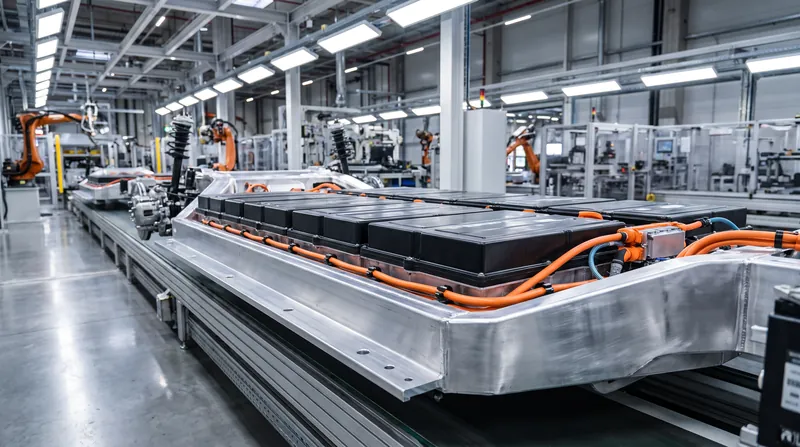
The era of the 1,000-kilometer electric vehicle is moving from the laboratory to the driveway. Chinese automakers, led by Dongfeng, Changan, and GAC, have officially commenced mass production of solid-state batteries, promising to eliminate range anxiety and slash charging times to just five minutes.[1][3]
For the everyday car buyer, the abstract science of battery chemistry translates into a very practical reality: road trips without mandatory hour-long charging stops, and winter driving without watching the battery gauge plummet. It changes the math for families deciding whether their next primary vehicle can be electric.[1]
Dongfeng Motor has confirmed that its 350 Wh/kg solid-state battery will enter mass production in September 2026. The company has already fired up a 0.2 GWh pilot production line, preparing to equip passenger vehicles with packs capable of exceeding 620 miles on a single charge.[1][4]
The charging speed fundamentally alters the rhythm of a road trip. Dongfeng's 1200-volt ultra-high-voltage platform allows drivers to add roughly 280 miles (450 kilometers) of range in just five minutes. That is less time than it takes to order a coffee, effectively matching the convenience of a traditional gas station fill-up.[1][4]
Traditional lithium-ion batteries rely on a liquid electrolyte, which can be heavy, temperature-sensitive, and prone to fire risks. Solid-state technology replaces that liquid with a solid material, drastically increasing energy density while virtually eliminating the risk of combustion—a major selling point for homeowners parking these vehicles in attached garages.[3][5]
For drivers in colder climates, the shift is particularly meaningful. During extreme cold-weather testing in Mohe, China, Dongfeng's solid-state prototype retained over 74% of its charge at temperatures plunging to -30°C (-22°F), meaning winter commutes no longer require a drastic reduction in expected range.[3]
Dongfeng is not acting alone in this market shift. Changan Automobile plans to deploy its "Golden Bell" solid-state battery in vehicles by the end of the third quarter of 2026, while GAC Group is gearing up to equip its Hyper-branded EVs with similar technology.[2][6]
Because solid-state batteries are significantly more energy-dense, they are also lighter. Dongfeng's new battery pack is reportedly 30% lighter than traditional lithium-ion counterparts, which improves vehicle handling, reduces tire wear, and frees up interior cabin space for passengers.[3][5]
As these vehicles roll out across China, the pressure mounts on Western legacy automakers to accelerate their own solid-state timelines. For consumers globally, the mass production of this technology signals that the biggest compromises of EV ownership are rapidly becoming a thing of the past, making the switch to electric a matter of preference rather than compromise.[2][5]
Why it matters
For the average car buyer, solid-state batteries remove the final hurdles to EV adoption: range anxiety, slow charging, and winter performance drops. This technology makes electric vehicles a viable primary car for households that previously couldn't accommodate long charging stops or cold-weather range loss.
Where opinion splits
Consumer Advocates
Focusing on how solid-state batteries eliminate the primary pain points of EV ownership.
For everyday drivers and consumer groups, the arrival of solid-state batteries represents the tipping point for mass EV adoption. By offering over 600 miles of range and five-minute charging, these vehicles finally match the convenience of gas-powered cars, removing the logistical hurdles that have kept many households from making the switch.
Industry Analysts
Tracking the competitive pressure this places on global automotive markets.
Market watchers note that China's aggressive timeline for solid-state mass production puts immense pressure on Western legacy automakers. With companies like Dongfeng and Changan moving from pilot lines to consumer driveways in 2026, competitors who are still years away from commercializing similar technology risk losing significant market share in the premium EV segment.
Key points
- Dongfeng, Changan, and GAC are launching mass-produced solid-state EV batteries in 2026.
- The new battery packs promise ranges exceeding 1,000 kilometers (620 miles) on a single charge.
- Ultra-high-voltage platforms will allow vehicles to add 450 kilometers of range in just five minutes.
- Solid-state technology eliminates flammable liquid electrolytes, drastically improving vehicle safety.
How we got here
Late 2023
Changan unveils its 'Golden Bell' all-solid-state EV battery.
Early 2026
Dongfeng conducts extreme cold-weather testing of its solid-state prototype in Mohe, China.
September 2026
Dongfeng targets the start of mass production for its 350 Wh/kg solid-state batteries.
Late 2026
Changan plans to deploy solid-state batteries in vehicles for validation.
- Consumer Advocates
- Eager for the end of range anxiety and long charging stops.
- Industry Analysts
- Focused on the competitive pressure this places on global automotive markets.
- Technology Developers
- Focused on the engineering milestones and scalability of solid-state cells.
Perspectives this story doesn't cover
- Western Automakers
- Public Charging Infrastructure Providers
Sources
Source coverage
6 outlets
3 viewpoints surfaced






- [1]ArenaEVConsumer Advocates
Dongfeng's new solid-state battery promises 1,000-kilometer electric cars by 2026
Read on ArenaEV → - [2]ElectrekIndustry Analysts
Solid-state EV batteries set to launch in China in 2026
Read on Electrek → - [3]CarNewsChinaIndustry Analysts
Dongfeng to mass-produce solid-state batteries in H2 2026, enabling 1,000 km+ range
Read on CarNewsChina → - [4]CnEVPostTechnology Developers
Dongfeng expects to begin mass production of solid-state batteries offering 1,000 km range in Sept 2026
Read on CnEVPost → - [5]CarsGuideConsumer Advocates
Game-changing solid-state batteries are back on the agenda
Read on CarsGuide → - [6]WardsAutoTechnology Developers
GAC's BEVs to Have 620-Mile-Range Solid-State Batteries by 2026
Read on WardsAuto →
More in Automotive & Transportation
See all →Infrastructure Standard
Geely Takes 30 Percent Stake in Nio Power at $2.4 Billion Valuation to Expand Battery Swapping
7 sources
Battery Tech
The Thermal Interface: How Immersion Cooling Changes EV Battery Lifespan and Charging Speed
3 sources
Battery Tech
Hyundai Validates US-Developed Sodium-Ion Cell, Proving Non-Flammable EV Battery Safety
6 sources
Battery Tech
LFP vs. NMC vs. NCA: The Definitive Comparison of EV Battery Chemistries on Cost, Density, and Lifespan
6 sources
Comments
Every angle. Every day.
Get Automotive & Transportation stories with full source coverage and perspective breakdowns, free every day.