
Appeals Court Rules EPA Cannot Block $20 Billion in Frozen Climate Grants
A federal appeals court has ruled that the Environmental Protection Agency likely exceeded its authority by freezing $20 billion in clean energy grants. The decision restores an injunction protecting the funds, though the EPA may still appeal to the Supreme Court.
By Aarav Khanna

Share this story
For communities waiting on affordable housing upgrades, tribal nations planning independent solar utilities, and local governments aiming to deploy electric vehicle infrastructure, the availability of low-cost capital is the single biggest bottleneck. When federal financing flows, local lending institutions can underwrite projects that commercial banks often deem too risky.
When that financing stops, the entire downstream chain of clean energy deployment—from manufacturing orders to construction jobs—grinds to a halt. For the past year, a massive pipeline of these community-level projects has been suspended in a state of deep freeze, waiting to see if the federal government would honor billions of dollars in previously awarded grants.
That freeze may soon be thawing. In a highly anticipated decision, the U.S. Court of Appeals for the District of Columbia Circuit ruled that the Environmental Protection Agency cannot indefinitely block the disbursement of roughly $20 billion in clean energy grants.
The divided court found that the agency likely exceeded its legal authority when it attempted to terminate the funding and claw back money that had already been distributed to nonprofit organizations. The ruling marks a significant victory for the grant recipients and a major setback for the administration's broader effort to dismantle the climate policies established under the previous administration.[1][2][3][4]
To understand the stakes of the court's decision, it is necessary to look at the architecture of the Greenhouse Gas Reduction Fund. Created by Congress in 2022 through the Inflation Reduction Act, the $27 billion program was designed to function as a national "green bank." Rather than the EPA funding individual solar arrays or heat pump installations directly, the agency awarded massive block grants to a handful of specialized nonprofit coalitions.
These coalitions, such as Climate United and the Coalition for Green Capital, act as financial intermediaries. They use the federal capital to provide low-interest loans and credit enhancements to local lenders, who in turn finance small-scale renewable energy projects, energy-efficient building retrofits, and clean infrastructure in communities that historically lack access to traditional financing.[1][2][4]
This hub-and-spoke model was intended to spur a virtuous cycle of public-private investment, leveraging the initial federal seed money to attract hundreds of billions in private capital over the next decade. For example, the frozen funds include approximately $1.5 billion specifically earmarked to support tribal and Native-serving projects, enabling sovereign nations to build independent, resilient utility grids. However, this decentralized structure also made the program a prime target for the incoming administration, which viewed the massive transfer of federal wealth to outside nongovernmental organizations with deep suspicion.[1][2][3][4]
In early 2025, shortly after taking office, EPA Administrator Lee Zeldin moved to freeze the $20 billion in grants, effectively trapping the money in holding accounts. The agency subsequently issued termination letters to the recipient organizations, arguing that the green bank program did not align with the new administration's priorities.
The EPA also cited concerns over program integrity, suggesting the funds were vulnerable to waste, fraud, and abuse, though the agency did not provide specific evidence of financial mismanagement at the time of the freeze. The sudden halt left the nonprofit coalitions unable to fulfill their lending commitments, forcing some to scale back operations and furlough staff.[1][2][4]
The grant recipients immediately sued, arguing that the executive branch cannot simply refuse to spend money that Congress has legally appropriated. In April 2025, a federal district judge agreed with the nonprofits, issuing a preliminary injunction that ordered the EPA to stop blocking the funds.
The court ruled that the agency had failed to provide a sufficient factual basis for terminating the contracts and warned that the administration was encroaching on the legislative branch's constitutional power of the purse. The EPA appealed the decision, keeping the funds locked in limbo while the case wound its way through the appellate system.[1][2][3][4]
The legal trajectory took a sharp turn in September 2025, when a three-judge panel of the D.C. Circuit Court of Appeals ruled 2-1 in favor of the EPA. The panel concluded that the nonprofits had filed their lawsuit in the wrong venue and should have brought their claims to the Court of Federal Claims, which handles monetary disputes against the government.
However, in a rare procedural move known as "en banc" review, the full ten-judge appeals court agreed to vacate the panel's decision and rehear the case, signaling the profound legal and financial significance of the dispute.[1][2][4]
In its latest ruling, the full appeals court effectively restored the original injunction protecting the grants. Six of the ten judges agreed that the EPA's attempt to terminate the contracts and claw back the funds "based solely on a policy disagreement" likely violated the Inflation Reduction Act.
The majority noted that the agency had provided no assurance that it would leave the funds alone if the injunction were lifted, making court intervention necessary to protect the plaintiffs from irreparable harm. Four dissenting judges argued that the injunction should be vacated, pointing to recent legislative efforts to repeal the program entirely.[2][3][4]
Despite the favorable ruling for the climate coalitions, the $20 billion will not begin flowing into community projects tomorrow. The appeals court temporarily suspended the execution of its decision to give the EPA time to seek intervention from the U.S. Supreme Court.
If the agency files an emergency appeal, the justices will have to decide whether to keep the funds frozen while they consider taking up the case. If the EPA declines to appeal, or if the Supreme Court denies the request, the deep freeze will finally end, allowing the nonprofits to access their accounts and begin underwriting the backlog of clean energy loans.[1][2][3][4]
The outcome of this standoff carries implications far beyond the immediate $20 billion. At its core, the dispute tests the boundaries of executive power and the durability of federal contracts. If the courts ultimately allow the administration to cancel finalized grants based on shifting political priorities, it could introduce a chilling level of uncertainty into federal procurement and public-private partnerships.
For the clean energy sector, which relies heavily on long-term regulatory stability to plan capital-intensive infrastructure projects, the resolution of this case will determine whether federal financial commitments can be trusted to survive a change in the Oval Office.[1][2][3]
For the communities waiting at the end of the funding pipeline, the legal maneuvering in Washington translates directly to delayed groundbreakings and lost economic opportunities. Tribal nations, for instance, had anticipated using their $1.5 billion share of the Greenhouse Gas Reduction Fund to build sovereign microgrids, reducing their reliance on aging, off-reservation power infrastructure.
Similarly, municipal green banks had planned to use the federal capital to offer zero-down financing for residential solar panels and high-efficiency HVAC systems in low-income neighborhoods. Every month the funds remain locked in litigation represents a lost construction season and a delay in the projected energy savings for households.[1][3]
Ultimately, the battle over the green bank illustrates the friction inherent in transitioning a national energy system. Congress designed the Inflation Reduction Act to be highly decentralized, pushing capital out of federal agencies and into the hands of local intermediaries precisely to insulate the funding from future political reversals.
The current administration's aggressive effort to claw that money back demonstrates that no federal program is entirely immune to executive pressure. As the EPA weighs its options for a Supreme Court appeal, the broader clean energy market continues to watch closely, knowing that the final verdict will shape the architecture of federal climate finance for decades to come.[1][2][4]
Key points
- The D.C. Circuit Court of Appeals ruled the EPA likely exceeded its authority by freezing $20 billion in clean energy grants.
- The decision restores a lower court injunction that protects the funds from being permanently canceled by the administration.
- The funds, part of the Greenhouse Gas Reduction Fund, are intended for community-level renewable energy and infrastructure projects.
- The EPA has a brief window to appeal the decision to the U.S. Supreme Court before the funds are officially unfrozen.
What we don’t know
- Whether the EPA will successfully convince the U.S. Supreme Court to issue an emergency stay keeping the funds frozen.
- How long it will take for the nonprofit coalitions to resume their lending operations if the funds are ultimately released.
- Whether Congress will attempt to pass new legislation explicitly repealing the Greenhouse Gas Reduction Fund before the money is spent.
How we got here
August 2022
Congress passes the Inflation Reduction Act, creating the $27 billion Greenhouse Gas Reduction Fund.
July 2024
The Biden administration announces the selection of nonprofit coalitions to receive the $20 billion in green bank grants.
March 2025
Newly appointed EPA Administrator Lee Zeldin freezes the funds and issues termination letters to the grant recipients.
April 2025
A federal district judge issues a preliminary injunction ordering the EPA to stop blocking the funds.
September 2025
A three-judge appellate panel sides with the EPA, ruling the nonprofits sued in the wrong court.
August 2026
The full D.C. Circuit Court of Appeals vacates the panel's decision and restores the injunction protecting the grants.
- Clean Energy and Community Advocates
- Focuses on the economic and environmental benefits of the unblocked funds, emphasizing the harm of the freeze.
- Neutral Legal and Policy Observers
- Focuses on the mechanics of the court ruling, the separation of powers, and the procedural next steps.
Perspectives this story doesn't cover
- Local community lenders who rely on the green bank capital to underwrite neighborhood projects.
- Private sector investors who planned to co-finance infrastructure alongside the federal grants.
Sources
Source coverage
4 outlets
2 viewpoints surfaced




- [1]Canary MediaClean Energy and Community Advocates
Court rules against Trump EPA's freeze of $20B in 'green bank' funds
Read on Canary Media → - [2]Al JazeeraNeutral Legal and Policy Observers
US court deals blow to Trump's bid to scrap climate grant programme
Read on Al Jazeera → - [3]Tribal Business NewsClean Energy and Community Advocates
Appeals court blocks EPA from canceling $20B climate grant program
Read on Tribal Business News → - [4]ReutersNeutral Legal and Policy Observers
EPA cannot freeze $20 billion in climate grants, US appeals court rules
Read on Reuters →
More in Environment
See all →Deep-Sea Biodiversity
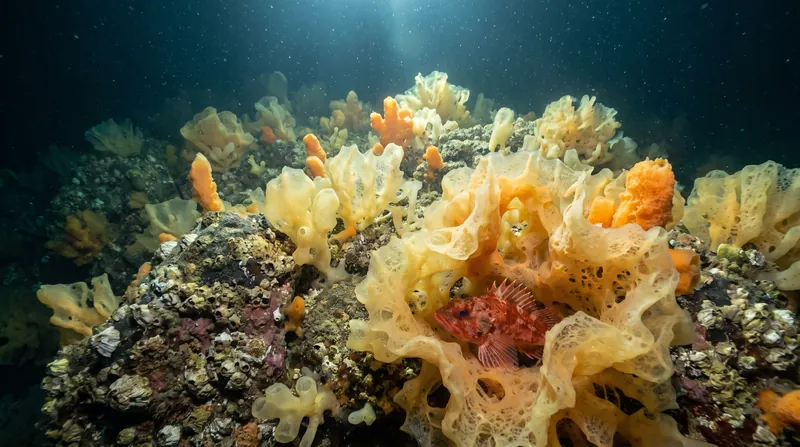
NOAA Discovers Nine New Deep-Sea Sponge Species Off the Alaskan Coast
6 sources
Planetary Boundaries
The Nine Quantitative Limits: How the Planetary Boundaries Framework Defines a Safe Operating Space for Humanity
6 sources
Ecosystem Dynamics
Why Thermodynamics and the 10 Percent Rule Limit Food Chain Lengths
6 sources

Biogeochemistry
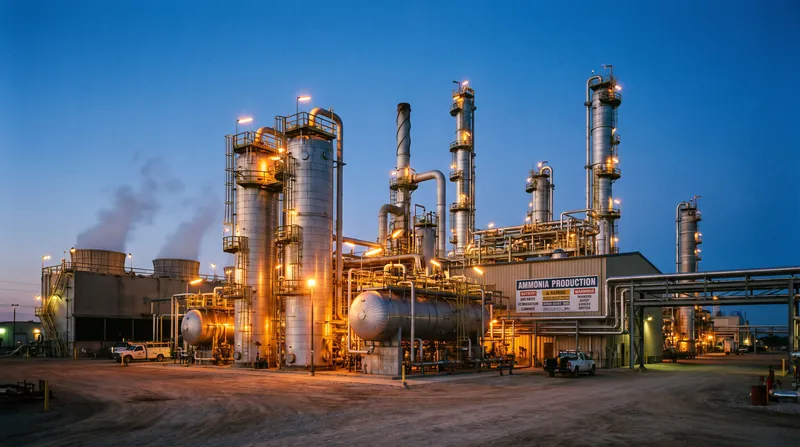
Haber-Bosch Nitrogen Synthesis Feeds Half the World While Overwhelming Global Ecosystems
6 sources
Comments
Every angle. Every day.
Get Environment stories with full source coverage and perspective breakdowns, free every day.