
Valve Bans Skin Gambling and Trading Site Sponsorships from CS2 and Dota 2 Broadcasts
Valve has officially prohibited esports teams from displaying skin gambling, case-opening, and skin trading sponsors during licensed broadcasts. The rule, now being enforced across top-tier tournament circuits, forces major organizations to adopt sponsor-less alternate jerseys.
By Meera Iyer

Share this story
The era of skin gambling logos plastered across the chests of Counter-Strike champions is officially over. In a sweeping regulatory shift that is currently reshaping the financial foundation of Tier 1 esports, Valve has banned all promotions for skin gambling, case-opening, and skin trading platforms from officially licensed broadcasts.
The mandate forces major organizations to adopt sponsor-less alternate jerseys and strips a lucrative, long-standing revenue stream from tournament organizers. This change represents a direct strike at the sprawling secondary market that has grown around Counter-Strike 2's in-game economy, where virtual weapon finishes are routinely traded for tens of thousands of dollars. By cutting off broadcast visibility, Valve is fundamentally altering how teams monetize their rosters.[1][2][5]
The mechanism driving the ban sits inside Section 2.4.e of Valve's Tournament Operation Requirements (TOR) and the Limited Game Tournament License. The newly enforced clause explicitly forbids licensees from distributing or displaying any content that violates Valve's intellectual property or the Steam Subscriber Agreement. Crucially, the rulebook specifically names "game case opening sites or skin trading sites" as prohibited entities.
Tournament organizers are now strictly barred from accepting sponsorship money from any company that generates revenue by relying on Valve's game economies or interacting with players' Valve inventories. This effectively blacklists the entire gray-market ecosystem of third-party trading sites from ever appearing on an official stream, regardless of the tournament's size or prestige.[1][3][6]
While Valve quietly updated the TOR framework in December 2025, the reality of the ban is only hitting the top tier of competitive Counter-Strike now. Because Tier 1 events require organizers to publish their full event information and secure licensing roughly ten months in advance, the summer of 2026 marks the first wave of marquee competitions bound by the revised text.
ESL FACEIT Group (EFG), one of the largest tournament operators in the world, officially updated its ESL Pro Tour rulebook in July 2026 to align with Valve's mandate. The updated EFG guidelines stipulate that if a team's official branding incorporates a prohibited sponsor, they must provide an alternative, compliant version for the broadcast, forcing an immediate logistical pivot for the world's best teams.[1][2]
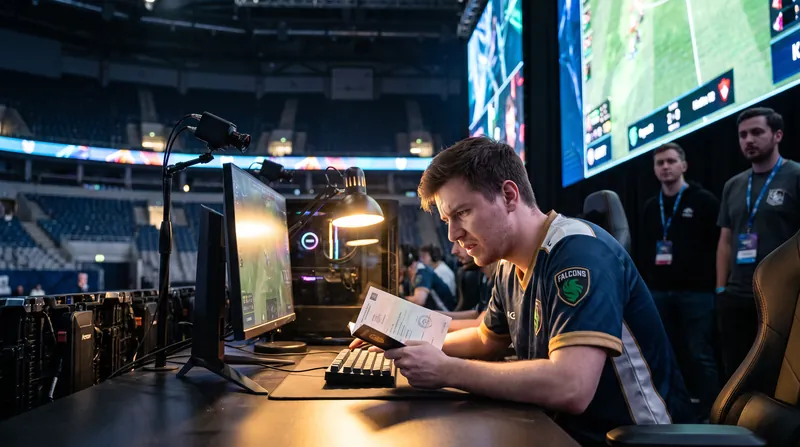
The enforcement has created a visible split on stage, fundamentally changing the aesthetic of top-tier competition. Top-ranked rosters like Team Vitality, MOUZ, and The MongolZ—who maintain active, highly lucrative partnerships with platforms like Skin.Club, G4Skins, and CSGO Skins—have been forced to compete in sanitized jerseys during recent Tier 1 events. However, Valve's rule only governs what appears on a licensed broadcast.
Teams are not explicitly banned from taking money from skin sites; they simply cannot display the branding on their jerseys, overlays, or stage backdrops during the tournament stream. Consequently, many organizations continue to promote these platforms heavily across their own social media channels, creating a bizarre dichotomy where a team's digital presence is heavily sponsored, but their physical broadcast presence is entirely clean.[1][2]
Despite the strict crackdown on virtual item trading, the new framework contains a massive, highly visible loophole: traditional cash-based gambling is completely exempt. Because sportsbooks and online casinos operate with fiat currency and do not interact with Steam inventories, they do not violate Valve's IP restrictions. As a result, offshore betting companies have taken center stage to fill the financial void.
Organizations that can no longer display skin-trading logos are instead featuring traditional gambling platforms like Stake, 1xBet, and Fonbet as their primary broadcast sponsors. This has drawn criticism from community members who point out the hypocrisy of banning virtual item betting while allowing traditional sportsbooks—many of which face their own regulatory hurdles in various global jurisdictions—to dominate the broadcast inventory.[2]
The broadcast crackdown arrives amid mounting legal pressure regarding Valve's in-game economy. In February 2026, New York Attorney General Letitia James filed a high-profile lawsuit against the developer, alleging that the sale of CS2 cases promotes unregulated gambling to minors. The lawsuit claims that Valve has made billions by luring teenagers into engaging with mechanics that mirror slot machines in the hopes of winning expensive virtual items.
By aggressively distancing its official esports broadcasts from third-party skin gambling sites, Valve is actively fortifying its legal defense against regulators, demonstrating that it does not endorse or partner with the secondary markets that facilitate the cashing out of virtual goods.[2][4]
Valve moved to dismiss the New York lawsuit in May 2026, arguing that the mechanics of its in-game economy are fundamentally benign. In its legal filings, the company argued that opening a virtual case is akin to buying a pack of baseball cards or a surprise toy, and that a ruling against them would "inject uncertainty into hundreds of daily commercial transactions."
Valve's legal team emphasized that the skins are designed for entertainment and possess subjective aesthetic value. The broadcast ban serves as a critical pillar in this argument, allowing Valve to point to its strict Tournament Operation Requirements as proof that it actively polices its intellectual property and prohibits the unauthorized commercialization of its game economy by gambling entities.[4]
For the broader esports ecosystem, the transition away from skin-site money is painful but necessary. While the sudden loss of gray-market revenue has forced smaller, tier-two organizations to withdraw from Counter-Strike entirely, the industry at large is being forced to mature. By cutting off the easy money hose provided by unregulated trading platforms, Valve is pushing Counter-Strike 2 toward a more sanitized, sponsor-friendly future.
Teams and tournament organizers must now work harder to attract non-endemic brands and mainstream advertisers who were previously deterred by the prominent placement of gambling logos. Ultimately, the ban represents a permanent structural shift, prioritizing long-term legal stability and mainstream legitimacy over short-term financial gains.[1][3]
Key points
- Valve has banned skin gambling, case-opening, and skin trading sites from appearing on licensed CS2 and Dota 2 broadcasts.
- The rule targets companies that generate revenue by interacting with players' Valve game inventories.
- Traditional cash-based sportsbooks and casinos are exempt from the ban, leading teams to pivot to offshore betting sponsors.
- Teams can still accept money from skin sites, but must use alternate, sponsor-less jerseys during official matches.
Open questions
- Whether Valve will eventually expand the ban to include traditional cash-based sportsbooks and casinos.
- How the loss of skin-site revenue will impact the financial viability of smaller, tier-two esports organizations over the next year.
- Whether the New York Attorney General's lawsuit will force Valve to alter the fundamental mechanics of CS2 cases.
Timeline
December 2025
Valve updates its Tournament Operation Requirements, officially banning skin gambling and trading sponsors from licensed broadcasts.
February 2026
The New York Attorney General files a lawsuit against Valve, alleging that CS2 cases promote unregulated gambling.
May 2026
Valve moves to dismiss the New York lawsuit, comparing virtual cases to baseball cards.
July 2026
ESL FACEIT Group updates its ESL Pro Tour rulebook to enforce the ban across its Tier 1 events.
August 2026
Major teams debut sponsor-less alternate jerseys at marquee events like BLAST Bounty Season 2.
- Tournament Operators
- Focuses on enforcing IP protection, complying with Valve's mandates, and sanitizing the broadcast product.
- Esports Organizations
- Highlights the financial blow of losing a major revenue stream and the logistical pivot to alternate jerseys and traditional betting sponsors.
- Regulatory Watchdogs
- Views the ban as a necessary but incomplete step in shielding minors from unregulated gambling ecosystems.
Perspectives this story doesn't cover
- Underage Gamers
- Non-Endemic Advertisers
Sources
Source coverage
6 outlets
3 viewpoints surfaced






- [1]HLTVEsports Organizations
Valve bans skins gambling, case opening sites from jerseys and events in TOR
Read on HLTV → - [2]Esports.netRegulatory Watchdogs
ESL joins Valve in banning CS2 skin trading and gambling sponsors for teams
Read on Esports.net → - [3]StrafeTournament Operators
Valve Bans Skin Gambling Sponsors From All CS2 Events
Read on Strafe → - [4]PCGamesNRegulatory Watchdogs
Valve moves to dismiss court case against Counter-Strike 2 cases
Read on PCGamesN → - [5]DexertoEsports Organizations
CS2 esports teams barred from promoting skin gambling sponsors
Read on Dexerto → - [6]Dot EsportsTournament Operators
Valve restricts skin trading and case opening sites in CS2 events
Read on Dot Esports →
More in Gaming & Esports
See all →RLCS 2026
Team Falcons Sweep Spacestation Gaming to Win 2026 Rocket League World Championship
4 sources
Sponsorship ROI
The Three-Factor Model: How Esports Sponsorship Valuation Is Calculated Using Reach, Engagement, and Sentiment
4 sources
Team Finances
The 80% to 120% Range: How Player Salaries Dictate the Operating Margin of a Franchised Esports Team
5 sources
Esports Visas
The 10-Year Rule: How Esports Visas and Immigration Policy Define a Player's Career Longevity
6 sources
Comments
Every angle. Every day.
Get Gaming & Esports stories with full source coverage and perspective breakdowns, free every day.