
How Grand Junction Used a Community Survey to Navigate a Contentious Pool Tax Measure
Faced with rising operational costs for a 43-year-old swimming pool, the Grand Junction City Council relied on a dual-track community satisfaction survey to justify placing a sales tax increase on the November 2026 ballot.
By Paige Carter

Share this story
In short
- Grand Junction City Council voted to place a 0.07% sales tax increase on the November 2026 ballot to fund the Orchard Mesa Pool.
- The decision was heavily informed by a 2026 Community Satisfaction Survey that showed residents wanted the issue put to a vote.
- The city used a dual-track survey method, combining a statistically valid mailer to 5,400 households with an open online link.
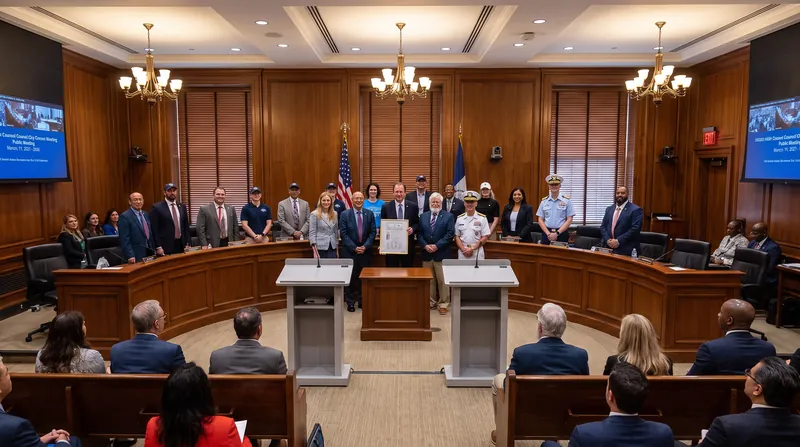
Grand Junction residents will vote this November on a 0.07% sales tax increase to save the 43-year-old Orchard Mesa Pool, a decision the City Council justified using a newly completed community satisfaction survey. The measure asks taxpayers to fund a $12 million renovation bond, raising the local sales and use tax rate from 3.39% to 3.46%. Rather than imposing the tax unilaterally, the council used the polling data to shift the final decision—and the political risk—directly to the voters.[1][2]
The financial stakes for the city are clear. Built in 1983, the Orchard Mesa Pool was originally funded through a three-way partnership between the city, Mesa County, and School District 51. After the county and school district withdrew their financial support, the city absorbed the entire operational subsidy, which is budgeted to reach $441,444 in 2026. With a new Community Recreation Center opening soon, officials needed a dedicated revenue stream to keep the aging neighborhood pool afloat.[1]
To determine if residents were willing to pay, the city commissioned RRC Associates to conduct its biennial Community Satisfaction Survey, explicitly adding questions about the pool's future. The city deployed a dual-track methodology: a statistically valid survey mailed to a random sample of 5,400 households, paired with an open-link online survey available to all residents. This structure captured both a representative baseline of the broader population and the passionate feedback of highly engaged pool advocates.[1]
The survey results delivered a clear actionable takeaway for the council. Presented in early August, the data showed the Orchard Mesa Pool ranked among the top three priorities within the parks and recreation department. While respondents were split on the prospect of taking on debt or raising taxes to fund the facility, there was overwhelming consensus that the decision should be placed on the ballot. This gave the council the mandate it needed to advance the measure.[2]
If approved, the tax increase comes with specific long-term costs. The measure authorizes the city to take on $12 million in debt for renovations, repaid by the 0.07% sales tax bump. Once the construction debt is fully retired in approximately 15 years, the tax rate will drop by 0.04%. However, a permanent 0.03% increase will remain on the books indefinitely to subsidize the pool's ongoing operations and maintenance.[2]
The city's reliance on the survey data has drawn sharp criticism regarding its methodology and cost. Critics challenged the scientific validity of the polling process, noting that the $30,000-plus contract was awarded without competitive bidding. A guest opinion in The Daily Sentinel argued that by accepting responses outside the controlled sample, the city risked producing skewed results that sound authoritative but lack the dependability required to guide public policy.[3]
Despite these methodological caveats, the survey successfully moved the funding debate from the council chambers to the voting booth. The Orchard Mesa Pool saga highlights how municipalities increasingly use targeted community polling to navigate the friction of infrastructure funding. By quantifying public sentiment, local governments can share the responsibility of contentious tax increases with the electorate.[4]
As Grand Junction residents prepare for the November election, the outcome will test whether the survey accurately captured the community's willingness to fund neighborhood amenities. The process offers a transparent look at how local governments leverage data to manage civic choices, ensuring that the final financial verdict rests directly with the taxpayers who will foot the bill.[2][4]
Definitions
- Statistically Valid Survey
- A polling method that uses a randomized sample to accurately reflect the demographics and opinions of a larger population within a defined margin of error.
- Open-Link Survey
- A public survey available to anyone who wishes to participate, capturing highly engaged feedback but lacking the controlled sampling needed for statistical accuracy.
- Operational Subsidy
- The ongoing financial support provided by a government to cover the gap between a facility's generated revenue and its total operating costs.
- Use Tax
- A tax imposed on the storage, use, or consumption of tangible personal property, acting as a complement to the sales tax.
Questions & answers
Why does the Orchard Mesa Pool need a tax increase?
The 43-year-old facility requires a full renovation, and the city is now solely responsible for its rising operational costs after former partners withdrew their financial support.
How much will the sales tax increase cost residents?
The measure proposes raising the sales and use tax rate from 3.39% to 3.46%, which equates to an additional 7 cents for every $100 spent on taxable goods.
Will the tax increase be permanent?
Partially. Once the $12 million construction debt is repaid in about 15 years, the rate will drop by 0.04%, leaving a permanent 0.03% increase to subsidize ongoing operations.
Analysis by camp
City Administration
Values using statistical surveys to guide council decisions and secure funding for community assets.
For city officials, the dual-track survey provided a necessary mandate to act. By demonstrating that the pool was a top community priority and that residents wanted the final say, the council could advance the ballot measure without unilaterally imposing a tax increase. This approach mitigates political risk while offering a lifeline to an aging facility.
Pool Advocates
Values preserving neighborhood recreational facilities, even at the cost of a small tax increase.
Supporters of the Orchard Mesa Pool view the facility as an essential gathering place for children, seniors, and the local neighborhood. They argue that the new Community Recreation Center across town is not easily accessible for everyone, making the preservation of the local pool worth the proposed 7-cent increase per $100 spent.
Methodology Skeptics
Questions the scientific validity of the survey and the financial burden of the tax.
Critics argue that the city's polling process was fundamentally flawed and a waste of taxpayer money. They contend that mixing a controlled mailer with an open-link survey dilutes the statistical validity of the results, creating a skewed mandate that the city is now using to justify a permanent tax increase.
Municipal Analysts
Examines how local governments use polling data to navigate political risk and infrastructure funding.
From a governance perspective, the Orchard Mesa Pool saga illustrates a growing trend: using targeted community polling to manage the friction of tax increases. By quantifying public sentiment, local governments can share the responsibility of contentious financial decisions with the electorate, ensuring that the final verdict rests with the taxpayers.
- City Administration
- Values using statistical surveys to guide council decisions and secure funding for community assets.
- Pool Advocates
- Values preserving neighborhood recreational facilities, even at the cost of a small tax increase.
- Methodology Skeptics
- Questions the scientific validity of the survey and the financial burden of the tax.
- Municipal Analysts
- Examines how local governments use polling data to navigate political risk and infrastructure funding.
Perspectives this story doesn't cover
- Local Business Owners
- Residents of Other Neighborhoods
Sources
Source coverage
4 outlets
4 viewpoints surfaced




- [1]City of Grand JunctionCity Administration
City Council Approves the Orchard Mesa Pool on the November 2026 Ballot
Read on City of Grand Junction → - [2]Western Slope TrellisPool Advocates
Grand Junction voters will decide Orchard Mesa Pool funding in November
Read on Western Slope Trellis → - [3]The Daily SentinelMethodology Skeptics
City's satisfaction survey is bad science — and a waste of money
Read on The Daily Sentinel → - [4]Factlen Editorial TeamMunicipal Analysts
Synthesis by Factlen editorial team
Read on Factlen Editorial Team →
More in Community
See all →Public Opinion
Majority of Israelis and Palestinians Believe Peaceful Coexistence is Impossible, Pew Poll Finds
5 sources

Survey Methodology
The Semantic and Syntactic Mechanisms That Cause Question Wording Effects in Public Opinion Surveys
7 sources

Polling Mechanics
The Fear of Social Isolation That Causes the 'Spiral of Silence' and Distorts Public Opinion Polls
5 sources

Data Center Zoning
St. Louis Enacts Nation-Leading Data Center Zoning Law With 100% Renewable Energy Mandate and Water-Use Ban
6 sources
Comments
Every angle. Every day.
Get Community stories with full source coverage and perspective breakdowns, free every day.