
Mossad Chief and Syrian Foreign Minister Hold De-escalation Talks Following Israeli Airbase Strike
Mossad Director Roman Gofman and Syrian Foreign Minister Asaad al-Shaibani met in Jordan to de-escalate tensions after an Israeli airstrike on a Syrian airbase.

Mossad Director Roman Gofman and Syrian Foreign Minister Asaad al-Shaibani sat across from each other in Jordan on Sunday, marking the highest-level direct contact between the two nations in months. The emergency summit, brokered by the United States, was convened to de-escalate a rapidly deteriorating border crisis that threatens to ignite a broader regional conflict.[1][3]
The meeting follows the collapse of US-mediated security talks earlier this year, which had briefly promised a new framework for relations following the December 2024 overthrow of former Syrian President Bashar al-Assad. Since those talks stalled, the security vacuum along the border has steadily filled with preemptive military actions.[3][6]
The immediate catalyst for the Jordan summit was a severe military escalation in northwestern Syria. Earlier in the week, Israeli warplanes launched a preemptive strike on the disused Abu al-Duhur airbase in the Idlib Governorate.[1][5]
During the operation, Israeli jets dropped at least eight bombs on the facility's runways and hangars. The airbase, located approximately 72 kilometers from the Turkish border, was heavily damaged, effectively neutralizing its immediate operational capacity.[1]
Israel justified the aggressive action by citing urgent intelligence. Officials in Jerusalem claimed that Turkey was on the verge of deploying advanced military hardware to the base, including attack drones and a sophisticated radar system, which Israel viewed as an unacceptable threat to its northern security.[1][6]
The Israeli government maintained that it had issued repeated warnings to both Damascus and Ankara regarding the impending deployment. When those warnings were allegedly ignored, Israel opted for the military track, executing what it described as a necessary preemptive measure.[1][6]
Turkey vehemently denied the Israeli allegations. The Turkish presidency rejected the claims of a planned military buildup as untenable, accusing Israel of fabricating the intelligence to legitimize unlawful airstrikes that violate Syrian sovereignty and territorial integrity.[6]
The strike triggered an immediate diplomatic backlash, notably from Israel's closest ally. Tom Barrack, the US ambassador to Turkey and special envoy for Syria and Iraq, publicly condemned the bombing. He labeled the operation an unnecessary escalation that does not advance regional stability, signaling Washington's deep frustration with the preemptive military doctrine.[1][6]
Driven by the US pressure, the Syrian and Israeli delegations arrived in Jordan with starkly different agendas. The Syrian delegation, which included the heads of the country's general and military intelligence services, demanded an immediate cessation of all Israeli incursions.[2]
Foreign Minister al-Shaibani emphasized that any future security agreement must respect Syrian sovereignty. Damascus is insisting on an Israeli withdrawal to pre-2024 territorial lines, specifically demanding that Israel vacate the UN-supervised buffer zone in the Golan Heights where it recently expanded its troop presence.[1][5]
Furthermore, the Syrian delegation stressed its firm opposition to any agreement that would prohibit Damascus from rebuilding its military capabilities or forging regional alliances. They argued that Israel cannot hold veto power over Syria's foreign policy or its relationship with Ankara.[5]
Israel's counter-proposal focused on pragmatic, tactical de-confliction rather than sweeping territorial concessions. The Israeli delegation pushed for the establishment of a special operations room in Jordan, operating under strict US supervision.[2][3]
This proposed operations room would serve as a real-time clearinghouse for intelligence and military movements. Its primary objective would be to ensure that escalating tensions between Israel and Turkey do not inadvertently spill over into Syrian territory, sparking a multi-front war.[3][5]
The negotiations highlight a fundamental strategic divergence that defines the current Middle Eastern security architecture. Syria views a comprehensive, formalized security agreement as the only viable path to long-term stability and domestic reconstruction.[1][2]
Conversely, Israel maintains that active deterrence—including preemptive strikes and physical buffer zones—remains an absolute necessity as long as foreign powers attempt to establish forward operating bases in the Levant. The outcome of the Jordan talks will ultimately determine whether these two competing doctrines can be reconciled into a functional, if fragile, coexistence.[2][3]
Where opinion splits
Option A: Formal Security Agreement
A comprehensive, US-mediated pact requiring Israeli withdrawal and cessation of strikes in exchange for Syrian border guarantees.
For: Stabilizes the northern border, allows the Syrian government to focus on domestic reconstruction, and reduces the risk of a multi-front regional war. Against: Requires Israel to forfeit its physical buffer zone in the Golan Heights and rely on a fragile Syrian state to block foreign military deployments. Evidence: The near-completion of a draft agreement in early 2026 demonstrates diplomatic viability, but its subsequent collapse highlights the fragility of trust. Fits well when: Both sides prioritize economic stabilization and have ironclad US enforcement guarantees. Does not fit when: Third parties like Turkey or Iran actively attempt to establish forward operating bases that Syria cannot or will not control.
Option B: Active Military Deterrence
Israel's current strategy of preemptive strikes and maintaining a physical buffer zone.
For: Directly and immediately neutralizes perceived threats—such as the Abu al-Duhur airbase—without relying on diplomatic promises or third-party enforcement. Against: Perpetuates a continuous cycle of escalation, alienates regional actors, and draws explicit condemnation from key allies like the United States. Evidence: Israel's deployment of eight bombs on the Idlib facility successfully halted alleged Turkish radar deployments, but triggered an immediate diplomatic crisis and border tensions. Fits well when: Intelligence indicates an imminent, unacceptable foreign military buildup that diplomatic channels cannot resolve in time. Does not fit when: The overarching strategic objective is long-term border normalization and regional economic integration.
Option C: Multilateral De-confliction
Establishing a joint US-supervised operations room to manage incidents without a final-status peace treaty.
For: Provides a pragmatic, immediate mechanism to prevent accidental wars, manage third-party movements, and maintain open communication channels. Against: Leaves the core territorial and sovereignty disputes entirely unresolved, functioning only as a band-aid over a volatile border. Evidence: The August 2026 Jordan meeting successfully established direct intelligence-sharing channels despite deep mutual mistrust, proving that tactical cooperation is possible without strategic alignment. Fits well when: A comprehensive peace treaty is politically impossible for domestic reasons, but both sides recognize the catastrophic cost of an accidental escalation. Does not fit when: Either side requires absolute territorial sovereignty or total military freedom of action to satisfy their core security doctrines.
Key points
- Mossad Director Roman Gofman and Syrian Foreign Minister Asaad al-Shaibani met in Jordan to de-escalate border tensions.
- The emergency summit followed an Israeli airstrike that dropped eight bombs on Syria's Abu al-Duhur airbase.
- Israel claimed the strike was necessary to prevent an imminent Turkish military deployment, an allegation Ankara strongly denied.
- US envoy Tom Barrack condemned the Israeli strike as an unnecessary escalation and helped broker the Jordan talks.
Unanswered questions
- Whether Turkey actually intended to deploy drones and radar systems to the Abu al-Duhur airbase prior to the strike.
- If the proposed US-supervised 'special operations room' in Jordan will be formally established and funded.
- How the Syrian government plans to balance its security negotiations with Israel against its strategic relationship with Ankara.
- The Diplomatic Track
- Prioritizes comprehensive security agreements, sovereignty, and de-escalation over military action.
- The Active Deterrence Track
- Focuses on preemptive strikes, preventing foreign military buildup, and maintaining physical buffer zones.
- The Regional Alliance Track
- Examines the proxy dynamics and the risk of broader regional spillover involving third parties like Turkey.
Perspectives this story doesn't cover
- Turkish Military Command
- Syrian Civilians in Idlib Governorate
- Iranian Revolutionary Guard Corps (IRGC)
Sources
Source coverage
6 outlets
3 viewpoints surfaced






- [1]Arab NewsThe Diplomatic Track
Israeli, Syrian officials meet after airbase strike: Axios
Read on Arab News → - [2]Turkiye TodayThe Diplomatic Track
Syria, Israel hold Jordan talks on de-escalation and Türkiye
Read on Turkiye Today → - [3]The Times of IsraelThe Active Deterrence Track
Israel said to set 'red lines' for diplomatic agreement, as US pushes for full renewal of direct Jerusalem-Damascus talks
Read on The Times of Israel → - [4]Middle East EyeThe Regional Alliance Track
Mossad chief met Syrian foreign minister to ease tensions, Haaretz reports
Read on Middle East Eye → - [5]The Jerusalem PostThe Active Deterrence Track
Mossad chief, Syria FM hold positive de-escalation talks after Israeli airbase strike, source says
Read on The Jerusalem Post → - [6]Al-MonitorThe Regional Alliance Track
Israel spy chief, Syria FM discussed Turkey military presence before strike
Read on Al-Monitor →
More in World
See all →Gulf Monetary Policy
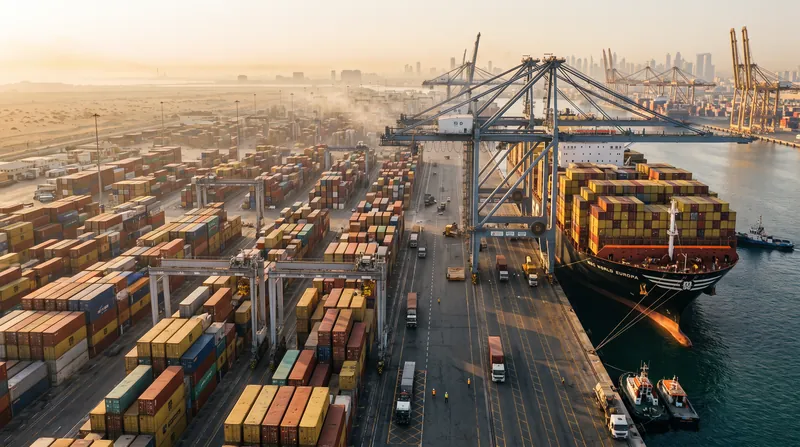
The Structural Trade-Offs of the Saudi and UAE Dollar Pegs
7 sources
Water Security
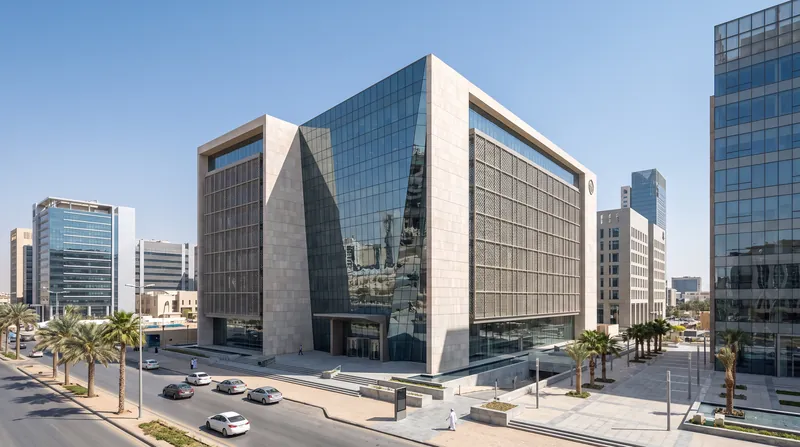
The Structural Shift in Middle East Water Security: Comparing Gulf Mega-Desalination to Levantine Wastewater Recycling
5 sources
Suez Canal
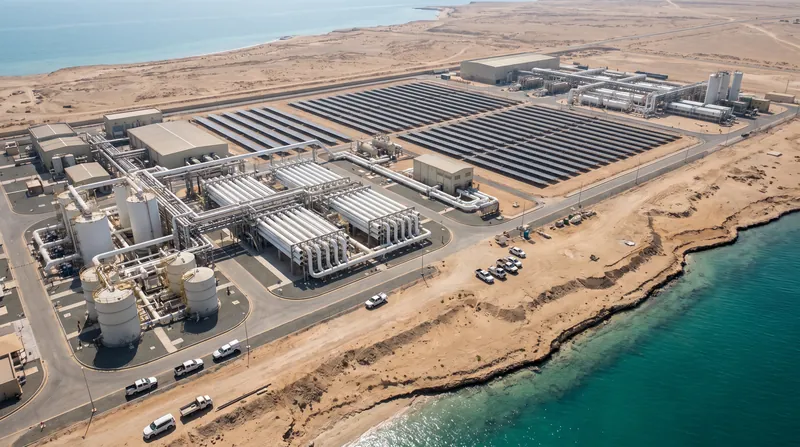
The Mechanics of the Suez Canal: How the Constantinople Convention and Sovereign Tolls Structure Global Trade
4 sources

Transit Corridors
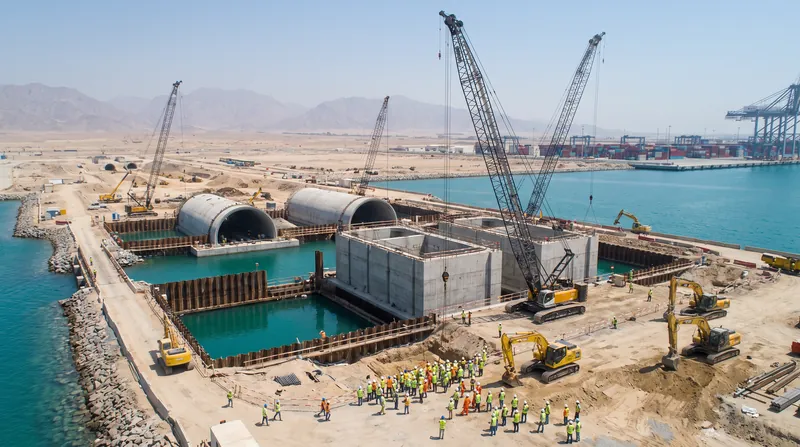
The Structural Shift in Middle East Transit: Comparing the India-Middle East-Europe Economic Corridor to Iraq's Development Road
7 sources
Comments
Every angle. Every day.
Get World stories with full source coverage and perspective breakdowns, free every day.