
U.S. Pork Production Projected to Exceed Beef in 2026 Amid Historic Cattle Shortage
For the first time in decades, U.S. pork production is set to surpass beef as the nation's cattle herd shrinks to its smallest size since the 1940s.
By Kabir Mehra

Share this story
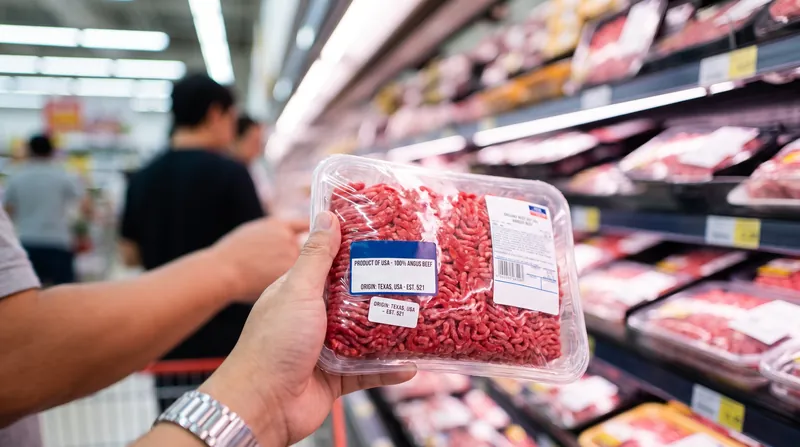
As Americans fire up their grills for the late-summer season, the meat case is presenting a stark financial choice. The price of fresh retail beef has surged to record highs, forcing many backyard chefs to rethink their cookout menus. But right next to those expensive steaks, pork chops and ribs are offering a surprisingly stable and affordable alternative.[1]
This grocery store reality is the downstream effect of a historic agricultural milestone. According to the latest projections from the U.S. Department of Agriculture, American pork production is poised to surpass beef production in 2026. The USDA estimates the country will produce approximately 28 billion pounds of pork this year, compared to just 25.5 billion pounds of beef.[1][2]
If realized, this 2.5-billion-pound gap would mark the largest production divergence on record between the two protein sectors. Historically, beef has dominated the American meat industry, with its production volume consistently exceeding pork from 1960 through 2014. The current reversal highlights a profound structural shift in how the nation sources its protein.
The primary driver behind this inversion is a severe and ongoing crisis in the cattle industry. The national beef cow herd has shrunk to its smallest size since the 1940s. Years of persistent drought across western grazing lands have dried up pastures and escalated feed costs to unsustainable levels.[1][4]
Faced with these harsh environmental and economic realities, ranchers have been forced to liquidate their herds rather than retain heifers for breeding. With fewer cattle available, meat packers are processing fewer head, leading to a tightening of domestic beef supplies that experts warn will persist well into 2027.[3][4]
In stark contrast, the pork industry is experiencing a period of stable expansion. Hog supplies remain abundant, and producers have capitalized on efficient production methods to keep output high. The USDA recently raised its expectations for second-half pork production, citing heavier carcass weights and a steady slaughter pace.[2][3]
The divergence in supply is directly reflected in retail prices. The all-fresh retail beef value recently hit a record $9.64 per pound, representing a 13 percent increase from the previous year. Meanwhile, retail pork prices have remained essentially flat, hovering around $4.89 per pound, providing significant relief for budget-conscious shoppers.[1]
Despite the shift in production, American consumption habits remain deeply entrenched. The USDA projects that the average consumer will still have 60 pounds of beef available to them in 2026, compared to just 49.6 pounds of pork. This paradox—producing more pork but eating more beef—is largely explained by international trade dynamics.[1][5]
The United States exports roughly a quarter of its total pork production, with countries like Mexico purchasing nearly 40 percent of those exports. Conversely, only about 9 percent of American beef is exported. To satisfy domestic demand amid the cattle shortage, the U.S. has increasingly relied on beef imports to fill the gap.[1][5]
For the everyday consumer, the message is clear: the cattle cycle is long, and rebuilding the national herd will take years. Until that happens, elevated beef prices are likely the new normal. However, the robust and growing pork supply ensures that Americans will still have plenty of high-quality, affordable options to keep their grills full.[4][5]
Viewpoints in depth
Beef Industry Analysts
Warning that the shrinking cattle herd and long rebuilding cycle will keep beef supplies tight and prices high.
Analysts tracking the cattle market emphasize that the current shortage is a structural issue, not a temporary blip. Years of severe drought across key grazing states have decimated pastures, while soaring feed costs have made it economically unviable for many ranchers to maintain their herd sizes. As a result, producers have been forced into liquidation, sending heifers to slaughter rather than retaining them for breeding. Because the biological cycle of cattle is long, experts caution that even if environmental conditions improve, rebuilding the national herd to previous levels will take years, ensuring that beef remains a premium-priced commodity for the foreseeable future.
Pork Industry Advocates
Highlighting the sector's efficient expansion and strong export relationships as a stabilizing force in the meat market.
For the pork sector, the current market dynamics represent a historic validation of their production efficiency. Industry advocates point out that while cattle numbers have plummeted, hog supplies have remained remarkably stable and abundant. This consistency has not only kept domestic retail prices flat but has also fueled a booming export market. With nearly a quarter of U.S. pork being shipped internationally—particularly to strong trading partners like Mexico—the industry is leveraging its production surplus to dominate both the domestic budget-conscious market and the global protein trade.
Consumer Economists
Tracking how record retail beef prices are shifting domestic purchasing habits toward more affordable proteins.
Economists observing grocery store trends note a significant shift in how Americans are navigating the meat case. While cultural preferences still heavily favor beef for summer grilling, the reality of a $9.64 per pound average retail price is forcing a behavioral change. Shoppers are increasingly trading down from premium steaks to ground beef, or pivoting entirely to pork chops and poultry to stretch their grocery budgets. Despite this substitution effect, economists highlight a fascinating paradox: domestic beef demand remains stubbornly resilient, with consumers willing to absorb significant price hikes rather than abandon their preferred protein entirely.
Key points
- U.S. pork production is projected to reach 28 billion pounds in 2026, surpassing beef production's 25.5 billion pounds.
- The shift is driven by a historic cattle shortage, with the national beef cow herd shrinking to its smallest size since the 1940s.
- Retail beef prices have surged 13 percent to record highs, while pork prices remain stable and affordable for consumers.
- Despite producing more pork, Americans still consume more beef per capita, largely due to high pork export volumes.
- Beef Industry Analysts
- Warning that the shrinking cattle herd and long rebuilding cycle will keep beef supplies tight and prices high.
- Pork Industry Advocates
- Highlighting the sector's efficient expansion and strong export relationships as a stabilizing force in the meat market.
- Consumer Economists
- Tracking how record retail beef prices are shifting domestic purchasing habits toward more affordable proteins.
Perspectives this story doesn't cover
- Restaurant Industry Buyers
- International Meat Importers
Sources
Source coverage
5 outlets
3 viewpoints surfaced





- [1]Farm ProgressPork Industry Advocates
U.S. pork production is project to exceed beef production in 2026
Read on Farm Progress → - [2]EuroMeatNewsPork Industry Advocates
The United States expects to produce more pork than beef in 2026
Read on EuroMeatNews → - [3]Brownfield Ag NewsBeef Industry Analysts
USDA lowers 2026 beef production, sees decline ongoing into 2027
Read on Brownfield Ag News → - [4]The Cattle SiteBeef Industry Analysts
USDA sees the cattle shortage persisting
Read on The Cattle Site → - [5]RFD-TVConsumer Economists
Beef Demand Holds Strong Despite Bigger Pork Output
Read on RFD-TV →

More in Food & Drink
See all →Smoke Chemistry
The Guaiacol-Syringol Balance: How Hardwood Pyrolysis Temperatures Dictate Barbecue Flavor
7 sources

Cattle Industry
Executive Orders Direct USDA to Review Mandatory Country-of-Origin Labeling for Beef
3 sources
Franchise Law
Dickey's Barbecue Pit Fined by California for Underreporting Franchise Closures, Loses $700K Arbitration Case
4 sources
Beef Supply Chain
Executive Orders Mandate Packers and Stockyards Act Enforcement to Expand Local Beef Access
6 sources

Comments
Every angle. Every day.
Get Food & Drink stories with full source coverage and perspective breakdowns, free every day.