
Treasury Doubles Long-Dated Bond Buybacks to $4 Billion as Yields Hit 19-Year Highs
The U.S. Treasury Department is doubling its repurchases of older 10- to 30-year government bonds to stabilize a market rattled by surging yields. The intervention aims to boost liquidity without expanding the money supply, though it highlights growing strain in financing the $40 trillion national debt.

Share this story
The U.S. bond market is fracturing under the weight of a $40 trillion national debt, pushing long-term borrowing costs to levels unseen since 2007. When the U.S. Treasury suddenly announced it was doubling its bond buyback program to stabilize the market, critics immediately accused the government of backdoor "quantitative easing"—printing money to suppress interest rates. But the reality of the intervention is far more mechanical, even if the underlying fiscal strain is real.[1][3]
The tension centers on a fundamental misunderstanding of the Treasury's powers. Unlike the Federal Reserve, the Treasury cannot create new reserves or print money. Instead, macro strategists emphasize that the expanded buyback program is strictly an asset swap. The government is purchasing long-term debt and financing those purchases by issuing short-term instruments, a maneuver designed to lubricate the market's plumbing rather than inflate the money supply.[1][2]
The concrete figures reflect a significant escalation in the government's market management. The Treasury is increasing the maximum size of its liquidity support buyback operations for longer-dated nominal coupon securities—specifically the 10-to-20-year and 20-to-30-year sectors—from $2 billion to at least $4 billion per operation.[1]
This expanded schedule will take effect on September 9 and run through the remainder of the current refunding quarter, ending on November 4. The Treasury stated that the increase reflects a desire to provide greater liquidity support in sectors where there is consistent, strong sponsorship from market participants, as evidenced by a high volume of offers in recent operations.[2]
To understand the mechanism, one must look at how government debt ages. When the Treasury issues new bonds, they are highly liquid and actively traded, known as "on-the-run" securities. Over time, as these bonds age into "off-the-run" status, they trade less frequently and can become difficult for investors to sell without accepting a steep discount.[1]
By stepping in as a guaranteed buyer for these older, off-the-run 20-year and 30-year bonds, the Treasury removes illiquid assets from the market. To fund these $4 billion purchases, the government issues an equivalent amount of highly liquid short-term debt, such as three-month or six-month Treasury bills. This swap reduces price distortions and ensures that the fixed-income market continues to function smoothly.[2]
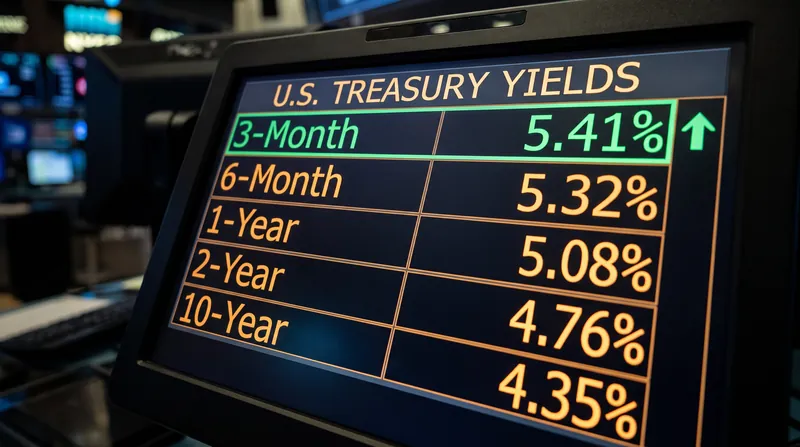
The immediate market reaction to the announcement was swift and decisive, sparking a sudden bond rally. The 30-year Treasury yield, which had spiked to a 19-year high of 5.34% just a day prior, dropped nearly 10 basis points to trade around 5.18%. The 10-year yield similarly fell 6 basis points to 4.64%, marking the largest daily drop in yields since late June.[1]
The intervention arrives at a precarious moment for the broader U.S. economy. Yields had been marching steadily upward due to a confluence of persistent inflation, geopolitical anxieties, and shifting dynamics within the buyer base for government debt.[5][6]
Minutes from the Federal Reserve's July meeting, released concurrently with the Treasury's announcement, revealed deep divisions among central bank policymakers. While the majority voted to hold the benchmark rate at 3.5% to 3.75%, several members indicated that further policy tightening might be necessary if inflation does not return to the 2% target, adding upward pressure to bond yields.[4][5]
The stakes for everyday money are immense. Long-term Treasury yields serve as the foundational benchmark for global finance, directly dictating the interest rates on 30-year mortgages, auto loans, and corporate borrowing. When the 30-year Treasury yield breaches 5.3%, it threatens to push mortgage rates higher, potentially freezing an already strained housing market and slowing corporate expansion.[2][6]
Despite the immediate relief provided by the buyback announcement, analysts caution that the intervention is a temporary salve rather than a structural cure. A $4 billion operation is relatively small compared to the sheer volume of U.S. debt issuance, meaning it can dampen volatility but cannot reverse the fundamental upward trajectory of yields.[1][2]
Furthermore, swapping long-term debt for short-term bills introduces new risks. By concentrating more of its obligations at the front end of the yield curve, the U.S. government becomes increasingly sensitive to short-term interest rate fluctuations. If the Federal Reserve is forced to hike rates again, the cost of rolling over those short-term bills will surge.[3][4]
The timing of the announcement also raised eyebrows on Wall Street. The Treasury had just released its planned buyback schedule two weeks prior; updating it so soon suggests an urgency to calm nerves as long-dated yields threatened to spiral out of control and trigger a broader stock market correction.[6]
Ultimately, the expanded buyback program serves as a powerful signaling mechanism. By doubling its intervention, the Treasury is alerting the market that it is actively monitoring yield pressures and is prepared to deploy its toolkit to prevent a broader financial dislocation, even as the historic $40 trillion debt load continues to cast a long shadow over the economy.[1][3]
Key points
- The U.S. Treasury is doubling its bond buyback operations for 10- to 30-year securities to $4 billion per operation.
- The intervention aims to boost liquidity in older, off-the-run bonds as the national debt nears $40 trillion.
- Long-term Treasury yields dropped sharply following the announcement, pulling back from 19-year highs.
- Strategists emphasize the move is an asset swap funded by short-term bills, not quantitative easing.
What we don’t know
- It remains unclear if the $4 billion operations will be sufficient to permanently stabilize yields if inflation forces the Federal Reserve to resume rate hikes.
- The long-term impact of shifting the government's debt burden further toward short-term bills is not yet fully understood.
How we got here
May 2024
The Treasury Department launches its initial bond buyback program to improve liquidity in the $32 trillion Treasury market.
August 5, 2026
The Treasury releases its quarterly refunding schedule, outlining a routine $2 billion cap for long-dated bond buybacks.
August 18, 2026
A major bond selloff pushes the 30-year Treasury yield to 5.34%, its highest level since 2007, amid inflation and debt concerns.
August 19, 2026
The Treasury abruptly doubles the buyback cap to $4 billion per operation, causing long-term yields to drop sharply.
- Market Technicians
- Focus on the plumbing of the financial system and the need for liquidity in off-the-run bonds.
- Fiscal Skeptics
- View the intervention as a temporary band-aid that exposes the government's struggle to finance its massive debt load.
- Monetary Policy Watchers
- Analyze the move in the context of the Federal Reserve's ongoing battle with inflation and interest rate policy.
Perspectives this story doesn't cover
- Retail Mortgage Borrowers
- Foreign Sovereign Debt Holders
Sources
Source coverage
6 outlets
3 viewpoints surfaced


- [1]MarketWatchMarket Technicians
Want to bet on the bond rally? Check out these overlooked funds.
Read on MarketWatch → - [2]MarketWatchMarket Technicians
Treasury-market reprieve could be fleeting with deluge of corporate-bond issuance due in September
Read on MarketWatch → - [3]Financial TimesFiscal Skeptics
US government debt hits $40tn as borrowing rises at historic rate
Read on Financial Times → - [4]MarketWatchMarket Technicians
Fed minutes reveal growing support for rate hikes
Read on MarketWatch → - [5]Financial TimesFiscal Skeptics
Fed officials express rising concern over persistently high inflation
Read on Financial Times → - [6]MarketWatchMarket Technicians
Five reasons we’re headed for a 10% stock-market correction — or worse
Read on MarketWatch →
More in Finance
See all →Derivatives Pricing
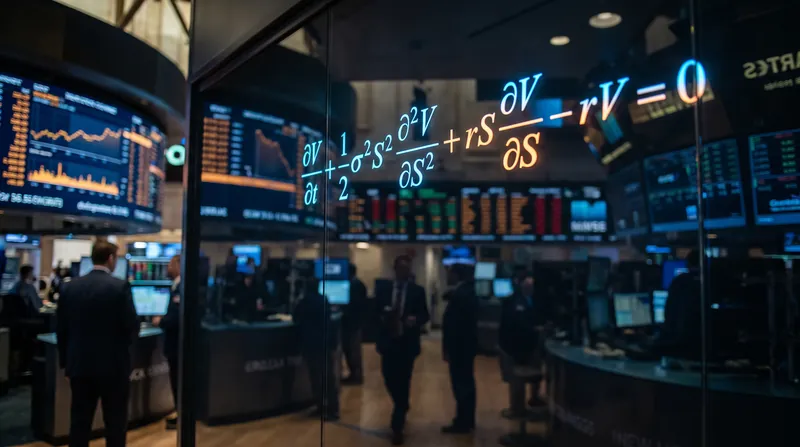
How Volatility, Time to Expiration, and the Risk-Free Rate Dictate the Theoretical Value of a European Option in the Black-Scholes Model
3 sources
AI Infrastructure
Nvidia Locks In $279 Billion Supply Commitment as AI Buildout Shifts From Silicon to Project Finance
5 sources

Risk Metrics
Why the Standard Deviation of Returns is the Denominator in the Sharpe Ratio, Not the Variance
6 sources
Risk Metrics
Using the Sharpe Ratio to Measure Excess Portfolio Returns Against Standard Deviation
10 sources

Comments
Every angle. Every day.
Get Finance stories with full source coverage and perspective breakdowns, free every day.