
Supreme Court Ruling Clears Way for DHS to Terminate Temporary Protected Status for Haiti and Syria
In a 6-3 decision, the Supreme Court ruled that federal courts cannot review the Department of Homeland Security's decisions to end Temporary Protected Status, allowing the termination of protections for hundreds of thousands of Haitian and Syrian nationals.
By Hailey Scott

- Immigration Advocates
- Defenders of the TPS program argue the decision removes vital checks on executive power and endangers vulnerable populations.
- Executive Authority Proponents
- Supporters of the ruling argue it restores the temporary nature of the program and respects the limits of judicial power.
- Corporate Employers
- Business groups and employers focus on the severe workforce disruptions caused by the sudden loss of legal status for hundreds of thousands of workers.
- Statutory Analysts
- Legal researchers emphasize the structural implications of the Court's broad interpretation of jurisdiction-stripping provisions.
Key terms
- Temporary Protected Status (TPS)
- A temporary immigration benefit granted to eligible nationals of designated countries facing armed conflict, environmental disaster, or other extraordinary conditions, allowing them to live and work legally in the U.S.
- Employment Authorization Document (EAD)
- A card issued by U.S. Citizenship and Immigration Services that proves a foreign national is allowed to work in the United States.
- Jurisdiction-Stripping Provision
- A law passed by Congress that removes the authority of federal courts to hear certain types of cases or review specific government actions.
- Administrative Procedure Act (APA)
- The federal law that governs the process by which federal agencies develop and issue regulations, requiring them to follow specific procedures and act reasonably.
- Equal Protection Clause
- A provision of the Fourteenth Amendment to the U.S. Constitution that requires states and the federal government to treat individuals in similar situations equally under the law.
Key points
- The Supreme Court ruled 6-3 that federal courts cannot review the Department of Homeland Security's decisions to terminate Temporary Protected Status designations.
- The decision clears the way for the administration to end protections for over 350,000 Haitian and Syrian nationals currently living in the United States.
- The Court dismissed a constitutional claim from Haitian plaintiffs alleging the terminations were motivated by racial animus, citing the administration's broad opposition to the program.
- Legal experts expect the ruling to dissolve lower-court injunctions that have temporarily shielded TPS beneficiaries from other designated countries.
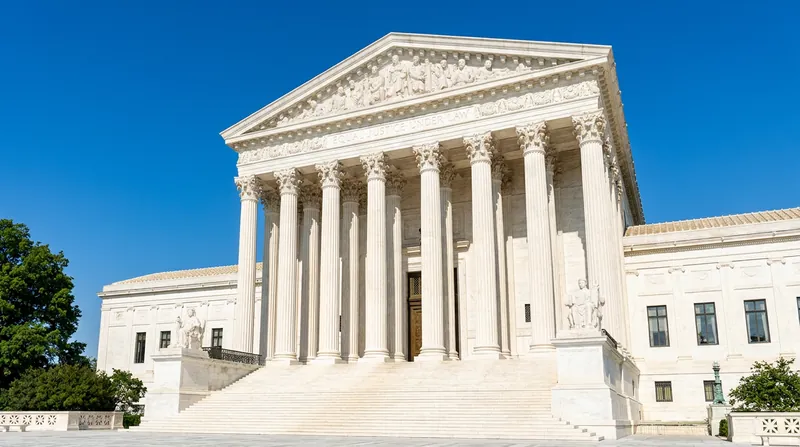
The Supreme Court has cleared the way for the Department of Homeland Security to terminate Temporary Protected Status for nationals of Haiti and Syria, ruling that federal courts lack the authority to review the executive branch's decisions to end the humanitarian program. In a sweeping 6-3 decision issued in the consolidated cases of Mullin v. Doe and Trump v. Miot, the Court overturned lower-court injunctions that had temporarily paused the terminations. The ruling effectively strips legal protections from hundreds of thousands of immigrants who have lived and worked legally in the United States for years, marking one of the most consequential immigration decisions of the term.[1][2]
The immediate consequence of the ruling falls squarely on an estimated 350,000 Haitian nationals and roughly 6,000 Syrian nationals currently residing in the United States. Once the terminations are formally implemented by the Department of Homeland Security, these individuals will lose their employment authorization documents and their statutory shield against deportation. The decision resolves months of legal limbo for these populations, replacing it with a narrow and rapidly closing window to either secure an alternative legal status or face the prospect of removal proceedings.[4]
At the center of the litigation was a fundamental structural question about the separation of powers and the limits of judicial oversight over immigration policy. The plaintiffs in the cases did not dispute that the executive branch possesses the ultimate statutory authority to end Temporary Protected Status designations. Instead, they argued that the administration unlawfully bypassed the mandatory procedural steps and interagency consultations required by Congress before reaching that final policy decision.[8]
Writing for the conservative majority, Justice Samuel Alito concluded that the Immigration Act of 1990 explicitly forecloses such procedural challenges from being heard in federal court. The Court held that the statute's jurisdiction-stripping provision bars federal judges from reviewing any non-constitutional claims related to the Secretary of Homeland Security's determinations regarding the program. This interpretation effectively insulates the executive branch's internal decision-making process from judicial scrutiny.[5][7]
Congress originally created Temporary Protected Status to provide a statutory framework for offering short-term, discretionary relief to foreign nationals whose home countries are experiencing armed conflict, environmental disasters, or other extraordinary and temporary conditions. Under the law, the Secretary of Homeland Security may designate a country for protection, allowing its nationals who are already physically present in the United States to remain and work legally until conditions improve sufficiently for their safe return.[8]
The governing statute explicitly requires the Secretary of Homeland Security to consult with appropriate government agencies to assess country conditions before deciding whether to extend or terminate a specific designation. The plaintiffs in the Haiti and Syria cases alleged that the administration failed to conduct these required consultations in good faith, rendering the resulting terminations procedurally invalid and arbitrary under the standards set by the Administrative Procedure Act.[6]
The Supreme Court rejected this avenue of legal challenge entirely. The majority interpreted the statutory bar on judicial review broadly, ruling that it sweeps in not just the final decision to terminate a designation, but the entire administrative process leading up to that decision. By this reading, whether the Secretary properly consulted other agencies is a matter strictly between the executive branch and Congress, placing it entirely beyond the reach of the federal judiciary.[6][8]
The Supreme Court rejected this avenue of legal challenge entirely.
Beyond the statutory arguments, the Court also addressed a distinct constitutional challenge brought by the Haitian plaintiffs. They argued that the decision to terminate Haiti's designation violated the Equal Protection Clause of the Constitution, alleging that the move was motivated by racial animus rather than an objective assessment of the country's recovery from its devastating 2010 earthquake and subsequent political instability.[5]
The majority dismissed this equal protection claim, concluding it was highly unlikely to succeed on the merits. The Court reasoned that the administration's across-the-board opposition to the Temporary Protected Status program—evidenced by its consistent efforts to terminate designations for multiple countries across different regions—supplied a strong, race-neutral explanation for the policy shift, overriding the plaintiffs' claims of discriminatory intent.[7]
The ruling drew a sharp and forceful dissent from the Court's liberal wing. Justice Elena Kagan, joined by Justices Sonia Sotomayor and Ketanji Brown Jackson, argued that the majority's interpretation of the jurisdiction-stripping provision was dangerously broad. The dissenters maintained that Congress intended to shield the Secretary's substantive policy judgments from review, not to give the executive branch a free pass to ignore the procedural requirements explicitly written into the law.[5]
For corporate employers across the country, the ruling triggers an immediate and severe compliance challenge. Companies relying on the affected workforce must now prepare for the sudden expiration of their employees' work authorizations. The Department of Homeland Security and U.S. Citizenship and Immigration Services are expected to issue operational guidance in the coming days, detailing the precise timeline for when the terminations will take effect and how employers should handle mandatory Form I-9 reverifications.[1][3]
Beyond the immediate impact on Haitian and Syrian nationals, legal experts emphasize that the decision establishes a sweeping precedent that fundamentally alters the legal landscape for the entire Temporary Protected Status program. By insulating the termination process from procedural lawsuits, the Court has effectively neutralized the primary legal strategy used by immigration advocates to keep the protections in place over the past several years.[2][4]
This precedent is expected to cascade rapidly through the lower federal courts, where similar injunctions have temporarily blocked the administration from ending protections for nationals of several other countries, including El Salvador, Honduras, Nepal, and Sudan. With the Supreme Court having definitively clarified the limits of judicial review, those lower-court orders are now highly vulnerable to being dissolved by the government.[2]
Structurally, the ruling represents a significant and enduring victory for executive power in the realm of immigration enforcement. It solidifies the administration's unilateral authority to wind down humanitarian programs without being tied up in protracted litigation over its internal decision-making processes. The Court's stance strongly reaffirms the program's original legislative design as a temporary measure entirely dependent on the discretion of the executive branch.[7]
For the hundreds of thousands of individuals who have built lives, families, and careers in the United States under the program's umbrella, the available legal avenues have narrowed drastically. Immigration attorneys are advising affected beneficiaries to immediately explore alternative pathways, such as family-sponsored visas, employment-based sponsorship, or asylum claims, before their current protections evaporate entirely and they become subject to deportation.[4]
Frequently asked
What did the Supreme Court decide in Mullin v. Doe?
The Court ruled 6-3 that federal law prevents judges from reviewing the Department of Homeland Security's procedural decisions to terminate Temporary Protected Status for foreign nationals.
Who is immediately affected by this ruling?
The decision directly impacts approximately 350,000 Haitian nationals and 6,000 Syrian nationals, who will lose their work authorization and protection from deportation once the terminations are implemented.
Does this ruling affect TPS holders from other countries?
Yes. Because the Court ruled that the termination process is generally exempt from judicial review, the decision is expected to clear the way for the administration to end protections for nationals of other designated countries.
Did the Court address the claims of racial discrimination?
Yes. The majority dismissed an equal protection claim brought by Haitian plaintiffs, ruling that the administration's broad opposition to the TPS program provided a race-neutral reason for the terminations.
Why this matters
The ruling strips the legal backstop that has protected over 350,000 Haitian and Syrian nationals from deportation, while establishing a sweeping precedent that shields the executive branch's future Temporary Protected Status terminations from judicial review.
Sources
Source coverage
8 outlets
4 viewpoints surfaced








- [1]Ogletree DeakinsCorporate Employers
Supreme Court Allows Termination of TPS for Haiti and Syria
Read on Ogletree Deakins → - [2]Seyfarth ShawCorporate Employers
Decision Allows DHS to Move Forward with TPS Terminations while Litigation Proceeds
Read on Seyfarth Shaw → - [3]FragomenCorporate Employers
Supreme Court Allows Termination of TPS for Haiti and Syria to Proceed
Read on Fragomen → - [4]Visa Lawyer BlogImmigration Advocates
Supreme Court Allows Termination of TPS for Haiti and Syria, Placing TPS Program in Jeopardy
Read on Visa Lawyer Blog → - [5]Congress.govStatutory Analysts
Mullin v. Doe: Racial Animus and Equal Protection
Read on Congress.gov → - [6]Stanford Law SchoolImmigration Advocates
In Mullin v. Doe, the Roberts Court issued a sweeping rejection of lawsuits challenging the Trump administration's summary termination of Temporary Protected Status
Read on Stanford Law School → - [7]Federalist SocietyExecutive Authority Proponents
Mullin v. Doe - Supreme Court Ruling
Read on Federalist Society → - [8]Congressional Research ServiceStatutory Analysts
Mullin v. Doe: Supreme Court Allows Termination of Temporary Protected Status for Haiti and Syria LSB11446
Read on Congressional Research Service →
Comments

Every angle. Every day.
Get law justice stories with full source coverage and perspective breakdowns delivered to your inbox.