
Structural Collapse in Luxury Demand Leaves Flagship Models Rotting on Dealer Lots for Over a Year
While the broader auto market has stabilized at a healthy 75-day supply, high-end luxury vehicles and premium EVs are experiencing an isolated inventory crisis. Dealerships are struggling to move six-figure flagship models, fundamentally altering floorplan economics and giving buyers unprecedented negotiating power.

Share this story
In short
- The broader U.S. automotive market has stabilized at a healthy 75-day supply of inventory.
- Ultra-luxury vehicles and high-end EVs are experiencing severe inventory bloat, with some models sitting for over a year.
- High interest rates on dealer floorplan loans are wiping out profit margins on stagnant flagship models.
The days of paying over MSRP for a luxury vehicle are over. If you are in the market for a premium car, the leverage is entirely in your hands.
The broader automotive market has finally returned to a state of equilibrium. Automakers and dealers traditionally target a 75-day supply of vehicles, a benchmark that ensures enough variety for consumers without burdening dealers with excessive holding costs.[1]
Recent data confirms this stabilization. National days' supply has settled right at that 75-day mark, supported by solid sales growth and stabilizing transaction prices across the industry.[1]
But beneath that healthy average lies a stark divide. While midsize SUVs and standard commuter vehicles are flying off the lots, the ultra-luxury and high-end electric vehicle segments are experiencing a structural collapse in demand.[5]
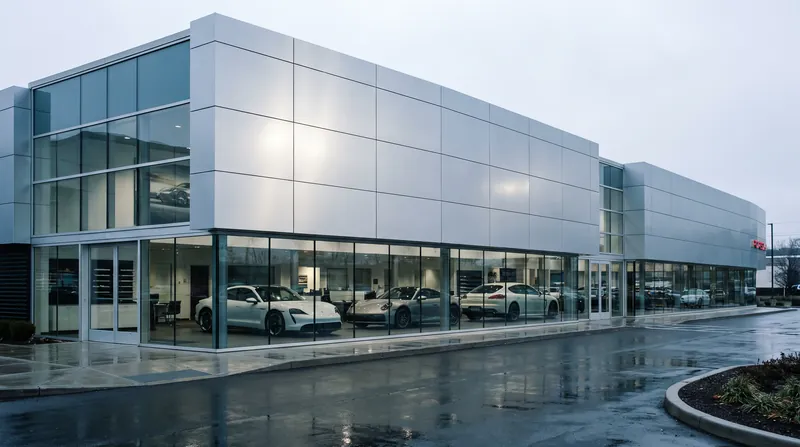
Dealerships across the country are watching six-figure flagship models collect dust. Some of these vehicles have been sitting unsold for over a year, fundamentally altering the economics of the showroom floor.[5]
To understand why this is happening, buyers need to look at the mechanism of dealer floorplan loans. Dealerships do not own their inventory outright; they finance it through specialized credit lines.[3]
When a high-end vehicle sits for a year, the interest payments alone can wipe out the dealer's entire profit margin. This creates a ticking time bomb that eventually forces massive, unadvertised discounts just to stop the financial bleeding.[2]
The root cause of this inventory bloat is a misalignment between automaker assumptions and actual buyer psychology. During the pandemic, manufacturers prioritized their most expensive, highest-margin vehicles, assuming the wealth effect would sustain endless demand.[5]
However, today's luxury buyers are pushing back against over-engineered tech packages and aggressive depreciation curves. Many are realizing that a flagship sedan losing half its value in three years is a poor financial decision, regardless of their net worth.[4][5]
The transition to electric vehicles has amplified this trend. High-end EVs are sitting at well over a 100-day supply in many markets, far outpacing the inventory levels of standard internal combustion engines.[5]
Buyers are hesitant to sink six figures into EV technology that might be obsolete in two years, especially when charging infrastructure remains inconsistent in certain regions.
This hesitation is compounded by the fact that many legacy luxury brands removed physical controls in favor of massive touchscreens, alienating their traditional, loyal customer base who valued tactile refinement over digital novelty.[5]
Yet, this structural collapse is overwhelmingly positive news for the educated consumer. The bloated inventory means that dealers are highly motivated to negotiate, offering thousands of dollars in incentives and favorable lease terms.
Furthermore, this market correction is forcing automakers to rethink their long-term strategies. The era of forced up-selling is ending, making way for a return to sensible pricing, proven reliability, and user-friendly design.
For anyone navigating the luxury car market today, the strategy is simple: look for the models that have been sitting the longest. The cars are not defective; they are simply victims of a market that outpaced its buyers.
By leveraging inventory data and understanding the pressure dealers are under, consumers can secure premium vehicles at price points that reflect their true market value, turning an industry miscalculation into a personal financial win.
Definitions
- Days' Supply
- An industry metric calculating how long it would take a dealership to sell its current inventory at the current daily sales rate.
- Floorplan Loan
- A specialized line of credit used by dealerships to finance the vehicles sitting on their lots, requiring regular interest payments.
- Average Transaction Price (ATP)
- The actual average price consumers pay for a vehicle after all dealer discounts and manufacturer incentives are applied.
- Depreciation Curve
- The rate at which a vehicle loses its financial value over time, typically steepest in the first three years for luxury cars.
- MSRP
- The Manufacturer's Suggested Retail Price, often called the sticker price, which serves as the starting point for negotiations.
Questions & answers
Why are luxury cars sitting on lots for so long?
Automakers overproduced high-end, expensive models assuming pandemic-era demand would last, but buyers are now pushing back against high prices and steep depreciation.
Are these unsold cars defective?
No. These vehicles are brand new and mechanically sound; they are simply victims of a market mismatch where supply vastly exceeded consumer demand.
Is now a good time to buy a luxury vehicle?
Yes. Because dealers are paying high interest on unsold inventory, buyers have immense leverage to negotiate significant discounts below MSRP.
What is a floorplan loan?
It is the credit dealerships use to buy cars from the manufacturer. When cars sit unsold, the dealer must pay ongoing interest, which eats into their profits and motivates them to sell.
Analysis by camp
Value-Driven Consumers
Buyers are rejecting steep depreciation and over-engineered tech in favor of long-term reliability.
This camp argues that the luxury market lost touch with reality by pushing six-figure price tags for vehicles that lose half their value in three years. They are leveraging the current inventory glut to demand massive discounts or are pivoting entirely to proven, reliable used models that offer the same comfort without the financial penalty.
Dealership Management
Dealers are caught between automaker production quotas and the reality of local demand.
Franchise owners point out that they are forced to accept allocations of high-end, slow-moving inventory from manufacturers. With floorplan interest rates eating into their margins, dealers are advocating for a return to balanced production that aligns with what their local communities actually want to buy.
Automotive Strategists
Industry analysts view this as a necessary market correction that will drive better product development.
Market observers argue that the current inventory bloat is a healthy reset. They believe this pressure will force legacy automakers to abandon the strategy of endless price hikes and instead focus on building vehicles that offer genuine value, intuitive interfaces, and sustainable depreciation curves.
- Value-Driven Consumers
- Buyers prioritizing long-term financial sense and reliability over the latest luxury trends.
- Dealership Management
- Franchise owners focused on moving inventory and managing the costs of floorplan loans.
- Automotive Strategists
- Analysts tracking broad market trends, inventory data, and automaker production strategies.
Perspectives this story doesn't cover
- Independent Auto Mechanics
- Used Car Auctioneers
Sources
Source coverage
5 outlets
3 viewpoints surfaced




- [1]Kelley Blue BookAutomotive Strategists
Automakers Enter 2026 With Normalizing Inventory Levels
Read on Kelley Blue Book → - [2]FREDDealership Management
Finance Rate on Personal Loans at Commercial Banks, 48 Month Loan
Read on FRED → - [3]WikipediaDealership Management
Car dealership
Read on Wikipedia → - [4]WikipediaDealership Management
Depreciation
Read on Wikipedia → - [5]Factlen Editorial TeamValue-Driven Consumers
Synthesis by Factlen editorial team
Read on Factlen Editorial Team →
More in Automotive & Transportation
See all →Carbon Fiber Tech
The Anisotropy of Carbon Fiber: How Fiber Orientation Dictates Strength and Stiffness in Different Directions
7 sources
EV Efficiency
Volkswagen's Mission Efficiency Uses Aerodynamics to Reach 9.59 Miles Per Kilowatt-Hour
3 sources
Suspension Tech
Magnetorheological Fluid's Microsecond Response Time: How Active Dampers Trade Comfort for Cornering Stiffness
8 sources
Torque Vectoring
How Clutch Packs and Planetary Gears Erase Understeer in Performance Cars
7 sources
Comments
Every angle. Every day.
Get Automotive & Transportation stories with full source coverage and perspective breakdowns, free every day.