
New World Order: Slovenia and Japan Disrupt Traditional Hierarchy in Latest FIVB Men's Rankings
Slovenia and Japan have cemented their status as global volleyball powerhouses in the August 2026 FIVB Men's World Rankings, overtaking traditional giants like Brazil and edging past the United States.
By Jackson Reed

- Emerging Powerhouses
- View the rankings as proof that tactical innovation and youth development can overcome historical dominance.
- Traditional Giants
- Acknowledge the deeper talent pool but emphasize the need to peak during major Olympic and World Championship cycles.
- Neutral Analysts
- Highlight the success of the FIVB's zero-sum algorithm in creating a more competitive and entertaining global landscape.
At a glance
- Slovenia has reached No. 4 in the FIVB Men's World Rankings with 344.53 points.
- The United States was pushed to No. 5, trailing Slovenia by just 0.12 points.
- Japan holds the No. 6 spot with 333.33 points following a strong VNL campaign.
- Brazil has dropped to No. 7, marking a historic low for the perennial powerhouse.
- The FIVB's zero-sum ranking algorithm heavily rewards upsets, accelerating the shift.
Why it matters now
The democratization of men's volleyball means the sport is no longer controlled by a three-nation oligopoly. For fans and developing federations, the success of Slovenia and Japan proves that strategic innovation and technical precision can overcome historical dominance and physical size.
The traditional hierarchy of men's international volleyball is undergoing a seismic shift. As of August 2026, the latest Fédération Internationale de Volleyball (FIVB) Men's World Rankings confirm that a new era has arrived, spearheaded by the meteoric rise of Slovenia and Japan.[1][2]
Slovenia has surged to No. 4 in the world with 344.53 points, officially edging out the United States by a razor-thin margin of 0.12 points. This marks a historic high for the European nation of just over two million people, cementing their transformation from regional challengers to global heavyweights.[1][3]
Hot on their heels is Japan, sitting comfortably at No. 6 with 333.33 points. The "Ryujin Nippon" squad has captivated the volleyball world with their electrifying defense and lightning-fast offense, proving that technical precision and tactical discipline can dismantle taller, more physical opponents on the world stage.[2][4]
The ascent of these two programs comes at the direct expense of volleyball's traditional royalty. Brazil, long considered the sport's gold standard and a perennial lock for the top three over the past two decades, has slipped to No. 7 with 312.13 points. France, another modern giant, finds itself pushed down to No. 8 with 302.59 points.[1][3]
The ascent of these two programs comes at the direct expense of volleyball's traditional royalty.
The dynamic points system introduced by the FIVB in 2020—a zero-sum algorithm that rewards teams heavily for upsetting higher-ranked opponents—has accelerated this changing of the guard. Every set won or lost in major tournaments immediately impacts the standings, punishing inconsistency and rewarding breakthrough performances.[3][5]
Slovenia's rise has been fueled by consistent podium finishes, including a historic bronze medal at the 2026 Volleyball Nations League (VNL) in Ningbo, China. In that tournament's third-place match, they defeated Japan 3-1, securing the crucial ranking points needed to vault them into the top four and push the Americans down to fifth.[4]
Japan, meanwhile, has dominated the Asian Volleyball Confederation while consistently challenging European and South American powerhouses. Their undefeated streaks during the preliminary rounds of the VNL showcased a team operating at peak tactical efficiency under head coach Laurent Tillie, racking up massive defensive dig numbers to frustrate opposing attackers.[2][4]
For fans of the sport, the August 2026 rankings represent a refreshing democratization of men's volleyball. The dominance of a few select nations has been replaced by a fiercely competitive top 10 where any team can win on any given day, setting the stage for an unpredictable and thrilling road to the 2027 World Championships.[2][5]
The backstory
Jan 2020
The FIVB implements a new zero-sum dynamic ranking system, making every match and set count toward world points.
Sep 2022
Slovenia co-hosts the Men's World Championship, finishing fourth and signaling their arrival as a global threat.
Aug 2026
Following the 2026 Nations League, Slovenia officially overtakes the USA for No. 4, while Japan secures No. 6.
Sources
Source coverage
5 outlets
3 viewpoints surfaced





- [1]FIVBNeutral Analysts
FIVB Senior World Ranking Men
Read on FIVB → - [2]Volleyball WorldEmerging Powerhouses
Men's Volleyball World Ranking Updates
Read on Volleyball World → - [3]Learn VolleyNeutral Analysts
Official FIVB Men's Volleyball Top 50 World Rankings
Read on Learn Volley → - [4]VolleyWeekEmerging Powerhouses
Japan and Slovenia Battle for VNL Supremacy
Read on VolleyWeek → - [5]Olympics.comTraditional Giants
FIVB Volleyball World Rankings Overview
Read on Olympics.com →
Comments
More in sports
See all →Transfer Market
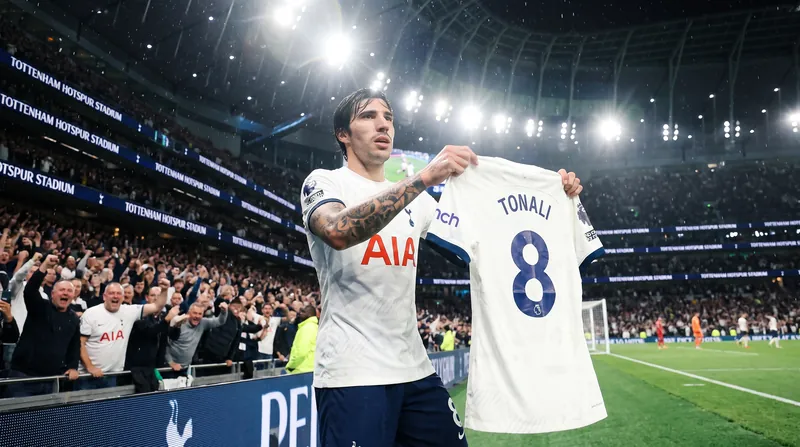
Tottenham Finalizes £92.5 Million Blockbuster Signing of Midfielder Sandro Tonali from Newcastle
4 sources
Preview
Hawthorn Chases Top-Four Finish and Percentage Boost in High-Stakes Clash Against West Coast
7 sources

Preview
2026 Wuhan Open Preview: Xiao Guodong Chases Hat-Trick as World No. 1 Race Heats Up
6 sources
Recap
James Wade Ends Five-Year Televised Title Drought with Australian Darts Masters Victory
2 sources

Every angle. Every day.
Get sports stories with full source coverage and perspective breakdowns delivered to your inbox.