
Federal Bill Proposes 'Safe Harbor' for Portable Benefits and Single National Independent Contractor Test
A new legislative package aims to allow companies to contribute to freelancers' benefits without triggering employee classification, sparking a fierce debate over the future of labor rights.

Share this story
In short
- A federal legislative package proposes a 'safe harbor' allowing companies to contribute to freelancer benefits without triggering employee classification.
- The bills also seek to establish a single, national common-law test for determining independent contractor status.
- Proponents argue the legislation modernizes labor law and provides regulatory certainty for businesses and independent workers.
Millions of American freelancers, gig workers, and independent contractors face a structural binary: maintain their operational independence or secure traditional workplace benefits. A new federal legislative package, advancing through both the House and Senate in 2026, aims to break that binary by proposing a "safe harbor" for portable benefits and a single national test for independent contractor status.[1][2]
The proposed legislation—spearheaded in the House as the Modern Worker Security Act (H.R. 1320) and the Modern Worker Empowerment Act (H.R. 1319), and mirrored in the Senate by the Unlocking Benefits for Independent Workers Act (S. 2210)—would fundamentally rewire the Fair Labor Standards Act (FLSA). It allows companies to contribute to a worker's health, retirement, or paid time off without those contributions being used as legal evidence that the worker is an employee.[1][2][6]
For a freelance graphic designer or a rideshare driver, the practical stakes are significant. Under the current legal framework, if a hiring entity offers traditional benefits, courts and federal agencies view that as a signal of an employer-employee relationship. This risk of reclassification has historically deterred companies from offering any safety net to their contract workforce.[4][5]
The mechanism of the "safe harbor" is straightforward but legally profound. It effectively blinds regulators and judges from considering voluntary benefit contributions when applying worker classification tests. If a platform company deposits funds into a worker-owned portable benefits account, that financial support cannot be weaponized in a misclassification lawsuit.[2][5][6]
Portable benefits themselves are accounts that belong to the worker, not the employer. Multiple hiring entities can make voluntary or required contributions, and the worker retains the accumulated funds as they move between clients or platforms. This model decouples the social safety net from a single W-2 employer, addressing the income volatility inherent in contingent work.[4]
The legislative package pairs this safe harbor with a second, highly contested mechanism: a single national independent contractor test. The Modern Worker Empowerment Act would replace the Department of Labor's complex, multi-factor "economic realities" test with a standardized common-law test across all federal labor laws.[1]
By standardizing the classification test, the bill's sponsors argue they are providing regulatory certainty. Businesses have long complained that navigating the patchwork of state laws and shifting federal agency guidelines creates operational paralysis, particularly for distributed teams and platform-based business models.[1][5]
However, labor rights organizations view the dual-pronged approach as a Trojan horse. The National Employment Law Project (NELP) argues that by legally ignoring benefit contributions, the safe harbor tips the scales in favor of independent contractor status, making it harder for misclassified workers to prove they are actually employees.[3]
The core of the labor critique is that portable benefits, while helpful, are an inadequate substitute for foundational employment rights. Workers classified as independent contractors are excluded from federal minimum wage guarantees, overtime pay, unemployment insurance, and the right to collectively bargain.[3][4]
Critics argue that the legislation incentivizes companies to default workers to contractor status. By offering a limited menu of portable benefits, companies could avoid the much larger financial obligations of traditional employment, effectively creating a second-tier workforce that lacks comprehensive legal protections.[3]
Despite the federal gridlock, the safe harbor concept is already gaining traction at the state level. In the first half of 2026 alone, multiple states introduced portable benefits bills, and several have enacted frameworks that protect companies from state-level reclassification risks when they contribute to worker accounts.[5]
These state-level laboratories of democracy have proven that the portable benefits model is operationally viable. However, state laws only provide a safe harbor against state labor regulations. Multi-state employers remain exposed to federal reclassification risks under the FLSA, which is why business groups are heavily lobbying for the federal bills.[5]
The tension ultimately centers on the definition of flexibility. Proponents argue that true flexibility requires allowing workers to operate as independent businesses while still accessing a safety net. They point to surveys showing that a majority of independent workers prefer their current status over traditional employment.[1][5]
Opponents counter that the flexibility touted by platform companies is often a mirage, particularly for lower-income gig workers who lack bargaining power. They argue that true flexibility should not require forfeiting the baseline protections established by the New Deal.[3]
As the legislation advances through committee hearings, the outcome will dictate the future architecture of the U.S. labor market. Whether the safe harbor becomes a bridge to a modernized safety net or a loophole for corporate cost-cutting remains the central debate of the modern workforce.[5]
Definitions
- Portable Benefits
- Employment-related benefits that belong to the worker and travel with them across different jobs or clients, rather than being tied to a single employer.
- Safe Harbor
- A legal provision that protects companies from liability—in this case, ensuring that contributing to a worker's benefits cannot be used as evidence to reclassify them as an employee.
- Common-Law Test
- A worker classification standard that focuses primarily on the degree of control a hiring entity has over how the work is performed.
- Economic Realities Test
- A broader worker classification standard used by the Department of Labor that examines multiple factors, including the worker's opportunity for profit or loss and whether the work is integral to the employer's business.
Questions & answers
What exactly does the safe harbor provision do?
It legally prevents regulators and courts from using a company's voluntary contributions to a worker's portable benefits account as evidence that the worker is an employee.
Would this legislation force companies to provide benefits to freelancers?
No. The proposed federal bills make benefit contributions entirely voluntary for hiring entities.
Why do labor rights groups oppose portable benefits?
They do not oppose the benefits themselves, but they argue that the safe harbor provision makes it easier for companies to misclassify workers and deny them minimum wage and overtime protections.
How does the single national test change things?
It replaces the Department of Labor's multi-factor test with a narrower common-law test, generally making it easier for businesses to classify workers as independent contractors.
Analysis by camp
Legislative Proponents
Argue the bills modernize labor law and protect independent workers from regulatory uncertainty.
Sponsors of the legislation argue that outdated labor laws force a false choice between flexibility and security. By establishing a single national test and a safe harbor, they believe the bills will give businesses the legal confidence to contribute to the social safety net of their contract workforce without triggering devastating misclassification lawsuits.
Labor Rights Advocates
Argue the safe harbor and single test legitimize misclassification and create a second-tier workforce.
Organizations like the National Employment Law Project contend that when a business offers benefits, it demonstrates economic control over the worker—a key indicator of employment. They argue that legally blinding courts to this fact will allow companies to substitute limited portable benefits for foundational rights like minimum wage, overtime, and unemployment insurance.
Safety Net Innovators
View portable benefits as a necessary evolution of the social safety net for contingent workers.
Policy researchers focused on the future of work emphasize that the traditional W-2 employment model no longer covers millions of Americans. They argue that decoupling benefits from a single employer through portable accounts is the most viable way to address the income volatility and lack of security inherent in the modern gig economy.
- Legislative Proponents
- Argue the bills modernize labor law and protect independent workers from regulatory uncertainty.
- Labor Rights Advocates
- Argue the safe harbor and single test legitimize misclassification and create a second-tier workforce.
- Safety Net Innovators
- View portable benefits as a necessary evolution of the social safety net for contingent workers.
Perspectives this story doesn't cover
- State-level labor regulators who would have to navigate the conflict between state and federal classification tests.
Sources
Source coverage
6 outlets
3 viewpoints surfaced




- [1]Congress.govLegislative Proponents
H.R.1319 - Modern Worker Empowerment Act
Read on Congress.gov → - [2]Congress.govLegislative Proponents
S.2210 - Unlocking Benefits for Independent Workers Act
Read on Congress.gov → - [3]National Employment Law ProjectLabor Rights Advocates
Workers Need Real Portable Benefits and Access to Foundational Employment Rights
Read on National Employment Law Project → - [4]The Century FoundationSafety Net Innovators
A New Safety Net for An Era of Unstable Earnings
Read on The Century Foundation → - [5]Factlen Editorial TeamSafety Net Innovators
Synthesis by Factlen editorial team
Read on Factlen Editorial Team → - [6]Congress.govLegislative Proponents
H.R.1320 - Modern Worker Security Act
Read on Congress.gov →
More in Careers & Work
See all →Worker Classification
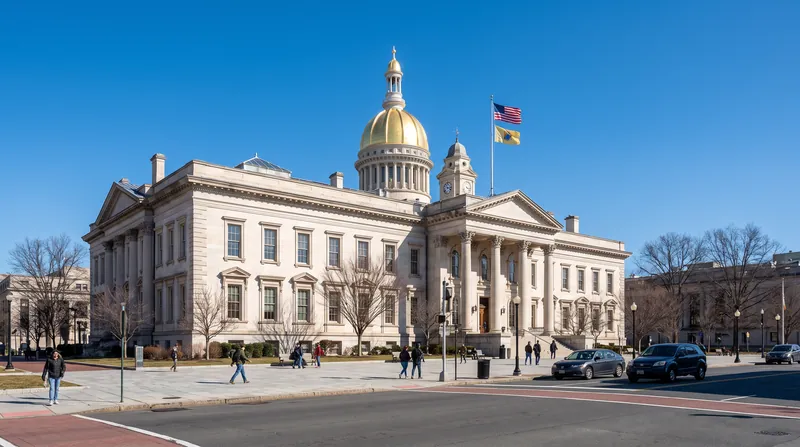
New Jersey Adopts Strict ABC Test Rules, Poised to Reclassify Thousands of Gig Workers as Employees
6 sources
Worker Classification
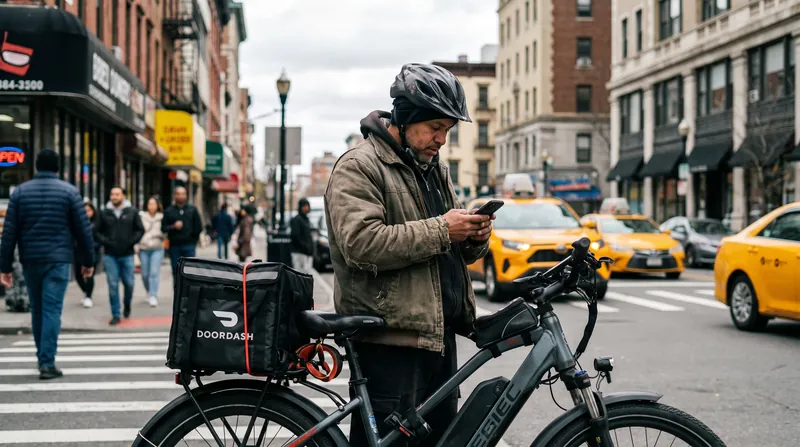
DOL Proposes New Independent Contractor Rule, Reverting to Business-Friendly Two-Factor Test
8 sources
Worker Classification
The 2026 Freelancer Classification Divide: How the Federal DOL and State ABC Tests Are Diverging
4 sources

Worker Classification
The End of the 6-Factor Test: How the DOL's New Independent Contractor Rule Affects Freelancers
2 sources

Comments
Every angle. Every day.
Get Careers & Work stories with full source coverage and perspective breakdowns, free every day.